Table of Contents >> Show >> Hide
- Meet the Artist Behind the Relatable Chaos
- Why “Everyday Struggles” Comics Go Viral
- The 61 Everyday Struggles These Funny Comics Nail So Well
- What These Comics Say About Modern Life (Without Turning Into a Lecture)
- Behind the Panels: How a Simple Comic Nails Real Life
- How to Enjoy Relatable Comics Without Turning It Into Doomscrolling
- Extra: of Real-Life “Yep, That’s Me” Experiences
- Conclusion: Why We Keep Coming Back for “New Pics”
There are two kinds of people in the world: the ones who say, “My life is totally together,” and the ones who
accidentally walk into a room and forget why they have a room in the first place. If you’re reading this, welcome
to Group Two. Pull up a chair. Try not to sit on that pile of clean laundry you’ve been “meaning to fold.”
Relatable slice-of-life comics have become the internet’s favorite way to laugh at the little stuff: the daily
annoyances, the social awkwardness, the pet chaos, the “adulting” moments that feel suspiciously like you’re
free-styling your way through a group project called Life. And when an artist turns those micro-struggles into
punchy, colorful panels, it’s like someone finally gave your brain a subtitle track.
Today’s theme: a girl illustrating her everyday struggles in 61 funny comics“new pics” energy included. Not as a
carbon copy of any one panel set, but as a deep dive into why this kind of humor hits so hard, what these comics
tend to capture, and the very specific ways they manage to make you laugh while whispering, “It’s not just you.”
Meet the Artist Behind the Relatable Chaos
Many viral “everyday struggles” collections spotlight creators like Meg Adams (aka “Moga”), the comic artist
behind ArtbyMogaa series built on modern-life moments: relationships, routines, pets, self-talk, and the tiny
inconveniences that somehow require a full emotional processing meeting. Her work has been shared widely online,
and she’s also published a comic collection that packages those “yep, that’s me” moments into book form.
What makes this style so magnetic isn’t a superhero plot twist or a big dramatic reveal. It’s the simple, brave
act of saying: “Here’s a thing I do that is kind of ridiculous.” Then drawing it in a way that makes the rest of
us point at our screens like we’ve been personally attacked by accuracy.
Why “Everyday Struggles” Comics Go Viral
They turn tiny problems into safe laughter
A good relatable comic is basically a pressure-release valve. It takes something minorlike losing your phone
while holding your phoneand turns it into a joke you can share without writing a 12-paragraph confession.
Suddenly, the struggle isn’t a failure. It’s a punchline. And that shift matters.
They’re designed for the way we actually live online
Social platforms reward quick recognition: a scroll, a glance, an instant “same.” Comics fit that rhythm. You can
absorb a story in seconds, then send it to a friend as a love language: “I saw this and thought of your ongoing
feud with mornings.”
They make people feel less alone (without getting preachy)
Relatable comics often do a sneaky emotional two-step: they make you laugh first, then make you feel seen.
The joke lands, and the subtext whispers, “You’re not the only one who overthinks a text message for 45 minutes.”
Humor can be a real coping tool
Laughter doesn’t erase your problems, but it can change how heavy they feel for a moment. That’s why funny,
slice-of-life comics often resonate during stressful seasons. When life is loud, a small joke can be a form of
mental unclenching.
The 61 Everyday Struggles These Funny Comics Nail So Well
Below are 61 classic “everyday struggle” moments that show up again and again in relatable comic worldsbecause
they’re universally human, mildly ridiculous, and perfect for a quick visual punchline.
- The Snooze Negotiation: You bargain with your alarm like it’s a hostage situation.
- Instant Regret Wake-Up: Opening your eyes feels like paying a fee you didn’t approve.
- “Just Five Minutes” Math: Five minutes becomes 27 minutes in a completely legal way.
- Hair Has an Agenda: Your hairstyle chooses chaos before you can choose a brush.
- Wardrobe Paralysis: You have clothes, but none of them are emotionally correct today.
- Outfit Confidence Collapse: You feel cute for 12 seconds, then catch a reflective surface.
- The Sock Mystery: One sock vanishes and you know it’s living a better life now.
- Phone at 3%: You become a spiritual person in the presence of low battery.
- Charging Cable Acrobatics: You contort your body just to keep the charger “working.”
- Breakfast Realism: The dream: smoothie. The truth: a granola bar you found in a bag.
- Drink Temperature Drama: Coffee is lava or sadnessnothing in between.
- Hydration Guilt: You drink water and expect applause from the universe.
- Public Bathroom Mirror: The lighting is a crime and you are the victim.
- “I’ll Just Do One Errand”: The errand multiplies like it’s in a science experiment.
- The Tote Bag Forget: You remember reusable bags only after paying for new ones.
- Grocery Cart Roulette: One wheel screams so everyone knows you’re here.
- Self-Checkout Panic: The machine beeps and your soul briefly leaves your body.
- Unexpected Small Talk: Your brain loads conversational software at 2% speed.
- “You Too” Syndrome: Someone says “enjoy” and you reply, “You too,” to the cashier’s receipt.
- Text Tone Anxiety: “K.” has the emotional impact of a thunderstorm.
- Overthinking a Reply: You draft three versions, then send “lol” like a professional.
- Accidental Double Text: You feel the shame before the second bubble finishes.
- Group Chat Lag: You don’t respond for two hours and return to a new civilization.
- Calendar Betrayal: Your schedule reminds you about an appointment you emotionally ignored.
- Meeting Face: You practice “interested and competent” in the mirror.
- Email Tone Crisis: Is “Best” too formal? Is “Thanks!” too excited? Are you… a squirrel?
- Work-from-Home Illusion: You “save time” and immediately spend it staring into space.
- Productivity Theater: You open 12 tabs to feel ambitious, then do none of it.
- Snack Logic: You eat a handful of something and call it “lunch-adjacent.”
- Sudden Motivation: At 11:47 p.m., you want to reorganize your entire life.
- “New Me” Planning: You make a plan so perfect it doesn’t include being tired, ever.
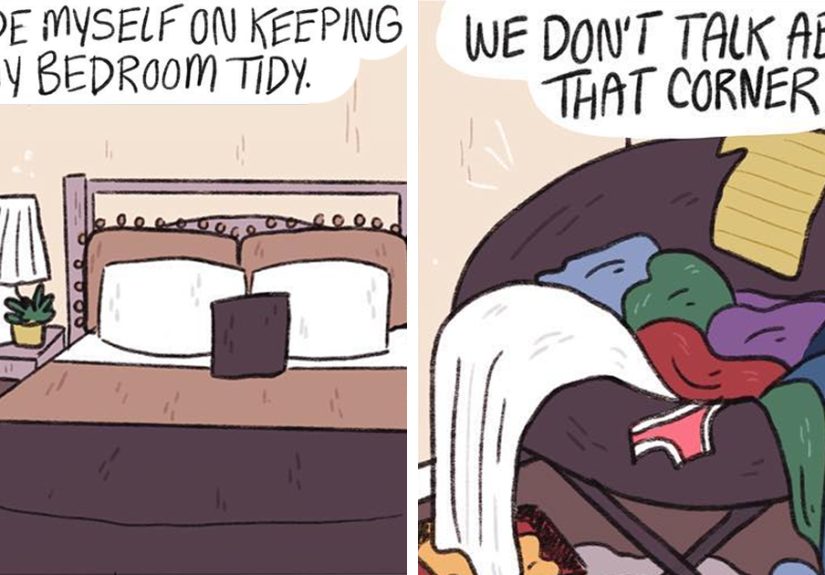
- Laundry Mountain: You start with hope and end with a chair that’s now a clothing museum.
- Folding Avoidance: You don’t fold. You “live out of the basket” with confidence.
- Dish Sink Sadness: One plate becomes eight plates through unknown physics.
- Cleaning Spiral: You clean one thing, find another thing, and suddenly you’re crying in a drawer.
- The “Where Did I Put It” Loop: You check the same spot five times like it might evolve.
- Keys in the Fridge: You’re not irresponsibleyou’re innovative.
- Wallet? Purse? Pocket? You pat yourself down like a confused security guard.
- Walking Into a Room: You arrive and your memory clocks out immediately.
- Chair Noise Betrayal: You shift and the chair announces it to the whole building.
- Headphones Tangled: They were in your pocket for 10 seconds and formed a Celtic knot.
- Skin & Weather Drama: Your body reacts to humidity like it’s personal.
- Bad Hair Day Confidence: You plan an imaginary hat collection you don’t own.
- Trying to “Be Normal”: You act normal and it immediately feels suspicious.
- Social Battery: You’re fun for an hour, then you need silence like it’s medication.
- Canceling Plans Relief: You feel guilty and thrilled at the same timetalent!
- Going Out Countdown: You hype yourself up, then consider staying home forever.
- Dating App Whiplash: One conversation feels promising, the next is a documentary.
- Relationship Mind-Reading: You guess what they meant instead of asking like a healthy adult.
- “What Should We Eat?” The eternal question that ruins 18 minutes of your life.
- Pet Judgment: Your dog watches you like you owe rent to the household.
- Pet Zoomies: Your pet becomes a blur at the exact moment you want calm.
- Pet Hair Everywhere: You find it in places that are technically not “places.”
- Walking the Dog Timing: The dog wants outside exactly when you sit down.
- New Hobby Phase: You buy supplies, feel inspired, and then never touch them again.
- Being “Responsible”: You do one adult task and need a nap as a reward.
- Budgeting Reality: You track spending and discover you’re funding your own chaos.
- Online Shopping Justification: It’s not a purchaseit’s “self-care,” obviously.
- Doorway Awkwardness: You walk the wrong way and perform a little apology dance.
- Laughing at the Worst Time: Someone says something serious and your brain chooses mischief.
- Trying to “Relax”: You think about everything you should be doing and call it “rest.”
- Late-Night Self-Reflection: You replay a 2016 conversation like it’s a streaming series.
What These Comics Say About Modern Life (Without Turning Into a Lecture)
Adulting is mostly improvisation
The best “everyday struggles” comics expose a secret: most people are winging it. Not in a dramatic waymore like
“I put my keys down and now we’re all on a quest.” These stories make adulthood feel less like a test you’re
failing and more like a weird game you’re learning.
Relationships are tiny misunderstandings with big feelings
Slice-of-life comics often focus on the funny friction of sharing space with another person: different snack
standards, different definitions of “clean,” and the ever-present question of whether someone is annoyed or just
hungry. The humor isn’t mean; it’s affectionate. Like, “I love you, but why do you open a new box when the old
box is 78% full?”
Pets are both comfort and comedy
A lot of popular creators (including ArtbyMoga) weave pets into their everyday stories because animals are the
perfect comedy partners: expressive, unpredictable, and completely uninterested in your plans. Pets add warmth,
surprise, and the occasional “I just vacuumed and now it’s snowing fur again” punchline.
Self-acceptance works better when it’s funny, not preachy
Many modern comics sneak in kindness: letting your body be a body, letting your brain be a brain, and letting your
life be imperfect. The point isn’t “fix yourself.” The point is “you’re allowed to be human while you figure it
out.”
Behind the Panels: How a Simple Comic Nails Real Life
Visual shorthand does the heavy lifting
Relatable comics often rely on instantly recognizable body language: the slumped “why am I like this” pose, the
wide-eyed panic face, the tiny triumphant fist pump after completing one task. You don’t need a paragraph of
explanationyour brain understands the emotion in one glance.
Timing matters more than detail
A lot of these comics are short: a setup panel and a punchline panel. That’s not “simple,” it’s efficient. The
pacing mimics the way small frustrations happen in real lifefast, dumb, and weirdly dramatic for something like
a stuck jar lid.
The best ones feel specific but stay universal
“I can’t find my phone” is universal. “I can’t find my phone while using my phone flashlight to find my phone” is
specific. Great comics nail that sweet spot: detailed enough to feel real, broad enough to feel like it belongs
to everyone.
How to Enjoy Relatable Comics Without Turning It Into Doomscrolling
Funny comics are meant to lift your mood, not steal your entire evening. If you want to keep the vibe healthy:
- Save your favorites: Screenshot or bookmark the ones that actually make you laugh.
- Share with intention: Send one to a friend who’ll appreciate it instead of forwarding into the void.
- Notice how you feel after: If you feel lighter, great. If you feel drained, step away and reset.
- Balance your feed: Mix humor with content that inspires you, teaches you, or genuinely relaxes you.
Extra: of Real-Life “Yep, That’s Me” Experiences
The funniest thing about “everyday struggles” comics is how often they become tiny mirrors for people’s lives.
You don’t just laughyou recognize yourself. And that recognition tends to show up in the same handful of
experiences that readers talk about again and again.
One common experience is the instant-send reflex. You see a panel about walking into a room and forgetting
what you came for, and your thumb is already tapping a best friend’s name before you’ve even finished reading.
It’s not just “this is funny.” It’s “this is us.” Relatable comics are basically shorthand for friendship: a quick
way to say, “I know you,” without making it awkward and emotional like a movie speech.
Another familiar moment: the quiet relief of being normal. A comic about social batterybeing cheerful in a
group setting and then needing to stare at a wall afterwardcan feel oddly comforting. People often assume
everyone else has unlimited energy, unlimited confidence, unlimited competence. Then a comic comes along and
gently announces: “Actually, lots of people are tired and confused, and they still deserve snacks and love.”
That’s a small message, but it lands big.
There’s also the experience of laughing at your own chaos without self-hating. A good comic doesn’t make you
feel like a mess in a cruel wayit makes you feel like a mess in a human way. Like, “Yes, I forgot my reusable
bags again. No, I am not banished from society. I am simply a person with a brain that sometimes runs on
glitter and vibes.” Humor becomes a kinder lens. You’re not “bad.” You’re just living.
And then there’s the big one: the comfort of small routines. Comics about pets, partners, and home life tend
to highlight the tiny, warm patterns that make a day feel survivable. The dog who demands a walk at the exact
wrong time. The partner who doesn’t load the dishwasher “correctly” but tries. The shared look that says, “We
are both tired; let’s eat something easy.” These moments aren’t dramatic enough for a novel, but they’re exactly
what most life is made of. Seeing them drawn in bright, funny panels can make them feel meaningful instead of
mundane.
Finally, many readers describe an unexpected side effect: these comics can motivate tiny improvements.
Not in a “new year, new you” waymore like a gentle nudge. You laugh at a panel about laundry piles, then you
fold three shirts because the comic made you feel seen, and being seen gave you a little energy. It’s not a
productivity hack. It’s a mood shift. Sometimes a laugh is enough to help you do one small thing… and that one
small thing is how real life gets managed.
Conclusion: Why We Keep Coming Back for “New Pics”
A “girl illustrates her everyday struggles” comic collection works because it’s honest in a way the internet
rarely is: it celebrates imperfection without making it tragic. It says, “Life is weird,” and then draws the
weirdness with enough warmth that you feel better about your own.
Whether the comics feature a partner, a pet, a chaotic brain, or the eternal battle between “I should be an adult”
and “I would like to be a burrito in a blanket,” the magic is the same: short stories that make you laugh quickly
and feel understood quietly.