Table of Contents >> Show >> Hide
- Table of Contents
- Why Satellite Images Matter for This Story
- How to Recreate “Satellite Views” Ethically
- Satellite Map Tour: Where Notorious Nazis Were Caught
- 1) Adolf Eichmann Suburban Buenos Aires area (captured 1960)
- 2) Klaus Barbie La Paz, Bolivia (arrested and expelled 1983)
- 3) Franz Stangl São Paulo metro area, Brazil (arrested 1967)
- 4) Erich Priebke San Carlos de Bariloche, Argentina (arrested 1994)
- 5) Josef Schwammberger Rural Córdoba Province, Argentina (arrested 1987)
- 6) Hermine Braunsteiner Ryan Queens, New York (located and arrested 1973)
- 7) John Demjanjuk Greater Cleveland area, Ohio (U.S. proceedings; deported 2009)
- 8) Gustav Wagner São Paulo State, Brazil (arrested 1978)
- What Satellite Images Canand Can’tTell You
- FAQ
- A 500-Word “Satellite Sleuth” Experience (Respectful Edition)
- Conclusion
“Satellite images” can’t show a 1960s street corner in motion (no matter how hard you squint at the pixels),
but they can show you something surprisingly powerful: the geography of escape and accountability.
The quiet suburbs, the port cities, the mountain resort towns, and the ordinary-looking neighborhoods where some of
the most wanted Nazi war criminals were finally located, arrested, or removed from hiding.
This is a history-and-maps tourbuilt for readers who like context, accuracy, and a little “armchair detective”
energywithout turning horror into entertainment. The Holocaust and Nazi crimes were real, devastating, and personal
to millions of families. Our goal here is to understand how justice efforts worked across borders, and how satellite
views help us “read” the places where that history collided with everyday life.
What you’ll get: a curated list of capture locations, what happened there (in plain English),
and how to recreate each view using free tools like Google Earth (historical imagery), NASA Worldview, and USGS EarthExplorer.
Why Satellite Images Matter for This Story
After World War II, many Nazi leaders and collaborators faced trialsyet a number of perpetrators escaped,
hid abroad, or blended into new communities. Later investigations often relied on paper trails, tips, interviews,
immigration records, and international cooperation. Satellite imagery adds a modern layer: it lets us locate the
settings where those investigations came to a head.
From above, you can spot patterns that newspapers describe but words can’t fully “draw”industrial corridors near
a city edge, a mountain town with a single main road, a neighborhood where anonymity is easy, or a port area built
for arrivals and departures. Put simply: if history is a story, geography is the stage.
A respectful reminder: these are real communities where regular people live today. Treat these places as historical
reference points, not tourist trophies. The point is understandingnot gawking.
How to Recreate “Satellite Views” Ethically
Tools you can use (free or widely available)
- Google Earth (Historical Imagery / Timelapse): useful for comparing how neighborhoods changed over time.
- NASA Worldview: great for global, daily satellite layers (more “Earth systems,” less “street-level”).
- USGS EarthExplorer: a gateway to Landsat and other archiveshelpful if you want older imagery for broad change-over-time.
Ethical ground rules
- Stay at “context zoom” when a site is residential: think neighborhood scale, not “house number” scale.
- Don’t share private addresses: even when a location is historically known, avoid turning it into a target.
- Focus on history and institutions: investigations, extraditions, trials, and the long pursuit of accountability.
Quick “map method” (works for every case below)
- Open your map tool and search the city + neighborhood listed.
- Zoom out until you can see major roads, rail lines, rivers, or the coastline.
- Read the case summary, then ask: What would make hiding easier here? What would make getting caught more likely?
- If available, turn on historical imagery and slide through time to see how the area evolved.
Satellite Map Tour: Where Notorious Nazis Were Caught
“Caught” can mean different things in postwar justice: arrested by local authorities, detained after investigative reporting,
located after years of tips, extradited after court fights, or removed from a country after denaturalization.
Each entry below tells you what happened and what to look for from above.
1) Adolf Eichmann Suburban Buenos Aires area (captured 1960)
Eichmann was a key organizer of deportations that fed the Holocaust’s machinery. After the war, he escaped to Argentina.
In May 1960, Israeli intelligence located him in the Buenos Aires suburbs and seized him in an operation that became a global headline.
His later trial drew international attention and helped many people understand the administrative, “paperwork” side of genocide.
Satellite-view angle: Look at the Greater Buenos Aires sprawldense neighborhoods, fast roads, and countless identical blocks.
It’s a landscape built for anonymity. From above, the area’s scale explains why a single fugitive could hide in plain sight for years.
- Search phrase: “San Fernando Buenos Aires Province” (then explore surrounding residential zones)
- Zoom tip: Start wide (city scale), then tighten to neighborhood scale.
- What to notice: Transit corridors, industrial edges, and how quickly “city” becomes “suburb.”
Context takeaway: This capture shows how intelligence work, surveillance, and human sources mattered as much as borders.
The place looks ordinarybecause hiding often depends on looking ordinary.
2) Klaus Barbie La Paz, Bolivia (arrested and expelled 1983)
Klaus Barbie, known as the “Butcher of Lyon,” was tied to torture and killings in occupied France. Decades after the war,
he was located in Bolivia. In 1983, he was arrested and expelled, then delivered to France to face trial. The legal and diplomatic
steps were complicated, and his case became a symbol of how long justice can takeand how political conditions can change what’s possible.
Satellite-view angle: La Paz sits in a dramatic high-altitude basin, with steep slopes and a city layout that’s easy to recognize.
Geography doesn’t “explain” the politics, but it does show how a person can become embedded in a capital’s daily churngovernment buildings,
commerce, crowded districtswhere identities can be reinvented.
- Search phrase: “La Paz Bolivia city center”
- Zoom tip: Tilt to 3D (if your tool supports it) to see the bowl-like terrain.
- What to notice: How tightly the city is packed along ridges and corridors.
Context takeaway: His arrest underscores a hard truth: accountability often depends on timingpolitical will, international pressure,
and a system willing to reopen old crimes when many people would rather “move on.”
3) Franz Stangl São Paulo metro area, Brazil (arrested 1967)
Franz Stangl commanded extermination camps at Sobibor and Treblinka. After the war, he fled and eventually lived in Brazil.
He was arrested in 1967 and extradited to West Germany, where he was tried and convicted for his role in mass murder.
Satellite-view angle: The São Paulo region is enormousdense, industrial, and constantly in motion.
That scale can hide someone, but it can also create records: employment, registrations, paper trails, neighbors, consulates.
Big cities produce both anonymity and documentationthe ultimate “hide and seek” paradox.
- Search phrase: “São Bernardo do Campo São Paulo Brazil” (then zoom out)
- Zoom tip: Trace major highways and industrial zones.
- What to notice: How an urban megaregion creates countless places to disappearand countless bureaucratic footprints.
Context takeaway: His case shows the importance of sustained investigation. Even when crimes are known,
it can take years for warrants, cooperation, and the right lead to line up.
4) Erich Priebke San Carlos de Bariloche, Argentina (arrested 1994)
Erich Priebke, an SS officer connected to a wartime massacre in Rome, lived openly for decades in Bariloche, a scenic Andean resort town.
In the 1990s, journalists confronted him on cameraan encounter that helped trigger legal action and an arrest in Argentina,
followed by a long extradition process.
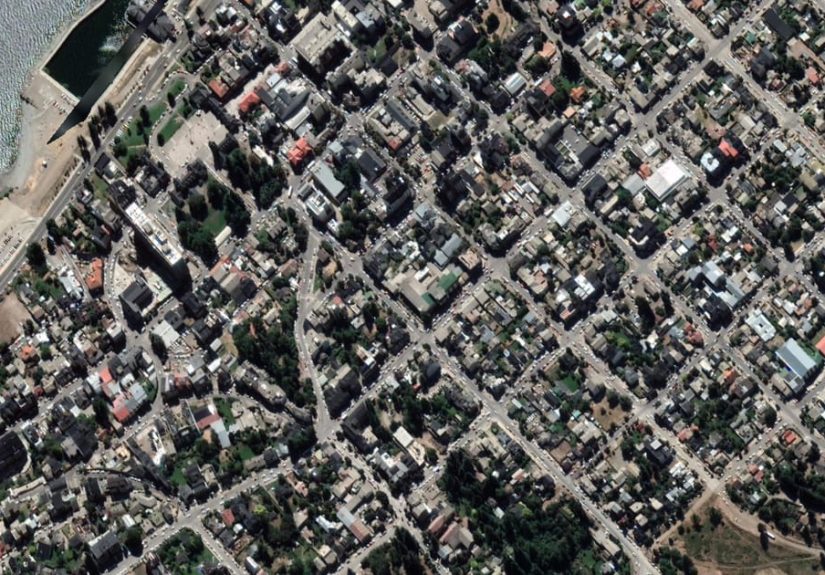
Satellite-view angle: Bariloche’s geography is striking: a town nestled by water with mountains at its edge.
It’s the opposite of a megacitysmaller, more “known,” where social networks matter. That makes his long residence there
especially revealing: sometimes hiding isn’t about invisibility; it’s about social acceptance and distance from the original crimes.
- Search phrase: “San Carlos de Bariloche Argentina”
- Zoom tip: Look for the lakefront, then pull back to see the town’s limited entry routes.
- What to notice: A resort town layouttourism corridors, residential pockets, and a clear town boundary.
Context takeaway: Media exposure can matter. Investigative reporting doesn’t replace courts, but it can force attention,
reopen dormant cases, and make “quiet hiding” much harder.
5) Josef Schwammberger Rural Córdoba Province, Argentina (arrested 1987)
Josef Schwammberger, an SS officer implicated in murders of Jewish forced laborers, was tracked down in Argentina and arrested in 1987.
Reports describe his detention near the town of Huerta Grande in Córdoba Province. He was later extradited to West Germany and convicted.
Satellite-view angle: Rural or semi-rural terrain looks “open,” but that can be misleading.
Farms, small towns, and scattered roads can create isolationyet they also create tight local awareness. Outsiders stand out.
A new face is remembered. A new name is repeated. That can help or hurt a fugitive, depending on whether the community asks questions.
- Search phrase: “Huerta Grande Córdoba Argentina”
- Zoom tip: Start with the town, then follow nearby roads and agricultural patterns.
- What to notice: Sparse development, limited routes, and the visibility of movement between towns.
Context takeaway: “Remote” isn’t the same as “safe.” Many captures depended on tips, recognition,
and the slow tightening of investigative netsnot on dramatic action scenes.
6) Hermine Braunsteiner Ryan Queens, New York (located and arrested 1973)
Hermine Braunsteiner served as a guard at Nazi camps and later lived in the United States as a naturalized citizen.
After being identified, she was arrested in New York in the early 1970s; U.S. proceedings led to her denaturalization,
and she was extradited to West Germany for trial.
Satellite-view angle: Queens is dense, layered, and ordinary in the way big-city neighborhoods are:
blocks of homes, schools, shops, and transit lines. From above, the “shock” is the normalcy. That’s the point.
Postwar hiding often wasn’t a jungle caveit was a routine commute, a grocery run, a quiet street.
- Search phrase: “Queens New York residential neighborhood Jackson Heights Woodside”
- Zoom tip: Keep a respectful distanceneighborhood scale is enough.
- What to notice: Transit access, density, and how easy it is to blend in among millions of lives.
Context takeaway: This case highlights a uniquely American front in Nazi-hunting:
immigration law, denaturalization, and the principle that citizenship obtained by concealment can be revoked.
7) John Demjanjuk Greater Cleveland area, Ohio (U.S. proceedings; deported 2009)
John Demjanjuk’s case is one of the most legally complex. Accused of being a camp guard, he became the subject of U.S. denaturalization
and deportation proceedings spanning decades, including extradition to Israel and later deportation to Germany in 2009.
His story is a reminder that courts move slowlyespecially when identity, evidence, and due process are fiercely contested.
Satellite-view angle: Suburban Ohio looks like a textbook grid of postwar Americacurving streets, lawns, shopping strips,
highways. From above, it illustrates something uncomfortable: the distance between the “where” of daily life and the “what” of alleged past crimes.
That distance is exactly what investigators and courts try to bridgewith documents, testimony, and careful legal standards.
- Search phrase: “Cleveland Ohio suburbs Seven Hills area”
- Zoom tip: Keep it broad (city/suburb scale), focusing on geography rather than any one residence.
- What to notice: Highway connectivity, routine suburban patterns, and the ease of anonymity in a metro area.
Context takeaway: This is a case where “catching” isn’t one momentit’s an extended legal marathon.
Whatever a reader’s view of specific outcomes, it demonstrates how democracies attempt to balance accountability with due process.
8) Gustav Wagner São Paulo State, Brazil (arrested 1978)
Gustav Wagner served at Sobibor and was later located in Brazil. He was arrested in 1978, and multiple countries sought extradition.
The case became another example of how the pursuit of Nazi perpetrators could collide with politics, courts, and international disputes.
Satellite-view angle: Look at the São Paulo region beyond the city coresmaller municipalities, greener space,
and a patchwork of development. It’s the “in-between” zone: not isolated wilderness, not a downtown crowd.
Places like this can feel private while still being connected to modern infrastructure and institutions.
- Search phrase: “Atibaia São Paulo Brazil” (then zoom out to the regional road network)
- Zoom tip: Trace roads connecting smaller towns to the São Paulo metropolitan gravity well.
- What to notice: Semi-rural development patternsspace to hide, but not truly off the grid.
Context takeaway: Some arrests led to trials; others ended in stalemates. Either way, each case generated records
and public awareness that made future hiding harder for others.
What Satellite Images Canand Can’tTell You
What they can tell you
- Scale and anonymity: Dense megacities provide more cover than small towns.
- Mobility: Highways, ports, rail lines, and airports are escape routesand investigation routes.
- Social geography: Some places encourage reinvention; others make newcomers memorable.
- Change over time: Historical imagery can show how a “hideout neighborhood” evolved after the relevant decade.
What they can’t tell you
- They can’t show motive: Maps don’t reveal who helped, who looked away, or who spoke up.
- They can’t replace evidence: Trials rely on testimony, documents, and lawnot vibes from a satellite view.
- They can mislead: A quiet-looking street can be a busy place; a remote-looking area can be full of social connections.
The best use of satellite imagery here is humble: it’s a context machine. It helps you understand how
a person could live “normally” after extraordinary crimesand how investigators worked through geography, paperwork, and time.
FAQ
Can satellite images show the moment someone was caught?
No. Satellite imagery is mostly still images taken at different times, not a live film reel of history.
What it can do is let you examine the environmentroads, density, borders, and how a location connects to the wider world.
What’s the best free tool for “then vs. now”?
For casual readers, Google Earth’s historical imagery is the easiest on-ramp. For broader, science-oriented time series,
NASA and USGS tools can help you explore environmental and land-use changes.
Why were so many fugitives found in South America?
There isn’t a single explanation. Factors discussed by historians include postwar displacement, forged or opportunistic identity changes,
sympathetic networks, gaps in international coordination, and the sheer difficulty of investigating across borders in an era before digital records.
Is it okay to “visit” these places digitally?
Yesif you keep it educational and respectful. Avoid zooming in on private homes, don’t share addresses, and don’t treat living neighborhoods
as props. Focus on the historical lessons: accountability, memory, and the institutions that pursued justice.
A 500-Word “Satellite Sleuth” Experience (Respectful Edition)
Open your map tool of choice and take a breath before you type a single search term. This isn’t a game. It’s a way to understand how
ordinary places can intersect with extraordinary crimesand how justice, when it arrives, often arrives slowly.
Start with Buenos Aires. Don’t zoom in like you’re trying to win a prize for “Most Dramatic Close-Up.”
Zoom out instead. Let the city fill your screen. The first feeling is usually scale: blocks and blocks and blocks, roads
threading through neighborhoods like shoelaces pulled tight. Now imagine the postwar worldno internet, limited international databases,
scattered records, and a person willing to lie about who they are. From above, anonymity isn’t a metaphor; it’s a street grid with
a million doors.
Next, switch to Bariloche. The map changes its tone. Mountains push up like a raised eyebrow, and the lake sits there calmly,
like it has nothing to prove. Resort towns have a different rhythm: tourism zones, scenic routes, a smaller web of relationships.
This is where you notice a second lesson: hiding isn’t always about vanishing. Sometimes it’s about being “known” in the wrong place,
among people who don’t ask the right questionsor don’t want the answers.
Now take a jump to Queens, New York. The satellite view becomes a patchwork quilt: rooftops, streets, schools, little strips of green,
transit lines sliding past. It looks like a million lives doing normal things at oncebecause it is. And that’s the unsettling point.
Postwar accountability work often happened in the middle of ordinary life. Investigators weren’t hunting in movie settings; they were
dealing with paperwork, interviews, court filings, and the slow grind of proving who someone was and what they did.
Head to La Paz, Bolivia, and tilt the map if you can. The city sits in a bowl, dramatic and dense. The terrain reminds you that every
“where” is also a “how”: how people move, how neighborhoods connect, how a capital city can swallow a person into its daily noise.
Then you realize a third lesson: geography can hide you, but it can also trap you in systemsbureaucracies, borders, and institutions
that eventually decide to cooperate.
Finish in Córdoba Province, Argentina, with the roads and fields stretching out. The quiet can feel like safetyuntil you remember that
small places also remember. In a tight-knit area, patterns stand out. Names repeat. Newcomers become stories. And stories, in the hands of
the right investigators, can become evidence trails.
Close the tab with one final thought: satellite imagery isn’t the hero here. People arethe survivors who testified, the journalists who asked
uncomfortable questions, the archivists who kept records, and the investigators and courts that insisted time doesn’t erase responsibility.
The map just helps you see the stage where that insistence played out.
Conclusion
Satellite images won’t show you history happening, but they can show you where history landed: on suburban streets, in capital cities,
in mountain towns, and in neighborhoods where the past tried to pass as ordinary.
The deeper lesson is not about zooming init’s about zooming out. Accountability after atrocity is slow, international, and often frustrating.
Yet the record shows that persistence matters. People who fled across oceans still faced investigators, courts, and public scrutiny decades later.
Maps make that pursuit easier to pictureand harder to dismiss as “something that happened somewhere else.”