Table of Contents >> Show >> Hide
- Where Did This “Bad Actor” Conversation Come From?
- Pedro Pascal’s Resume: Does It Really Say “Bad Actor”?
- The Main Criticisms: Why Some People Think Pedro Pascal Is Overrated
- The Case for Pedro Pascal Being a Very Good Actor
- Fandom, Hot Takes, and the New “Good vs. Bad” Binary
- So… Is Pedro Pascal Actually a Bad Actor?
- What It Feels Like Watching the Pedro Pascal Debate Unfold
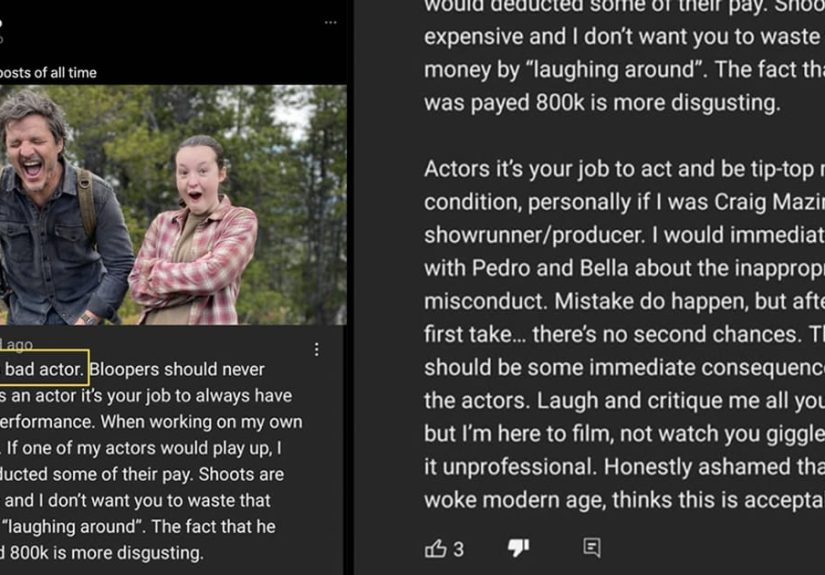
If there’s one universal truth of the internet, it’s this: the moment someone becomes wildly popular, a “actually, they’re bad” hot take is not far behind. Enter Pedro Pascal the internet’s favorite “daddy,” star of The Last of Us, The Mandalorian, and about three dozen other projects that all somehow filmed in the same year. Recently, a scalding hot take questioning whether Pedro Pascal is actually a bad actor set social media on fire, and fans have been arguing ever since.
So is there anything to this claim, or is it just another case of “we love to tear down what we built up”? Let’s dig into Pascal’s career, the criticism, the praise, and the complicated way fandom now treats its favorite stars.
Where Did This “Bad Actor” Conversation Come From?
The spark for this debate wasn’t some major awards snub or a disastrous performance. Instead, it came from a viral “hot take” post that framed Pascal as overhyped, overcast, and in the author’s opinion simply not that good. The post gathered steam on social media, especially as it got reshared in fan groups that already had mixed feelings about his newer roles and upcoming projects like his turn as Reed Richards in Marvel’s Fantastic Four.
From there, the discourse practically wrote itself. Some people nodded along and said, “Finally, someone said it.” Others responded with detailed threads about his performances in The Last of Us and The Mandalorian, calling the take ridiculous. And then there were the rest of us, eating popcorn and thinking, “Okay, but have you seen episode 6 of The Last of Us?”
In other words: this isn’t a calm, measured conversation about craft. It’s fandom-era discourse passionate, messy, and extremely online.
Pedro Pascal’s Resume: Does It Really Say “Bad Actor”?
Before we rule on whether Pedro Pascal is secretly terrible, it helps to look at what he’s actually done. Pascal is a Chilean–American actor who spent nearly two decades in small and supporting roles before he “suddenly” became an overnight success in the eyes of mainstream audiences. His breakout came as Oberyn Martell in Game of Thrones, where he stole an entire season with a handful of scenes and one extremely traumatic head-squishing moment.
From there, he stacked up roles that are now modern pop-culture landmarks: Javier Peña in Narcos, the helmeted bounty hunter Din Djarin in The Mandalorian, Joel Miller in HBO’s adaptation of The Last of Us, and now big-screen projects like Gladiator II and Fantastic Four. He’s become a fixture on red carpets, late-night shows, and awards shortlists, earning Emmy, SAG, and other nominations and wins for his work.
On paper, that’s not the career of someone Hollywood secretly thinks is bad at acting. It’s the career of someone casting directors trust to carry billion-dollar franchises and emotionally heavy stories at the same time.
The Main Criticisms: Why Some People Think Pedro Pascal Is Overrated
But popularity and a packed resume don’t make you immune to criticism. The “Pedro Pascal is a bad actor” crowd does have a few recurring arguments. Let’s break them down.
1. “He’s in everything, and he always plays the same guy.”
One of the most common complaints isn’t that Pascal is technically bad, but that he’s overexposed. To some viewers, he feels like “the same weary, sad-eyed dad in a different franchise.” Gruff protector of a child in The Mandalorian, gruff protector of a teenager in The Last of Us, older, world-weary genius in Fantastic Four you see the pattern.
When an actor becomes closely associated with a certain archetype, people often start accusing them of “playing themselves” or having “no range,” even if the characters have meaningful differences. It’s less about raw talent and more about fatigue: viewers sometimes get tired of seeing the same face at the center of every major project.
2. “He’s miscast especially as Reed Richards.”
The other big source of criticism centers on his casting as Reed Richards (Mr. Fantastic) in Marvel’s upcoming Fantastic Four reboot. Some comic fans feel he doesn’t match their mental picture of the character, whether that’s about age, vibe, or physicality. When people are already upset about casting, they often retroactively downgrade the actor’s talent too, turning “not my ideal Reed” into “he can’t act.”
In reality, what’s being debated here isn’t always acting ability. It’s a mix of fan expectations, attachment to decades of comic-book lore, and the fact that social media amplifies every disappointment into a crusade.
3. “He’s good, but not that good.”
Finally, there’s the backlash that comes from overhype. When think pieces, awards shows, and fan edits all insist someone is the greatest actor of their generation, critics will inevitably push back: “Hold on. He’s solid, but he’s not Daniel Day-Lewis.”
That’s a fair conversation to have. You can argue about whether Pascal is “great” or “merely very good” without calling him a fraud. But some hot takes skip the nuance and jump straight to “bad,” because nuance doesn’t get nearly as many clicks.
The Case for Pedro Pascal Being a Very Good Actor
Let’s flip the script. If you look at how critics and fans talk about Pascal’s best work, a very different picture emerges. Across respected entertainment outlets and fan communities, three performances come up again and again when people argue he’s genuinely talented: Oberyn in Game of Thrones, Din in The Mandalorian, and Joel in The Last of Us.
1. His Work in The Last of Us Is Widely Praised
In HBO’s The Last of Us, Pascal plays Joel, a broken man who’s lost a child and is desperately trying not to care about anyone ever again and failing. His performance has been praised for its quiet vulnerability, especially in emotionally charged episodes where Joel’s tough exterior cracks and the fear, grief, and love leak through.
Critics have highlighted episodes where Pascal carries long stretches of the story with small shifts in expression and voice rather than big, showy outbursts. Fans point to scenes of Joel opening up to his brother, or admitting his fear of failing Ellie, as proof that Pascal can sell complex, layered emotion without melodrama. That’s not the hallmark of a “bad” actor; that’s the work of someone who understands subtlety.
2. He Acts Through a Helmet in The Mandalorian
The Mandalorian’s helmet rule is notoriously unforgiving: for much of the series, Din’s face is completely covered. Many of the most beloved scenes rely on tiny head tilts, body language, and the way Pascal’s voice softens when he talks to Grogu.
Acting with your face hidden is not easy. Yet fans routinely describe Din Djarin as one of the most emotionally resonant characters in modern Star Wars largely because Pascal manages to make a man in full armor feel like a tired, lonely, deeply caring parent. That’s highly technical work, even if the performance is understated.
3. Oberyn Martell: The Role That Started It All
Pascal’s turn as Oberyn Martell in Game of Thrones is still considered one of the show’s most memorable supporting performances. In a handful of episodes, he had to be charming, vengeful, seductive, lethal, and ultimately tragic. Critics and fans alike remember how alive he felt on screen, how he could dominate a scene with a smirk and a line reading.
If someone can walk into a stacked ensemble like Game of Thrones and leave that big an impression in that little time, it’s hard to argue they’re simply “bad.”
Fandom, Hot Takes, and the New “Good vs. Bad” Binary
Underneath all this bickering about whether Pedro Pascal is bad at acting is a bigger problem with how we talk about art online. Nuance doesn’t trend. Saying, “He’s a strong character actor who sometimes gets miscast and is a little overhyped right now” doesn’t fit in a headline. “He’s a bad actor” does.
Modern fandom tends to flatten everything into extremes: something is either underrated genius or overhyped trash. Actors become avatars for larger arguments about studios, franchises, and even culture-war nonsense that has nothing to do with the actual performance on screen.
Pascal, unfortunately, sits at the crossroads of many of these forces. He’s part of huge IP franchises, he’s been meme-ified into a lovable internet persona, and he keeps getting cast in high-profile roles, which makes him an easy target for “I’m tired of this guy” sentiment.
So… Is Pedro Pascal Actually a Bad Actor?
If we strip away the noise, the answer looks pretty straightforward:
- He has multiple critically acclaimed performances under his belt.
- He’s carried emotionally dense, prestige TV dramas and massive franchise shows.
- Directors, casting teams, and studios keep trusting him with high-stakes roles.
- Even many of his critics admit he’s at least decent they’re more upset about casting choices, overexposure, or creative direction.
That doesn’t mean he’s perfect. You can absolutely feel that he’s miscast as a particular character, or that a given role doesn’t showcase much range. You can prefer a different interpretation of Joel or think another actor would have made a better Reed Richards. That’s all fair game.
But calling Pedro Pascal a “bad actor” ignores a huge amount of evidence to the contrary. The more honest, less click-friendly conclusion is this: he’s a skilled, charismatic performer who’s currently everywhere, which inevitably makes him a lightning rod for backlash.
In other words, he’s not a bad actor he’s just a very visible one living in the age of weaponized hot takes.
What It Feels Like Watching the Pedro Pascal Debate Unfold
Let’s be honest: if you’ve spent any time in fandom spaces over the past couple of years, watching the Pedro Pascal discourse unfold feels like déjà vu. One day your feed is full of edits of him eating a sandwich or laughing in an interview, with captions declaring him “the internet’s dad.” The next day, you scroll and suddenly everyone’s debating whether he’s secretly talentless and has been coasting on Twitter’s affection this whole time.
It’s jarring, but also very 2025.
You might start out neutral maybe you liked him in The Mandalorian or found him compelling in The Last of Us, but you weren’t exactly building a shrine. Then the hot take hits your timeline, framed in the most inflammatory way possible: “Pedro Pascal Is Actually a Bad Actor and We Need to Talk About It.” You click, because of course you do. The piece leans hard into the backlash: he’s overcast, overpraised, too old for some roles, too soft for others, apparently wrong even when he’s pretty good.
By the time you’re done reading, you’re not convinced he’s bad you’re just aware that the internet once again has turned “I don’t like this casting” into a referendum on someone’s entire career.
Then come the quote-tweets and reaction videos. One fan posts a thread breaking down his performance in a key The Last of Us scene shot by shot, pointing out micro-expressions, breath work, and how his voice cracks when Joel admits he’s afraid. Another replies with GIFs from The Mandalorian, arguing that acting through armor and a disembodied voice is harder than it looks. Someone else digs up his earlier theater work or smaller TV roles, saying, “If you only know him as ‘that guy from the memes,’ you’re missing the point.”
Meanwhile, the critic camp doubles down. They argue that lots of competent actors get overpraised when they’re flavor of the month, and Pascal is just the latest example. Some genuinely don’t connect with his performances; others are simply allergic to hype. The problem is that online, that reasonable sentiment rarely shows up as, “He’s good, but not my personal favorite.” It becomes, “He’s mid,” “he’s terrible,” or “he can’t act without a helmet.”
Watching this play out in real time can feel surreal. It’s like sitting in the world’s loudest group chat where half the people are writing heartfelt essays about grief and vulnerability, and the other half are yelling in all caps that a 50-year-old can’t possibly play a genius superhero. Somewhere in the middle, you’re just trying to remember that acting is allowed to be subjective.
The experience also reveals a lot about how we consume media now. We don’t just watch a show or movie and move on; we immediately rank, rate, meme, dissect, and fight about it. Actors are no longer just performers they’re symbols of bigger arguments: about representation, franchise fatigue, “real acting” vs. blockbuster acting, and whether Hollywood has any new ideas left.
So when someone asks, “Is Pedro Pascal a bad actor?” what they’re really asking might be, “Am I allowed to be tired of seeing him everywhere?” or “Why does this one guy keep getting roles my favorite actor doesn’t?” The discourse becomes less about the craft and more about the emotions we’ve attached to his face.
If you step back from the noise, though, the experience of following this debate can actually be useful. It’s a reminder to separate “I’m sick of this trend” from “this person is untalented,” to question whether a scorching hot take is telling you anything you didn’t already know, and to remember that it’s okay to have a middle-ground opinion. You don’t have to worship Pedro Pascal or declare him a fraud. You’re allowed to say, “He’s good, not perfect, and I liked him best as Oberyn,” and then go about your day.
In a world where every opinion has to be turned up to eleven just to be heard, choosing nuance might be the real hot take.