Table of Contents >> Show >> Hide
- First, a quick reality check: what a haircut can (and can’t) do
- Way #1: Let your hair (and scalp) voteuse health and behavior signals
- Way #2: Do the lifestyle mathmaintenance, time, budget, and your real schedule
- Way #3: Try it before you buy itlow-risk experiments that make the decision obvious
- Putting it all together: a quick, confident choice
- Experiences People Commonly Have When Deciding to Cut Their Hair (Extra Insight)
There are few decisions in life that feel both wildly dramatic and deeply practical at the same timelike choosing whether
to cut your hair. On one hand: freedom, reinvention, maybe bangs. On the other: commitment, upkeep, and that tiny voice
whispering, “What if I look like a thumb?”
The truth is, “Should I cut my hair?” isn’t just a beauty question. It’s a lifestyle question, a maintenance question, and
occasionally a “Do I need a fresh start?” question. The good news: you can make the call without flipping a coin or panic-booking
a salon appointment at 11:58 p.m.
Below are three smart (and sanity-saving) ways to decide between cutting your hair or keeping your current lengthbased on hair
health, real-life practicality, and low-risk experiments that help you commit with confidence.
First, a quick reality check: what a haircut can (and can’t) do
A haircut can absolutely change how your hair looks, behaves, and feels. It can help remove visibly damaged ends, improve shape,
reduce tangling, and make styling easier. What it cannot do is magically speed up hair growth from the scalp. Growth happens at the
root; a trim mainly helps you keep more length over time by preventing split ends and breakage from traveling upward.
So if you’ve been clinging to scraggly ends “so it grows faster,” you can stop negotiating with your split ends like they’re tenants
with a lease. They’re not paying rent. They’re just causing problems.
Way #1: Let your hair (and scalp) voteuse health and behavior signals
If your hair could text you, it would send one of two messages: “I’m thrivingleave me alone,” or “Help. I’m tired.” The easiest way
to decide between cutting your hair or not is to look for practical signs of damage, stress, or shape fatigue.
Signs you may be overdue for a cut (even a small one)
- Split ends and rough texture: Ends look frayed, feel crunchy, or snag easily when you comb.
- More tangles than usual: You’re detangling like it’s a part-time job.
- Breakage and flyaways: Short pieces pop up around the crown or mid-length (especially after heat styling).
- Loss of shape: Layers collapse, curls won’t “clump,” or your haircut looks like it’s slowly melting.
- Styling takes longer: You need more heat, more product, and more prayer to get the same result.
Why trims matter if you’re growing your hair out
When ends split, they can continue to split upward. That can lead to more breakage and an overall thinner-looking perimeter, which
makes hair appear shorter over timeeven if your scalp is growing normally. That’s why many stylists recommend occasional trims while
growing out hair: you’re protecting your length by reducing damage, not “feeding” growth.
A simple 2-minute “hair vote” test
- Do the ends pass the touch test? Run fingers down the last two inches. Smooth = good. Velcro = consider a trim.
- Do the ends pass the comb test? If a wide-tooth comb gets stuck at the bottom repeatedly, the ends may be splitting.
- Do you like your silhouette? Step back from the mirror. If the outline looks wispy, uneven, or “stringy,” shape support helps.
- Check your scalp too: Oily, itchy, flaky, or tender scalps deserve attention. Sometimes the best “hair decision” is scalp care.
When a haircut is not the main answer
If you’re experiencing sudden shedding, noticeable thinning, or scalp pain, a haircut won’t solve the root cause. Stress, illness,
hormonal shifts, medications, and traction from tight hairstyles can all affect hair health. In those cases, consider checking in with
a healthcare professional or dermatologistespecially if the change feels abrupt or intense.
Bottom line: if your ends are visibly damaged or your hair has become harder to manage, that’s your “yes” signat least for a maintenance
cut. If your hair is healthy and behaving, you might not need to cut it at all. (Shocking, I know.)
Way #2: Do the lifestyle mathmaintenance, time, budget, and your real schedule
Your dream haircut has a secret twin: your maintenance haircut. They look similar in photos, but one fits into your daily life
and the other requires 47 minutes, three hot tools, and emotional support mousse.
Deciding whether to cut your hair (or keep it) gets easier when you match your hair goals to your lifestyle.
Ask the questions that actually predict haircut happiness
- How much time do you style your hair on a normal day? Be honest, not aspirational.
- Do you air-dry or heat-style? Some cuts look best with specific styling routines.
- How often do you work out or sweat? Very short cuts can be easier; bangs can be… enthusiastic about forehead oil.
- Do you wear your hair up for work? If your job requires tight ponytails or buns, consider the tension and comfort factor.
- How often do you want salon visits? Some styles need frequent shaping to look intentional.
Typical upkeep timelines (so you don’t accidentally adopt a high-maintenance haircut)
There’s no single “right” schedule for trims, but many experts suggest these general ranges:
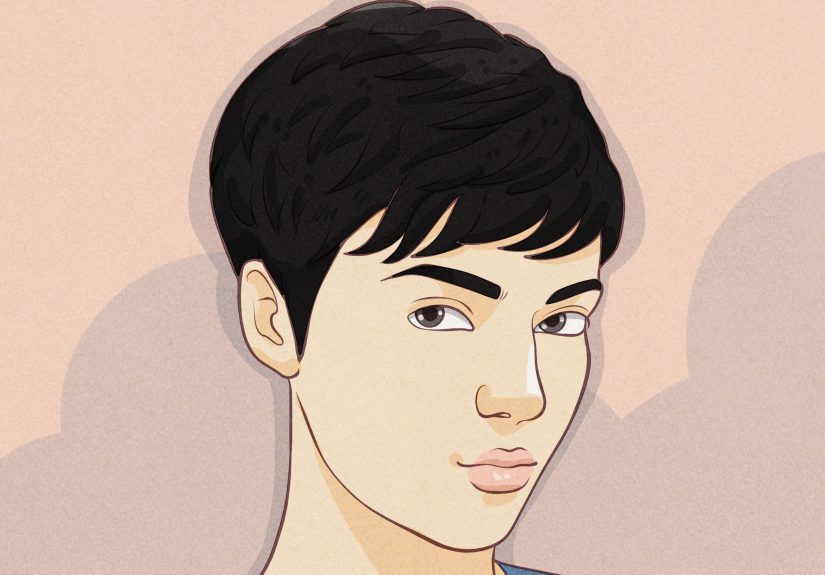
- Very short cuts (pixies, buzz, tight fades): often need shape-ups every few weeks to stay crisp.
- Bangs/fringe: usually need quick touch-ups more often than the rest of your hair.
- Medium-length styles (lobs, layered shoulder cuts): can often go longer between trims, depending on texture and shape.
- Long hair: may go a few months between trims if ends are healthy, but damaged ends need earlier attention.
Match your cut to your hair texture (this prevents regret)
A haircut isn’t just a length changeit’s a physics experiment starring your texture. Straight hair can show blunt lines and grow-out
quickly. Wavy hair can get fluffy in humidity. Curly and coily hair often benefits from shaping that respects shrinkage and pattern.
Fine hair may look fuller with strategic bluntness or soft layers, while very thick hair often feels lighter with internal layering.
This is why “I want that exact haircut” sometimes ends in disappointment: two people can have the same cut and completely different outcomes
because the hair type, density, and growth pattern do the final editing.
Budget counts, too (and it’s not just the haircut)
Cutting your hair can reduce product usage (shorter hair often needs less shampoo and conditioner), but some styles increase styling needs:
texturizing products, heat protectants, smoothing creams, curl definers, frequent trims, or color maintenance. If you’re trying to simplify
your routine, choose a low-maintenance haircut that suits your natural texture and day-to-day habits.
Bottom line: if you want a change and you’re willing to maintain it, go for the cut. If you love the idea but dread the upkeep,
keep your length and adjust shape subtly (face-framing layers, a longer bob, or a small trim that refreshes the ends).
Way #3: Try it before you buy itlow-risk experiments that make the decision obvious
You don’t have to commit all at once. The smartest haircut decisions often come from testing the experience of the look first:
how it frames your face, how it feels on your neck, how it fits your style, and how much you enjoy seeing yourself in it.
Experiment #1: The “fake short hair” test
Before going from long hair to a bob (or shorter), try a faux bob:
- Make a low ponytail.
- Tuck the ponytail up and under, pin it at the nape.
- Pull out face-framing pieces to mimic the shape you want.
Live with it for a day. If you love the lighter feeling and the sharper look, that’s a strong “yes.” If you spend the day tugging it
down and missing your ponytail, that’s useful data too.
Experiment #2: The “bangs without regret” test
Bangs are often the gateway haircutsmall change, big personality. But they also have opinions about humidity and your forehead.
To test-drive bangs:
- Use clip-in bangs or a bang-like front section pinned forward.
- Try different parts (center, deep side, soft side) to see how your face framing changes.
- Notice styling time: do you enjoy it or resent it?
Experiment #3: The “consultation + inspiration” method (aka: bring receipts)
If you’re on the fence, book a consultation or arrive early and talk through options with your stylist. Bring 3–5 reference photos:
- One that shows the length you want
- One that shows the vibe (polished, shaggy, classic, edgy)
- One that shows the texture or movement you like
- One “no thank you” example (what you want to avoid)
The goal isn’t to copy a celebrity’s hair exactly. The goal is to communicate shape, density, and styling direction clearlyso your stylist
can tailor the haircut to your hair type and face features.
A decision rule that works shockingly well
Try this: if you want the same haircut for two full weeks (not just after one dramatic day), it’s probably a real desire.
If you only want it after a stressful event, a bad hair day, or a random Tuesday when your ponytail feels “aggressive,” pause.
You can also use the “regret minimization” trick:
- What’s the worst-case if I cut it? It takes time to grow. You adapt. You learn what you like.
- What’s the worst-case if I don’t? You feel stuck and keep wondering.
If not cutting keeps you in permanent “maybe” mode, a thoughtful change can be freeing. If cutting feels like a panic response, choose a
smaller step: trim, layers, face-framing pieces, or a longer version of the style you want.
Putting it all together: a quick, confident choice
Here’s the simplest way to decide:
- Choose a cut if your ends are damaged, your hair is harder to manage, or you want a lifestyle-aligned change you can maintain.
- Hold off if your hair is healthy, you like your current look, or you want change but not the upkeep (yet).
- Compromise if you want something new without full commitment: long layers, a “lob,” face-framing pieces, or a conservative trim.
Hair grows, trends change, and your style evolves. The goal isn’t a “perfect” decisionit’s a decision that fits your hair health,
your daily life, and the version of you you’re trying to feel more like.
Experiences People Commonly Have When Deciding to Cut Their Hair (Extra Insight)
If you’ve ever stared at your reflection and thought, “Do I cut it… or do I just need a nap?” you’re not alone. A lot of people describe
the haircut decision as less about inches and more about identity. One common experience is the “mental loop”: you think about cutting
your hair for weeks, save a gallery of inspiration photos, then suddenly get attached to your current length the moment scissors become
real. It’s almost like your hair overhears you and starts behaving better out of spite.
Another frequent experience is realizing that the idea of a haircut and the life of that haircut are different. People often
love how a short cut looks in pictures, but what seals the deal is imagining the everyday routine: quicker showers, faster drying time,
and less detangling. On the flip side, some people find they miss the flexibility of tying hair up instantlyespecially on hot days,
during workouts, or when they’re running late and a ponytail feels like a personal assistant.
“Haircut regret” stories also tend to have patterns. A classic one is getting bangs without thinking about maintenance. Many people love the
look, but don’t expect the day-to-day reality: bangs can need frequent mini-trims, styling to sit right, and a plan for humidity. Another
pattern is making a big change right after a stressful event. People describe it as cathartic in the momentlike hitting a reset button
but later wishing they had chosen a smaller change first, like face-framing layers or a healthy trim, to see if the urge passed.
There’s also the opposite experience: the “I waited too long” haircut. This usually happens when someone keeps avoiding trims while trying
to grow their hair, only to notice that ends become thinner, tangles worsen, and breakage creeps up. When they finally cut a few inches,
many describe a surprising sense of reliefhair looks fuller, styling feels easier, and they wish they had trimmed sooner. It’s a reminder
that keeping length isn’t always the same as keeping healthy hair.
A lot of people report that the most satisfying haircuts happen when they bring clear communication to the salon. Instead of saying “Make
it cute,” they say what they actually want: “I want it to air-dry well,” “I don’t want to use hot tools every day,” or “I want to keep
enough length for a ponytail.” That kind of practical goal-setting tends to lead to less surprise and more “Yes, this is me.”
Finally, many people describe the post-cut period as an adjustment rather than an instant verdict. Even a great haircut can feel unfamiliar
at firstdifferent movement, different styling, a different silhouette. People often say the moment they truly like the cut is not the second
they leave the salon, but the first time they style it themselves at home and realize it fits their routine. That’s why the best “experience”
advice is simple: decide thoughtfully, cut with intention, and give yourself a little time to get used to the new you in the mirror.