Table of Contents >> Show >> Hide
- What guttate psoriasis is (and why it shows up so suddenly)
- The big-picture strategy: treat triggers, then quiet the skin
- Start here: skin-barrier “boring” care that works
- Topicals: the MVPs for many guttate flares
- Antibiotics: essential for strep throat, optional for the rash
- Phototherapy: narrowband UVB and targeted light
- Systemic treatments: when you need more than skin-deep help
- Tonsils, supplements, and other “popular internet side quests”
- A practical 14-day plan you can actually follow
- When to see a dermatologist sooner rather than later
- Real-world experiences: what people often notice during treatment (about )
- Conclusion: a smart plan beats a perfect plan
- SEO Tags
Guttate psoriasis has a flair for dramatic entrances. One week you’re living your best life, the next you’ve got dozens (or hundreds) of tiny, drop-like spots that look like your skin got sprinkled with angry confetti. If you’re thinking, “Cool cool coolwhy is my immune system freelancing?” you’re not alone.
The good news: guttate psoriasis often improves over time, and there are several evidence-based ways to calm it downespecially when you match treatment to what triggered it in the first place. This guide walks through the most common options: topicals, antibiotics (when appropriate), phototherapy, and what comes next if the rash refuses to take the hint.
What guttate psoriasis is (and why it shows up so suddenly)
“Guttate” comes from the Latin word for “drop,” and the name fits: small, round or teardrop-shaped pink-to-red (or darker, discolored) scaly spots often appear on the trunk and limbs. It’s especially common in kids, teens, and young adults, and it frequently pops up after an infectionclassically strep throat.
Here’s the key idea: the skin spots aren’t an infection on your skin. They’re an immune reaction that can be triggered by an infection elsewhere. That difference matters, because it explains why antibiotics can be essential for treating strep throat but still not magically erase the rash overnight.
The big-picture strategy: treat triggers, then quiet the skin
Most treatment plans for guttate psoriasis follow a simple “ladder”:
- Check for (and treat) triggers like strep throat or another infection.
- Calm inflammation in the skin using topicals (often the first line).
- Escalate when needed (phototherapy, systemic medications) if it’s widespread, persistent, or severely affecting daily life.
Along the way, your goals are practical: reduce redness and scaling, control itch, protect your skin barrier, and keep you functioning like a human being who has places to go and clothes that touch their body.
Start here: skin-barrier “boring” care that works
If topicals are the “active ingredients,” moisturizers are the stage crewquietly doing the work that makes everything else perform better.
Moisturize like it’s your part-time job
- Use thick, fragrance-free emollients (ointments/creams beat lotions) at least twice daily.
- Apply within 3 minutes after bathing to lock in water (“soak and seal”).
- Don’t exfoliate aggressively; scaling is annoying, but over-scrubbing can irritate and worsen inflammation.
Take the itch down a notch
- Short, lukewarm showers (hot water feels amazing and then immediately betrays you).
- Gentle cleansers (no harsh fragrance, no “industrial strength” soap vibes).
- Cool compresses or damp wraps over moisturizer for stubborn itch.
Topicals: the MVPs for many guttate flares
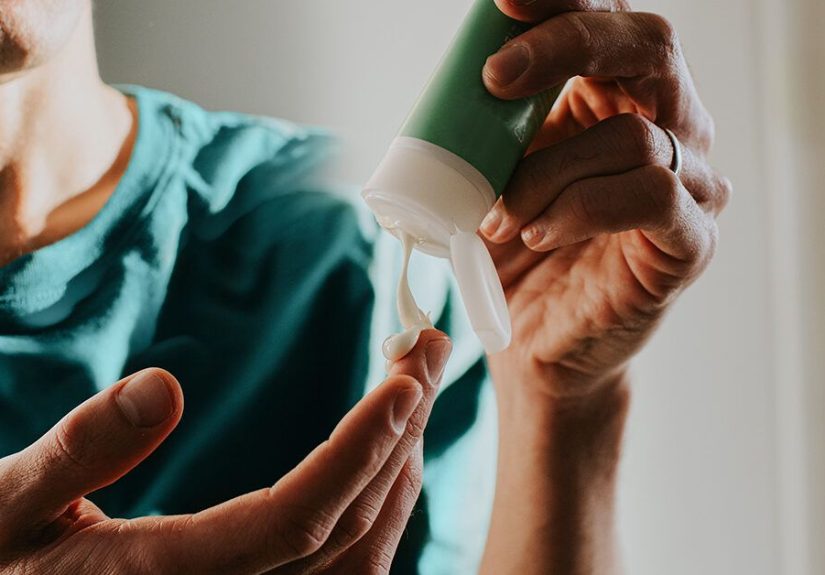
Topical treatments are often first-line because they’re targeted, widely available, and effective for many peopleespecially when the flare is mild to moderate. In real life, dermatology is a lot of “right medicine + right location + right consistency.”
1) Topical corticosteroids (aka “steroids,” but not the gym kind)
Topical steroids reduce inflammation and itching and are among the most commonly used treatments for psoriasis. They come in different strengths (“potencies”) and forms (ointment, cream, lotion, foam, solution), and your clinician picks based on where the psoriasis is and how thick the lesions are.
How they’re typically used: a clinician may recommend a stronger steroid for thicker areas (like limbs or trunk) and a lower-potency steroid (or a non-steroid) for sensitive skin (face, groin, skin folds). Many plans use steroids for a limited time to get control, then step down to maintenance.
Why your dermatologist cares about the details: overusing strong steroids can thin skin and cause other side effects. Underusing them (or stopping too early) can make the flare linger. The sweet spot is “enough to control the flare, not enough to annoy your skin.”
Example routine (general, not a prescription): moisturize morning and night; apply the medicated topical once daily to active spots (as directed); reassess in 2–4 weeks with your clinician if you’re not improving.
2) Vitamin D analogs (calcipotriene/calcipotriol, calcitriol)
Vitamin D analogs help slow the overproduction of skin cells and reduce inflammation. They’re commonly used for mild to moderate psoriasis and are often paired with topical steroidsbecause the combo can be more effective (and sometimes lets you use less steroid over time).
If you’ve ever wondered why your “vitamin D cream” doesn’t come with a beach soundtrack, it’s because it’s doing a different job than sunlight: it’s a medication with a specific action on skin cell growth and immune activity.
3) Steroid-sparing options for sensitive areas
Certain areas (face, eyelids, groin, underarms) are more prone to side effects from potent steroids. That’s where “steroid-sparing” topicals can help.
- Topical calcineurin inhibitors (often used off-label in psoriasis): can be helpful for delicate skin areas where long-term steroid use is risky.
- Topical retinoids (like tazarotene): can help with scaling and thickness, sometimes used in combination with other treatments.
- Coal tar or anthralin: older-school options that can still be useful, though they can be messy or irritating for some people.
- Scale-lifters (like salicylic acid in some products): can soften scale so other meds penetrate better, but may irritate sensitive skin if overdone.
- Newer nonsteroids for psoriasis (in some cases): options like topical PDE-4 inhibitors or AhR agonists may be considered depending on availability, location of psoriasis, and clinician preference.
Pro tip: “Non-steroid” does not mean “risk-free.” It means “different risk.” The best topical is the one you can use correctly, consistently, and comfortably.
Antibiotics: essential for strep throat, optional for the rash
Because guttate psoriasis often follows a streptococcal (strep) infection, clinicians commonly check for signs of strep throatespecially if the rash appeared after a sore throat, fever, swollen glands, or recent illness.
When antibiotics make sense
- Confirmed strep throat (positive test or strong clinical suspicion): antibiotics are used to treat the infection and reduce complications and transmission.
- Other confirmed bacterial infections: treated based on the specific diagnosis.
What antibiotics can’t promise
Treating strep throat is important, but antibiotic therapy doesn’t reliably “switch off” the skin eruption once the immune response is in motion. Research reviews have found limited, low-certainty evidence that antistreptococcal interventions shorten psoriasis flares. In plain English: antibiotics are a must for strep, but they’re not a guaranteed eraser for guttate spots.
Bottom line: if your clinician prescribes antibiotics, take them exactly as directed and finish the course. But plan on also treating the skin directly (topicals and/or phototherapy) if the rash is bothersome.
Phototherapy: narrowband UVB and targeted light
If your guttate flare is widespreador if topicals are struggling to keep upphototherapy can be a game-changer. Dermatologists often use narrowband UVB (NB-UVB), a specific wavelength of ultraviolet light that helps slow skin cell overgrowth and reduces inflammation.
Why NB-UVB is so commonly recommended
- Effective for many psoriasis types, including guttate patterns.
- Non-drug option that can pair well with topicals.
- Structured dosing under medical supervision helps reduce risk compared with “DIY UV.”
What a typical schedule can look like
Many protocols involve multiple sessions per week over several weeks, with total session counts commonly in the dozens for meaningful improvement. Your dermatologist adjusts exposure based on your skin response (because the goal is “therapeutic,” not “lobster chic”).
Targeted light options
For smaller areas or tricky locations (like scalp), dermatologists may use targeted NB-UVB (such as excimer devices) to treat specific spots without exposing unaffected skin.
Important warning: skip tanning beds
Tanning beds primarily emit UVA and come with significant skin cancer risk. Medical phototherapy is not the same thing as a tanning booth, even if both involve light and questionable life choices by some people you know.
Systemic treatments: when you need more than skin-deep help
Many guttate flares improve with topicals and/or phototherapy. But if symptoms are severe, persistent, rapidly spreading, or significantly affecting quality of life, clinicians may consider systemic (whole-body) treatments.
Non-biologic systemic options
- Methotrexate: can reduce inflammation and skin cell turnover; requires medical monitoring.
- Cyclosporine: fast-acting immune suppression sometimes used short-term; monitoring is essential.
- Oral retinoids (like acitretin): can help with scaling; not appropriate for everyone and has important safety considerations.
Biologics (for severe, refractory cases)
Biologics target specific immune pathways and can be highly effective in psoriasis overall. They’re generally reserved for more severe or persistent diseaseespecially if psoriasis becomes chronic or overlaps with plaque psoriasisbecause they require screening, monitoring, and ongoing follow-up.
If you’re hearing about biologics on social media and thinking, “Should I jump straight to that?” the best move is to talk with a dermatologist. The right timing depends on severity, duration, other health factors, and how your psoriasis is behaving over time.
Tonsils, supplements, and other “popular internet side quests”
Tonsillectomy
Because strep infections can trigger guttate psoriasis, tonsillectomy has been explored for people with recurrent strep-related flares. Evidence is mixed, and it’s not a routine treatment. It’s a conversation for people with frequent, confirmed tonsillitis and repeated psoriasis episodesusually after other approaches are tried.
Supplements
People often ask about vitamin D, fish oil, probiotics, and “anti-inflammatory” supplements. Some may support overall health, but none are guaranteed guttate psoriasis treatments. Supplements can also interact with medications, so it’s worth checking with a clinician before starting anything new.
“Detoxes,” extreme diets, and miracle creams
If a product promises to “cure psoriasis in 48 hours,” it’s either lying or selling you something that smells like regret. Focus on evidence-based care: trigger management, prescribed topicals, phototherapy when needed, and consistent skin-barrier support.
A practical 14-day plan you can actually follow
Here’s a realistic approach that fits into normal life (school, work, existing responsibilities, and the fact that laundry is already a lot).
Days 1–3: check triggers and calm irritation
- If you recently had a sore throat, ask about strep testing.
- Switch to gentle skin care: fragrance-free cleanser, lukewarm showers, thick moisturizer.
- Stop “angry scrubbing” (it feels productive, but it’s a trap).
Days 4–10: use targeted treatments consistently
- Apply prescribed topicals exactly as directed (timing and amount matter).
- Track changes with photos every 3–4 days in the same lighting (your memory is not a reliable medical device).
- Note itch triggers (sweat, hot showers, scratchy clothing, stress spikes).
Days 11–14: evaluate and escalate if needed
- If you’re improving: keep going and ask about a maintenance plan.
- If you’re stuck: ask about phototherapy or adjusting the topical plan.
- If you’re worsening quickly or feel unwell: contact a clinician promptly.
When to see a dermatologist sooner rather than later
- Rapid spread over large body areas
- Severe itch that disrupts sleep
- Signs of infection (fever, severe sore throat, worsening pain, pus)
- Joint pain or swelling
- Major impact on mental health or daily functioning
Also: if you’re unsure whether it’s guttate psoriasis (and not something like pityriasis rosea or another rash), a clinician can confirm the diagnosis and save you from a month of guessing.
Real-world experiences: what people often notice during treatment (about )
People’s experiences with guttate psoriasis tend to follow a few familiar storylinesdifferent details, same plot twists. One of the most common is the “I thought I was over my sore throat… and then my skin disagreed” saga. A strep infection clears (or at least quiets down), and a week or two later the spots show up like they got invited to a party you didn’t plan. It can feel confusing because the rash is on the outside, but the trigger was internal. Once patients hear that explanationimmune reaction, not a contagious skin infectionmany describe feeling immediate relief: not because the spots vanish, but because the mystery does.
Topicals come with their own learning curve. Some people are nervous about steroids (totally understandable), and they either avoid them completely or use a tiny dab so small it could moisturize a single breadcrumb. Then nothing improves, and frustration builds. Others go the opposite direction and apply strong steroid everywhere, twice a day, foreveruntil their skin gets irritated or a clinician hits the brakes. The “aha” moment tends to be realizing that topical plans are like recipes: the ingredient matters, but so does the portion, the timing, and the location. When used correctly, many people report itch calming first, then redness fading, then scale softening and shedding more gently.
Phototherapy stories often sound like: “I didn’t want another appointment in my life… but wow, this helped.” The biggest challenge is scheduling. Going two to three times weekly can be hard with school, work, or transportation. People who stick with it often say the progress is gradual but realless itch, spots flattening, fewer new lesions popping up. It’s also common to feel impatient around week two and then notice a bigger shift later, especially if the course runs for several weeks. Patients also learn quickly that medical phototherapy is not tanning: you’re aiming for controlled dosing, not a vacation glow.
Antibiotics can be emotionally tricky. When someone tests positive for strep throat, getting antibiotics can feel like “Great, we found the cause!” Then the rash doesn’t instantly disappear, and the disappointment hits. Many people describe feeling better when clinicians set expectations clearly: antibiotics treat the infection (and help prevent complications), while the skin still needs its own plan. Once people stop expecting one pill to do a full costume change, they can focus on what actually helps: consistent topicals, moisturizers, gentle routines, and follow-up if progress stalls.
Finally, there’s the social side. Guttate psoriasis is visible, and visibility can be exhausting. People often talk about choosing long sleeves out of habit, dodging questions, or feeling “watched” in gym class, at work, or on public transit. A practical trick many share: having a simple one-sentence explanation ready. Something like, “It’s psoriasisan immune thing, not contagious.” Short, calm, done. Pair that with a routine that supports your skin (and your sanity), and the flare becomes less of a daily headline and more like background noisestill annoying, but not in charge.
Conclusion: a smart plan beats a perfect plan
Guttate psoriasis can be sudden and stressful, but you have options. Start by checking for triggers (especially strep throat), support your skin barrier, and use topicals consistently. If the flare is widespread or stubborn, narrowband UVB phototherapy is a well-established next step. For severe or persistent cases, systemic treatments may be considered with a dermatologist’s guidance.
The most effective approach is rarely the fanciestit’s the one you can actually follow. Treat the trigger, treat the skin, and reassess early if you’re not improving. Your immune system may be overachieving, but your treatment plan doesn’t have to.