Table of Contents >> Show >> Hide
- First, a quick name check: “Poet” isn’t always the same sofa
- The original Poet two-seater: why Finn Juhl’s design still feels fresh
- Dimensions: the reason this sofa works where big couches panic
- What it’s made of: materials and construction that explain the price tag
- Upholstery options: picking a look that matches your real life
- Comfort profile: who the Poet is perfect for
- Styling the Poet two-seater: make it look “designed,” not “placed”
- Buying checklist: the smart stuff people skip (until it’s too late)
- New production vs. vintage: how to shop without regrets
- Real-world experiences with the Poet two-seater sofa (extra notes from how it lives day-to-day)
- SEO Tags
Some sofas are just furniture. The Poet two-seater sofa is the kind of piece that shows up, clears its throat politely,
and then steals the whole scenewithout ever raising its voice. It’s compact, curvy, and unapologetically sculptural,
which is a fancy way of saying: it looks like art, but it still wants you to sit down and stay awhile.
In this guide, we’ll talk about what people mean when they say “Poet sofa,” what makes the iconic Poet two-seater
special, how it fits (and feels) in real homes, and what to consider before you buyespecially if you’re trying to
land a small-space sofa that doesn’t look like it was designed in the break room of a corporate waiting area.
First, a quick name check: “Poet” isn’t always the same sofa
If you search “Poet sofa,” you’ll notice something funny: more than one brand has used the name. There’s the famous,
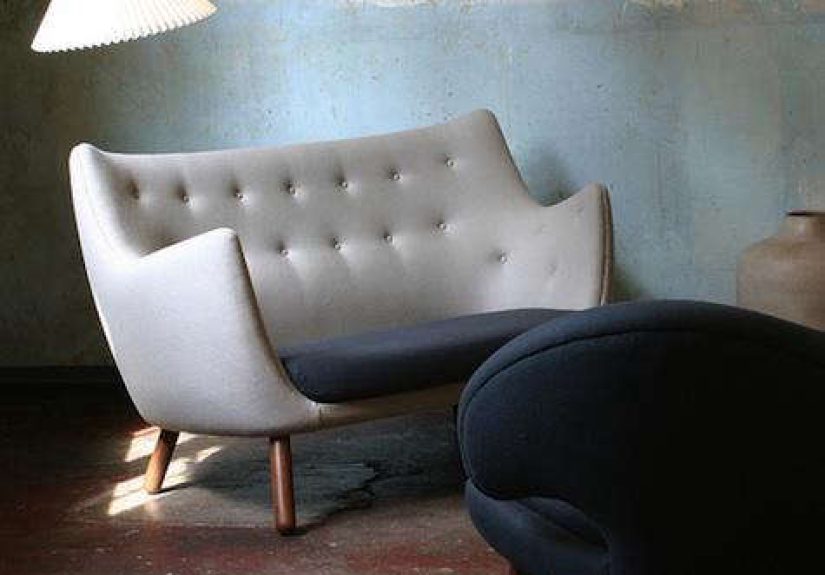
classic Poet Sofa originally designed by Finn Juhl (the one most design people mean when they say “Poet”).
And there are also newer, modern sofas that use “The Poet” as a product name.
Translation: if you’re shopping, double-check the designer/manufacturer so you don’t accidentally fall in love with a
completely different curve. (Your heart can handle a lot. Your living room layout, less so.)
The original Poet two-seater: why Finn Juhl’s design still feels fresh
A 1941 sofa that understood “small apartment living” before it was a hashtag
The Poet Sofa was designed in 1941 and first presented at the Copenhagen Cabinetmakers’ Guild Exhibition, created as
part of Finn Juhl’s experiments for his own home. What’s charmingand honestly a little smug, in a tasteful wayis that
it was conceived as functional seating that could still work in smaller apartments. That’s the whole point of a great
two-seater: it’s intimate without being cramped, and it looks intentional instead of “we ran out of space.”
Why it’s called “Poet” (and yes, there was an actual poet)
The story behind the name is delightfully human. The “Poet” nickname is tied to poet Frank Jæger, who reportedly loved
stretching out on a prototype. The name stuckbecause when a sofa makes people daydream, you don’t call it “Model 4100-B,
Version 3.” You call it “Poet” and let it do its thing.
Dimensions: the reason this sofa works where big couches panic
A two-seater sofa can mean a lot of thingssome “loveseats” are barely wide enough for two adults who like each other,
while others stretch close to full sofa territory. The Poet two-seater is firmly in the “small space-friendly but still
substantial” zone, with a width a little over 53 inches and a depth around 31.5 inches (varies slightly by how specs
are listed). Its overall height is about 34 inches, and the seat height is notably low compared with many mainstream
sofas.
That low, grounded posture is part of the design’s personality: it reads relaxed and sculptural. But it also means you
should think about who’s using it most. If you love a lounge-y, low-slung vibe, you’ll probably grin every time you walk
past it. If you prefer a higher perch (or you’re furnishing a space for people who dislike “getting up from the floor,
but make it furniture”), you’ll want to consider that before you commit.
Fit check: how to know it’ll actually make it into your home
The best-looking sofa in the world is still useless if it can’t get past your doorway. Before you order any two-seater,
measure the path from the entry point to the final spot: doorways, halls, tight turns, stairs, and landings.
Many retailers recommend comparing doorway width to a sofa’s depth, height, or diagonal depth to determine fit.
- Measure doorways and hallways along the entire route (not just the front door).
- Don’t forget interior doors, stair rails, and ceiling height on landings.
- Compare your tightest measurement with the sofa’s depth/height/diagonal depth.
- When in doubt, sketch it out or tape the footprint on the flooryour future self will say thank you.
What it’s made of: materials and construction that explain the price tag
Let’s be honest: the Poet two-seater is not “I found it on sale next to the air fryers” furniture. Part of what you’re
paying for is the build, the upholstery work, and the design pedigree.
Frame, legs, and suspension: the hidden parts that decide how a sofa ages
Authoritative product listings for the Poet Sofa describe a mixed-wood frame (including beech and pine) with walnut legs,
plus web suspension and a fabric bottom cover. Web suspension can be a strong choice when it’s well-executed: it helps
distribute weight and support the seat without the feel of rigid springs. The goal is comfort that stays consistent
over timenot a “mystery dip” that appears six months after purchase.
Cushion materials matter, too. The Poet’s specs are often described with foam and fiber padding that help it keep its
shape while still feeling inviting. And yes, this is where the Poet quietly flexes: the sofa’s silhouette is all curves,
but it’s not trying to be a beanbag. It’s designed to look tailored and sculptural even when it’s actually being used.
Upholstery options: picking a look that matches your real life
The Poet two-seater is offered in multiple upholstery directions, commonly including textiles and (depending on the
retailer and configuration) leather or sheepskin. This is where your lifestyle should get a vote.
A sofa can be gorgeous and still be wrong for your householdespecially if your household includes snacks, pets,
or that one friend who “doesn’t spill” (the liar).
Fabric: the flexible, practical choice
Fabric upholstery is usually the easiest way to tailor the Poet to your space. You can lean crisp and modern with
tighter weaves, or go softer and warmer with more texture. If you want the sofa to be the “calm object” in a busy room,
neutral fabrics tend to make the silhouette pop without shouting. If you want it to read more playful, saturated colors
can emphasize the sofa’s personality.
Sheepskin: the statement (and the commitment)
Some listings offer sheepskin upholstery, which turns the Poet into a cozy, design-forward perch that practically begs
for a reading lamp and a rainy afternoon. The trade-off is maintenance: textured upholstery can be more forgiving in some
ways (it hides minor wear), but it can also collect crumbs like it’s doing a public service announcement for your vacuum.
Comfort profile: who the Poet is perfect for
Comfort is personal, but it’s not mysterious. Seat depth, seat height, and cushion construction do most of the work.
Many comfort guides point out that “standard” inside seat depths often land around the low-20-inch range, while deeper
seating supports lounging and curling up. The Poet’s overall proportions and curving back tend to encourage a more
upright, “conversation-friendly” sitcozy for two, and excellent for anyone who enjoys a supportive back.
You’ll probably love the Poet if…
- You want a small two-seater sofa that reads like sculpture.
- You’re furnishing an apartment, bedroom sitting area, or a “that corner needs a purpose” nook.
- You like a low, relaxed posture and a cocoon-like shape.
- You want a piece that feels intentional, not generic.
You might not love it if…
- You want a super-deep, nap-every-day “cloud couch” experience.
- You prefer higher seats for easy standing and sitting.
- You need a sofa that regularly hosts three adults (the Poet is charming, not magical).
Styling the Poet two-seater: make it look “designed,” not “placed”
Because the Poet has a strong silhouette, it doesn’t need a lot of extra help. In fact, over-accessorizing it can be
like adding more eyeliner to a catunnecessary and potentially a cry for help.
Three easy styling wins
- Pair it with a round table: Curves love curves. A small round side table echoes the sofa’s shape and keeps the look cohesive.
- Choose a rug that frames it: A rug slightly wider than the sofa visually “anchors” it so it doesn’t float.
- Use lighting like punctuation: A floor lamp or wall sconce nearby turns it into a destination, not an afterthought.
Where it shines most
The Poet is excellent in places where a standard 80+ inch sofa would bully the room:
in a home office that needs a lounge moment, in a bedroom sitting area, in a studio apartment living zone, or as a
secondary piece opposite a larger sofa. Think of it as the “best supporting actor” that can still win the whole show.
Buying checklist: the smart stuff people skip (until it’s too late)
Design lovers are often brave, but bravery doesn’t help when the delivery team is staring at a doorway that’s two inches
too narrow. Before you buy a Poet two-seater sofa (or any compact designer loveseat), run through this list.
Checklist you’ll be glad you used
- Measure first: Room dimensions, doorways, hallways, and tight turnsthen compare to sofa specs.
- Confirm lead times: Designer upholstery and made-to-order options can take months.
- Ask about assembly: Some listings ship fully assembled, which is convenientbut also affects delivery constraints.
- Understand returns: Custom upholstery can change return eligibility. Read the fine print before you click “buy.”
- Pick upholstery for your life: Pets, kids, sunlight, snacks, and your cleaning tolerance all matter.
- Plan your “landing zone”: Decide where it goes, what table pairs with it, and where the lighting lives.
New production vs. vintage: how to shop without regrets
The Poet two-seater exists in both modern production and vintage/secondhand markets. New production typically gives you
clearer authenticity, known condition, and retailer support. Vintage can be wonderfulespecially if you love patina and
provenancebut it requires a sharper eye.
If you’re considering vintage
- Request clear photos of joints, legs, upholstery seams, and the underside.
- Ask about reupholstery history (great upholstery is a skill; bad upholstery is a jump scare).
- Confirm measurementsvintage listings sometimes round in ways that do not respect your doorway.
- Factor in professional cleaning or reupholstery cost if needed.
Real-world experiences with the Poet two-seater sofa (extra notes from how it lives day-to-day)
People who bring the Poet into their homes often describe a similar first-week pattern: you place it, step back, and
immediately realize it doesn’t behave like a normal couch. Not because it’s precious (it’s meant to be used), but
because the silhouette has opinions. In a small apartment living area, it tends to “organize” the room without trying
the curve reads intentional, and suddenly your space looks like you hired an interior designer when you really just
watched one too many design videos and made a confident choice at 1:00 a.m.
In tight layouts, the Poet shines as a two-seater sofa that doesn’t demand an oversized footprint. One common setup:
a studio or one-bedroom where a large sectional would swallow the room. The Poet anchors a compact conversation zone
with a petite coffee table or even two nesting side tables. The best part is the visual lightnessthose rounded legs
and sculptural body can make a small space feel curated instead of crowded. The only surprise some people mention is
how much the sofa’s low posture changes the rest of the “heights” in your room. Coffee tables that looked normal next
to a standard sofa can suddenly feel tall, so owners often switch to a slightly lower table or a soft ottoman-style
piece that matches the Poet’s grounded vibe.
Comfort-wise, many folks find the Poet is less “sink in and disappear” and more “sit down and stay present.” That curved
back and compact width make it feel intimateexcellent for reading, talking, or sipping something warm while pretending
you’re the main character in an artsy film. It’s also a sofa that gets used in short bursts throughout the day: a quick
morning coffee, a phone call you want to take away from your desk, or the spot guests naturally drift toward because it
looks inviting. For people who prefer very deep lounging, it can become the “beautiful upright sofa” paired with a
separate lounge chair or chaise elsewherebecause sometimes your room needs both poetry and a nap.
Upholstery choices create very different lived experiences. In durable textiles, owners tend to treat it like a daily
driver: it’s a practical small space sofa that still looks elevated. In lighter colors, people often add a throw (not
to hide the sofa, but to make it feel even more welcomingand to give themselves a little buffer against denim dye,
coffee splashes, or the occasional “I swear it wasn’t me” mystery mark). In sheepskin, the experience is peak cozy:
it reads warm, tactile, and a little indulgent. But the maintenance reality is also realsheepskin can collect pet hair
and lint in a way that makes you feel like you’re vacuuming a stylish cloud. Owners who love it usually don’t mind,
because the tactile payoff is huge.
A surprisingly common “long-haul” note is that the Poet becomes a reliable photograph magnet. People don’t necessarily
buy it for social media, but friends will comment on it. It’s the furniture equivalent of a great jacket: even if you
wear basic jeans, the jacket makes you look like you tried. In living rooms, it often becomes the “accent sofa” opposite
a larger couch; in bedrooms, it’s the thing that turns an unused corner into a reading nook. And in offices or studios,
it becomes the seating that says, “Yes, we can meet here,” without forcing anyone to sit on a chair that feels like a
waiting room auditioning for a dentist’s office.
The other real-world detail? Lead times and delivery planning can shape the experience. With premium, design-forward
furniture, waiting is commonsometimes it’s weeks, sometimes it’s months. People who are happiest long-term tend to be
the ones who plan the sofa’s arrival like a mini project: they measure carefully, map the delivery path, and have the
final layout ready. When the Poet finally lands, it feels less like “a purchase arrived” and more like “the room just
leveled up.” And once it’s in place, it tends to keep its charmbecause great design doesn’t have to shout to be
memorable.