Table of Contents >> Show >> Hide
- Measles 101: A serious disease in a picture-obsessed world
- Why measles looks so scary on screen
- When fear helpsand when it makes things worse
- Social media: The accelerant on the fire
- What actually deserves our fear during a measles outbreak?
- How to read measles headlines without losing your mind
- Talking to kids about measles without scaring them senseless
- Building a healthier information diet during outbreaks
- Experiences from the edge of the measles news cycle
- Conclusion: From panic to perspective
Open any news app during a measles outbreak and you’ll see the same images over and over:
close-ups of bright red rashes, worried parents in ER waiting rooms, and syringes so zoomed-in
they look like props from a sci-fi movie. It’s scary, it’s emotionaland it’s not an accident.
The way the media uses imagery during a measles outbreak doesn’t just tell us what is
happening. It quietly tells us what to fear, and how much.
The tricky part? Measles is something we should take seriously. It’s one of the most
contagious viruses on Earth and can cause severe complications, especially in young children
and people with weakened immune systems. But our brains don’t just respond to facts; they
respond to pictures, headlines, and vibes. That’s where fear can either point us toward
helpful actionor push us into panic, blame, or bad decisions.
In this article, we’ll unpack three things at once: what measles actually is (beyond the scary
stock photos), how media imagery shapes our perception of risk, and how to focus fear in a
thoughtful way that protects our families and our communities instead of just spiking our
anxiety.
Measles 101: A serious disease in a picture-obsessed world
Measles is not just “a rash and a fever.” It’s a highly contagious viral illness known for a
high fever, cough, runny nose, red eyes, and a distinctive blotchy rash that spreads from head
to toe. Complications can include ear infections, diarrhea, pneumonia, encephalitis (swelling
of the brain), and even death, especially in children younger than 5, adults over 20, and
people with compromised immune systems.
The virus spreads through the air when an infected person coughs or sneezesand it’s so
contagious that if one person has measles, up to 9 out of 10 unvaccinated people close to them
will also become infected. The virus can linger in the air or on surfaces for hours, which is
why outbreaks can explode quickly once measles gets a foothold in an undervaccinated
community.
The good news: measles is vaccine-preventable. Two doses of the measles, mumps, and rubella
(MMR) vaccine are about 97% effective at preventing measles. For years, high vaccination
coverage helped countries like the United States declare measles “eliminated,” meaning the
disease was no longer constantly spreading within the country. But “eliminated” does not mean
“extinct.” Measles still circulates globally, and imported cases can ignite outbreaks wherever
local vaccination rates have dropped.
That’s exactly what we’re seeing now: a combination of declining vaccine coverage, travel, and
tightly connected communities turning single imported cases into multi-state outbreaks. When
those outbreaks make the news, the images do a lot of heavy lifting in telling the story
sometimes accurately, sometimes not so much.
Why measles looks so scary on screen
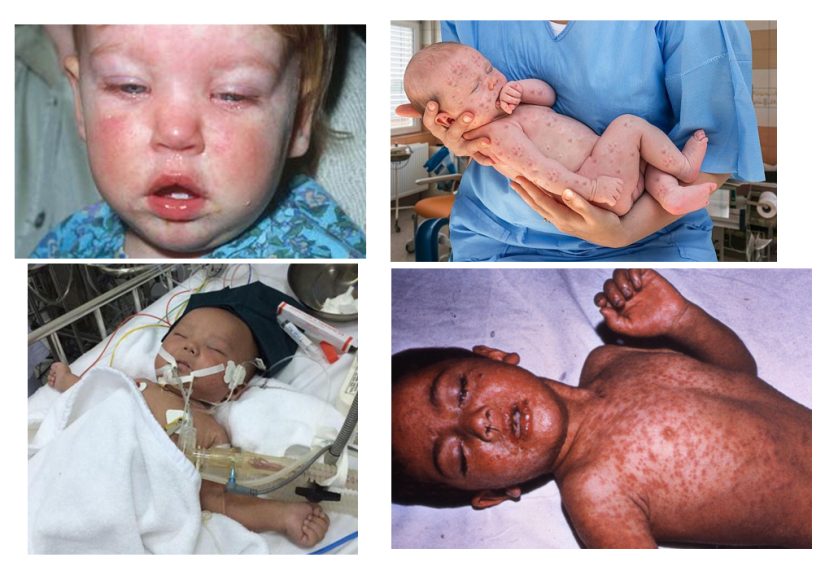
News outlets survive on attention, and attention is driven by emotion. During a measles
outbreak, that often means:
- Close-up photos of children with dramatic rashes.
- Images of hospital beds, oxygen masks, and IV poles.
- Footage of long lines at vaccination clinics or parents holding crying toddlers.
- B-roll of protest signs and anti-vaccine rallies.
These visuals are not random. They’re chosen because they are instantly understandable and
emotionally “loud.” Your brain doesn’t have to work hard to decode them: “Sick kid = bad.
Needles = scary. Crowds = crisis.” That’s great for grabbing attention but not always great
for helping you understand your actual personal risk.
Psychologists call this the “availability heuristic.” The more vivid and memorable something
is, the more likely we are to think it’s common. If all you see are terrifying measles images,
you may start to feel as though measles is lurking in every grocery aisle, even if your local
community has high vaccination rates and no active cases. On the flip side, if you rarely see
images of immunocompromised patients, crowded pediatric wards, or the long-term impacts of
measles brain inflammation, you might underestimate just how severe the disease can be for the
most vulnerable.
In other words, media imagery can skew our fear in two directions at once: it can make
you feel too personally threatened while making the real stakes for at-risk
groups feel oddly abstract.
When fear helpsand when it makes things worse
Fear is not always the villain. Well-placed concern is what motivates parents to check
vaccination records, schedule appointments, and follow public health advice. A measured level
of concern during a measles outbreak can actually be healthy. It keeps people engaged and
encourages protective behavior.
But fear goes sideways when it becomes:
-
Paralyzing – You become so overwhelmed by scary headlines and images that
you stop reading, shut down, and avoid the topic altogether. -
Misfocused – You worry more about a photo of a rashy child in another
state than you do about your own child being overdue for a vaccine. -
Blame-driven – Instead of focusing on solutions, fear turns into anger
toward “those people”: other parents, certain communities, or even healthcare workers.
During outbreaks, you’ll often see fear-driven narratives like “the government is hiding
something,” “the media is exaggerating,” or “vaccines are the real danger.” These stories
spread quickly, especially when paired with powerful imagery: a crying child, a screenshot of
a vaccine insert, or a dramatic hospital scene with no context. The visuals give the story a
sense of “proof,” even if the underlying claim is misleading or flat-out wrong.
The challenge is not to get rid of fearbecause honestly, a virus that can hospitalize
children deserves a healthy dose of respectbut to aim it in the right direction.
Social media: The accelerant on the fire
If traditional news is the match, social media is the gasoline. Platforms reward content that
gets shares, comments, and strong reactions. Measles outbreak posts with intense images and
emotional stories do exactly that.
On your feed, you might see:
- Graphic photos of rash-covered bodies with captions like “THIS is what they’re hiding.”
- A short video of a parent insisting their child was harmed by a vaccine.
- Memes mocking public health officials or turning outbreaks into political weapons.
- Confusing charts and screenshots that look scientific but lack context.
The more that content gets reshared, the more the algorithm shows it to people, often without
any indication of whether it’s accurate. Meanwhile, calm, evidence-based posts from doctors
and public health agencies may get fewer clicks simply because they are… well, kind of boring.
“Get the second MMR dose on time” doesn’t compete well with “Shocking truth the media won’t
tell you!”
This doesn’t mean social media is all bad; it can also spread accurate information quickly,
connect people with local outbreak updates, and amplify expert voices. But it does mean we
have to deliberately slow down, especially when a measles-related post makes us instantly
angry or terrified. If your heart rate jumps before you even finish reading, that’s your cue
to switch from scrolling mode to critical-thinking mode.
What actually deserves our fear during a measles outbreak?
Let’s zoom out from the imagery and get practical. When it comes to measles, the things that
truly deserve our focused concern are surprisingly clear:
-
Low vaccination coverage in your community. Measles needs vaccination
rates of about 95% to prevent outbreaks. When coverage drops below that, one imported case
can quickly turn into dozens or hundreds. -
People who cannot be vaccinated or don’t respond fully to vaccines. This
includes some infants, people receiving certain cancer treatments, transplant recipients,
and those with immune conditions. Their safety depends heavily on everyone around them. -
Delays in recognizing and isolating cases. Because early measles symptoms
(fever, cough, runny nose) look like any other viral illness, people may go to school,
daycare, or work while contagious, especially if they don’t know they’ve been exposed. -
Access barriers and misinformation. Even in high-income countries, not
everyone has easy access to pediatric care, time off work, or transportation to clinics.
Add in misinformation about vaccine safety, and preventable gaps in coverage widen.
These are the real “villains” in the measles storynot the nurse with the syringe, not the
reporter covering the outbreak, and definitely not the parents who are trying to make sense of
conflicting information.
How to read measles headlines without losing your mind
You don’t need a public health degree to interpret measles coverage more wisely. You just need
a simple mental checklist. The next time an outbreak headline pops up with a dramatic photo,
try this:
1. Ask “Where and when?”
Outbreaks are often very localized. A cluster in one state or community doesn’t mean the
entire country is on fire. Check:
- The specific location (state, county, or city).
- How long the outbreak has been going on.
- Whether cases are rising, stable, or declining.
This helps you distinguish between “serious but local” and “widespread national crisis.”
2. Ask “Who is getting sick?”
Look for details on:
- Vaccination status (unvaccinated, partially vaccinated, or status unknown).
- Age groups (infants, children, adults).
- Underlying conditions or risk factors, if mentioned.
You’ll often find that most cases occur among unvaccinated people. That doesn’t mean
vaccinated people are invincible, but it tells you that catching up on vaccines is one of the
most powerful ways to reduce risk.
3. Ask “What can I actually do?”
Fear feels useless when it doesn’t come with a to-do list. If a story about a measles outbreak
leaves you thinking “Okay, now what?”, try these action steps:
- Check your child’s (and your own) vaccination records.
- Call your pediatrician or primary care provider if you’re unsure.
- Ask about early vaccination recommendations if you’re traveling to an area with outbreaks.
- Learn the early symptoms of measles so you know when to seek care.
Once you have a clear plan, the scary images lose some of their power. They stop being
horror-movie stills and turn back into what they should be: reminders to take specific,
evidence-based steps.
Talking to kids about measles without scaring them senseless
Kids are expert headline detectives. If there’s a measles outbreak and it’s on TV, TikTok, or
overheard in grown-up conversations, they will notice. If you don’t explain it, their
imaginations will happily fill in the gapswith dragons, zombies, or whatever else they’ve
been watching.
A simple approach:
-
Keep it short and honest. “There’s a sickness called measles going around
in some places. It gives people a bad fever and rash. Doctors know how to treat it, and
there’s a vaccine that helps keep people from getting it.” -
Reassure without lying. You can say, “We’ve gotten you the vaccines your
doctor recommended, and we’ll go in if we ever need more. If you ever feel sick, we’ll take
care of you.” -
Invite questions. Kids often just want to know, “Will I be okay? Will you
be okay? Can I still see my friends?” Answer those directly and calmly.
You don’t have to show them measles photos or videos to educate them. In fact, it’s usually
better if you don’t. Words and reassurance are often more than enough.
Building a healthier information diet during outbreaks
Dealing with measles news (or any disease outbreak) is a lot like managing nutrition. You
don’t have to cut out all media; you just need to balance the junk with the good stuff.
Some practical “info-diet” tweaks:
-
Limit doomscrolling. Decide how often you’ll check updates (for example,
once in the morning and once in the evening) instead of refreshing your feed all day. -
Prioritize expert sources. Look for information from pediatricians,
infectious disease specialists, and major public health organizationsnot random accounts
with dramatic thumbnails. -
Notice your triggers. If certain types of images or headlines spike your
anxiety, it’s okay to mute, unfollow, or scroll past. You’re allowed to protect your mental
health even while staying informed. -
Share thoughtfully. Before reposting a scary measles story, ask yourself:
“Does this help someone take a useful action? Or am I just spreading fear?”
When your media intake is calmer and more intentional, your fear becomes calmer and more
intentional too. You can still care a lotyou just don’t have to live in a permanent state of
alarm.
Experiences from the edge of the measles news cycle
It’s one thing to talk about “media imagery” and “risk perception” in the abstract. It’s
another to live through a measles scare while those headlines are pinging your phone. Here are
a few composite stories, drawn from patterns many families and healthcare workers describe,
that show how fear can be refocused in a healthier direction.
The parent who turned panic into a checklist
When the first measles cases hit her state, Mia did what many parents do: she opened her news
app, saw a photo of a toddler with a severe rash, and felt her stomach drop. She had a
preschooler and a baby at home. Her brain jumped straight to, “What if this is us?”
At first, she spiraled. She read every story, watched every clip, and checked social media
constantly. By day three, she couldn’t sleep. That’s when her partner gently suggested they do
something different: “What if, instead of reading another article, we just call the
pediatrician and ask what we should actually do?”
The pediatrician walked them through their kids’ vaccine records, explained how measles
spreads, and suggested an early dose for the baby because of a planned trip to visit family.
The call took 15 minutes. The anxiety didn’t magically vanish, but it shrank down from a
vague, global panic into a manageable list of actions: get a shot, avoid crowded indoor
spaces if an outbreak hit their neighborhood, watch for specific symptoms after travel.
The media images hadn’t liedmeasles really can be seriousbut by focusing her fear on what
she could control, Mia turned those images from a source of helpless dread into a reminder to
stay on top of vaccinations and pay attention to local health alerts.
The nurse who sees the story behind the photo
For Jordan, a pediatric nurse, measles headlines land differently. When she sees a news
segment with a rashy toddler, she doesn’t just see the image; she sees the missing context:
the long night shift, the parents who haven’t slept in 36 hours, the respiratory therapist
called in at 2 a.m., the infection control team tracing contacts so the outbreak stops with
this child and doesn’t hit ten more.
During a recent outbreak, Jordan noticed a lot of online comments accusing hospitals and
doctors of “fearmongering” for speaking to the media. Having watched colleagues suit up,
suction airways, and gently reassure terrified parents, the accusation stung.
So she started doing something small but powerful: when she saw misinformation-filled threads,
she occasionally added a calm, first-hand voice. She’d write things like, “As someone who
takes care of kids with measles, here’s what I see…” and then describe in simple terms what
it’s like to treat a child struggling to breathe from pneumonia. She didn’t post photos. She
didn’t shame anyone. She just replaced abstract fear with grounded, respectful detail.
Over time, she noticed that people in those threads asked more practical questions: “How do I
check my records?” “Is it too late to get vaccinated?” The imagery hadn’t changedbut the
conversation around it had.
The young traveler who learned to fact-check his fear
Then there’s Leo, a 22-year-old who came back from an overseas backpacking trip right as
measles stories were spiking in the news. A week after he returned, he developed a fever and a
cough. Then he noticed a few red spots on his torso. Cue panic.
Leo’s first instinct was to google image-search “measles rash.” Within seconds he was staring
at extreme, late-stage photos that looked nothing like his own mild spotsbut his brain didn’t
care about nuance. His heart pounded, and his thoughts raced: “I’ve infected everyone. I’m the
outbreak.”
Luckily, a friend reminded him of a better plan: call a doctor or telehealth line first.
After asking a few questions, the clinician walked him through the difference between early
measles symptoms and more common viral illnesses, checked his vaccination history (two documented MMR doses),
and helped him decide whether to come in for testing. Leo still took it seriouslyhe wore a
mask, limited contact with others until he got more claritybut he wasn’t held hostage by the
most dramatic images he’d seen online.
That experience didn’t make him fearless, but it did make him more skeptical of pure
image-based panic. He still follows health news, but now he reads text before zooming in on
photos, and he treats his doctor’s advice as the main story, not the comment section.
Conclusion: From panic to perspective
Measles outbreaks are genuinely serious. They remind us that vaccines only work as a shield
when enough of us actually use them, and that global travel plus local vaccine gaps is a
dangerous combination. The images you see in the mediarashes, needles, crowded clinicsare
not fake. They represent real suffering and real work by healthcare teams.
But pictures are powerful, and power needs direction. A thoughtful focus of fear means:
- Letting fear motivate you to check vaccines, not doomscroll endlessly.
- Paying attention to who is truly at risknot just who makes the most dramatic photo.
- Choosing credible information over viral outrage.
- Turning concern into conversations with doctors, teachers, and family instead of arguments in the comments section.
We can’t control every headline or every image. But we can control how we respond. When we aim
our fear toward practical actionvaccinating, staying informed, protecting the vulnerablewe
turn measles from an abstract horror story into something we can confront together with
science, compassion, and just enough healthy caution to keep our communities safe.