Table of Contents >> Show >> Hide
- Before You Start: What You Might Actually Be Holding
- The 11-Step Checklist to Tell CZ from a Diamond
- Step 1: Clean the Stone Like You Mean It
- Step 2: Look for Cloudiness and “Tired Sparkle”
- Step 3: Watch the SparkleDiamond “White Flash” vs. CZ “Rainbow Party”
- Step 4: Check Facet EdgesSharp Like a Knife vs. Rounded Like a Spoon
- Step 5: Look InsideInclusions Can Be a Diamond Clue (But Not a Guarantee)
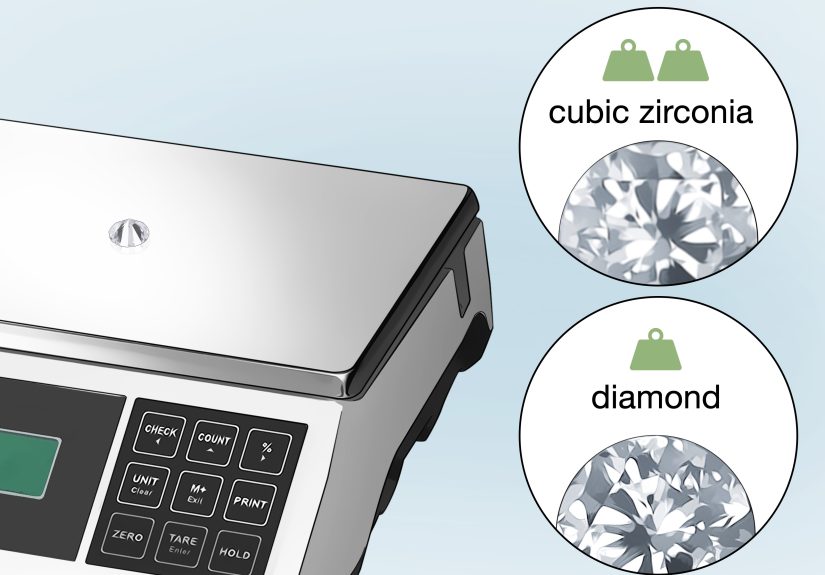
- Step 6: Compare Size vs. WeightCZ Is Usually Heavier for the Same Look
- Step 7: Do the Fog TestFast Clearing Can Point Toward Diamond
- Step 8: Use a Diamond Tester (Thermal)Great for CZ, But Watch for Moissanite
- Step 9: Inspect the Setting and StampsSometimes the Ring Tells on the Stone
- Step 10: Try UV Light CarefullyFluorescence Is a Clue, Not a Conclusion
- Step 11: When It Matters: Get a Professional ID (Jeweler or Lab Report)
- Common Myths to Avoid (Because the Internet Is Wild)
- A Quick, Practical Decision Guide
- Experiences in the Real World (Extra Insight That Feels Familiar)
- Conclusion: The Smart Way to Tell CZ from Diamond
Diamonds and cubic zirconia (CZ) can look like identical twins… right up until you give them five minutes, a little light,
and the tiniest bit of detective energy. If you’ve ever stared at a sparkly stone thinking, “Is this a forever diamond…
or a temporary overachiever?” you’re in the right place.
This guide walks you through 11 practical stepsfrom quick at-home checks to “let’s not gamble with grandma’s ring”
professional optionsto help you tell cubic zirconia vs. diamond the smart way. We’ll keep it real, keep it readable,
and keep the “please don’t set your jewelry on fire” advice loud and clear.
Before You Start: What You Might Actually Be Holding
Here’s the key truth: CZ is a diamond simulant. It’s not a “fake diamond” in the sense of pretending to be carbon
it’s a different material made to mimic a diamond’s look. Meanwhile, a lab-grown diamond is still a real diamond
(same crystal structure and chemistry as mined). And then there’s moissanite, another popular lookalike that can
fool some basic testers.
So when you’re trying to identify a stone, you’re really asking: “Does this behave like a diamond in the ways that matter
light performance, durability, and physical properties?” The steps below are designed to answer that question without
turning your kitchen into a questionable gem lab.
The 11-Step Checklist to Tell CZ from a Diamond
-
Step 1: Clean the Stone Like You Mean It
Dirt is the great equalizer. A smudged diamond can look dull, and a freshly cleaned CZ can look shockingly convincing.
Before you judge anything, clean the stone with warm water, mild dish soap, and a soft toothbrush. Rinse well and pat dry
with a lint-free cloth.Why it matters: Some tests (sparkle, fog clearing, edge sharpness) are useless if the surface is coated in lotion,
hand sanitizer, or last week’s pizza ambitions. -
Step 2: Look for Cloudiness and “Tired Sparkle”
One of the most practical real-life differences is how stones age. CZ is softer than diamond, so it’s more likely to pick up
micro-scratches over time. That can make it look a little cloudy or “soft focus,” especially on the table (the big top facet).Quick clue: If the stone looks hazy even after cleaningor seems to lose its crisp sparkle faster than you’d expect
CZ becomes a stronger suspect.Important nuance: A neglected diamond can also look dull. Cleaning helps you avoid blaming the stone for the crime of being
covered in moisturizer. -
Step 3: Watch the SparkleDiamond “White Flash” vs. CZ “Rainbow Party”
Both stones sparkle, but they don’t sparkle the same way. Diamonds tend to produce sharp, high-contrast flashesoften more
“white light” brilliancewhile CZ can throw more bold rainbow fire that sometimes looks a bit glassy or “disco-ball” intense.How to do it: Stand near a window in indirect daylight, then move under a small point light (like a lamp). Tilt the
stone slowly. If the rainbow flashes look exaggerated and frequent compared to the white sparkle, that leans CZ.Reality check: Cut quality changes everything. A beautifully cut CZ can look stunning, and a poorly cut diamond can look…
honestly a little rude for the price. -
Step 4: Check Facet EdgesSharp Like a Knife vs. Rounded Like a Spoon
Diamond is the hardest natural material used in jewelry, so its facet edges tend to stay crisp for a long time. CZ is softer,
meaning the edges can become slightly rounded or abraded with wear. This is especially noticeable on older, frequently worn pieces.How to do it: Use a 10x jeweler’s loupe (or your phone camera in macro mode if that’s what you’ve got). Look at the
facet junctions. Diamond often shows cleaner, sharper lines; CZ may look a bit softened. -
Step 5: Look InsideInclusions Can Be a Diamond Clue (But Not a Guarantee)
Many natural diamonds have tiny internal features called inclusions. CZ is often very clean and can look almost “too perfect.”
Sometimes CZ may show bubbles or a slightly swirly look, depending on how it was made.What to look for: Under 10x magnification, do you see tiny crystals, feather-like lines, or pinpoints (possible diamond
inclusions)? Or do you see perfectly glassy emptiness (possible CZ)? Bubbles are a red flag for simulants.Don’t over-interpret this: Lab-grown diamonds can be very clean, and some CZ can have minor internal features. This step is a clue,
not a verdict. -
Step 6: Compare Size vs. WeightCZ Is Usually Heavier for the Same Look
CZ is denser than diamond, so a CZ stone that looks the same size as a diamond typically weighs more. Jewelers use this difference
alongside measurement charts (millimeters vs. carat expectations).Easy version: If you have two stones of similar face-up size, the one that feels unexpectedly heavy could be CZ.
More accurate version: Measure the stone’s diameter in millimeters and compare it to typical diamond size-to-carat ranges.
If the “carat weight” seems high for the visible size, CZ becomes more likely.Important note: The popular “water test” (drop it in water and see if it sinks) isn’t helpful for diamond vs. CZ because both sink.
Don’t waste a good glass of water on a test that can’t settle the argument. -
Step 7: Do the Fog TestFast Clearing Can Point Toward Diamond
Diamonds disperse heat quickly, so when you breathe on them, the fog tends to vanish faster than on many simulants.
How to do it: Hold the stone close, fog it like a mirror, and watch. If it clears almost instantly, that leans diamond.
If it hangs around a few seconds longer, CZ is more likely.Be honest about limits: Room temperature, stone size, and how you’re holding it can affect results. Treat this as a quick clue, not
courtroom evidence. -
Step 8: Use a Diamond Tester (Thermal)Great for CZ, But Watch for Moissanite
A thermal diamond tester checks how the stone conducts heat. Diamond conducts heat very well, while CZ does not, so this is one of the most
straightforward ways to separate the two.Two things to know:
1) Some testers can’t reliably separate diamond from moissanite, because moissanite can also conduct heat in ways that confuse basic tools.
2) A tester usually won’t tell you whether a diamond is mined or lab-grownbecause both are real diamond.Best practice: If the tester says “diamond,” but the stone has very intense rainbow fire and looks suspiciously “extra,” ask
for moissanite testing too (often electrical conductivity or advanced tools). -
Step 9: Inspect the Setting and StampsSometimes the Ring Tells on the Stone
Check the inside of the band for markings. You might find metal purity stamps (like 10K, 14K, 18K, or PT/plat for platinum). Occasionally,
jewelry is marked in ways that indicate a simulant (for example, a “CZ” stamp on fashion pieces).Also look for: a laser inscription on the diamond’s girdle (the thin edge). Many certified diamonds have an inscription that
matches a grading report number. It’s not guaranteed, but if you see one, that’s a strong sign you’re dealing with a real diamond that’s been
through a lab.Reality check: A real diamond can be set in modest metals, and a CZ can be set in expensive ones. Use this step as context, not proof.
-
Step 10: Try UV Light CarefullyFluorescence Is a Clue, Not a Conclusion
Under a UV/black light, some diamonds fluoresce (often blue), while others show no fluorescence at all. CZ may react differentlyor not much.
The tricky part is that fluorescence varies widely among real diamonds, so you can’t “prove” diamond just by seeing a glow.How to use it: Use UV as a supporting clue alongside other steps. If you see a reaction, note the color and intensity, but don’t
stop there. -
Step 11: When It Matters: Get a Professional ID (Jeweler or Lab Report)
If the stone has serious valuefinancial or sentimentalskip the guesswork and get a professional evaluation. A reputable jeweler can inspect it with
magnification, testers, and experience. For high confidence in buying or insuring, an independent grading report from a recognized lab is the gold
standard.What you gain: a clear answer, documentation for insurance, and peace of mind (which is pricelessunless you’re buying diamonds,
in which case everything has a price tag).
Common Myths to Avoid (Because the Internet Is Wild)
Myth: “Scratch glass and you’ll know.”
Many materials can scratch glass, and you can damage the stone or the setting. Also: your countertop did not sign up for this.
Skip it.
Myth: “Heat it with a lighter, then drop it in water.”
This is a great way to gamble with your jewelry. Even if a diamond can tolerate heat better than many simulants, settings, adhesives, and metal finishes
may not. If a test involves flames, just… no.
Myth: “Perfect = fake.”
Lots of CZ is very clean, but so are some diamondsespecially lab-grown or high-clarity stones. “Too perfect” is a clue, not a conviction.
A Quick, Practical Decision Guide
- If it fogs and stays foggy + looks rainbow-heavy + shows rounded facet edges: CZ is likely.
- If it clears fog fast + facets look crisp + sparkle looks sharp and high-contrast: diamond is more likely.
- If a thermal tester says “diamond” but the fire looks extremely rainbow-intense: consider moissanite testing.
- If you need certainty for resale, insurance, or peace of mind: get a jeweler evaluation or lab report.
Experiences in the Real World (Extra Insight That Feels Familiar)
People usually don’t wake up one day and randomly decide to compare refractive indices. Real life is messierand funnierthan that. The most common
“diamond vs. cubic zirconia” moments happen in a handful of familiar scenarios, and noticing the pattern can help you interpret what you’re seeing.
1) The thrift-store or vintage-find adrenaline rush. Someone spots a sparkly ring in a display case labeled “costume jewelry,” and the
brain immediately starts composing a victory speech. In these situations, the setting often tells a story: older pieces may have worn prongs,
tiny scratches on the table, or softened edges on the stone. That’s where CZ tends to show its age. Even after cleaning, a well-worn CZ can look slightly
cloudy compared to the crisp “snap” a diamond keeps for decades. The smartest move here is the loupe: if facet edges look rounded and the sparkle reads
“rainbow confetti,” it’s usually not a miracle diamond hiding in plain sight.
2) The online marketplace mystery listing. Photos are flattering, lighting is suspiciously cinematic, and the description says
“diamond-like” (which is the seller’s way of saying “please don’t ask follow-up questions”). In practice, buyers report that CZ often looks incredible in
staged photos but less convincing in normal daylightwhere the fire can appear more colorful and less precise. If you’re shopping this way, ask for a
short video in daylight, plus close-ups of the facet edges. Then, once it arrives, do the clean-and-compare routine: fog test, loupe check, and sparkle
behavior under two types of light. Most “surprises” disappear when the stone has to perform outside its photo shoot.
3) The travel ring strategy. Plenty of people intentionally wear CZ for travelbecause losing a ring hurts less when it costs less.
A common experience is that a travel CZ looks fantastic at first, but after sunscreen, pool time, and everyday handling, it starts to lose some crispness.
That’s not a moral failing of the stone; it’s physics and wear. Diamonds are simply more resistant to scratching and edge abrasion. If you’re evaluating a
stone that’s been “through it” and looks tired even after cleaning, CZ climbs the suspect list quickly.
4) The heirloom handoff with missing paperwork. Someone inherits a ring and has no certificate, no appraisal, and no cluejust a story
and a box that smells like history. This is where people tend to over-rely on myths (“it scratched glass, so it must be real!”) or under-rely on the simple
stuff (a loupe and a reputable jeweler). The most helpful mindset is: treat the stone respectfully, avoid risky tests, and aim for evidence that stacks.
A single at-home clue is never as persuasive as multiple clues that point the same way. And if it’s emotionally important, getting it properly identified is
part of honoring the piece, not doubting the story.
5) The jeweler repair-shop plot twist. One of the most common real-world outcomes is that people discover their stone isn’t what they assumed
during resizing, resetting, or repair. Jewelers see everything: diamonds swapped over time, CZ used as replacements, and stones described vaguely in old family
stories. The good news is that a professional can typically sort out diamond vs. CZ quickly using proper toolsoften without drama. The “experience lesson” here
is simple: if the answer affects money, insurance, or your future decisions, let a professional confirm it. Guessing is for game nights, not gemstones.
Conclusion: The Smart Way to Tell CZ from Diamond
The best approach is a layered one: clean the stone, watch the sparkle, inspect the facet edges, look for inclusions, and use quick thermal clues like the fog
test. If it still isn’t obviousor if the stone truly mattersbring in a jeweler or request a lab evaluation. In the end, the goal isn’t to “catch” your jewelry
in a lie. It’s to understand what you have, care for it properly, and spend your money (or protect your memories) with confidence.