Table of Contents >> Show >> Hide
- Why Your Dutch Bike Looks “Different” (And Why That’s the Point)
- The Netherlands Didn’t Just Buy BikesIt Built a Bike-First World
- How to Make Your Drawing Look Unmistakably “Dutch City Bike”
- What It’s Like to Ride a Bike in the Netherlands (The Real-World Habits Behind the Calm)
- How People Keep Their Bikes From Disappearing Into the Night
- Choosing “Your” Dutch Bike: A Quick Matchmaking Guide
- Conclusion: Your Drawing Is a Love Letter to Utility
- Experiences Related to “This Is A Drawing Of The Bike I Use In The Netherlands.” (Extra )
There are two kinds of bikes in the world: the ones you polish like a trophy, and the ones you use like a toaster.
In the Netherlands, the “toaster bike” winsdaily, quietly, and usually while carrying groceries, a backpack, and a level of confidence that says,
“Yes, I will ride through drizzle. No, I won’t apologize.”
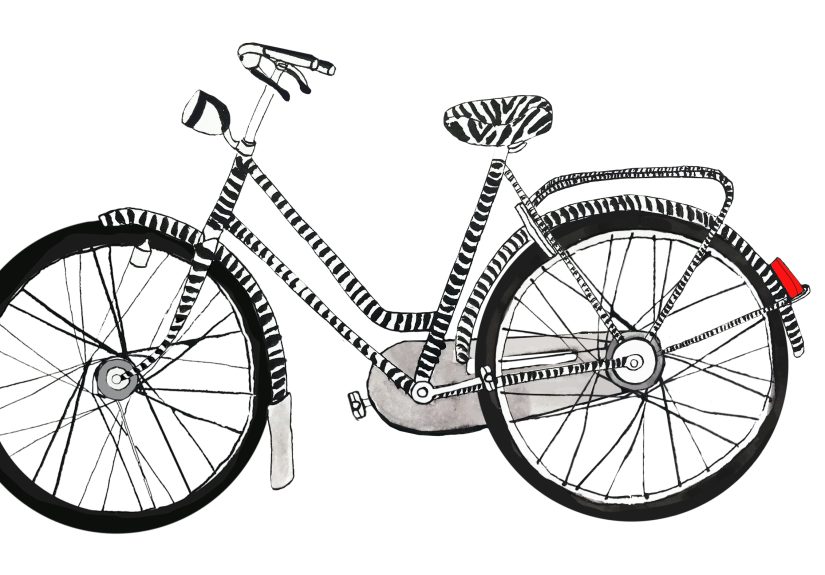
So when you say, “This is a drawing of the bike I use in the Netherlands,” you’re not just showing off a sketch.
You’re capturing a whole philosophy: practicality over flash, comfort over speed, and “I need to get there” over “I need to look fast getting there.”
In this guide, we’ll decode what your drawing is really sayingframe shape, accessories, and those little Dutch details that make a city bike feel like a
reliable sidekick. Along the way, we’ll look at why Dutch cycling works so well, what habits keep the system smooth, and how to make your drawing feel
unmistakably “Netherlands” even if it’s just pencil on paper.
Why Your Dutch Bike Looks “Different” (And Why That’s the Point)
A classic Dutch city bike isn’t trying to impress a peloton. It’s trying to help you live your life. That’s why, when you draw it,
the silhouette usually looks calm and uprightlike the bike is standing there thinking, “We can do this all day.”
The step-through frame: utility in one simple line
The most recognizable feature in many Dutch bikes is the step-through frame.
Not because everyone is riding in formalwear every day (though you can), but because city riding means frequent stops:
traffic lights, pedestrians, narrow streets, crowded bike parking, quick errands, quick dismounts.
A step-through makes the bike easy to mount and dismountespecially when you’re carrying a bag, wearing a long coat,
or hopping off to slide into a bike rack that looks like it was designed by someone who hates empty space.
The upright position: comfort, visibility, and “I can do this in jeans”
Dutch city bikes tend to put you in a more upright riding posture. That’s not lazinessit’s strategy.
Upright riding improves visibility in busy urban environments, keeps your neck and wrists happier,
and makes it easier to ride at a steady pace without turning your commute into a fitness test.
In your drawing, you can show this by placing the handlebars higher than you would on a road bike and letting the rider’s back look more vertical than angled.
The vibe is “going somewhere,” not “escaping a bear.”
The “everything stays clean” package: fenders, chain guard, and skirt/coat protection
Dutch weather is famously… enthusiastic. Rain happens. Puddles happen. Wind happens. And yet people still ride.
That’s why many Dutch bikes are built with practical coverage:
- Full fenders to reduce splash (your pants will thank you).
- Chain guards to keep oil and grime away from clothes.
- Rear wheel/coat guards so fabric and straps don’t get pulled into spokes.
In a drawing, these details are your secret weapon. A chain guard alone can instantly make a bike look “Dutch city” instead of “weekend hobby.”
The Netherlands Didn’t Just Buy BikesIt Built a Bike-First World
A Dutch bike makes sense because Dutch streets make sense for bikes. The design of the bicycle and the design of the city are basically in a long-term
committed relationship. They’ve coordinated outfits. They finish each other’s sentences. It’s adorable.
Protected bike lanes: separation that feels normal
One big reason Dutch cycling is so approachable is that riders often have space that’s clearly theirsphysically separated from faster motor traffic.
When biking feels safe, it stops feeling like a brave act and starts feeling like… transportation.
If you want your article (and your drawing) to reflect real Dutch riding, imagine the bike living in a world with bike paths that are continuous,
legible, and designed for everyday peoplenot just the fearless.
Protected intersections: the “hard part” is designed, not guessed
Intersections are where a lot of cycling fear lives. The Dutch approach is famously design-heavy here: they use geometry, visibility, and separation
to reduce conflict points and slow turning movements. The goal isn’t to rely on perfect human behavior. The goal is to make good behavior the easiest behavior.
That matters even when you’re talking about a single bike sketchbecause the bike you draw is shaped by the conditions it rides in.
A bike built for constant stop-and-go in busy city intersections will prioritize stability and comfort over light weight and speed.
Roundabouts and traffic calming: slower cars, calmer streets
Dutch design often focuses on slowing motor traffic and clarifying priority, especially where modes mix.
If you’ve ever ridden a bike where cars are moving slower and behaving more predictably, you know how much that changes everything:
your shoulders drop, your grip relaxes, and suddenly you’re thinking about dinner instead of survival.
Bike parking that’s taken seriously
You can’t build a cycling culture without giving bikes a place to live. Dutch cities invest heavily in bike parkingat stations, in neighborhoods,
near shopsbecause if parking is chaos, biking becomes chaos.
For a drawing, that means your bike doesn’t have to float in empty space. Put it near a rack. Put it near a station. Put it among other bikes.
It’ll feel instantly more authenticlike it belongs to a daily rhythm.
How to Make Your Drawing Look Unmistakably “Dutch City Bike”
Even if your drawing is simplejust lines and a few shaded partsyou can make it feel like the Netherlands by focusing on the right cues.
Think of these as visual keywords (SEO, but for eyeballs).
Start with the silhouette: frame, posture, and calm geometry
- Step-through or low top tube (often the biggest giveaway).
- High handlebars and a more upright rider position.
- Sturdier proportionsDutch city bikes often look a bit more substantial than sporty bikes.
Add the “daily life” accessories
The Netherlands is where accessories are not optional personality traits. They are survival tools.
If you want your drawing to say “I use this bike,” not “I pose with this bike,” consider adding:
- Rear rack (bonus points if it looks like it can carry a small planet).
- Front rack or crate for groceries or a bag.
- Integrated lights (even simple light shapes help).
- Bellsmall detail, huge Dutch energy.
- Wheel lock near the rear wheel (that “ring” lock shape).
Make it feel used (in a charming way)
A perfectly clean bike can look like a showroom model. A real Dutch commuter bike often has tiny signs of life:
a slightly scuffed chain guard, a sticker from a bike shop, a scratched rack, or a kickstand that looks like it’s holding the whole operation together.
In a drawing, you can suggest this with a few light texture marksnothing dramatic. Think “well-loved,” not “post-apocalyptic.”
What It’s Like to Ride a Bike in the Netherlands (The Real-World Habits Behind the Calm)
A Dutch bike is only half the story. The other half is behaviorpredictable, cooperative, and weirdly efficient.
Not perfect, not magical, but coordinated enough that it feels like a system rather than a battle.
Predictability is the main safety feature
When lots of people ride every day, the “rules” become cultural muscle memory:
hold your line, signal your turns, pass in a predictable way, and don’t stop in the middle of a path like you’re admiring a sunset.
(You can admire the sunset later. Preferably from a bench. Not from the bike lane.)
The bell is not rudeit’s punctuation
In many places, ringing a bell can feel aggressive. In Dutch cycling culture, a bell is often just information:
“Hi, I exist, and I’m passing.” In your drawing, that tiny bell can represent a whole social contract.
Weather happens. You adapt.
The Netherlands is famously flat, which is great. The wind, however, occasionally chooses violence.
People still ride, because the bike is integrated into life, not reserved for perfect days.
This is where practical bike features shine: fenders, guards, stable handling, comfortable posture. Your bike is not a fair-weather friend.
How People Keep Their Bikes From Disappearing Into the Night
Let’s talk about the least romantic part of biking: theft prevention. In bike-dense places, theft can be an issue, and Dutch riders tend to lock up like
they’re protecting state secretsquickly, routinely, and without drama.
The “two-step” mindset
A common approach is to lock the bike in more than one way: one lock to immobilize the wheel and another to attach the frame to something solid.
(If your bike has a built-in wheel lock, it’s basically begging you to add a second lock and make it a whole thing.)
Parking choices matter
Where you park is part of your security strategy. Busy areas, designated racks, and well-lit station facilities can reduce risk.
Your drawing can even nod to this: show the bike locked to a rack, or tucked into a dense cluster of bikes at a station.
It’s a tiny detail that tells a big truth: this bike lives in a system.
Choosing “Your” Dutch Bike: A Quick Matchmaking Guide
Not every bike in the Netherlands is the same. There’s a whole cast of characters, and each one has a different job description.
Here’s how to think about itespecially if your drawing is based on a real bike you ride.
The classic omafiets-style city bike
This is the iconic look: step-through, upright, sturdy, practical, often with full coverage.
It’s built for short to medium city trips where comfort and durability beat speed and weight.
The “I need to carry my life” cargo bike
Cargo bikes are common enough in Dutch cities that they stop feeling exotic. Groceries, kids, packagesthese bikes do real work.
If your drawing includes a front box or extended frame, you’re capturing something deeply Dutch: moving stuff by bike as a normal, everyday choice.
The e-bike: same idea, more range
Electric bikes fit naturally into Dutch life because they extend the same practical model: commuting, errands, steady traveljust with more help against wind
and longer distances. If you draw a bulkier down tube or a battery shape, that’s a modern Dutch detail.
Three quick examples (because real life is specific)
- City errands + lots of stops: upright city bike with a rack and a bell.
- School drop-off + groceries: cargo bike with a box or long rear rack setup.
- Commute with wind + distance: an e-bike that still looks like a practical city machine, not a race bike in disguise.
Conclusion: Your Drawing Is a Love Letter to Utility
A drawing of a Dutch bike can look simpletwo wheels, a frame, handlebars, a rackbut it holds a lot of meaning.
It’s a portrait of a place where cycling is treated as normal transportation, supported by infrastructure, culture, and design choices that reduce stress.
And your specific bike? It’s not just “a bike.” It’s a daily tool shaped by its environment: upright for comfort, covered for weather, equipped for carrying,
and built to be parked, locked, and used again tomorrow.
So keep the drawing. Add details. Sketch the bell. Outline the chain guard. Give the rack some weight.
You’re not just drawing a bicycleyou’re drawing a lifestyle where getting around feels human-sized.
Experiences Related to “This Is A Drawing Of The Bike I Use In The Netherlands.” (Extra )
Imagine this: you’re leaving your place on a gray morning that isn’t quite raining, but is definitely threatening to.
The bike is waiting outside like it always iskickstand down, rack ready, quietly confident. You don’t “gear up” the way you might for a sporty ride.
You just grab your bag, check your tires with a quick glance, and go. That casualness is the first big experience: biking isn’t an event.
It’s just how you move.
The first few minutes are pure rhythmshort street, quick turn, a gentle coast. You’re upright, scanning ahead, not hunched over like you’re chasing a finish line.
A rider glides past and gives a quick bell ring that sounds more like a tap on the shoulder than a warning siren. Nobody flinches.
It’s the language of the lane: “Passing on your left, all good.” You return the favor later without thinking.
Then comes the intersection. In some countries, this is where you’d do mental math, pray a little, and prepare to sprint.
Here, it feels more like a choreographed pause. You slow, you look, you roll when it’s your turn. The design does some of the work,
and the culture does the rest. You don’t feel invisible. You feel expectedlike the street planned for you to be there.
Of course, the Netherlands has its own personality tests. Wind is the big one. Some days you’ll pedal and wonder if you’re secretly towing a small boat.
The funny part is how normal that becomes. You learn to pick a steady pace, to relax your shoulders, to accept that sometimes “fast” is not the goal.
The bike’s stability helps. The upright posture helps. The practical build says, “We can take our time.”
Errands are where the Dutch bike really shines. You stop at a shop, slide the bike into a rack that’s already packed, click the wheel lock,
add a second lock if you’re being smart, and walk away without a dramatic farewell. When you come back, you lift your bag onto the rack
like it’s the most natural thing in the worldbecause it is. No sweaty backpack struggle. No juggling. The bike carries the burden so you don’t have to.
And latermaybe evening nowyou pass a station or a busy street where bikes cluster like a school of fish.
That’s when your drawing makes even more sense. You drew your bike, sure, but you also drew a symbol:
a machine designed for daily life in a place that treats everyday movement as something worth supporting.
Your sketch is a souvenir you don’t buy in a store. You earn it by living the patternride, park, lock, repeatuntil the bike feels less like equipment
and more like part of your routine.