Table of Contents >> Show >> Hide
- What Those “31 Pics” Really Captured (Hint: It Wasn’t Just Crowds)
- Why “Not Avoiding Contact” Matters: The Science in Plain English
- South Carolina in Early 2020: Timing, Policy, and the Reality on the Ground
- The First Stage of a Tragedy: How Outbreaks Start Looking Like “No Big Deal”
- Why People Didn’t Distance: It Wasn’t Always Ignorance
- What Those Photos Teach Us Now: Practical, Human-Scale Prevention
- How to Write About Viral Crowd Photos Without Turning People Into Punchlines
- Experiences People Commonly Report From the “First Stage” (And What They Reveal)
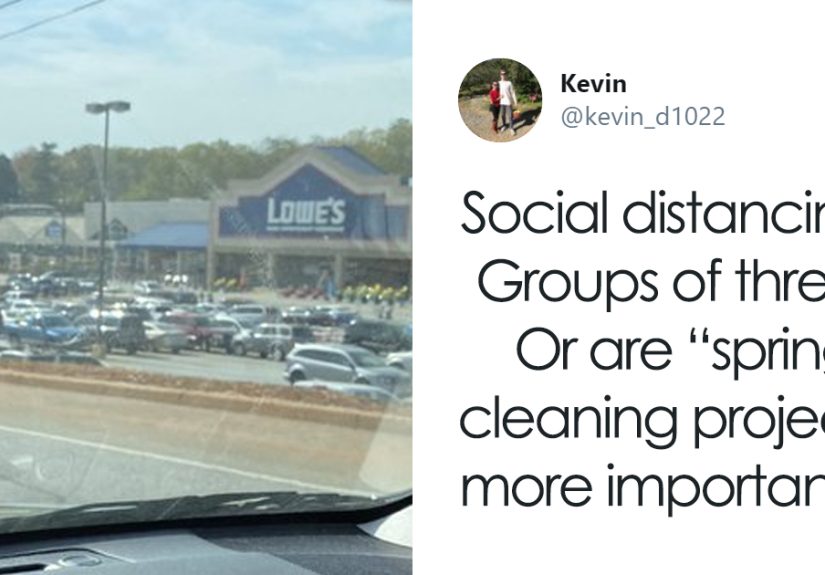
In early April 2020, a set of photos made the rounds online: crowds on beaches, shoulder-to-shoulder lines, group hangouts,
and that unmistakable vibe of “Relax, it’ll be fine.” The post that pulled them together framed the images as more than just
awkward snapshotsmore like a time capsule of a moment when public health warnings were colliding with human nature in real time.
If you’ve ever looked at a crowded scene and thought, “This is how it starts,” you already understand the headline.
To be clear: those pictures weren’t proof that South Carolina was uniquely reckless, or that everyone in the state was ignoring guidance.
They were an illustrationa sharp, shareable highlight reel of what happens when people don’t avoid close contact
during an outbreak: the “first stage of a tragedy,” where nothing looks tragic yet. It looks normal. It looks like weekend plans.
It looks like “just this once.” And that’s exactly why it’s dangerous.
What Those “31 Pics” Really Captured (Hint: It Wasn’t Just Crowds)
A photo can’t show you a virus, incubation periods, or transmission chains. But it can show you the ingredients that make outbreaks
explode: density (lots of people), duration (staying near each other), and distance
(or lack of it). Add laughter, talking, singing, eating, and shared surfacesplus the simple fact that people can spread infection
without feeling sickand you’ve got a scene that looks harmless and behaves like a spark in dry grass.
The photos also captured something less visible but just as real: risk perception. Humans are excellent at reacting
to obvious danger (a speeding car) and famously bad at reacting to invisible danger (a respiratory virus floating in the air).
So when officials said, “Avoid mass gatherings,” many people heard, “Don’t go to a stadium,” not “Maybe skip the packed patio where
everyone’s leaning in to talk over the music.”
Why “Not Avoiding Contact” Matters: The Science in Plain English
Close contact is basically the virus’s favorite hobby
During the COVID-19 pandemic, public health guidance focused on the simple idea that close contact increases risk.
That’s because infected people release respiratory droplets and tiny particles when they breathe, talk, sing, cough, or sneeze.
If you’re close enough, those particles can be inhaled or land on your eyes, nose, or mouth. Translation: the virus doesn’t need
a grand planit just needs you near another person for long enough.
Public health agencies often used “six feet” as a practical rule of thumb, and “close contact” was generally defined around being
within that range for a meaningful amount of time (commonly described as about 15 minutes total over a day). It’s not magic. It’s
a way to estimate when exposure becomes more likely. And it’s why photos of shoulder-to-shoulder crowds made people wince:
the scenes screamed “high contact rate.”
Asymptomatic spread: the plot twist nobody asked for
One of the most frustrating truths about COVID-19 was that a person could feel fine and still spread infection.
That reality turns “I’m not sick” into a weak defense. It also explains why public health messages sometimes sounded strict:
they weren’t built on assumptions of bad intentionsjust on the math of transmission.
Indoor vs. outdoor: where the risk really piles up
Not all crowded spaces behave the same. Outdoors generally lowers risk compared with indoors, because fresh air disperses particles.
But “outdoors” isn’t a force field. If you pack people together, add close conversation, linger for a long time, and funnel everyone
through indoor spaces (bathrooms, bars, entryways, rideshares), your “fresh air advantage” can get spent fast.
Indoors is where the problem can compound: fine particles can linger and accumulate, especially in poorly ventilated spaces.
That’s why layered prevention mattered so muchdistance plus ventilation plus staying home when sick, and, in many settings,
masks and smarter airflow. Ventilation helps reduce indoor airborne contaminants, but it isn’t a solo hero; it works best as part of
a bigger strategy.
South Carolina in Early 2020: Timing, Policy, and the Reality on the Ground
The “31 pics” moment happened at a specific point in time: early pandemic uncertainty, rapidly evolving guidance, and a country
trying to decide what “normal life” meant when a new virus was spreading. In South Carolina, suspected early cases were being investigated
in early March 2020, and public messaging was shifting quickly as officials and communities responded.
By early April, South Carolina issued a statewide “Home or Work” order (commonly described as a stay-at-home style directive) that
reflected the urgency of reducing contacts. Local governments also created practical rules for retail, queues, and public behavior.
Meanwhile, news coverage documented crowded coastal scenesbeaches and tourist areas where distancing was difficult and tempers ran hot.
If you’ve ever tried telling spring break energy to “form an orderly line,” you can imagine how well “please spread out” went some days.
The key point isn’t to litigate every decision from 2020 with 2026 hindsight. It’s to recognize what those images represented:
high-contact settings appearing at the exact moment when reducing contact was one of the only tools available.
Vaccines weren’t yet in the picture. Treatments were limited. Testing and tracing were still ramping up. In that phase, behavior mattereda lot.
The First Stage of a Tragedy: How Outbreaks Start Looking Like “No Big Deal”
When people say “the first stage of a tragedy,” they’re usually describing this pattern:
the early phase of a crisis feels optional. The consequences are delayed. The warning signs are abstract.
And because the worst outcomes don’t happen instantly, the risky behavior can masquerade as harmless freedom.
Stage 1: Normalcy bias (“It hasn’t happened to me, so it won’t”)
Normalcy bias is the brain’s way of filing danger under “later.” It whispers: “If it were serious, it would feel serious.”
But outbreaks don’t feel serious at first. They feel like rumors, inconvenient rules, and canceled plans that “probably didn’t need canceling.”
Photos of crowds during an outbreak often show this bias in full color: people acting exactly like they did last week.
Stage 2: Contact networks do their thing (quietly, efficiently)
Viruses spread through networks: households, friends, coworkers, bars, gyms, churches, beaches, birthday dinners, and the “quick stop”
that turns into a 45-minute conversation because you ran into someone you actually like. The more connected the network, the easier
transmission becomes. The phrase “flatten the curve” was shorthand for reducing those connections so hospitals and clinics wouldn’t be overwhelmed.
Stage 3: The bill comes due (and it’s paid in missed work, closed schools, and strained care)
Even without focusing on the most extreme outcomes, the “bill” of uncontrolled spread is obvious: more illness, more disruptions, more
anxiety, more pressure on healthcare, more people stuck at home when they’d rather be anywhere else (including the DMV, which is saying something).
That’s why early prevention mattered: it wasn’t only about one person’s riskit was about community transmission.
Why People Didn’t Distance: It Wasn’t Always Ignorance
It’s tempting to look at crowd photos and assume the explanation is simple: people didn’t care. Sometimes that was true.
But often, it was messierand understanding the mess helps prevent the next mess.
Mixed messages and shifting guidance
In early 2020, guidance evolved as scientists learned more. That’s normal in a new outbreak, but it can feel like whiplash to the public.
When rules change, some people interpret it as “they don’t know what they’re doing,” rather than “they’re updating based on evidence.”
Economic pressure and “I can’t just stay home” reality
Many jobs can’t be done from a laptop. Service work, manufacturing, healthcare support, deliveries, caregivingpeople kept the world running.
Crowds weren’t always “parties”; sometimes they were necessities: paychecks, groceries, childcare, and essential errands done in imperfect settings.
Social identity and the pull of belonging
Humans copy humans. If your peers are gathering, staying home can feel like overreactingeven when it’s not. Photos of crowds can create a
feedback loop: people see crowds, assume crowds are normal, and then contribute to crowds. Congratulations, we’ve invented peer pressure for microbiology.
What Those Photos Teach Us Now: Practical, Human-Scale Prevention
If the “31 pics” post is a snapshot of what not to do, the response is not shameit’s design. Make the safer choice the easier choice.
In public health, that means layering strategies and reducing friction.
Design spaces for distance (without turning life into a maze)
- Wider lines and managed entry in retail and events, so people aren’t forced into a close-contact bottleneck.
- Outdoor-first socializing when respiratory viruses are surging, with plans for weather and crowd control.
- Smarter indoor air: better ventilation and filtration reduce risk when people share a space.
Normalize staying home when sick (and make it possible)
The culture shift is simple: if you’re sick, you’re not “tough” for showing upyou’re just sharing.
Paid sick leave and flexible policies aren’t just “nice”; they’re outbreak control tools in regular clothes.
Keep the message clear: “Close contact is the shortcut”
If you want one line people remember, it’s this: close contact is the shortcut for spread.
Distance, time, and airflow change the odds. And the goal isn’t perfectionit’s reducing risk enough that outbreaks don’t sprint.
How to Write About Viral Crowd Photos Without Turning People Into Punchlines
The internet loves a dunk. But if you’re using a set of images to tell a public health story, a better approach is:
acknowledge the real pressures (work, money, stress), explain the science plainly, and offer alternatives people can actually do.
Humor helps when it punches up at the situation, not down at individuals. Example: “If you can smell the stranger’s sunscreen,
you might be closer than recommended.” That’s silly, memorable, andoddlyuseful.
The “31 pics” headline worked because it framed a truth: tragedies often begin as ordinary moments that feel harmless.
The job of good communication is to help people see the invisible consequence before it arrives.
Experiences People Commonly Report From the “First Stage” (And What They Reveal)
Many people remember early 2020 as a strange blend of disbelief and improvisation. There was the sudden vocabulary“flatten the curve,”
“close contact,” “quarantine”and the awkward social choreography of trying to keep distance in a world built for crowding.
Grocery trips became strategy sessions. People learned the art of the “polite sidestep” in aisles. Some neighborhoods turned
evening walks into the safest social activity available, where a wave across the street became its own kind of friendliness.
A common experience was the emotional contradiction: wanting to be responsible while also craving normal life. Weddings were postponed,
graduations went virtual, and birthdays became driveway celebrations with signs and honking cars. People who lived alone often described
a kind of “quiet heaviness,” while people in busy households described the opposite problem: too much togetherness, too little privacy.
Even families that agreed on safety sometimes disagreed on what “safe enough” meantindoors with windows open, outdoors with distance,
small groups, no groups. The negotiation itself became exhausting.
Essential workersespecially in healthcare, retail, and service jobsoften described a different “first stage.” For them, the crisis
didn’t feel optional. It felt like showing up while the rules changed weekly. Many reported stress from interacting with the public
when guidance wasn’t universally followed. Others described pride in helping, mixed with fear of bringing illness home. For households
with older relatives or people with health risks, everyday choices carried extra weight: who goes to the store, who visits, what happens
if someone is exposed, how to isolate within a home that doesn’t have spare rooms just sitting around like a luxury hotel.
Another widely shared experience was learning how much environment matters. People began noticing ventilation in a way they never had before:
Does this place feel stuffy? Are the windows open? Is it crowded? Some shifted gatherings outside, kept visits short, or met in driveways and parks.
Even without using technical terms, people were intuitively adjusting time, distance, and airflowthe same levers public health emphasizes.
And many described a lasting change: a new habit of staying home when sick, masking in crowded indoor places during seasonal surges, and treating
“I don’t feel great” as a reason to rest, not a reason to push through.
Finally, people often remember how quickly public mood could swing. One day, distancing felt like an overreaction; the next day, it felt
like the only responsible choice. That’s the core lesson embedded in those crowd photos: the first stage of a tragedy is often a stage
of uncertainty. The difference between “we got lucky” and “we got overwhelmed” can come down to whether communities reduce close contact
early enough for prevention to work.