Table of Contents >> Show >> Hide
- Mudroom Success Starts with Three “Zones”
- 40 Mudroom Ideas You Can Steal Immediately
- 1) Build a Bench-and-Hook “Landing Strip”
- 2) Add Shoe Drawers Under the Bench
- 3) Use Cubbies for Grab-and-Go Bags
- 4) Install Two Rows of Hooks (Adult + Kid Height)
- 5) Try Wraparound Hooks on a Corner Wall
- 6) Put a Slim Shelf Above Hooks
- 7) Use Labeled Bins for Sports Gear
- 8) Create a Mini Mudroom with Pegboard
- 9) Install a Wall-Mounted Mail Sorter
- 10) Add a Key + Sunglasses Tray
- 11) Choose Closed Cabinets for Visual Calm
- 12) Use a Tilt-Out Hamper for Dirty Gear
- 13) Add a Boot Tray (and Actually Use It)
- 14) Store Umbrellas in a Tall Container
- 15) Include a Mirror for the “Last Look”
- 16) Use a Narrow Shoe Cabinet in Tight Hallways
- 17) Add a Fold-Down Bench
- 18) Try a Rolling Cart for Flexible Storage
- 19) Build Lockers for Each Family Member
- 20) Ventilate Cubbies to Help Wet Items Dry
- 21) Add a Top Shelf for Seasonal Rotation
- 22) Put a Small Stool Under the Bench
- 23) Include a Charging Drawer or Hidden Power Strip
- 24) Create a “Dog Station”
- 25) Add Wall Hooks for Reusable Bags
- 26) Use Wainscoting or Beadboard for Durable Walls
- 27) Pick a Durable Floor That Can Take a Beating
- 28) Add a Washable Runner Rug
- 29) Install a Utility Sink if You Have the Room
- 30) Combine Mudroom + Laundry
- 31) Add a Hanging Drying Rod
- 32) Build a Backpack “Garage”
- 33) Use Baskets for Gloves, Hats, and Scarves
- 34) Add a Small “Mudroom Desk” or Message Center
- 35) Upgrade Lighting to Make the Space Feel Intentional
- 36) Use Wallpaper or a Bold Paint Color
- 37) Add a Built-In or Freestanding Pantry Section
- 38) Include a Hidden “Clutter Cabinet”
- 39) Use Clear Containers for Fast Inventory
- 40) Finish with One Decor Moment
- How to Keep a Mudroom Working (Without Turning It Into a Second Job)
- Real-Life Mudroom Lessons (Experience + What Actually Held Up)
- Conclusion
If your home had a “customer service desk,” the mudroom would be it. It handles complaints (wet boots), processes returns (random sports gear), and somehow keeps smiling while everyone barges in at once. Whether you’ve got a grand, magazine-worthy mudroom or a heroic two-foot slice of wall by the back door, the goal is the same: create an entry that catches clutter before it spreads across your whole house like glitter at a kindergarten art table.
This guide breaks down what makes a mudroom work, then serves up 40 practical, style-friendly mudroom ideas you can mix and match for small spaces and large layouts. Expect real-world tips, specific examples, and a little humorbecause if we can’t laugh at the mysterious third left glove, what can we laugh at?
Mudroom Success Starts with Three “Zones”
No matter the size, the best mudrooms feel calm because they’re designed around how people actually enter the home. Think in three zones:
- Drop Zone: Keys, wallet, sunglasses, mail, backpacksanything that tends to land on the nearest flat surface.
- Dirty Zone: Shoes, boots, umbrellas, muddy paws, wet coats. This is where durable materials earn their paycheck.
- Ready-to-Go Zone: Items you need on the way outdog leash, reusable bags, sports gear, rain jackets, school stuff.
Design Rule #1: Mix Open and Closed Storage
Open storage (hooks, cubbies) keeps daily items fast to grab. Closed storage (cabinets, drawers) hides the “visual noise” when life gets busy. The sweet spot is both: open for today, closed for the chaos you don’t want on display.
Design Rule #2: Go Vertical (Especially in Small Mudrooms)
If your mudroom is basically a hallway corner, your walls are prime real estate. Add shelves above hooks, tall cabinets, wall-mounted organizers, and stacking bins. Floors stay clear, and you stop playing nightly “dodge the backpack” in socks.
Design Rule #3: Pick Surfaces That Don’t Panic at Moisture
Mudrooms are utility spaces disguised as decor. Prioritize durable flooring, wipeable paint, washable rugs, and materials that can handle wet boots, paw prints, and whatever your life drags in on a Tuesday.
40 Mudroom Ideas You Can Steal Immediately
Use these as a menu, not a mandate. You don’t need all 40. You just need the right combination for your home, your habits, and your particular brand of “Where did that soccer cleat come from?”
1) Build a Bench-and-Hook “Landing Strip”
A bench for shoes + hooks for coats is the classic mudroom combo for a reason. Even a 36-inch-wide setup makes arrivals smoother.
2) Add Shoe Drawers Under the Bench
Drawers keep shoes contained and dust-free. Great for families who own more than two pairs of footwear per human (so… most families).
3) Use Cubbies for Grab-and-Go Bags
Assign a cubby per person for backpacks, lunch bags, or work totes. It’s like giving clutter a name tag and a job.
4) Install Two Rows of Hooks (Adult + Kid Height)
Kids can hang their own coats when hooks are reachable. Adults keep theirs up higher. Independence for them, fewer piles for you.
5) Try Wraparound Hooks on a Corner Wall
If you have an awkward corner, use it. Wrap hooks around the angle so you get more hanging space without eating up floor area.
6) Put a Slim Shelf Above Hooks
A narrow shelf holds hats, baskets, or décor while keeping essentials off the bench. Bonus: it visually “finishes” the wall.
7) Use Labeled Bins for Sports Gear
One bin per category (soccer, swim, gym, dog stuff) prevents the dreaded “everything pile.” Labels are the mudroom’s love language.
8) Create a Mini Mudroom with Pegboard
No mudroom? No problem. A pegboard panel plus a small bench makes a flexible drop zone on almost any blank wall.
9) Install a Wall-Mounted Mail Sorter
Mail multiplies if it senses fear. Give it a sorter: “To Pay,” “To Read,” “To Shred,” and “School Papers.”
10) Add a Key + Sunglasses Tray
Small detail, huge impact. A tray stops the daily scavenger hunt for keys.
11) Choose Closed Cabinets for Visual Calm
If your household produces clutter at Olympic levels, closed cabinetry hides it and keeps the space looking tidy faster.
12) Use a Tilt-Out Hamper for Dirty Gear
Great for sports uniforms, muddy dog towels, or “this hoodie has been through things.” Keeps laundry off the floor.
13) Add a Boot Tray (and Actually Use It)
Boot trays catch water, salt, and mud. Put it where people naturally step inthen you’ll stop finding mystery puddles.
14) Store Umbrellas in a Tall Container
A sturdy umbrella stand prevents dripping chaos. Pick one that won’t tip when someone grabs an umbrella like it’s a sword.
15) Include a Mirror for the “Last Look”
Mirrors make small mudrooms feel bigger and help with quick outfit checks before you head out.
16) Use a Narrow Shoe Cabinet in Tight Hallways
Wall-hugging shoe cabinets store a surprising amount without blocking walkwaysperfect for apartment-style entryways.
17) Add a Fold-Down Bench
In ultra-small spaces, a fold-down bench gives you seating only when you need it. Fold it up and reclaim the floor.
18) Try a Rolling Cart for Flexible Storage
Rolling carts hold hats, gloves, dog-walking supplies, or cleaning items. Move it where you need it, hide it when you don’t.
19) Build Lockers for Each Family Member
Lockers keep coats, bags, and shoes separatedespecially helpful for busy households with overlapping schedules.
20) Ventilate Cubbies to Help Wet Items Dry
Open cubbies or vented doors help airflow so damp coats and boots don’t smell like “yesterday’s rain, but angrier.”
21) Add a Top Shelf for Seasonal Rotation
Store off-season items up high: summer hats in winter, heavy boots in summer. Mudrooms work best when they’re edited.
22) Put a Small Stool Under the Bench
Extra seating without taking extra space. Great for kids or anyone who doesn’t enjoy balancing on one foot like a flamingo.
23) Include a Charging Drawer or Hidden Power Strip
Keep devices charging out of sight. It reduces countertop clutter and prevents cords from becoming modern art installations.
24) Create a “Dog Station”
Mount leash hooks, store treats, and keep towels handy. If you have pets, your mudroom is basically mission control.
25) Add Wall Hooks for Reusable Bags
Reusable bags are great until they become a wrinkled heap. Hang them near the exit so they actually leave the house.
26) Use Wainscoting or Beadboard for Durable Walls
Lower wall paneling protects against scuffs from backpacks and shoes. It also adds instant architectural charm.
27) Pick a Durable Floor That Can Take a Beating
Tile, luxury vinyl plank, or other water-friendly options are popular for a reason. Mudrooms don’t need delicate floors.
28) Add a Washable Runner Rug
Runners catch dirt before it hits the rest of the home. Choose one that’s washable, or at least easy to shake out.
29) Install a Utility Sink if You Have the Room
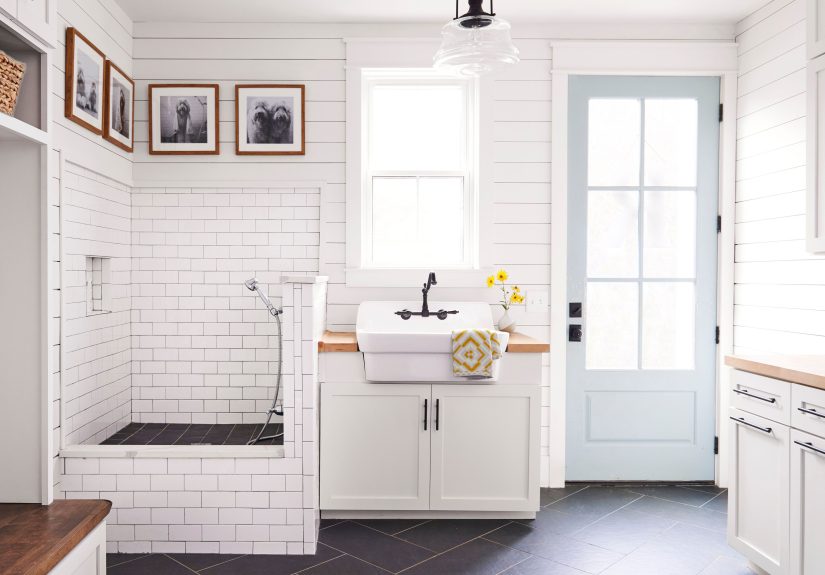
A sink is a game-changer for rinsing muddy shoes, soaking stained clothes, or cleaning paintbrushes without risking your kitchen.
30) Combine Mudroom + Laundry
This pairing makes sense: dirty items enter, then go straight to the washer. Add shelving above machines for detergents and baskets.
31) Add a Hanging Drying Rod
A simple rod (or retractable line) helps raincoats and wet gear dry neatly instead of dripping on a chair elsewhere.
32) Build a Backpack “Garage”
Use tall hooks or dedicated cubbies for backpacks. The goal is to prevent them from living on the floor like sleepy turtles.
33) Use Baskets for Gloves, Hats, and Scarves
One basket per category keeps small items from vanishing. Labels help everyone put things back without asking you.
34) Add a Small “Mudroom Desk” or Message Center
A shallow counter with a calendar or memo board helps manage schedules. Great for families juggling school and work.
35) Upgrade Lighting to Make the Space Feel Intentional
A stylish flush mount or pendant transforms the mudroom from “utility closet vibes” to “yes, we meant to do this.”
36) Use Wallpaper or a Bold Paint Color
Small rooms are perfect for personality. Wallpaper, color, or pattern makes the mudroom feel welcoming, not purely functional.
37) Add a Built-In or Freestanding Pantry Section
If your mudroom connects to the kitchen, incorporate pantry storage for snacks, paper towels, or bulk itemsespecially in busy homes.
38) Include a Hidden “Clutter Cabinet”
Sometimes you just need a place to shove things fast. A tall cabinet can hide everything from helmets to gift bags.
39) Use Clear Containers for Fast Inventory
Clear bins help you see what you have, so you stop buying yet another pack of lint rollers because “we’re out”… but you weren’t.
40) Finish with One Decor Moment
A framed print, a plant, or a pretty bowl makes the space feel cared for. The mudroom can be practical and pleasant.
How to Keep a Mudroom Working (Without Turning It Into a Second Job)
A mudroom only stays functional if it’s easy to reset. Here are habits that keep things from drifting into chaos:
- Do a 60-second nightly reset: shoes on the tray, coats on hooks, mail sorted.
- Rotate seasonally: store out-of-season items up high or elsewhere to reduce overflow.
- Declutter monthly: ditch broken umbrellas, old flyers, and the “I might use this someday” pile.
- Assign every item a home: if something doesn’t have a spot, it becomes clutter by default.
Real-Life Mudroom Lessons (Experience + What Actually Held Up)
My first “mudroom” was a sad little rectangle of floor by the doorabout the size of a welcome mat and a regret. I had big plans, of course. I imagined a calm entryway where shoes lined up politely, coats hung like they were auditioning for a catalog, and nobody dropped mail on the nearest surface like it was a competitive sport. Reality arrived wearing wet sneakers and carrying three bags.
The first lesson: if storage isn’t faster than dropping stuff on the floor, the floor wins. I tried a decorative basket for shoes. Shoes ignored it. I tried a bench without storage. It became a “temporary” pile zone that lasted three seasons. What finally worked was a simple bench with cubbies underneathbecause sliding shoes into a slot takes about two seconds, which is apparently the maximum time humans are willing to invest after walking inside.
The second lesson: hooks beat hangers for everyday life. Hangers are lovely in theory. In practice, people do not “hang” coats after a long day. They fling them with emotion. Hooks accept emotional flinging. Once I mounted a row of sturdy hooks at the right height, coats stopped migrating to chairs, doorknobs, and that one corner where jackets go to become a mountain.
Then came the weather lesson. Rainy days revealed that my entry area wasn’t just a drop zoneit was a drip zone. A boot tray made an immediate difference, but only when it was placed exactly where feet naturally landed. I moved it two inches once and somehow everyone missed it like it turned invisible. So yes, design is important, but placement is everything. If you’re adding a tray, put it where the first step happens, not where it looks prettiest in a photo.
As the setup improved, I got ambitious and added a small shelf for grab-and-go items: sunscreen, dog bags, gloves, reusable totes. That was the moment the space started feeling like a system, not just furniture near a door. The shelf created a “ready-to-go” zone, and suddenly mornings were calmer. Not perfectnothing is perfect when someone can’t find their other shoebut calmer.
The biggest surprise was how much closed storage helped my brain. Open cubbies are great, but when life got busy, visual clutter stacked up fast. Adding one small cabinet (even a slim one) meant I could hide the awkward stuff: extra hats, random gear, the collection of tote bags that kept reproducing. The mudroom still workedeven when it wasn’t pristineand that’s the point. A good mudroom doesn’t demand perfection. It simply gives your everyday chaos a place to live that isn’t your kitchen counter.
Conclusion
The best mudroom isn’t the biggest or the fanciestit’s the one that matches your routines. Start with the essentials (hooks, a bench, shoe control), add vertical storage, and choose durable materials that can handle real life. Whether you’re building a full wall of lockers or creating a mini mudroom on one brave patch of wall, the right setup will make your home feel more organized the moment you step inside.