Table of Contents >> Show >> Hide
- Why Hollywood Keeps Fouling Up the Rulebook
- 1) The Mighty Ducks (1992) & D2: The Mighty Ducks (1994): Trick Plays, Magical Penalties, and the Flying V of Chaos
- 2) Any Given Sunday (1999): Football as a 24/7 Highlight Reel (With Bonus Melodrama)
- 3) Remember the Titans (2000): A True Story (Seasoned Heavily for the Screen)
- 4) Cool Runnings (1993): The Spirit Is Real; the Details Took a Detour
- 5) The Blind Side (2009): A Complex Position Reduced to a Catchphrase
- 6) Space Jam (1996): Basketball, but Make It a Cartoon Survival Game
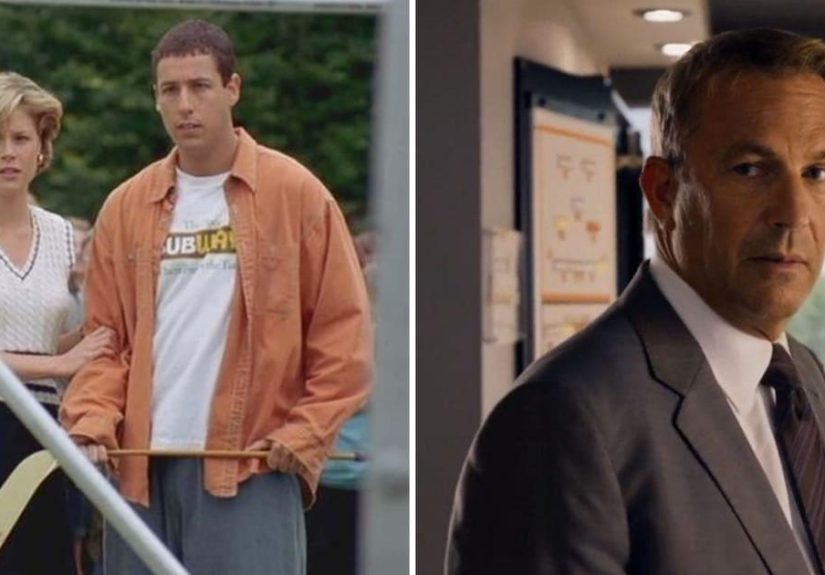
- 7) Happy Gilmore (1996): Golf That’s Technically Golf, Emotionally Hockey
- 8) Talladega Nights (2006): Racing as a Confidence Seminar on Wheels
- How to Watch Inaccurate Sports Movies Without Becoming a Full-Time Heckler
- The Bottom Line: Wrong, but Often Wonderful
- Real-World Watching Experiences: When Your Brain Knows the Rules but Your Heart Loves the Movie (Extra 500-ish Words)
Sports movies are supposed to make your heart race. Not make you pause the screen, squint, and whisper,
“Wait… can you do that?” Yet Hollywood keeps handing us cinematic masterpieces that treat rulebooks like
decorative coasters.
To be fair, sports films have a tough job. They need to explain a game, tell a story, build characters, and deliver
big momentsall in about two hours, with enough slow-motion sweat to irrigate a small golf course. But sometimes,
the “rule of cool” becomes the “rule of what on earth am I watching,” and the sport on-screen turns into a
completely different activity. Like football-meets-ballet. Or hockey-meets-traffic-violation.
This article celebrates those beautiful messes: sports movies that get sports completely wrong.
Not because we hate them (many are wildly entertaining), but because it’s oddly soothing to see a film confidently
commit to nonsense while we, the audience, sit there like unpaid referees.
Why Hollywood Keeps Fouling Up the Rulebook
1) The camera wants drama, not fundamentals
Real sports are full of details that don’t always read on camera: subtle positioning, disciplined footwork,
quiet communication, and the occasional five-minute pause while everyone argues about a call. Movies can’t live there.
They need highlight moments every few minutes, which means the sport often gets “edited” into something louder,
faster, and more chaotic than reality.
2) The audience is mixedand the movie knows it
Sports films aren’t made only for die-hard fans. They’re made for everyone: the person who knows every rule and the
person who thinks “offsides” is a vibe. So filmmakers sometimes simplify strategy into speeches, compress seasons
into montages, and turn complex positions into one-liners. It’s not always wrong on purposeit’s wrong on schedule.
3) “Inspired by” is the loosest phrase in the English language
When a movie is “based on a true story,” it’s often telling you: Some of these people existed, and at least one
of them owned a whistle. True-story sports films frequently swap accuracy for a cleaner narrative arc, even if
that means reshaping timelines, rivalries, and sometimes the entire point of the game.
1) The Mighty Ducks (1992) & D2: The Mighty Ducks (1994): Trick Plays, Magical Penalties, and the Flying V of Chaos
The Mighty Ducks movies are beloved for a reason: they’re fun, scrappy, and packed with kid-power confidence.
They’re also a masterclass in how to commit interference on skates and get away with it like it’s a loyalty program.
The Flying V: iconic… and also a “please call a penalty” formation
The Flying V is essentially a moving human shield. In real hockey, “picking” or “blocking” opponents who aren’t
carrying the puck is a quick way to meet the rulebook’s favorite word: interference. The movies
treat it like a secret weapon; real officials would treat it like a long lunch break of penalty calls.
The Knuckle Puck: physics asked to leave the building
D2 gives us the knuckle puck, a shot so unpredictable it seems to obey a separate set of lawspossibly from a
fantasy novel. The idea of intentionally removing spin to create movement is real in some sports (hello, baseball),
but hockey pucks sliding, bouncing, and flying with “knuckleball” behavior the way the film shows is… let’s say
aspirational.
None of this ruins the movies. But it does mean that if you learned hockey from the Ducks, your first real practice
would be a humbling experience featuring a lot of whistles and a concerned coach asking, “Who taught you that?”
2) Any Given Sunday (1999): Football as a 24/7 Highlight Reel (With Bonus Melodrama)
Any Given Sunday is loud, intense, and determined to make football feel like a battlefield documentary.
As filmmaking, it’s a vibe. As a guide to how the sport actually functions minute-to-minute, it occasionally veers
into “football-themed fever dream.”
Every snap is a Big Moment
The movie stacks explosive plays and brutal collisions like it’s trying to hit a quota. Real football is a strategic
grind: reads, audibles, timing, matchups, and a whole lot of plays that don’t look dramatic unless you know exactly
what you’re watching. The film compresses that reality into constant peak intensity.
The league feels realuntil you remember it isn’t
The movie’s fictional league and teams add to its mythic quality. That choice gives filmmakers freedom, but it also
means the on-field world doesn’t have to match the real NFL’s rhythms, branding, or constraints. You’re watching a
version of pro football with its own logicand its own volume knob permanently stuck on “MAX.”
It’s entertaining, it’s influential, and it’s not subtle. But if you’re looking for a clean depiction of football’s
pace and structure, this one is more “cinema” than “clinic.”
3) Remember the Titans (2000): A True Story (Seasoned Heavily for the Screen)
Remember the Titans has one of the most inspirational reputations in the sports movie universe. It’s also a
case study in how “based on a true story” can become “based on true emotions, plus some narrative carpentry.”
Integration and conflict: real history, reshaped framing
The film centers racial tension as the primary engine of the team’s conflict. Real players and accounts have noted
that some of the biggest friction also came from the school consolidationmerging athletes from different programs
into one roster, compressing rivalries into a single locker room. That’s still conflict, just a more complicated
blend than the movie’s cleaner storyline.
Composite characters and simplified arcs
Like many biographical sports films, it streamlines reality: combining roles, sharpening villains, softening messy
context, and moving events around so the story lands on the emotional beats it wants. The result is powerfuljust
not a documentary.
If you treat it as an inspirational drama with roots in real events, it works. If you treat it as a history lesson,
you’ll want to read up afterward.
4) Cool Runnings (1993): The Spirit Is Real; the Details Took a Detour
Cool Runnings is one of the most charming sports movies ever made. It’s also famously loose with the truth,
especially about how the Jamaican bobsled team formed, qualified, and competed.
The crash happenedHollywood added the “movie finish”
The real team did crash in Calgary, and that moment became central to the film’s identity. But the movie’s most
emotional imagecarrying the sled across the finish linedidn’t happen the way it’s portrayed on-screen.
The film turns a complicated, dangerous, real incident into a perfectly packaged inspirational crescendo.
Underdog math: uplifting, but not realistic
The movie frames Jamaica as a surprising threat, with a fast-learning team that can hang with the giants almost
immediately. In reality, bobsled is brutally technical, resource-heavy, and difficult to master quickly. The real
achievement was enormousjust less like a Disney montage and more like years of grinding logistics, training, and
funding challenges.
If you want the truth, you can find it. If you want a movie that makes you believe in yourself, Cool Runnings
will happily provide that serviceno paperwork required.
5) The Blind Side (2009): A Complex Position Reduced to a Catchphrase
The Blind Side introduced a lot of viewers to the importance of offensive line playspecifically the idea
that protecting a quarterback’s “blind side” is crucial. That’s a real concept. But the film often treats the left
tackle position like it’s a single, simple job: “stand here and stop the bad guy.” Actual pass protection is a
coordinated system involving footwork, leverage, play design, and communication across the line.
Football IQ isn’t a light switch
One criticism that’s followed the movie is how it portrays learning the position: as if a player can be “turned on”
through a motivational moment and a simplified explanation. In reality, technique and recognition take repsthousands
of themplus coaching and film study. Great linemen aren’t just big; they’re trained.
It reshaped public perception of linemen
The movie helped popularize the idea that left tackle is the premium line spot. That’s not entirely wrong
but it can oversimplify how modern defenses attack (from both edges and the interior) and how offensive lines are
built as a unit. When a movie becomes the public’s shorthand for a position, nuance tends to get sacked behind the
line of scrimmage.
6) Space Jam (1996): Basketball, but Make It a Cartoon Survival Game
Space Jam is not pretending to be a basketball tutorial. It’s a live-action cartoon where physics takes a
nap and the rulebook gets launched into orbit. If you applied real basketball rules, the whistle would never stop.
Traveling, carrying, goaltending, contactpick a category and the movie will dunk on it with joy.
And honestly? That’s fine. The “wrongness” is part of the charm. The real issue is when someone watches it young,
steps onto a court, and discovers that stretching your arms across the lane is not considered “creative defense.”
7) Happy Gilmore (1996): Golf That’s Technically Golf, Emotionally Hockey
Happy Gilmore is basically a hockey player trapped in a golf movie. The running start swing is the most
famous gimmick, and while golf’s rules don’t generally police your vibes (they police outcomes, equipment,
and procedures), the film’s depiction of instant dominance is where it gets silly.
Power is not the whole sport
Real golf is control, course management, consistency, and a short game that can ruin your day with one innocent-looking
putt. The movie knowingly exaggerates the idea that raw power alone makes you unstoppable. It’s comedy, and it works
but it’s not how the sport rewards players over time.
8) Talladega Nights (2006): Racing as a Confidence Seminar on Wheels
Talladega Nights is another film that’s “wrong” in a way that’s clearly intentional. It’s a comedy first,
a racing movie second, and an excuse for absurd bravado third. The strategies are simplified, the crashes are
exaggerated, and the on-track decisions feel more like sketch comedy than professional motorsport.
But it’s worth noting: real racing is deeply technicalcar setup, tire strategy, drafting, pit timing, communication,
and risk management. The movie swaps that complexity for personality warfare, which is hilarious, but not accurate.
How to Watch Inaccurate Sports Movies Without Becoming a Full-Time Heckler
- Decide what the movie is selling. Is it realism? Inspiration? Comedy? If it’s comedy, let it cook.
- Enjoy the “movie sport” as its own sport. Think of it like an alternate league where the rules are “dramatic effect.”
- Use the inaccuracies as conversation starters. The best post-movie debates start with: “Okay, but could that actually happen?”
- Keep one foot in reality. If you play the sport, remember: movies are entertainment, not coaching.
The Bottom Line: Wrong, but Often Wonderful
A lot of these films aren’t “bad” because they’re inaccurate. They’re inaccurate because they’re trying to do something else:
tell a story, create a legend, deliver a feeling. The problem is when a movie’s version of the sport becomes the default
understanding for everyone watching.
So yeslaugh at the Flying V. Groan at the nonstop highlight plays. Side-eye the “true story” that behaves like it was
assembled from three real events and a motivational poster. Then enjoy the movie anyway, because sometimes the most
unrealistic sports films still nail the one thing fans love most: the emotional win.
Real-World Watching Experiences: When Your Brain Knows the Rules but Your Heart Loves the Movie (Extra 500-ish Words)
Watching inaccurate sports movies hits different depending on who you are in the room. If you’ve never played the sport,
you’re usually along for the ride. You see the big moments, the underdog speeches, the last-second heroics, and you
think, “Sports are awesome.” And honestly, that’s a win. Sports movies are gatewayssometimes you watch one and suddenly
you’re Googling how offsides works at 1 a.m., like a normal person.
If you have played the sport, though, your viewing experience becomes a weird split-screen. One half of your
brain wants to be swept away by the story. The other half becomes a tiny referee living behind your eyes, tossing
imaginary flags into your living room. You’ll find yourself reacting to things you didn’t know you cared about:
footwork that doesn’t make sense, gear that’s worn incorrectly, a coach calling something that no sane coach would call,
or a training montage that looks like it was designed by someone who once saw a gym through a car window.
The funniest part is how specific the irritation can get. It’s not always the big, obvious stuff. Sometimes it’s the
small details: a character celebrating before the play is truly over, a scoreboard that changes like it’s haunted,
or a “championship game” that seems to be played in a stadium with approximately six fans and one guy who brought a tuba.
Real athletes notice those tiny tells because real sports are built from repetition and routinetiny habits stacked into
performance. Movies skip the routine, because routine doesn’t sell popcorn.
Then there’s the social experience: watching with friends who don’t know the sport while you quietly wrestle with the
urge to deliver a five-minute lecture. You’ll bite your tongue, fail, and end up saying something like,
“That would be interference,” or “You can’t just do that,” and then everyone looks at you like you’re the villain who
hates joy. So you learn the delicate art of letting things gochoosing your moments like a veteran coach saving timeouts.
The best inaccurate sports movies still give you something real: the feeling of competition, belonging, pressure,
comeback energy, and the strange magic of believing in a team. Even when the rules are bent into a pretzel, the emotions
can be spot-on. That’s why people rewatch them. You’re not returning for the perfectly executed tactics. You’re returning
for the rushthe moment your brain stops officiating and your heart says, “Fine. Let them have this one.”
And if you ever want proof that sports movies mattereven when they’re wronglook at what happens after the credits.
Someone starts tossing a ball around. Someone asks a question. Someone gets curious. Accuracy is great, but inspiration
is powerful too. Ideally, we can have both. Until then, we’ll keep watching, cheering, and occasionally yelling at the TV
like we’re being paid by the whistle.