Table of Contents >> Show >> Hide
- Why We’re So Drawn to Adorable Animal Comics
- Meet the Kind-Hearted Cast
- 25 Adorable Animal Comics That Show a Good Example for Us Humans
- 1. The Alligator Who Always Waits
- 2. Sharing the Last Slice
- 3. The Hedgehog Who Says “No”
- 4. The Bear Who Apologizes First
- 5. The Turtle Who Moves Slowly on Purpose
- 6. The Cat Who Brings a Comfort Object
- 7. The Tiny Frog With Big Feelings
- 8. The Fox Who Admits They’re Lost
- 9. The Penguin Who Cheers for Others
- 10. The Squirrel Who Plans for Tough Days
- 11. The Bird Who Listens Without Fixing
- 12. The Otter Who Makes Space at the Table
- 13. The Panda Who Takes Breaks
- 14. The Mouse Who Asks for Help
- 15. The Dog Who Forgives Slowly but Truly
- 16. The Rabbit Who Celebrates Small Wins
- 17. The Bear Who Loves Their Soft Belly
- 18. The Alligator Who Recycles
- 19. The Cat Who Logs Off
- 20. The Fox Who Stands Up to a Bully
- 21. The Owl Who Admits They Don’t Know
- 22. The Duck Who Notices the Quiet Friend
- 23. The Koala Who Chooses Therapy
- 24. The Dolphin Who Encourages Imperfect Art
- 25. The Whole Forest That Shows Up
- How Cute Animal Comics Can Quietly Change Us
- Using Adorable Animal Comics as Gentle Life Guides
- What These Comics Have Taught Me (A Personal Experience)
If you’ve ever opened your phone “for just one minute” and resurfaced half an hour later after scrolling through adorable animal comics, congratulations: you’ve experienced the soft power of cute. It’s not just procrastination those fluffy alligators, anxious bears, and tiny frogs with huge feelings are quietly teaching us how to be better humans.
This collection of 25 wholesome animal comics is inspired by feel-good series like Buddy Gator and other Bored Panda–featured artists who use gentle, anthropomorphic animals to model kindness, empathy, and everyday heroism. Instead of shouting life advice at us, these characters simply live it: they wait for their friends, share snacks, apologize when they’re wrong, and show that vulnerability is not a bug, but a superpower.
Psychologists have found that looking at cute animals can sharpen our focus and boost our mood, making us more careful and considerate in what we do. At the same time, educators and child-development experts use animal stories and comics to teach empathy, responsibility, and respect for other living beings. In other words, adorable animal comics are basically self-improvement books, just with more tiny hats and fewer lectures.
Let’s step into this cozy universe of kind-hearted critters and see what they can teach us about living a gentler, more compassionate life one comic at a time.
Why We’re So Drawn to Adorable Animal Comics
There’s a reason cute alligators, potato-shaped puppies, and wide-eyed bunnies take over our feeds. Research on “kawaii” (cuteness) shows that seeing cute animals doesn’t just make us go “awww”it actually narrows our attention, improves performance on careful tasks, and encourages more deliberate behavior. That carefulness is part of the same system that helps us protect small, vulnerable beings. When we see a tiny gator holding an umbrella for a friend, our brains quietly switch on their “care mode.”
Animal characters are also emotionally safe teachers. When a human character gets overwhelmed or messes up, we might feel judged or defensive. When a hedgehog does it? Suddenly it’s easier to say, “Same, honestly,” and reflect on our own behavior. That’s why parents, teachers, and therapists often use animal stories, picture books, and comics to help kids understand big feelings, kindness, and boundaries without making it feel like a lecture.
Online, these wholesome comics create little islands of calm in noisy feeds. Whether it’s Buddy Gator patiently encouraging his friends or other artist-created critters offering quiet pep talks, readers see simple, repeatable behaviors they can copy in real life: saying thank you, waiting for others, taking breaks, and asking for help. They’re tiny moral stories disguised as cute doodles.
Meet the Kind-Hearted Cast
In many of these comics, the main character is a gentle, slightly chubby creature who looks like they’d absolutely cry at a Pixar movie. Buddy Gator, for example, is a small green alligator who does big-hearted things giving rides to friends on his back, checking in on anxious buddies, and reminding everyone that they’re enough, exactly as they are.
Around them is a whole community: shy rabbits, sleepy bears, birds with giant scarves, turtles who move slowly but listen deeply, and tiny mice who always bring snacks. Each species subtly represents different personality types: introverts, overthinkers, caregivers, people-pleasers, late bloomers. Because none of them are perfect, the comics don’t preach; they simply show how everyday kindness looks when you’re tired, scared, or unsure which is when kindness actually matters.
With that in mind, here are 25 comic ideas and themes that show how these adorable animals model good behavior better than most self-help books.
25 Adorable Animal Comics That Show a Good Example for Us Humans
1. The Alligator Who Always Waits
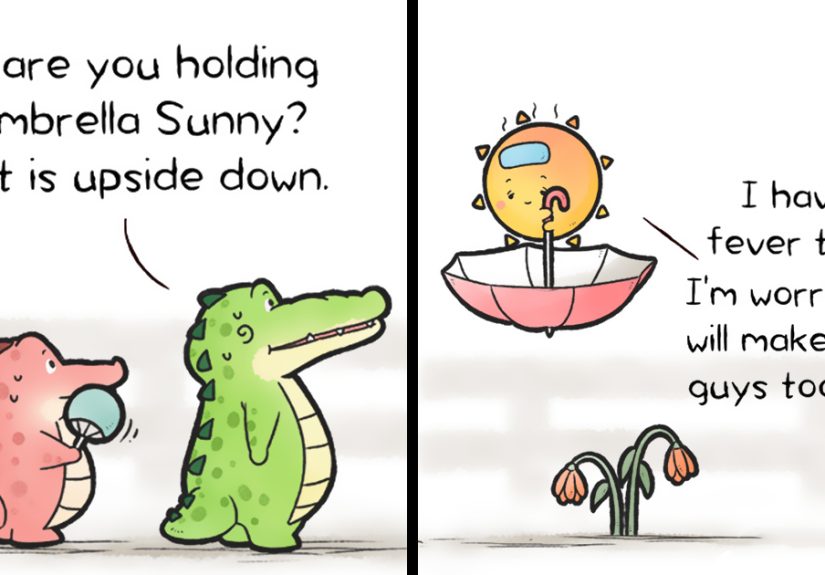
In this comic, an alligator friend arrives early, but instead of getting annoyed that others are late, he simply sits on a bench, holding an extra umbrella and a thermos of tea. When his rabbit friend shows up out of breath and apologizing, the gator answers, “You’re here. That’s what matters.” It’s a gentle reminder that real friendship values presence over punctual perfection.
2. Sharing the Last Slice
A group of animals stare at one last slice of cake. Everyone insists someone else should have it. Finally, the smallest hamster cuts it into tiny pieces so everyone can share. The lesson is simple but powerful: generosity isn’t flashy; it’s the everyday choice to make sure nobody feels left out even when there’s “not enough” to go around.
3. The Hedgehog Who Says “No”
A polite hedgehog is overwhelmed by invitations: game night, a party, a late-night call. In the final panel, the hedgehog is in pajamas, turning off their phone with the caption, “Saying no is how I say yes to rest.” Instead of glorifying constant availability, the comic models healthy boundaries and normalizes taking time to recharge.
4. The Bear Who Apologizes First
A bear accidentally snaps at a friend when stressed. You see the regret in the next panel as the bear walks back, holding a little “I’m sorry” mug of hot chocolate. The last panel shows them sitting together in silence. It illustrates that repairing relationships doesn’t always need a perfect speech just honesty, effort, and a warm drink.
5. The Turtle Who Moves Slowly on Purpose
While the other animal friends rush to cross a busy page filled with tasks and checklists, the turtle moves slowly, watering a plant and checking in on a sad fox along the way. The caption: “Slow doesn’t mean behind.” This comic quietly challenges productivity culture and suggests that being present can matter more than being fast.
6. The Cat Who Brings a Comfort Object
An anxious fox dreads going to a party, so a cat friend shows up with matching comfort scarves. They walk in together like a tiny emotional support duo. It’s a visual reminder that we can support anxious friends not by pushing them to “be normal,” but by joining them where they are and making unfamiliar spaces feel safer.
7. The Tiny Frog With Big Feelings
A little frog tells a huge elephant, “I know my problems are small, but they feel big to me.” The elephant leans down and replies, “Then they’re big enough for me to care about.” This comic showcases emotional validation the idea that someone else’s feelings don’t need to be “logical” or “objective” to deserve compassion.
8. The Fox Who Admits They’re Lost
A fox tries to act confident while clearly going in circles. Eventually, they stop and say, “I don’t know what I’m doing.” Other animals pop out of the bushes and say, “Same!” then spread out a map together. Here, vulnerability invites community; admitting we’re lost is often the first step to getting real help.
9. The Penguin Who Cheers for Others
In one strip, a penguin’s attempt to ice-skate goes hilariously wrong. In the next, they’re on the sidelines, cheering loudly as their seal friend glides elegantly. The comic quietly models mature joy: being truly happy for someone else’s success, even when we’re not the ones shining.
10. The Squirrel Who Plans for Tough Days
A squirrel fills a little “Bad Day Box” with snacks, cozy socks, and uplifting notes. On a gloomy day, another animal opens it and finds a note that says, “Past me believed in future you.” This encourages emotional preparedness not denying that bad days happen, but gently planning for them with kindness.
11. The Bird Who Listens Without Fixing
A stressed-out raccoon rants about life while a small bird sits beside them, saying nothing. In the final panel, the raccoon says, “Thanks for listening,” and the bird replies, “Thanks for trusting me.” The lesson: sometimes the most loving thing we can do is simply be present, not leap into problem-solving mode.
12. The Otter Who Makes Space at the Table
An otter saves a spot in a crowded lunch scene by placing a tiny name card that reads “New Friend.” When a shy rabbit enters, they immediately have a place to sit. It’s a visual example of everyday inclusion: you don’t need a grand campaign to be welcoming; one empty chair and a smile are enough.
13. The Panda Who Takes Breaks
The panda tries to work nonstop but keeps falling asleep at the desk. In the final panel, the panda is napping on a hammock with a to-do list pinned nearby that includes “Rest (very important).” The comic normalizes rest as part of productivity, not the enemy of it.
14. The Mouse Who Asks for Help
A tiny mouse struggles to move a huge piece of cheese alone until they finally whisper, “Can someone help me?” Suddenly, a team of animals shows up, and the cheese moves easily. It reframes asking for help as a strength an invitation to community rather than a sign of failure.
15. The Dog Who Forgives Slowly but Truly
A friend breaks the dog’s favorite toy by mistake. In the next few panels, the dog is clearly hurt and keeps some distance. Eventually, the dog returns with a repaired toy and says, “I was angry, but I still love you.” The comic shows that forgiveness doesn’t have to be instant to be real; it just has to be honest.
16. The Rabbit Who Celebrates Small Wins
A rabbit marks everyday achievements on a calendar: “Got out of bed,” “Sent that scary email,” “Watered my plant.” The final frame shows the rabbit proudly looking at the wall of tiny victories. It teaches us that progress isn’t just big promotions or milestones; it’s the quiet accumulation of small acts of courage.
17. The Bear Who Loves Their Soft Belly
Standing in front of a mirror, the bear pokes their belly and frowns. In the next panel, friends are using that same belly as a pillow during movie night. The last frame reads, “It’s okay to be soft. Some people need a soft place to land.” It’s a sweet nudge toward body acceptance and self-compassion.
18. The Alligator Who Recycles
Our gator hero spends an entire page quietly picking up trash, turning cans into plant pots and bottles into lanterns. Other animals join in, and the final panel shows a glowing, cozy forest. This comic demonstrates environmental care as a community act not perfection, but collective, tiny choices adding up.
19. The Cat Who Logs Off
A cat doomscrolls under a dark blanket of notifications. In the last panel, the cat closes the laptop and opens a window to see stars outside. A caption reads, “The world is heavy, but so is your phone. You’re allowed to put it down.” The message: it’s okay to step away from digital noise for mental health.
20. The Fox Who Stands Up to a Bully
A bully is teasing a smaller critter. The fox doesn’t fight or insult back; instead, they stand beside the victim and say, “We don’t talk to our friends like that here.” The bully, now outnumbered by kindness, backs off. The comic models assertive, nonviolent boundary-setting especially powerful for kids (and adults) who struggle to speak up.
21. The Owl Who Admits They Don’t Know
Ironically, the “wise” owl is asked a complex question and responds, “I don’t know, but we can learn together.” In the final panels, the owl and friends are reading, watching videos, and taking notes. It’s a soft attack on perfectionism and a reminder that curiosity is wiser than pretending to know everything.
22. The Duck Who Notices the Quiet Friend
At a party, one character stands alone with a drink. A duck approaches and says, “I like quiet corners too.” They stand together in companionable silence. The good example here is subtle but huge: you don’t have to “fix” a quiet friend; sometimes just keeping them company is enough.
23. The Koala Who Chooses Therapy
A koala carries a backpack labeled “Old Stuff I Never Talk About.” In the next panel, they sit with an owl therapist, slowly unpacking it. The last frame shows the backpack smaller, with the caption, “Still heavy, but not alone.” This normalizes seeking professional help instead of carrying emotional weight in silence.
24. The Dolphin Who Encourages Imperfect Art
A dolphin compares their messy sketch to a friend’s polished artwork and wants to quit. The friend says, “You’re comparing a first step to someone else’s marathon.” In the last panel, both hang their imperfect art on a line. It’s a love letter to creativity without the pressure of perfection.
25. The Whole Forest That Shows Up
In the final comic, one character posts a tiny sign: “Having a hard day. Company welcome.” The last panel zooms out to show nearly every animal we’ve met sitting around them, bringing snacks, blankets, and bad jokes. The message is simple and deeply human: you don’t have to carry hard days alone, and asking for community is an act of courage.
How Cute Animal Comics Can Quietly Change Us
These comics aren’t just internet fluff. Studies suggest that watching or viewing cute animals can lower stress, improve focus, and nudge us toward more careful, prosocial behavior. At the same time, educators and psychologists increasingly use animal-based stories to help kids (and adults) practice empathy, recognize emotions, and understand that other beings have inner lives and needs.
When you repeatedly see a kind alligator wait for friends, or a mouse bravely ask for help, those tiny stories start to sink in. You may catch yourself being more patient in line, kinder to a stressed colleague, or more forgiving of your own mistakes. Cute doesn’t mean shallow in many cases, it’s the most disarming way to talk about serious things like anxiety, self-worth, and compassion.
And because these comics usually live on social platforms and community sites like Bored Panda, their impact multiplies. People share them with captions like “Needed this today,” “This is so me,” or “I’m the frog.” Every share is a small act of care: “Here, I thought you might need this soft reminder too.”
Using Adorable Animal Comics as Gentle Life Guides
You don’t have to be a professional therapist or teacher to make use of these comics in your everyday life. Here are a few simple ways to turn your love of wholesome animal comics into something that actively supports your well-being and relationships:
- Create a “Soft Gallery”: Save your favorite comics in a folder or album labeled “For Tough Days,” so you have instant access to gentle reminders when you’re overwhelmed.
- Talk About Them With Kids: Ask questions like “What did the bunny do that was kind?” or “How did the fox feel?” to help children practice empathy and emotional vocabulary.
- Use Them as Conversation Starters: Share a comic with a friend and say, “This reminded me of how you always show up for people.” It’s a low-pressure way to express appreciation.
- Print and Post: Put a comic about rest near your workspace, a comic about boundaries on your fridge, or a comic about asking for help in a shared living area.
- Let Them Inspire Your Own Mini Comics: You don’t need drawing skills. Even stick-figure animals can help you externalize feelings, rewrite tough moments, or imagine kinder responses.
Over time, these tiny, adorable stories can become inner scripts: “What would the turtle do here?” “How would the bear apologize?” “What would the frog say about big feelings?” That’s when you know the comics have moved from your screen into your actual life.
What These Comics Have Taught Me (A Personal Experience)
Spending so much time with adorable animal comics reading them, collecting them, and sketching my own has changed the way I move through the world. At first, I followed artists like Buddy Gator’s creator simply because the characters were cute and cozy. It felt like wrapping my brain in a warm blanket after a long day. But the more I paid attention, the more I realized these comics weren’t just decoration for my feed; they were gently coaching my behavior.
One of the first lessons that stuck with me was about waiting. I used to be impatient when people were “late” late to reply, late to arrive, late to change. Then I saw a comic where a character quietly waited with a spare umbrella and a smile. Nobody got scolded for being delayed; the focus was on the joy of finally being together. That image kept popping up in my mind the next time a friend apologized for running behind. Without trying, I heard myself say, “No worries, I’m just glad you’re here,” and genuinely mean it.
Another huge shift came around asking for help. I grew up thinking that independence meant doing everything alone. Then I met countless tiny comic mice and frogs dragging giant problems across the page until they finally whispered, “Can someone help me?” In every single story, help arrived not with judgment, but with enthusiasm. It made me question why I expected my own friends to respond any differently. The first time I texted, “I’m having a rough day, can we talk?” I realized I’d basically turned into one of those little characters, and my friends responded exactly as the comics had promised: with kindness, not criticism.
These comics also softened the way I talk to myself. When I mess up now, a grumpy inner critic still shows up, but so does a sleepy cartoon bear from my mental gallery, handing me a mug of tea and muttering, “We can try again tomorrow.” That visual of a fictional bear practicing self-compassion has weirdly become more persuasive than any motivational quote I’ve read. It’s hard to argue with a bear who looks like they’ve also had a long week.
On bad mental health days, I’ve noticed that scrolling through random content rarely helps, but intentionally revisiting gentle, animal-based comics does. They don’t deny that life is hard. Instead, they quietly normalize it: some days you’re the one who needs to be carried; other days you’re the one doing the carrying. There’s a deep comfort in seeing that pattern repeated over and over, in different characters and settings, until it feels like a universal rule: you are not supposed to handle everything alone.
The most surprising lesson, though, is about scale. These comics prove that tiny acts add up. A single shared snack, a single message checking in, a single “You did your best” speech bubble none of them are grand gestures. But when you flip through a series of them, you realize that a kind life is built almost entirely out of these small, repeatable behaviors. You don’t need to become a different person overnight. You just need to be 5% more like that patient alligator, that validating elephant, or that determined little frog today.
So the next time you pause on an adorable animal comic that makes your chest ache in a good way, take an extra second. Ask yourself: “What is this tiny creature modeling for me?” Maybe it’s a boundary you need, an apology you owe, or a softness you’ve been denying yourself. These characters may be drawn with simple lines and pastel colors, but their examples are anything but trivial. In a world that often rewards loudness and speed, they quietly remind us that the bravest thing we can do is stay kind, stay gentle, and show up for each other one small, comic-sized moment at a time.