Table of Contents >> Show >> Hide
- Step 1: Decide what “chemistry” means for you
- Step 2: Build your “chemistry math” survival kit
- Step 3: Learn the language: symbols, formulas, and units
- Step 4: Master the “mole” before it masters you
- Step 5: Make the periodic table feel like a map (not a poster)
- Step 6: Understand bonding by asking one question: “Who wants electrons?”
- Step 7: Get comfortable writing and balancing reactions
- Step 8: Learn stoichiometry like it’s a recipe (because it basically is)
- Step 9: Make peace with states of matter, solutions, and concentration
- Step 10: Learn energy and equilibrium without panicking
- Step 11: Add kinetics and redoxwhere chemistry shows its timing and its electrons
- Step 12: Study like a chemist: practice problems, simulations, and safe labs
- Putting it all together: a simple 4-week starter plan
- Conclusion
- Bonus: What It Feels Like to Learn Chemistry (Real Beginner Experiences)
Chemistry is the science of what stuff is made of, how that stuff behaves, and why it sometimes decides to
dramatically change its identity (looking at you, rust). It’s also the subject that makes people say,
“I’m bad at chemistry,” usually five minutes before they successfully follow a recipe, clean a countertop,
or complain about battery lifeactivities that are basically chemistry wearing a hoodie.
If you want to learn chemistry, you don’t need a lab the size of a movie villain’s hideout. You need a plan,
reliable resources, a little math confidence, and a healthy respect for safety. Below are 12 practical steps
to help you start from “what is a mole?” to “oh… that’s why the reaction does that.”
Step 1: Decide what “chemistry” means for you
“Getting started in chemistry” can mean different things: passing a class, prepping for AP/college, exploring
a career in healthcare, or learning the science behind everyday materials. Your goal matters because it
determines the depth you need and the topics you’ll prioritize.
Try this
- Write one sentence: “I want chemistry so I can ______.”
- Pick a path: general chemistry basics first, then branch to organic, biochem, materials, or analytical.
- Choose a timeline: 4 weeks (intro), 12 weeks (solid foundation), or a semester (full general chemistry pace).
Step 2: Build your “chemistry math” survival kit
Chemistry isn’t advanced math, but it is consistent math. If you’re shaky on exponents, unit conversions,
and rearranging equations, chemistry will feel like trying to bake cookies while the measuring cups keep changing size.
Fix the basics early, and everything else gets easier.
Focus skills
- Scientific notation and exponents (so tiny/huge numbers behave).
- Significant figures (so your answers match your measurements).
- Dimensional analysis (a.k.a. unit-cancelingthe ultimate chemistry superpower).
Step 3: Learn the language: symbols, formulas, and units
Chemistry has its own “alphabet”: element symbols, formulas, charges, and state labels like (s), (l), (g), (aq).
The faster you can translate that language, the faster problems stop looking like secret code.
Mini-goals
- Know common ions (Na+, Cl−, SO42−, NH4+).
- Get comfortable with SI units (grams, liters, kelvin) and prefixes (milli-, micro-, kilo-).
- Practice reading formulas out loud: “CaCl2” becomes “calcium chloride.”
Step 4: Master the “mole” before it masters you
The mole is chemistry’s counting unit, like a “dozen,” except… more. A lot more.
It links the microscopic world (atoms and molecules) to the macroscopic world (grams you can weigh).
Once the mole clicks, stoichiometry stops being scary and starts being… only medium scary.
What to practice
- Converting between grams ↔ moles using molar mass.
- Interpreting coefficients in balanced equations as mole ratios.
- Understanding why “moles of molecules” can lead to “moles of atoms” inside those molecules.
Step 5: Make the periodic table feel like a map (not a poster)
Beginners often treat the periodic table like wall decor. Instead, treat it like a GPS for behavior:
where an element lives tells you how it tends to bond, what charges it prefers, and what trends it follows.
Trends worth knowing early
- Atomic radius: generally increases down a group and decreases across a period.
- Ionization energy and electronegativity: often increase across a period and decrease down a group.
- Families: alkali metals, alkaline earth metals, halogens, noble gasesthese are personality types.
Step 6: Understand bonding by asking one question: “Who wants electrons?”
Bonding is chemistry’s relationship drama, but it has rules. Ionic bonds are mostly electron transfers;
covalent bonds are electron sharing; metallic bonding is a community pool (everyone shares… sort of).
Learn the “why” and Lewis structures become less like art class and more like logic.
Key checkpoints
- Draw Lewis structures for common molecules (H2O, CO2, NH3).
- Use electronegativity to predict bond type and polarity.
- Connect shape (VSEPR) to properties (like boiling points and solubility).
Step 7: Get comfortable writing and balancing reactions
Chemical equations are the grammar of chemistry. Balancing isn’t optionalit’s conservation of atoms.
Start with simple reactions (synthesis, decomposition, combustion) and work up to net ionic equations.
A quick example
If you write: H2 + O2 → H2O, it’s not balanced (two oxygens vanish).
Balanced: 2H2 + O2 → 2H2O. Nothing disappears. Chemistry is dramatic,
but it’s not magic.
Step 8: Learn stoichiometry like it’s a recipe (because it basically is)
Stoichiometry is the “how much” of chemistry: how much reactant you need and how much product you can make.
The trick is to rely on balanced equations and treat units like puzzle pieces that must fit.
Start with these problem types
- Mass-to-mass conversions (grams of A → grams of B).
- Limiting reactant problems (who runs out first?).
- Percent yield (how close reality got to theory).
Step 9: Make peace with states of matter, solutions, and concentration
Chemistry lives in phases: solids, liquids, gases, and solutions. You’ll need to understand intermolecular forces,
why some substances dissolve, and how concentration works (molarity is the big one).
Practical skills
- Read phase diagrams at a basic level (where solid/liquid/gas are stable).
- Use molarity (mol/L) and dilution ideas.
- Recognize strong vs. weak electrolytes (who really splits into ions?).
Step 10: Learn energy and equilibrium without panicking
Thermochemistry explains heat in reactions; thermodynamics explains what’s possible and what’s favorable;
equilibrium explains when reactions “settle.” This is where chemistry becomes less “memorize” and more “reason.”
Core ideas to nail down
- Endothermic vs. exothermic and what enthalpy means in plain English.
- Le Châtelier’s principle (systems push back when you mess with them).
- Acids/bases and pH as a logarithmic scale (tiny changes can matter a lot).
Step 11: Add kinetics and redoxwhere chemistry shows its timing and its electrons
Two reactions can have the same products but move at wildly different speeds. Kinetics is the “how fast”:
rates, activation energy, catalysts. Redox is the electron bookkeeping behind batteries, corrosion,
and plenty of real-world chemistry.
What to practice
- Identify oxidation numbers and spot what’s oxidized vs. reduced.
- Understand catalysts as “lowering the hill,” not changing the destination.
- Interpret simple rate graphs (concentration vs. time) and what they imply.
Step 12: Study like a chemist: practice problems, simulations, and safe labs
Chemistry is learned by doingespecially problems. Reading helps, but it’s like watching workout videos and
expecting abs. (No shade. I’ve tried.) Use a solid textbook or course sequence, then build a routine:
learn concept → work examples → do practice → check mistakes → repeat.
Smart study moves
- Daily reps: 20–40 minutes beats a single “Sunday panic marathon.”
- Active recall: close the notes and explain the idea in your own words.
- Simulations: use interactive tools to “see” particles and trends.
- Virtual labs first: if you don’t have a supervised lab, don’t improvise one. Use virtual labs and simulations instead.
Safety note (seriously)
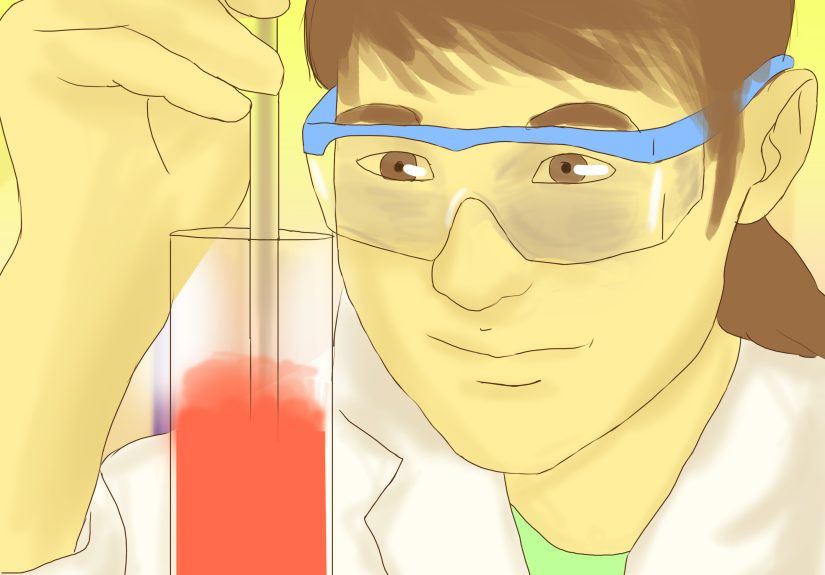
Chemistry can be hands-on, but it must be safe. If you’re doing any experiments, do them in a supervised
lab setting (school, approved program) and follow your instructor’s rules, including proper eye protection.
Avoid mixing household chemicals “to see what happens”that’s how you accidentally create dangerous fumes.
Chemistry rewards curiosity, but it also rewards caution.
Putting it all together: a simple 4-week starter plan
If you want structure, here’s a starter plan that doesn’t require you to quit your life:
- Week 1: units, sig figs, scientific notation, intro atoms + periodic table trends.
- Week 2: moles, molar mass, basic bonding + Lewis structures.
- Week 3: balancing equations + stoichiometry (including limiting reactants).
- Week 4: solutions + molarity, intro acids/bases, intro energy ideas.
After that, keep going into equilibrium, kinetics, and redoxthose topics turn “I memorized chemistry”
into “I can explain chemistry.”
Conclusion
Starting chemistry isn’t about being “naturally good at science.” It’s about building a foundation in the right order:
math and units, chemical language, atoms and bonding, reactions and quantities, then the bigger ideas
(energy, equilibrium, kinetics, redox). If you work consistently, chemistry stops feeling like a pile of facts
and starts feeling like a set of tools you can actually use to understand the worldfood, medicine,
materials, the environment, and yes, why your phone battery slowly loses its will to live.
Bonus: What It Feels Like to Learn Chemistry (Real Beginner Experiences)
Most beginners have the same emotional storyline, and it usually goes something like this:
first, chemistry looks “easy” because you recognize words like atom and energy. Then you meet
units and realize that chemistry is secretly a unit-conversion course wearing a lab coat.
You do your first stoichiometry problem and think, “I understand the concept,” and then the calculator returns
a number that feels personally insulting. That’s normal.
Another very common experience is the “I can do it in class, but not at home” effect. In class, an example is
guided, the numbers are friendly, and the teacher is basically narrating the thought process.
At home, the problem is silent, the numbers are less friendly, and your brain tries to negotiate:
“What if we simply… don’t become a chemistry person?” The fix isn’t talentit’s practice that’s honest and specific.
Beginners who improve fastest aren’t the ones who never make mistakes; they’re the ones who track mistakes.
“I forgot to convert milliliters to liters,” “I used the wrong molar mass,” “I balanced atoms but forgot charge.”
That kind of mistake list is pure gold because it turns confusion into a to-do list.
You’ll probably also experience a few satisfying “click” moments. One is when the mole stops being a mysterious
monster and becomes a bridge between microscopic particles and grams you can measure. Another is when you realize
the periodic table isn’t triviait’s a predictive tool. Suddenly, you can guess which elements form +1 ions,
which ones cling to electrons, and why certain bonds are polar. That’s when chemistry starts to feel less like
memorizing and more like decoding patterns.
Many learners say simulations are where ideas become real. When you can “see” particles moving faster as
temperature rises, or watch a model of molecules forming and breaking, abstract concepts get a home in your
imagination. Virtual labs can also be surprisingly confidence-building because you get to practice procedures
and decision-making without the stress of real chemicals or real breakable glassware.
Finally, beginners often learn that chemistry has a weird sense of humor: tiny errors can cause huge problems.
Forgetting a negative sign, rounding too early, or skipping units can derail a whole solution. The upside is
that chemistry also teaches a superpower: once you become the kind of person who checks units automatically,
you start catching mistakes before they happenin chemistry and in real life. And that’s a pretty good trade:
a little patience now for a skill that keeps paying you back.