Table of Contents >> Show >> Hide
- Secret 1: It’s not actually a tapestry (it’s an embroidery)
- Secret 2: It’s hugeand the size is part of the message
- Secret 3: It was probably made in England, not France
- Secret 4: It has a “producer” in the castBishop Odo
- Secret 5: The Latin captions are medieval subtitlesand they shape what you “see”
- Secret 6: The borders aren’t “decoration”they’re a parallel story
- Secret 7: Halley’s Comet shows upand it’s doing narrative work
- Secret 8: It’s propaganda… but it’s complicated propaganda
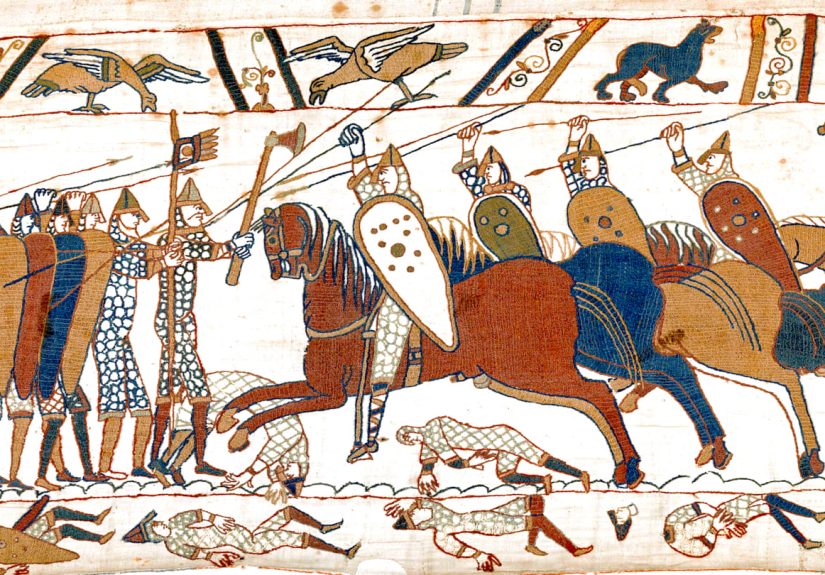
- Secret 9: The “arrow in the eye” moment is still debated
- Secret 10: It’s a technical masterclass disguised as a story
- Secret 11: It’s one of our best visual guides to 11th-century life
- Secret 12: The ending is missingand modern history keeps getting stitched onto it
- Conclusion: A stitched epic that still argues back
- Experiences: 12 Ways to Enjoy the Bayeux Tapestry Like You’re There (About )
- SEO Tags
The Bayeux Tapestry is basically the Middle Ages’ greatest “previously on…” recapexcept it’s nearly 230 feet long,
stitched with wool on linen, and it’s been delivering 1066 drama for almost a thousand years.
If you’ve ever wished history came with captions, visual effects, and a few weird little side plots in the margins,
congratulations: you’re about to meet your new favorite medieval masterpiece.
On the surface, it’s a straightforward story about the Norman Conquest of England and the Battle of Hastings.
Underneath? It’s a layered mix of politics, propaganda, design tricks, and tiny details that historians still argue over.
Here are 12 fascinating “secrets” that make the Bayeux Tapestry much more than a long piece of old fabric with big opinions.
Secret 1: It’s not actually a tapestry (it’s an embroidery)
The first secret is the one that makes textile folks gently clear their throats: the Bayeux Tapestry is not a tapestry in the strict sense.
Tapestry usually means images are woven into the cloth on a loom. This one is stitched onto a linen ground using colored wool yarn.
It’s closer to a giant illustrated manuscriptjust made with thread instead of ink.
Why does this matter? Because embroidery lets you “draw” with stitches: outline a horse’s leg, fill a shield, and add lettering
all without needing the loom setup of true tapestry weaving. It also helps explain how the work could be created in panels and joined,
like a stitched-together epic rather than one continuous woven bolt.
Secret 2: It’s hugeand the size is part of the message
The Bayeux Tapestry stretches roughly 68–70 meters long and is only about half a meter tall for the main action,
like an ancient widescreen film strip. That shape is not accidental.
A long, continuous horizontal format is perfect for storytelling: it keeps your eye moving forward, scene after scene,
like you’re physically walking through the plot.
And yes, it’s designed to impress. A work this large is a public statement: “Our version of events deserves a wall.”
Even today, when you see how much narrative is packed into a thin band of fabric, the scale still feels like a flex.
Secret 3: It was probably made in England, not France
The tapestry lives in Bayeux, Normandyso it’s easy to assume it was made there. But a strong scholarly consensus places its production in England,
often linked to workshops associated with Canterbury and other English centers of embroidery.
Style clues, language spellings, and embroidery traditions point that direction.
The irony is delicious: a celebrated artifact telling a Norman triumph may have been stitched by English hands.
If you want a single object that captures how tangled conquest can bethis is it.
Secret 4: It has a “producer” in the castBishop Odo
Many historians think the tapestry was commissioned by Bishop Odo of Bayeux, William’s half-brother.
Odo isn’t just a background figure eitherhe appears in the narrative, including near the Battle of Hastings,
where he’s sometimes interpreted as rallying troops.
That’s one reason people see the work as more than a neutral record. When the likely sponsor is literally on screen,
you should read the whole production the way you’d read a documentary funded by someone who really wants to look good.
Secret 5: The Latin captions are medieval subtitlesand they shape what you “see”
The tapestry isn’t silent. It includes Latin inscriptions (often called tituli) that label people, places, and events.
Those captions can feel straightforward“Here Harold…” “Here Duke William…”but they also guide interpretation.
Captions do two powerful things. First, they reduce ambiguity: even if two armored guys look alike, the words tell you who matters.
Second, they subtly frame meaning. A scene of an oath, a coronation, or a battle isn’t just an imageit’s an argument presented in text and thread.
Secret 6: The borders aren’t “decoration”they’re a parallel story
Above and below the main action, you’ll find animals, hybrids, fable-like scenes, and odd little vignettes that sometimes feel unrelated.
These borders can function like commentary, mood-setting, or even visual foreshadowing.
Think of them as the medieval equivalent of a director sneaking symbolism into the frame.
While the main strip shows kings, earls, ships, and swords, the margins can hint at chaos, moral lessons, or cultural anxieties.
They’re also a reminder that medieval audiences enjoyed layered storytellingserious politics in the center, strange creatures at the edges.
Secret 7: Halley’s Comet shows upand it’s doing narrative work
One of the most famous “blink and you’ll still see it” moments is the depiction of a cometwidely identified as Halley’s Cometappearing in 1066.
The tapestry presents it like an ominous headline in the sky.
In medieval thinking, unusual celestial events could be read as signs: warnings, judgments, or shifts in fortune.
Including the comet isn’t just a cool astronomy cameo. It helps build the sense that the story’s outcome is bigger than human politics
as if the universe itself is leaning into the plot.
Secret 8: It’s propaganda… but it’s complicated propaganda
The Bayeux Tapestry often gets called “medieval propaganda,” and that’s fairespecially if it was commissioned by powerful Normans
and presents events in a way that supports William’s claim.
But the interesting part is that it’s not a cartoonishly simple “Normans good, everyone else bad” poster.
Harold isn’t depicted as a monster 24/7; he appears capable, active, and important. That complexity may be strategic.
A believable rival makes the eventual victory feel more legitimate: if the opponent is serious, winning looks earned.
In other words: it persuades partly by appearing to record, not merely to boast. That’s an advanced storytelling move,
and it still works on modern viewers who assume “old = unbiased.” (History would like a word.)
Secret 9: The “arrow in the eye” moment is still debated
If you know one Bayeux image, it’s probably the figure associated with King Harold’s deathoften shown with an arrow near the eye.
That scene has become iconic, but scholars have debated whether the arrow detail is original or the result of later repairs and alterations.
Why would that matter? Because the imagery changes the moral read. Medieval iconography sometimes punished oath-breakers symbolically
and an injury to the eye could signal spiritual “blindness” or perjury. If the arrow is original, it may underscore a specific accusation.
If it’s later, it shows how even famous “primary sources” can be edited by time.
Secret 10: It’s a technical masterclass disguised as a story
The tapestry uses a limited but effective stitch vocabularyespecially outline stitches for contours and lettering,
plus laid-and-couched work to fill larger shapes with color.
This creates crisp silhouettes that read clearly from a distance, the way bold linework helps a comic panel “pop.”
It also uses a relatively restrained palette compared to what your brain might expect from “royal medieval splendor.”
The colors are chosen for contrast and legibility, not realism. Horses aren’t always “horse-colored.”
Clothing reads as pattern and status more than perfect naturalistic shading. It’s design thinking, centuries before anyone called it that.
Secret 11: It’s one of our best visual guides to 11th-century life
Historians love the Bayeux Tapestry because it’s packed with detail:
ships under construction, armor styles, weapons, feast scenes, horses, buildings, and everyday objects.
It doesn’t just show “what happened.” It shows what people thought was worth depictingand how they pictured their world.
For example, the ship scenes aren’t just travel filler. They show logistics: timber, tools, crews, supplies, and the sheer effort of mobilization.
That helps modern audiences understand conquest as a project, not just a battle.
Of course, it’s still an artwork, not a neutral photo. But as a visual source, it’s unusually richespecially for a period where images and written records
don’t always give you this many concrete “here’s what stuff looked like” clues in one place.
Secret 12: The ending is missingand modern history keeps getting stitched onto it
The tapestry doesn’t reach a neat “happily ever after” in fabric form. A portion at the end appears to be missing,
and many researchers think it may once have continued beyond the final surviving battle scenes.
That missing section fuels one of the best historical “what if” conversations: what did the creators want the final takeaway to be?
Coronation? Divine approval? A tidy wrap-up of legitimacy?
Meanwhile, the tapestry is still part of living history.
It’s been digitized in high resolution for close study, and it’s also been at the center of modern debates about conservation and travel,
including plans for high-profile exhibitions and museum renovations. The story of 1066 is finished; the story of this object isn’t.
Conclusion: A stitched epic that still argues back
The Bayeux Tapestry is famous because it’s beautiful, rare, and historically valuablebut it’s fascinating because it’s strategic.
It tells a story with pacing, captions, symbolism, and a very clear sense of who should look justified when the credits roll.
The deeper you look, the more it behaves like a modern narrative: a blend of documentation and persuasion, spectacle and subtext.
So the next time someone calls it “just an old tapestry,” you can smile politely and say,
“Correct. It’s an old embroideryand it’s been winning arguments since the 11th century.”
Experiences: 12 Ways to Enjoy the Bayeux Tapestry Like You’re There (About )
Reading the Bayeux Tapestry is less like staring at a painting and more like watching a slow, silent seriesone you control with your eyes and attention.
One fun “experience” is to treat it like a storyboard: stand (or scroll) at the beginning and ask, “Who is the main character right now?”
The answer changes. Sometimes it’s Edward the Confessor. Sometimes it’s Harold. Sometimes it’s William. Power shifts, and the tapestry makes you feel it.
Another experience: follow the horses. They’re everywhere, and they work like emotional punctuation marks.
Calm scenes have calm postures; tense moments suddenly feel crowded with legs and motion.
You start noticing that the artists used repeated shapes the way modern illustrators use visual rhythmso your eye stays moving.
Try a “caption-only” pass. Imagine the images are blurred and you’re just reading the Latin labels (or translations).
The story becomes brisk, almost blunt: here someone goes, here someone speaks, here someone dies.
Then switch and do an “image-only” passignore the words and watch how much the visuals imply:
gestures, pointing, the way bodies face each other, who sits higher, who stands apart. The tapestry becomes a lesson in nonverbal storytelling.
If you like mystery, zoom in on the borders and hunt for your favorite weird detailan animal doing something suspicious,
a tiny scene that feels like a fable, or a moment that seems to comment on what’s happening above it.
The margins can feel like a medieval version of “Easter eggs,” and once you notice them, you can’t unsee them.
For a hands-on vibe, do the “stitch imagination test.” Pick one small sectionjust a hand, a helmet, a ship’s sailand imagine the labor:
choosing thread colors, keeping outlines consistent, filling areas cleanly so the figures read from a distance.
Even without being a textile expert, you start respecting the project management alone.
The tapestry becomes less like “an artifact” and more like an enormous creative job that real people had to finish on a deadline.
Finally, try sharing one scene with a friend and asking, “What do you think the tapestry wants you to believe here?”
That question turns viewing into a conversation instead of a lecture.
And suddenly the Bayeux Tapestry feels surprisingly modern: not just historyhistory with opinions, pacing, and a point of view.