Table of Contents >> Show >> Hide
- What “Balance” Really Means (And Why It Gets Better With Practice)
- Safety First: The “No Drama” Setup
- The Core Idea: Make Balance Easier, Then Make It Real
- Easy Balance Exercises To Improve Stability (Step-by-Step)
- 1) Weight Shifts (The Quiet MVP)
- 2) Feet-Apart to Feet-Together Stand
- 3) Tandem Stance (Heel-to-Toe Stand)
- 4) Heel-to-Toe Walk (Tandem Walk)
- 5) Single-Leg Stand (Start With “Assisted”)
- 6) Sit-to-Stand (Chair Stands)
- 7) Calf Raises + Toe Raises (Ankles = Stability Headquarters)
- 8) Side Steps (Sidestepping)
- 9) Three-Way Leg Kicks (Front/Side/Back)
- 10) Step-Ups (Stairs, But Make Them Training)
- 11) Clock Reach (A Smart “Real Life” Drill)
- 12) Tai Chi (Low Impact, High Payoff)
- How Often Should You Do Balance Exercises?
- A Simple Weekly Plan (No Guessing, No Overthinking)
- Progress Without Getting Reckless
- Common Mistakes That Make Balance Training Less Effective
- When to Talk to a Professional
- Conclusion: Steadier Starts Small
- Experiences People Commonly Notice When They Start Balance Training (Extra)
- SEO Tags
Balance is one of those “invisible” fitness skillsuntil it suddenly becomes extremely visible, like when you’re carrying laundry down the stairs and your sock decides to test gravity.
The good news: balance is trainable at any age, and you don’t need fancy equipment, a yoga retreat, or a life coach named “Sky.” You need a few simple moves, a little consistency,
and a plan that makes your body feel steady instead of shaky.
This guide walks you through easy balance exercises to improve stability, plus smart progressions, safety tips, and a simple weekly routine you can actually stick with.
You’ll train the three big “balance systems” (your eyes, inner ear, and body-position sensors), while building the strength and coordination that keep you upright in real life.
What “Balance” Really Means (And Why It Gets Better With Practice)
Balance isn’t just standing on one leg like a flamingo doing taxes. It’s your brain coordinating signals from:
vision (what you see), vestibular system (inner earyour motion/tilt detector),
and proprioception (your body’s “where am I in space?” sensors in feet, ankles, knees, hips, and spine).
If any part is undertrainedor overwhelmed by fatigue, stress, illness, or poor sleepyour stability can feel off.
The fastest way to improve stability is to combine balance practice with leg, hip, and core strength.
That’s why many fall-prevention programs pair balance drills with functional moves like sit-to-stand and controlled stepping.
Safety First: The “No Drama” Setup
Balance training should challenge youbut it should not turn your living room into a stunt show. Use these safety rules:
- Use a support: Start near a kitchen counter, sturdy chair, or a corner wall where you can catch yourself quickly.
- Clear the area: Move rugs, cords, and clutter. Yes, even that “decorative” pile of shoes.
- Wear stable footwear: Barefoot can be fine on safe surfaces, but avoid slippery socks on hardwood.
- Stop if symptoms hit: If you feel dizzy, lightheaded, chest pain, numbness, or unusual shortness of breath, stop and seek medical advice.
- If you have ongoing balance problems: Get checkedbalance issues can be related to medications or medical conditions and deserve attention.
The Core Idea: Make Balance Easier, Then Make It Real
Most people improve fastest when they train balance in two ways:
- Static stability (holding still): helps you build control and confidence.
- Dynamic stability (staying steady while moving): helps you in the real worldwalking, turning, reaching, stepping over stuff, and navigating crowds.
The exercises below start with “easy wins” and build toward “real-life stability.” If an exercise feels too hard, use more hand support or shorten the time.
If it feels too easy, progress it using the options listed.
Easy Balance Exercises To Improve Stability (Step-by-Step)
1) Weight Shifts (The Quiet MVP)
Weight shifts teach your nervous system how to control your center of mass. Translation: you become less wobbly when you lean, reach, or change direction.
- Stand tall with feet hip-width apart, near a counter.
- Shift weight slowly to the right foot until you feel pressure through that foot.
- Pause 2–3 seconds, then shift to the left.
- Repeat for 8–12 slow shifts per side.
Make it harder: Shift forward/back, or add gentle head turns (only if steady and symptom-free).
2) Feet-Apart to Feet-Together Stand
Narrowing your base of support challenges balance without needing big movement.
- Stand with feet shoulder-width apart, eyes open. Hold 10–30 seconds.
- Bring feet closer. Hold 10–30 seconds.
- Try feet together. Hold 10–30 seconds.
Pro tip: Keep a soft bend in the kneeslocked knees are drama queens.
3) Tandem Stance (Heel-to-Toe Stand)
Tandem stance is a classic stability drill because it mimics the balance demands of walking in a straight line.
- Stand tall near a counter.
- Place one foot directly in front of the other, heel touching toe.
- Hold 10–30 seconds, then switch feet.
- Do 2–3 rounds per side.
Make it harder: Light fingertip support only, then no hands. (If you’re not steady with eyes open, don’t close your eyes.)
4) Heel-to-Toe Walk (Tandem Walk)
This is tandem stance in motiongreat for ankle control, coordination, and smoother gait.
- Walk forward in a straight line.
- Place your heel directly in front of your opposite toe each step.
- Take 10–20 steps, turn carefully, and repeat once.
Make it easier: Widen your steps slightly or stay close to a wall for “just in case” support.
5) Single-Leg Stand (Start With “Assisted”)
Standing on one leg trains foot/ankle stability, hip strength, and core controlbasically your full “stay upright” toolkit.
- Stand near a counter with light hand support.
- Lift one foot slightly off the floor (knee bent is fine).
- Hold 10 seconds. Repeat 3–5 times per leg.
Progression ladder: Two hands → fingertips → one hand → no hands → add gentle arm reaches.
6) Sit-to-Stand (Chair Stands)
This looks simple because it is simpleand it’s incredibly useful. Getting up from a chair is real life strength and balance.
- Sit on a sturdy chair. Feet flat, hip-width apart.
- Lean slightly forward and stand up using legs (use hands if needed).
- Sit down slowly with control.
- Do 8–12 reps for 2–3 sets.
Make it harder: Slow the lowering phase (3 seconds down) or use a slightly lower chair (only if safe).
7) Calf Raises + Toe Raises (Ankles = Stability Headquarters)
Your ankles make tiny “micro-corrections” all day long. Strong calves and shins help you react quickly when your balance shifts.
- Hold a counter lightly.
- Rise onto toes. Pause 1 second. Lower slowly. Do 10–15 reps.
- Rock back onto heels, lifting toes. Pause 1 second. Lower. Do 10–15 reps.
8) Side Steps (Sidestepping)
Side-to-side control is often the missing linkespecially for catching yourself when you stumble.
- Stand tall, knees slightly bent.
- Step to the right, then bring the left foot in.
- Take 8–12 steps each direction.
Make it harder: Add a mini resistance band above the knees if you’re already steady.
9) Three-Way Leg Kicks (Front/Side/Back)
Controlled leg movements train hip stability on the standing leg while the moving leg challenges coordination.
- Hold a chair lightly.
- Kick one leg forward (small range), return. Kick to the side, return. Kick back, return.
- That’s 1 rep. Do 6–10 reps per leg.
Focus: Move slowly; your standing leg is doing the real work.
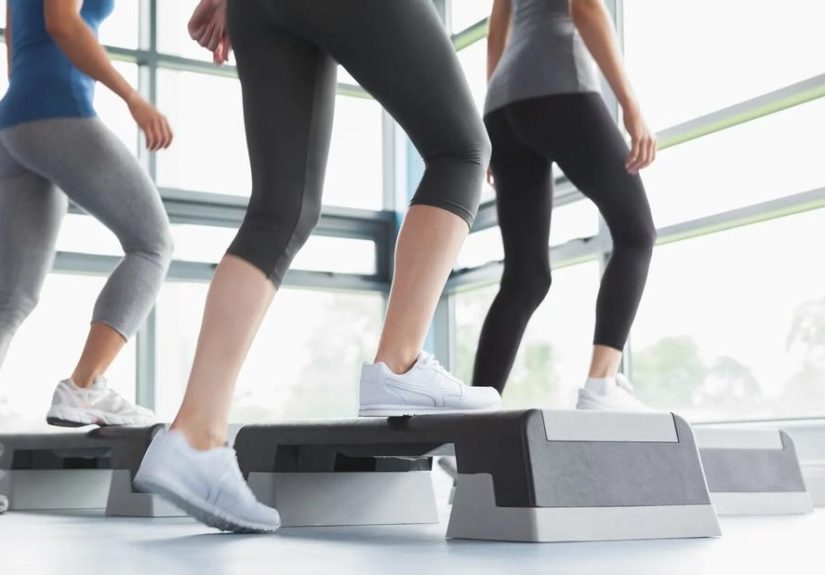
10) Step-Ups (Stairs, But Make Them Training)
Step-ups build strength and stability for stairs and curbstwo places where balance issues love to show up uninvited.
- Use a bottom stair or low step.
- Step up with the right foot, bring left foot up.
- Step down with control. Repeat 8–10 reps, then switch lead leg.
Make it safer: Use a handrail. Control beats speed every time.
11) Clock Reach (A Smart “Real Life” Drill)
Reaching while staying stable is one of the most practical balance skills. This drill trains controlled leaning and recovery.
- Stand near a counter, weight on one leg.
- Imagine a clock on the floor: 12 is straight ahead, 3 to the right, 6 behind, 9 to the left.
- Tap the floor lightly with your free foot at 12, 3, 6, 9returning to center each time.
- Do 1–2 rounds per leg.
12) Tai Chi (Low Impact, High Payoff)
Tai chi is gentle, controlled movement that continuously shifts your weight and challenges stability in a calm, joint-friendly way.
If you want a balance practice that feels more like “moving meditation” than “workout,” tai chi is a strong option.
Beginners can start with a class (in person or video), focusing on slow weight transfers, posture, and smooth steps.
Consistency matters more than perfection.
How Often Should You Do Balance Exercises?
For most people, balance improves with frequent, short practice. Think “snacks,” not “feast.”
A realistic target is 10–15 minutes, 3–5 days per week, plus a couple days of strength work (even light strength).
If you’re at higher risk of falls, structured exercise interventions are commonly recommended as part of prevention.
A Simple Weekly Plan (No Guessing, No Overthinking)
Option A: 10-Minute Daily Balance Circuit (Beginner-Friendly)
- Weight Shifts – 1 minute
- Feet-Together Stand – 2 x 20 seconds
- Tandem Stance – 2 x 20 seconds each side
- Heel-to-Toe Walk – 10–20 steps
- Single-Leg Stand (assisted) – 3 x 10 seconds each leg
- Calf Raises – 10 reps
Option B: 3-Day Plan (Balance + Strength Combo)
Day 1: Sit-to-Stand, Step-Ups, Tandem Walk
Day 2: Side Steps, Three-Way Kicks, Single-Leg Stand
Day 3: Clock Reach, Calf/Toe Raises, Tai Chi (10–20 minutes)
Progress Without Getting Reckless
If you want to improve stability safely, progress one variable at a time:
- Reduce hand support (from hands → fingertips → hover).
- Narrow your base (feet apart → together → tandem).
- Add movement (holds → walking → stepping/reaching).
- Add time (10 seconds → 20 → 30).
- Add “real life” complexity (turning, stepping over obstacles, carrying something light).
A smart rule: if your form falls apart, the exercise got too hard. Dial it back.
Balance training is a conversation with your nervous system, not an argument you have to win.
Common Mistakes That Make Balance Training Less Effective
- Rushing reps: Speed hides wobble. Slow exposes itand that’s how you improve.
- Staring at your feet: Use your eyes to stabilize, but keep your head up (like you’re walking in public).
- Holding your breath: Exhale slowly. Your core likes oxygen too.
- Skipping strength: Balance isn’t only coordinationyour legs and hips need power and endurance.
- Going “hard mode” too soon: If you aren’t steady with eyes open, don’t jump to eyes closed or unstable surfaces.
When to Talk to a Professional
If you’ve had recent falls, feel persistently unsteady, or notice dizziness that doesn’t make sense, talk to a healthcare provider.
A physical therapist can assess static and dynamic balance and build a plan that matches your needs, including safe reaction training and functional movement practice.
Conclusion: Steadier Starts Small
If you want better stability, you don’t need to overhaul your entire life. Start with two things:
practice balance a little, often and build the strength that supports it.
A few minutes of weight shifts, tandem work, and controlled single-leg practice can pay off in walking confidence, smoother movement, and fewer “whoaalmost fell” moments.
Keep it simple, keep it safe, and keep showing up. Your future self (and your reminder app) will thank you.
Experiences People Commonly Notice When They Start Balance Training (Extra)
When people begin doing easy balance exercises to improve stability, the first “result” is often emotional, not physical: confidence.
Not the loud, “I could do parkour right now” kind of confidencemore like a quiet feeling that your body is listening again.
Many notice that everyday movements start to feel less unpredictable. Stepping off a curb, turning quickly in the kitchen, or walking on uneven ground stops feeling like a surprise test.
In the early days, it’s normal to feel wobbly during basic drills like tandem stance or a single-leg standeven if you’re otherwise fit.
People often assume wobble equals weakness, but wobble is frequently a coordination issue: your nervous system is recalibrating how fast it needs to make corrections.
This is why slow practice works so well. When you do controlled reps (instead of rushing), you give your brain time to build better “maps” for balance.
Many beginners find that their best progress comes from doing short sessions more often, rather than one intense session that leaves them tired and shaky.
Another common experience: the feet wake up. People begin to feel the floor more clearlypressure under the big toe, the heel, the outer edge of the foot.
That’s proprioception getting louder, and it matters because your feet are your foundation.
Once that foundation improves, people often report fewer “ankle-y” moments where the foot rolls inward on a crack in the sidewalk.
It’s not magicit’s stronger ankles plus quicker corrections.
A fun surprise is how much hips and glutes influence stability. People doing side steps or three-way kicks often realize,
“Oh. My hips are doing a lot of negotiating to keep me upright.” Exactly.
Hip muscles help control side-to-side motion and keep the pelvis steady.
As those muscles get stronger, some people notice improvements in walking speed, stair comfort, and how stable they feel standing in one spotlike waiting in line or cooking.
Many also notice that balance practice changes posture without them trying to “fix posture.”
When you train stability, you naturally stack your ribs over your pelvis and stop leaning into your joints.
People describe it as feeling “taller” or “lighter,” especially after drills that emphasize standing tall with soft knees.
And because balance work often encourages calmer breathing, some say it feels strangely relaxingeven though their ankles are working overtime.
If people add tai chi, the experience is often different from typical workouts. Instead of chasing sweat,
they chase smoothness. The steady weight shifts and controlled steps can make movement feel more coordinated.
Over time, people commonly report they trip less, recover faster when they do stumble, and feel less anxious about losing balance.
That reduced fear matters because when you’re tense and cautious, your movement can become stiffironically making balance worse.
Calm, controlled practice tends to break that loop.
Finally, there’s a very practical experience that shows up after a few weeks: people start using balance exercises “in the wild.”
They’ll do a quick single-leg stand while brushing teeth, try heel-to-toe walking down a hallway, or practice sit-to-stand during TV commercials.
It becomes a habit, not a chorebecause it’s easy, doesn’t require equipment, and the payoff is immediate: you feel steadier.
That’s the real win. Better stability isn’t only about performanceit’s about moving through your day with fewer near-misses and more control.