Table of Contents >> Show >> Hide
- First: What is Neuralink actually building?
- The “pig phase”: what Neuralink showed and why it mattered
- So… why pigs, specifically?
- 1) Size and anatomy: big enough to feel “human-like” in surgery
- 2) Brain characteristics: a useful translational step beyond rodents
- 3) Long-term living testbed: biology is the real boss fight
- 4) Behavior and signal mapping: pigs make “readable” demos possible
- 5) Practicality and ethics: less controversy than primates, still serious responsibility
- What pig testing can prove (and what it can’t)
- Regulation and oversight: how animal testing is supposed to be governed
- How pig testing fits into the path toward humans
- FAQ: quick answers people actually ask
- Experiences and real-world takeaways from the “pig phase” (extra 500+ words)
- Conclusion
- SEO tags (JSON)
If you ever expected the future to arrive quietlylike a polite software updateNeuralink disagrees.
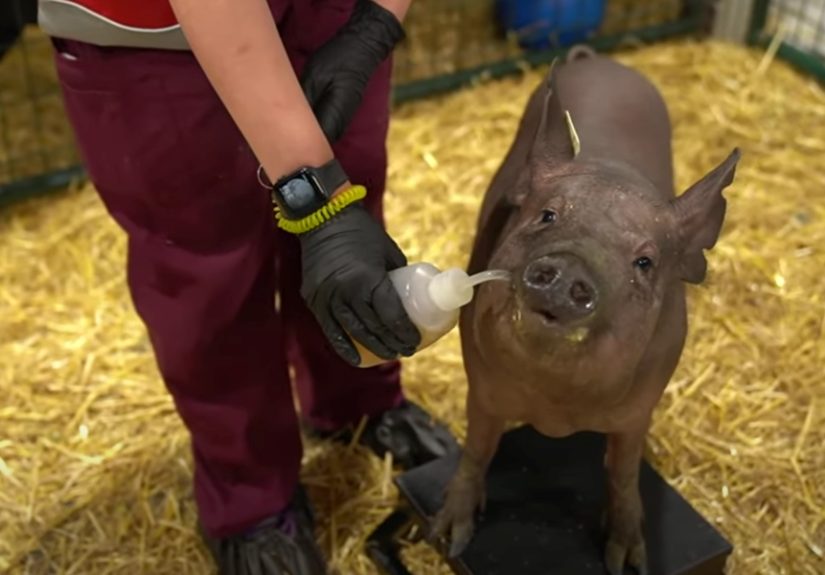
Elon Musk’s brain-computer interface company has repeatedly brought pigs into the spotlight,
turning farm animals into the most unexpected guests in the “What’s next?” conversation.
And that leads to the obvious question: why pigs?
The short version: pigs are big enough, biologically useful enough, and practical enough to help engineers
test a brain implant system before it ever touches a human volunteer. The longer version is where it gets
interestingbecause “testing on pigs” isn’t about pig cosplay or shock value. It’s about the unglamorous,
deeply technical grind of turning a bold idea into a device that can survive inside living tissue, transmit
clean signals, and be implanted safely and repeatably.
Let’s break down what Neuralink is trying to build, what pig testing can actually prove, where it can’t,
and why the pig era matters more than the memes.
First: What is Neuralink actually building?
Neuralink sits in the brain-computer interface (BCI) world: technology meant to read (and, in some visions,
eventually write) signals in the brain and translate them into commands for computers and devices.
The near-term goal that’s been discussed publicly is practical and medical: helping people with paralysis
interact with digital toolsmoving a cursor, selecting letters, controlling assistive techusing neural activity.
In plain English, this is less “telepathy” and more “hands-free computer control… but powered by neurons.”
That may sound like a sci-fi flex, but it’s also a serious engineering and biology problem: brains are soft,
living tissue that doesn’t love foreign objects, and “great signal quality on day 1” is not the same thing
as “works reliably for months or years.”
The device is not just a chipit’s a whole system
When people say “Neuralink implant,” it’s easy to imagine a single magic coin being dropped into a skull.
Real BCIs are systems: the implant, electrode threads, firmware, wireless telemetry, power management,
software for decoding signals, and a surgical process that must be consistent.
Neuralink’s public presentations have emphasized a surgical robot designed to insert ultra-thin electrode threads
with high precision. That focus matters because the surgery is not an accessoryimplanting the device is
part of the product. If the implantation process is too variable, too slow, or too risky, the device doesn’t scale,
no matter how flashy the demo looks.
The “pig phase”: what Neuralink showed and why it mattered
Neuralink’s pig demos put a spotlight on something engineers love and the public rarely sees:
proof that the hardware can record meaningful neural signals in a living, moving animal.
Pigs were shown with implants, without implants, and even with an implant removedeach meant to answer
a different question about feasibility, safety, and reversibility.
Why the snout keeps coming up
In Neuralink’s pig demonstrations, the pig’s snout wasn’t just a cute cameoit was a convenient neuroscience “signal source.”
A pig’s snout is extremely sensitive and maps to a large region in the somatosensory cortex.
That makes it easier to correlate real-world touch and movement with measurable neural spikes.
Translation: when the pig snuffles around, you can often see the data change in ways that are easier to interpret
than, say, “the pig had a thought… trust me.”
Also, snouts are brutally honest. You can’t tell a pig to “pretend you’re excited for the demo.”
If the snout is doing snout stuff and the signal lines up, that’s a more convincing engineering check than a scripted scenario.
So… why pigs, specifically?
Neuralink could (and reportedly did) test across multiple species, but pigs have a special role in medical-device development:
they’re often used as a “large animal model” that sits between rodents and humans.
Here are the main reasons pigs show up in brain implant testingwithout the hype fog.
1) Size and anatomy: big enough to feel “human-like” in surgery
One practical reason pigs are common in biomedical research is scale. Their bodiesand importantly, their skulls and brainsare
large enough to use tools and surgical approaches that resemble human procedures more closely than rodent work.
When a device is meant for people, you need to know how it behaves in an environment that isn’t “miniature.”
For a BCI system, that scale matters because the surgical robot, the insertion mechanics, the implant packaging,
and the routing of electrode threads all interact with physical realities: skull thickness, tissue depth, movement, healing,
and the messy fact that living organisms do not behave like tidy CAD models.
2) Brain characteristics: a useful translational step beyond rodents
Rodents are common in early neuroscience because they’re small, fast to study, and well-characterized.
But rodent brains differ from human brains in important waysincluding size and folding patterns.
Pig brains are often described as “gyrencephalic” (meaning they have folds), which can make certain anatomical
and developmental comparisons more relevant than in smooth-brained rodents.
That doesn’t mean “pig brain = human brain,” but it does mean pigs can be a valuable middle step:
you can test whether your implant and electrodes behave in a larger, folded brain environment
before you ever discuss a first-in-human implantation.
3) Long-term living testbed: biology is the real boss fight
The hardest part of implanted neurotechnology is not getting the device init’s keeping it working once it’s there.
The brain responds to foreign objects. Tissue can shift. Small changes in electrode position can reduce signal quality.
The immune response and scarring (gliosis) can interfere. Materials that look great in a lab bench test can behave
differently inside a warm, wet, moving biological environment for months.
Pigs are useful for studying these longer-term realities: healing, stability, durability, wireless performance in real motion,
and the question every medical device has to answer eventually: “Does it still work after life happens?”
4) Behavior and signal mapping: pigs make “readable” demos possible
Public demos aren’t peer-reviewed science, but they do reveal what a company thinks is worth highlighting.
Pigs are large enough to comfortably wear external monitoring gear if needed, can move naturally in a pen,
and (when handled appropriately) can tolerate controlled environments that allow signal capture.
For Neuralink’s purposes, pigs also offered a way to demonstrate “signals in, data out” without requiring an animal
to perform complex trained tasks. Sniffing, exploring, and eating are plenty for a basic proof-of-function demo.
5) Practicality and ethics: less controversy than primates, still serious responsibility
Like it or not, species choice carries ethical weight in public perception. Testing invasive brain implants in monkeys
triggers intense scrutiny (and often outrage). Pigs are still sentient animals deserving strong welfare protections,
but they’re a more common large-animal model in biomedical research and may be viewed as a more “standard” step
in device development by institutions and regulators.
That said, “more common” doesn’t mean “no big deal.” It means strict protocols matter even morebecause normalization
can’t become complacency.
What pig testing can prove (and what it can’t)
A pig study can be extremely informative, but it’s not a magic stamp that says “ready for humans.”
Here’s the honest split.
What pigs can help validate
- Surgical workflow: Can the implant be placed consistently? Is the robot reliable? How long does the procedure take?
- Biocompatibility signals: Does tissue reaction appear manageable over time? Are there obvious inflammatory or healing issues?
- Signal capture: Do electrodes record neural activity with usable signal-to-noise ratio in a living brain?
- Wireless and power performance: Does the device transmit data reliably in realistic movement and environments?
- Durability: Do materials and packaging survive real biological conditions (not just a lab test)?
What pigs cannot guarantee
- Human-level decoding: A clean signal doesn’t automatically become accurate control for complex human tasks.
- Long-term outcomes in humans: Human brains, immune responses, and life circumstances are differentand the stakes are higher.
- All surgical risks: Even a smooth animal surgery doesn’t eliminate infection, bleeding, or device-related complications in people.
- Public claims about far-future abilities: Memory downloads and “mind reading” are not validated by pig demos.
In other words, pigs can help you answer, “Does the machine work in biology?” They can’t answer,
“Will this transform human life safely at scale?” That second question takes years, careful clinical trials,
and a lot of boring paperworkwhich, inconveniently, is how real progress happens.
Regulation and oversight: how animal testing is supposed to be governed
In the United States, animal research doesn’t happen in a vacuum. Institutions typically rely on review bodies
like Institutional Animal Care and Use Committees (IACUCs), which evaluate proposed animal work, protocols,
and welfare measures. The goal is to ensure experiments are justified, alternatives are considered,
and pain/distress are minimized as much as possible.
Ethical frameworks often referenced in this space include the “3Rs”:
Replace animals when possible, Reduce the number used, and Refine methods to minimize harm.
Good labs treat the 3Rs like engineering constraints: if you can reduce suffering and improve data quality at the same time,
you do itbecause sloppy welfare often equals sloppy science.
Controversy existsand it matters to trust
Neuralink’s animal testing has drawn criticism and regulatory attention in public reporting,
including concerns about rushing experiments and documentation/quality practices at animal facilities.
It’s important to separate two ideas that can both be true:
(1) preclinical animal work is a standard step for invasive medical devices, and
(2) the way that work is conducted should withstand scrutiny.
For readers, the practical takeaway is this: when you see pigs in Neuralink’s story, you’re seeing a high-stakes
bridge between prototypes and people. The quality of that bridgeethically and scientificallyaffects whether
the technology earns public trust.
How pig testing fits into the path toward humans
Before an investigational brain implant is studied in people, regulators expect evidence that the device and procedure
have been tested in relevant models. That’s where animal studies help answer “Is it plausible?” and “Is it reasonably safe
to proceed to early feasibility trials?”
In the U.S., clinical studies of investigational devices commonly proceed under an Investigational Device Exemption (IDE).
That doesn’t mean a device is proven safe and effective for general useit means the company has a pathway to collect
safety and performance data in a controlled study.
As Neuralink and other BCI companies move forward, the storyline becomes less about dramatic animal demos
and more about measured clinical endpoints: usability, adverse events, durability, reliability, and the lived reality
of the people using the technology day after day.
FAQ: quick answers people actually ask
Is Neuralink testing on pigs because pigs are “closest to humans”?
Not exactly. Pigs are useful as a large animal model for certain anatomical and surgical comparisons, but “closest” depends on what you’re measuring.
For many neuroscience questions, primates may be closer in some cognitive and cortical featureswhile pigs can be closer in size, surgical practicality,
and certain translational device-testing needs. The choice is usually about the specific question and ethical constraints.
Does a successful pig demo mean the device is safe for humans?
No. It’s a meaningful milestone, but it’s not a safety certificate. Animal results help justify proceeding to tightly controlled early trials;
they don’t guarantee long-term outcomes in people.
Why not just use computer simulations or lab-grown tissue?
Those tools are increasingly useful and can reduce animal use, but they can’t fully replicate the complexity of a living organism:
immune response, long-term healing, motion, and real-world signal stability. In many implantable-device programs, they’re used alongside
animal work, not as a total replacement (at least not yet).
Are pigs still part of the story now that humans have implants?
Typically, yes. Even once a company begins human trials, animal testing may continue for next-generation iterations, surgical refinements,
safety validation, and exploring new use cases. “First-in-human” doesn’t mean “done with preclinical.”
Experiences and real-world takeaways from the “pig phase” (extra 500+ words)
If you were online when Neuralink rolled out the pig demos, you probably remember the emotional whiplash:
one minute you’re watching a farm animal stroll around like it owns the stage, and the next minute someone is saying,
“This could help people with paralysis control computers.” That contrastordinary pig behavior paired with extraordinary ambition
is exactly why the pig phase became so sticky in public memory.
Experience #1: Watching people argue about the same video for totally different reasons.
Engineers and tech fans often watched the pig demos like a product launch: “Look, the signal is live! It’s wireless! It’s compact!”
Meanwhile, many clinicians and scientists reacted with a different lens: “Where’s the peer-reviewed data? What’s the timeline? What are the risks?”
And animal welfare advocates saw something else entirely: “What did the animal go through, and was it justified?”
The same pig can become a Rorschach test for what you care about mostinnovation, evidence, or ethics.
Experience #2: Realizing that ‘cool’ doesn’t automatically equal ‘ready.’
A live neural signal is undeniably cool. But anyone who has followed medical technology knows a humbling truth:
early success is often the easy part. The hard part is reliability. It’s not enough for an implant to work in a moment;
it has to work after inflammation settles, after tissue adapts, after weeks turn into months.
The pig phase teaches a useful lesson in patience: biology grades on a curve, and it does not accept late homework.
Experience #3: Seeing the “invisible” work behind the scenessurgery as product design.
Most consumer tech hides the manufacturing process. BCIs can’t. The surgery is not just a step; it’s a design constraint.
When Neuralink emphasizes its robot and implantation method, it’s a tacit admission that the procedure itself can be a bottleneck.
Watching the pig phase with a practical eye nudges you to ask better questions: How repeatable is implantation?
How does the company train surgeons? How does it monitor complications? Those questions sound boring until you realize they decide
whether the technology is nicheor scalable.
Experience #4: Learning to separate near-term medical goals from long-term sci-fi marketing.
The most grounded, near-term benefit discussed publicly is helping people with paralysis interact with computers more easily.
That’s a big dealand it doesn’t require mind-reading, memory downloads, or human-AI hive minds.
The pig phase is a great moment to practice intellectual hygiene: enjoy the ambition, but evaluate the claims on the evidence available.
A snout-triggered neural readout can support “we can record spikes.” It cannot support “we’ll upload skills like in a movie.”
Experience #5: Feeling hope and discomfort at the same timeand realizing that’s normal.
It’s completely reasonable to feel inspired by the possibility of restoring autonomy to people who have lost it.
It’s also reasonable to feel uneasy about invasive experiments and the pressure-cooker culture that sometimes surrounds moonshot projects.
Holding both reactions doesn’t make you inconsistent; it makes you attentive.
In fact, that mixed feeling is a healthy sign that you’re treating neurotechnology like what it is:
not a gadget, but a medical tool with moral weight.
Ultimately, the pig phase is less about pigs and more about proof: proof that the system can exist inside living tissue,
proof that signals can be captured reliably, proof that a surgical workflow can be refined, and proofover timethat safety claims
deserve trust. The pigs were not the destination. They were a test track. And like any test track,
what matters most is what the engineers learn, what the oversight demands, and what the results show when the cameras are off.
Conclusion
Neuralink’s pig testing isn’t a random detourit’s a classic step in turning an invasive medical device into something that can be evaluated responsibly.
Pigs offer a practical, large-animal model for testing implantation techniques, device durability, wireless performance, and signal quality in a living brain.
That doesn’t erase the ethical responsibilities or public concerns around animal research, and it doesn’t guarantee human success.
But it does explain why pigs keep appearing in the Neuralink story: because before brain implants can help people,
they have to survive biologyand pigs are one way to learn those lessons early.