Table of Contents >> Show >> Hide
- What Is a Glidden Brilliance Collection Tester, Exactly?
- Why a Tester Beats a Paint Chip (and Saves Your Sanity)
- Set Up a Fair Test Before You Paint Anything
- How to Use the Glidden Brilliance Collection Tester (Step-by-Step)
- How to Read Your Results: Undertones, Lighting, and the “Neighbor Effect”
- Choosing the Right Finish After the Tester: It’s Not Just About Shine
- Common Tester Mistakes (That Make People Hate the Color for No Reason)
- Smart Ways to Use the Brilliance Palette Without Overthinking Yourself Into a Nap
- FAQ: Quick Answers About Paint Testers
- Experiences With the Glidden Brilliance Collection Tester: Real-World Scenarios and Lessons (500+ Words)
- Conclusion
Picking a paint color sounds simple until you realize your “soft warm greige” turns into “wet cardboard” the second the sun goes down.
If you’ve ever painted a whole room and then stood there whispering, “Who are you?” at your wall… congrats: you’re normal.
That’s exactly why the Glidden Brilliance Collection Tester existsso you can audition a color before you commit to a full-on relationship.
In this guide, we’ll break down what the tester is, how to use it like a pro (without becoming the “oops, I painted five squares on every wall” person),
and how to actually read your resultsundertones, lighting, sheen, and all the sneaky stuff that makes the same color look different at 9 a.m. vs. 9 p.m.
We’ll also wrap with a real-world “experience” section (the good, the bad, and the “why is it green now?”) to help you avoid classic paint pitfalls.
What Is a Glidden Brilliance Collection Tester, Exactly?
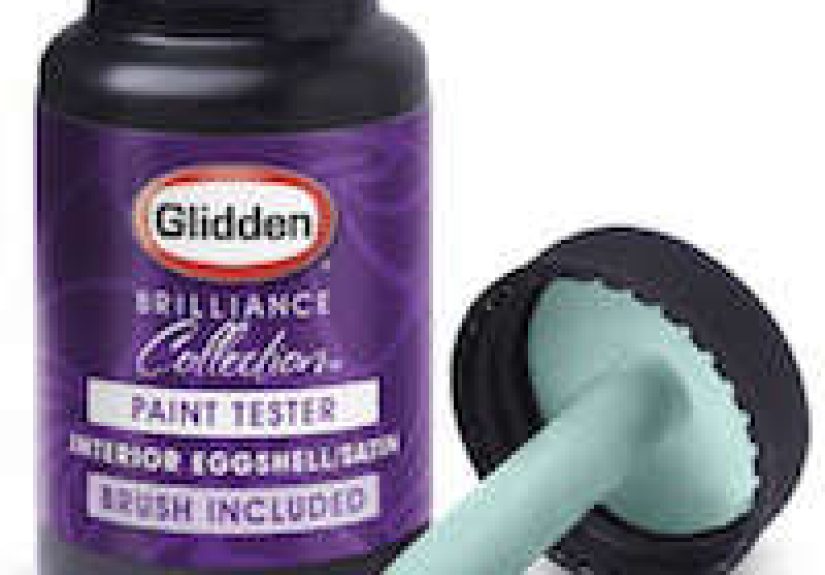
A Glidden Brilliance Collection Tester is a small, ready-to-use paint sample designed to help you preview a specific Brilliance Collection color
in your actual space. Instead of relying on tiny paper chips (which are basically paint’s version of a blurry profile pic), the tester lets you apply real paint
to see how it behaves on a larger swatch under your lighting.
What makes it especially handy is the convenience factor: Brilliance Collection samples are often packaged as a small container with a built-in brush,
meant to cover a small test areaenough to give you a meaningful read without buying a quart you’ll never use again. The whole point is to make “try before you buy”
feel less like a project and more like a quick experiment.
Why the “Brilliance Collection” part matters
“Brilliance Collection” refers to Glidden’s curated color palette and product line that’s been positioned as a paint + primer-in-one option for homeowners who want
good coverage and durability without a million steps. In plain English: it’s made for real rooms with real scuffs, fingerprints, and the occasional mystery smudge
that appears three minutes after you finish painting.
Why a Tester Beats a Paint Chip (and Saves Your Sanity)
Paint chips are helpful for narrowing down choices, but they’re not the final exam. Here’s why a tester is the smarter last step:
- Lighting changes everything. Natural light shifts all day, and bulbs at night can swing a color warmer or cooler.
- Undertones show up in context. Beige might quietly carry green, pink, or gray undertones that only appear next to your floors and furniture.
- Surrounding colors “bounce.” Rugs, cabinets, countertops, and even a giant red sofa can reflect color onto walls.
- Finish affects perception. Sheen can make the same color read brighter, deeper, smoother, or more “dramatic spotlight” than expected.
A tester turns your choice into a data-driven decision (but, you know, still emotionalbecause paint color is basically interior design’s mood ring).
Set Up a Fair Test Before You Paint Anything
If you want the tester to tell you the truth, you have to run a fair experiment. That means controlling a few variables so the color isn’t being “influenced”
by whatever chaos is currently happening on your wall.
Option A: Paint directly on the wall
This is the fastest method and works well if you’re already painting the room soon. It’s especially useful if your current wall color is fairly neutral.
Just remember: if the existing wall color is bold (or very dark), it can visually compete with your sample.
Option B: Paint a sample board (highly recommended)
If you want the most accurate, low-drama approach, paint the tester onto a piece of white foam board or thick poster board.
Then you can move it around the room, hold it near trim, compare it to furniture, and check cornerswithout turning your walls into a quilt of regret.
Make your sample big enough to be honest
Tiny swatches lie. Go larger than you think you need. A generous rectangle (or a couple of them) helps you see the color’s “mass tone”how it reads when it’s not
surrounded by a sea of white space.
How to Use the Glidden Brilliance Collection Tester (Step-by-Step)
Here’s a practical, repeatable method that makes your sample results actually useful.
1) Pick your test locations
- Choose at least two walls if possible: one that gets strong daylight and one that stays a little dim.
- Include a spot near something permanent (flooring, countertops, tile, cabinets).
- If you’re considering an accent wall, test it on that wallnot across the room where the light behaves differently.
2) Prep the surface (quickly, not obsessively)
Wipe dust and grime off the test area. If it’s a kitchen wall, give it a quick degrease. You don’t need perfectionyou just need the paint to stick and dry evenly.
3) Apply two coats for a true read
One coat can look streaky or lighter than the final result, especially with saturated colors. Two coats helps reveal the real depth and undertone.
Let it dry fully between coats so you’re not judging a “wet paint illusion.”
4) Label your samples like a responsible adult
Write the color name (and finish, if relevant) on painter’s tape next to the swatch or on the back of your sample board. Otherwise you’ll end up with
“Green-ish #1” and “Green-ish #2,” which is how people lose weekends.
5) Watch it through a full day
Check it in the morning, midday, late afternoon, and evening. Then check it again at night with your usual lamps on.
Your goal is to find a color you like in the lighting you actually live in.
How to Read Your Results: Undertones, Lighting, and the “Neighbor Effect”
If a color surprises you, it’s usually because of undertones or reflected lightnot because paint enjoys messing with you (though it often feels that way).
Undertones: the secret ingredient
Undertones are the subtle hues underneath the main color. A “simple” gray might have blue, green, violet, or beige undertones.
Those undertones become obvious when the color sits next to your floors, trim, and fabrics.
Example: A pale green like “Cool Cucumber” can read crisp and spa-like in bright daylight, but it may lean more yellow or muted in warm lamplight.
Meanwhile, a blue-gray like “Blue-Grey Slate” might feel calm in the morning but look moodier at night, especially in a room with warm bulbs.
North vs. south light: why rooms have personalities
- North-facing rooms often feel cooler and can make colors look more gray or subdued.
- South-facing rooms usually have warmer, stronger light and can make colors look brighter and more saturated.
- East-facing rooms can feel warm in the morning and cooler later.
- West-facing rooms may look neutral early but turn warm and intense in late afternoon.
The neighbor effect (aka reflected color bounce)
Big surfaces reflect color. A honey-toned wood floor can warm up a neutral wall color. A bright white countertop can make the same wall color appear darker by contrast.
A bold rug can cast a subtle tint onto the wall, especially in corners.
That’s why a tester is most useful when you place it near your “non-negotiables”the stuff you’re not changing, like flooring, tile, and cabinetry.
Choosing the Right Finish After the Tester: It’s Not Just About Shine
The Brilliance Collection line is commonly offered in multiple finishes (like flat, eggshell/satin, and semi-gloss depending on interior vs. exterior products).
Even if your tester is in a standard sample finish, it still helps you decide the colorthen you can choose the best sheen for the job.
Quick sheen cheat sheet
- Flat/Matte: Great at hiding wall imperfections. Best for low-traffic rooms and ceilings.
- Eggshell/Satin: A popular “sweet spot” for wallsmore washable than flat, less shiny than semi-gloss.
- Semi-gloss: Durable and wipeable. Great for trim, doors, and areas that get splashed or touched a lot.
If you’re painting a hallway, kids’ room, kitchen, or bath, durability matters. Paints marketed as “easy stain removal,” “scuff resistant,” and “mildew resistant”
are worth paying attention to because those are the exact places life happens with maximum enthusiasm.
Common Tester Mistakes (That Make People Hate the Color for No Reason)
If a tester “fails,” it’s often the processnot the color. Here are the biggest mistakes and how to avoid them:
Mistake 1: Testing only one tiny swatch
Solution: Go bigger. If you can’t go bigger on the wall, use a movable foam board sample and make it generous.
Mistake 2: Judging wet paint
Solution: Let it dry fully. Paint can dry darker or lighter depending on color and sheen. Judge it when it’s truly dry.
Mistake 3: Comparing samples side-by-side like a paint “face-off”
Solution: Compare one sample at a time against a neutral background. Too many colors together can distort your perception.
Mistake 4: Forgetting the trim and ceiling factor
Solution: Hold the sample next to your trim color and look at it where the wall meets the ceiling.
Trim “white” can be warm, cool, creamy, brighteach one changes the wall color’s vibe.
Mistake 5: Using the wrong light bulbs during testing
Solution: Test under the bulbs you actually use. If you’re planning to swap bulbs later, do that first.
Warm bulbs can make neutrals creamier and cool colors duller; cooler bulbs can sharpen blues and make warm tones feel flatter.
Smart Ways to Use the Brilliance Palette Without Overthinking Yourself Into a Nap
The Brilliance Collection has a broad palette, and that can be both exciting and dangerous. (Too many options is how a “quick paint project” turns into a three-week saga.)
Use a simple strategy to narrow choices.
Try a “60-30-10” room plan
A classic design guideline is the 60-30-10 balance:
- 60% dominant color (usually walls)
- 30% secondary color (furniture, rugs, curtains)
- 10% accent color (pillows, art, small décor)
Your tester helps you decide if your wall color belongs in the 60% roleor if it’s better as an accent.
Use “pairing logic,” not vibes alone
- If your floors are warm (oak, honey, reddish tones), many cool grays can look extra icytest carefully.
- If your counters are cool (white marble look, gray quartz), overly warm wall colors can look yellow by comparison.
- If your room is dim, a mid-tone color might read much darker on the wall than it does on a chip.
The tester isn’t just answering “Do I like this color?” It’s answering: “Do I like this color here, with this light, next to these surfaces?”
That’s the whole game.
FAQ: Quick Answers About Paint Testers
Can I use a tester for touch-ups?
Sometimes, but don’t count on it. Touch-ups are tricky because the existing wall paint may have faded, and the finish can differ.
Test in an inconspicuous area first. If it flashes (shows a different sheen), you’ll see it.
Should I paint the sample right next to a corner?
Yesat least one sample near a corner or shadowy spot is smart. Corners exaggerate undertones and depth because light is lower there.
What if the color looks perfect in daylight but weird at night?
That’s a lighting issue. You can either (a) choose a different color that behaves better under your bulbs, or (b) change your bulbs.
If you spend most time in the room at night, prioritize night lighting.
How many tester colors should I try?
Ideally, 2–4 finalists. More than that can become confusing, and you’ll start picking colors based on “least annoying” instead of “best.”
Experiences With the Glidden Brilliance Collection Tester: Real-World Scenarios and Lessons (500+ Words)
People don’t usually regret testing paint. They regret not testing paintand then repainting a room while loudly insisting they’re “fine” and “not upset,”
even though the roller tray is basically a tiny rage pond. The Glidden Brilliance Collection Tester tends to show up in the exact moment someone wants certainty:
the moment after you’ve stared at swatches for two days and started seeing undertones in your cereal.
One common experience: you pick a calm, neutral color because you want “timeless,” and the tester reveals a surprise undertone the paper chip never admitted.
A gray that seemed perfectly balanced can lean blue in a north-facing bedroom, or a warm greige can suddenly read pink next to a beige carpet.
The tester’s value here is emotional as much as practicalit gives you permission to change your mind before the room is fully painted.
It’s much easier to pivot when you’ve only invested a few minutes in a sample rather than an entire Saturday in full coverage.
Another scenario: the “I love it… on one wall” moment. You paint the sample on the wall that gets the best light and it looks amazing.
Then you move the sample board (or paint a second swatch) to the darker side of the room and the same color looks deeper, cooler, or flatter.
This is where the tester teaches a key lesson: there is no single “true” look for a paint colorthere’s a range.
The practical takeaway is to decide whether you like the color across that range, not just in its best-case spotlight.
If you only love it for two hours a day, it might not be your wall color. (It might be your accent color, and that’s still a win.)
People also discover how much sheen changes the vibe. Even when you’re sampling mainly for color, you start noticing how light hits the painted patch.
In a hallway or kitchen, a slightly more washable finish can feel like a lifesaver. In a living room with imperfect drywall, a flatter finish may look smoother and calmer.
The tester phase is often when homeowners realize they don’t just want a colorthey want a behavior:
“Will this clean easily?” “Will it show every bump?” “Will it look like a mirror when the sun hits it?”
There’s also the “neighbor effect” revelation that almost everyone experiences at least once. You hold the sample up next to your cabinets and suddenly the wall color
looks totally different than it did on the open wall. Or you place it near the floor and notice the wood tone warms it up.
This can feel annoying until you realize it’s a superpower. Once you see it, you can use it intentionally:
choose a wall color that balances a warm floor, or pick a shade that makes white trim look crisp instead of dingy.
The tester becomes less about approval and more about strategy.
Finally, there’s the confidence momentthe point where you stop squinting and start knowing.
You walk into the room at night, turn on the lamps, and the sample still looks good.
You see it in morning light and it still feels like the room you want to live in.
That’s the tester doing its job: lowering the risk so your final paint purchase feels like a decision, not a gamble.
And if you do decide to switch colors after testing? That’s not failurethat’s the process working exactly as designed.
The goal isn’t to pick the “perfect” color on the first try. The goal is to pick the right color for your space,
and the Glidden Brilliance Collection Tester is basically your low-cost, low-mess way to get there.
Conclusion
The Glidden Brilliance Collection Tester is a simple tool with a big job: helping you see paint color in real life before you commit.
Use it thoughtfullybig enough samples, multiple walls, two coats, and lighting checksand you’ll avoid the classic “it looked different online” heartbreak.
When you treat your tester like a mini experiment (instead of a quick dab), you’ll make a color choice that holds up in the morning, at night,
and in that weird in-between hour when the sun is setting and your house looks like a movie scene.