Table of Contents >> Show >> Hide
- Why Spring Cleaning Works (And Why It Feels So Good)
- Your Spring Cleaning Strategy (So You Don’t Rage-Quit)
- Spring Cleaning Supplies List (The Non-Dramatic Essentials)
- The Whole-Home Spring Cleaning Checklist (Do These First)
- Room-by-Room Spring Cleaning Checklist
- Kitchen: Where crumbs go to start new lives
- Bathrooms: Small room, big opinions
- Bedrooms: The “rest” part of your house should feel restful
- Living room/family room: Where the most living happens
- Laundry room/mudroom: The unsung hero zone
- Home office: A tidy desk is a kinder brain
- Entryway: First impressions (and the shoe situation)
- Garage/basement/storage: Where good intentions go to retire
- Deep-Cleaning “Bonus” Checklist (Pick What Applies)
- Keeping It Tidy After Spring Cleaning (The Maintenance Magic)
- Conclusion
- Real-Life Spring Cleaning Experiences (So It Feels Less Like a Chore)
Spring cleaning is basically your home’s annual physicalminus the awkward paper gown. It’s the reset button that
makes everything feel lighter: the air, your brain, and yes, even that “mystery drawer” that currently contains
three batteries, a rubber band, and a single chopstick you’ve been “saving.”
This guide gives you a practical, room-by-room spring cleaning checklist that actually fits real life. We’ll start
with a smart game plan (so you don’t burn out on Day 1), then move through whole-home tasks and each room with
specific, doable deep-cleaning steps. You’ll also get safety tips for cleaning products, plus a longer “experience”
section at the end to make the process feel less like punishment and more like a victory lap.
Why Spring Cleaning Works (And Why It Feels So Good)
A tidy home isn’t about perfectionit’s about reducing friction. When surfaces are clear and storage makes sense,
you spend less time hunting for stuff and more time living your life. Spring cleaning also tackles the tasks that
quietly pile up: dust on baseboards, smudges on walls, crumbs in couch cushions, and that “why does this room feel
stuffy?” vibe.
The trick is not doing everything at once. A complete spring cleaning checklist is powerful because it turns a
giant, vague project (“clean the house”) into a set of small, specific wins.
Your Spring Cleaning Strategy (So You Don’t Rage-Quit)
1) Pick your pace: one weekend, one week, or “a little at a time”
- Weekend Warrior: Best if you want one big reset and can commit 4–8 hours total.
- One-Week Plan: 60–90 minutes per day, rotating rooms.
- Low-Stress Plan: 20–30 minutes per day for 2–3 weeks (the “slow cooker” method).
2) Work in the right order: dry → wet, top → bottom
Start with dry tasks (declutter, dust, vacuum) before wet tasks (wiping, mopping). And always clean higher areas
first (ceiling fans, shelves) so you’re not sprinkling dust confetti onto a freshly mopped floor.
3) Use the “three-bin rule” for fast decluttering
Grab three containers (or bags) labeled: Keep, Donate/Sell, Trash/Recycle.
This prevents the classic “I’ll just set it down here temporarily” trapalso known as “creating a new pile.”
Spring Cleaning Supplies List (The Non-Dramatic Essentials)
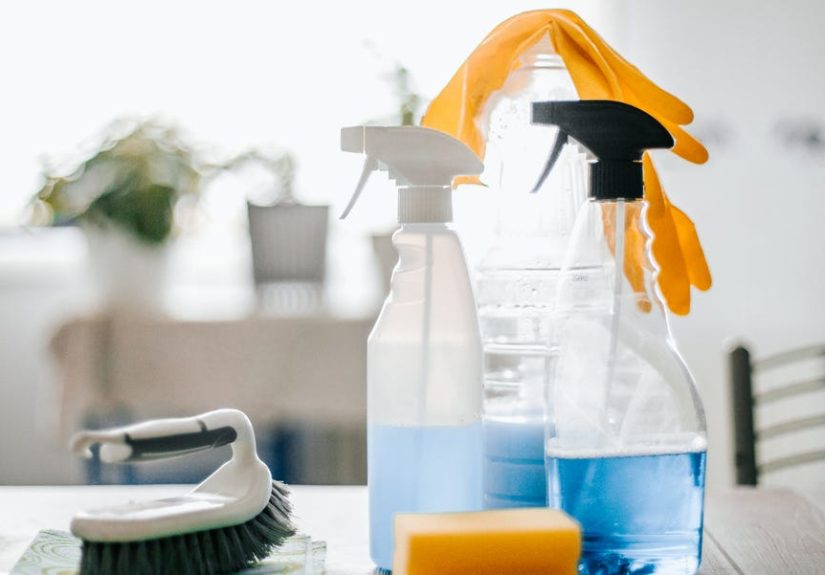
You do not need 47 specialized sprays. You need a small toolkit that handles most messes safely.
Tools
- ☐ Microfiber cloths (a few)
- ☐ All-purpose cleaner (or mild dish soap + water)
- ☐ Glass cleaner (or water + a tiny drop of dish soap)
- ☐ Baking soda (for gentle scrubbing)
- ☐ White vinegar (optionalgreat for some jobs, not all)
- ☐ Scrub brush + old toothbrush (details matter)
- ☐ Vacuum with attachments
- ☐ Mop + bucket (or a spray mop)
- ☐ Trash bags, donation box, and a marker
- ☐ Step stool (for “tall stuff”)
- ☐ Gloves if you’re using stronger cleaners
Safety quick rules (please readfuture you will thank you)
- ☐ Open windows or run ventilation when using strong cleaners.
- ☐ Never mix cleaning chemicals (especially anything with bleach or ammonia).
- ☐ Follow label directions, including contact time if disinfecting.
- ☐ When in doubt, use mild soap and water for everyday cleaning.
The Whole-Home Spring Cleaning Checklist (Do These First)
These are the “every room benefits” tasks. Knock them out before you go room-by-room to avoid repeating yourself.
Air, dust, and “why is it so gloomy in here?” fixes
- ☐ Replace or clean HVAC/AC filters (check size and direction arrow).
- ☐ Dust ceiling fans, light fixtures, vents, and corners (top to bottom).
- ☐ Vacuum upholstery, curtains (if appropriate), and mattress surfaces.
- ☐ Wipe light switches, doorknobs, cabinet pulls, and railings.
- ☐ Clean windows and window sills; wipe blinds or dust shades.
- ☐ Spot-clean walls and doors where fingerprints love to gather.
Floors and soft surfaces
- ☐ Vacuum edges and under furniture (use attachmentsthis is their moment).
- ☐ Shake out entry rugs; clean or wash washable rugs per label.
- ☐ Mop hard floors with the right cleaner for the surface.
- ☐ Consider steam cleaning carpets if needed (or spot clean high-traffic zones).
Clutter control (the fastest “tidier home” win)
- ☐ Clear surfaces: counters, coffee tables, nightstands, bathroom sinks.
- ☐ Do one “junk drawer” and one “random shelf” (yes, only one each).
- ☐ Start a donation box in a closet and keep it there all spring.
Room-by-Room Spring Cleaning Checklist
Kitchen: Where crumbs go to start new lives
- ☐ Toss expired pantry items; wipe shelves before restocking.
- ☐ Clean fridge: wipe shelves/drawers, check condiments, deodorize (baking soda helps).
- ☐ Clean microwave (steam a bowl of water to loosen splatters, then wipe).
- ☐ Degrease stovetop and hood filter (follow manufacturer instructions).
- ☐ Wipe cabinet fronts and handles (especially near the stove).
- ☐ Clean sink and faucet; scrub around the drain and under the rim.
- ☐ Run dishwasher cleaner or wipe the filter if your model has one.
- ☐ Vacuum and mop under the table, chairs, and “crumb corridor” zones.
Specific example: If your coffee station has become a sticky museum exhibit, pull everything off
the counter, wipe the surface, and put back only what you use weekly. Everything else earns a cabinet spot or a
polite goodbye.
Bathrooms: Small room, big opinions
- ☐ Toss old products and empty bottles (check expiration dates if listed).
- ☐ Wash shower curtain/liner (if washable) and bath mats per label.
- ☐ Scrub shower/tub; pay attention to corners and the drain area.
- ☐ Clean grout lines (a soft brush + gentle scrub works well).
- ☐ Disinfect high-touch surfaces: faucet handles, toilet flush handle/button, doorknob.
- ☐ Clean mirror and wipe vanity drawers if they’ve become tiny chaos vaults.
- ☐ Empty trash and wipe the can (it deserves better).
- ☐ Mop floor and wipe baseboards.
Pro tip: Keep one microfiber cloth just for mirrors. It prevents “I cleaned it and now it looks
worse” heartbreak.
Bedrooms: The “rest” part of your house should feel restful
- ☐ Wash bedding, including pillowcases and duvet cover/blanket per label.
- ☐ Flip or rotate mattress (if recommended by your mattress type).
- ☐ Vacuum mattress surface and bed frame edges.
- ☐ Edit the nightstand: keep only true essentials (phone charger counts; 14 lip balms do not).
- ☐ Declutter closet: donate what doesn’t fit, flatter, or get worn.
- ☐ Dust furniture, lamps, and baseboards; vacuum/mop floors.
Living room/family room: Where the most living happens
- ☐ Vacuum couches and chairs (lift cushionsbe brave).
- ☐ Spot clean upholstery if safe for the fabric.
- ☐ Dust shelves, frames, electronics (use a dry microfiber cloth for screens).
- ☐ Organize remotes, cords, and “things that migrated here.”
- ☐ Clean windows and wipe fingerprints off doors and trim.
- ☐ Vacuum/mop floors; don’t forget under side tables and along walls.
Laundry room/mudroom: The unsung hero zone
- ☐ Wipe washer/dryer exteriors and clean lint trap (always).
- ☐ Check behind machines for dust bunnies and lost socks.
- ☐ Clean utility sink and surrounding splash zones.
- ☐ Sort cleaning supplies (safely store chemicals out of reach of kids/pets).
- ☐ Add hooks or a bin system for shoes, bags, and “I’ll deal with it later” items.
Home office: A tidy desk is a kinder brain
- ☐ Shred or recycle paper clutter; keep only what you need.
- ☐ Dust monitor, keyboard, and desk surface (dry cloth first).
- ☐ Wipe chair arms and drawer pulls (high-touch zones).
- ☐ Create one “active” tray for current projects; archive the rest.
- ☐ Tidy cords with clips or ties so your desk stops impersonating spaghetti.
Entryway: First impressions (and the shoe situation)
- ☐ Shake out/doormat clean; vacuum corners and edges.
- ☐ Edit shoes and coats; donate what isn’t used.
- ☐ Wipe door, handle, and light switches.
- ☐ Add a small catchall bowl for keys/mail to prevent “counter sprawl.”
Garage/basement/storage: Where good intentions go to retire
- ☐ Make three zones: Keep, Donate/Sell, Trash/Recycle.
- ☐ Group like with like (tools, paint, sports gear, holiday bins).
- ☐ Sweep floors; clear cobwebs from corners and around doors.
- ☐ Label bins clearly so you don’t re-invent confusion next month.
- ☐ Safely dispose of old chemicals/paint according to local guidelines.
Deep-Cleaning “Bonus” Checklist (Pick What Applies)
These are the tasks that level up your results. Don’t do them all unless you love cleaning in the way some people
love running marathons.
- ☐ Wash window screens and wipe window tracks.
- ☐ Clean inside cabinets/drawers (kitchen, bathroom, or one closetstart small).
- ☐ Dust behind and under major appliances if accessible and safe.
- ☐ Clean air vents covers; vacuum intake areas carefully.
- ☐ Freshen patio furniture or wipe down outdoor door frames.
- ☐ Check smoke/CO alarms and replace batteries if needed.
Keeping It Tidy After Spring Cleaning (The Maintenance Magic)
The secret to a tidier home isn’t heroic effortit’s tiny routines that prevent mess from becoming a saga.
Three easy habits
- The 10-minute nightly reset: clear counters, load dishes, quick pickup.
- One load a day: laundry or dishwashersmall batches beat weekend avalanches.
- One-in, one-out: bring in a new item, donate or toss an old one (especially clothes).
Conclusion
A complete spring cleaning checklist is less about scrubbing every molecule and more about making your home easier
to live in. Start with a simple plan, tackle whole-house tasks, then go room-by-room. If you only do the “high
impact” itemsdecluttering surfaces, dusting, floors, and high-touch areasyou’ll still feel a dramatic difference.
And if you do the bonus tasks? Congratulations, your home just got promoted to “fresh start” status.
SEO Tags (JSON)
Real-Life Spring Cleaning Experiences (So It Feels Less Like a Chore)
The first time you do a full spring cleaning, you learn a humbling truth: the mess is never where you think it is.
You’ll start confidently with counters and floors, then lift a couch cushion and discover a tiny ecosystemcrumbs,
coins, and something that might be a raisin (but no one is brave enough to confirm). That’s not failure; that’s
spring cleaning doing its job. It reveals the hidden stuff that makes your home feel “off” even when it looks
“fine” at a glance.
One of the biggest game-changers is realizing how much a “surface reset” changes your whole day. A clear kitchen
counter feels like extra square footage. A wiped bathroom sink makes the morning routine smoother. A decluttered
nightstand reduces that low-grade stress that whispers, “You’re behind.” In real life, you don’t need a perfect
homeyou need fewer bottlenecks. Spring cleaning works because it removes the daily obstacles: you stop playing
hide-and-seek with scissors, you stop stacking mail like it’s a modern art installation, and you stop opening
cabinets like you’re bracing for an avalanche.
Another real-world lesson: momentum matters more than motivation. The best days happen when you start with an
easy win. For example, begin with your entryway. It’s small, it’s visible, and it changes how you feel every time
you walk in the door. Once that space looks better, you naturally want to keep goingkind of like when you finally
clean your glasses and wonder how you were functioning before. If you start with a massive project (like the
garage), your brain might decide to “take a quick break” that lasts until next spring.
People also underestimate how emotional spring cleaning can be. Closets and storage areas tend to hold old
decisions: the jeans you’re mad at, the hobby supplies you swore you’d use, the wedding gift you never liked but
felt guilty donating. A helpful approach is to treat spring cleaning like editing, not judging. You’re not
“wasting” anything by letting it goyou’re making space for your present life. And if you feel stuck, use a simple
rule: if you wouldn’t buy it again today, you probably don’t need to store it for another year.
The most practical “experience tip” is the timer trick. Set a timer for 20 minutes and clean until it rings. This
turns spring cleaning into a game instead of a sentence. You’ll be shocked how much you can do in 20 minutes when
you’re not reorganizing your entire spice rack alphabetically “just because.” (No shade to the alphabetizers. You
are powerful. You are feared.) Use the timer for the hard parts toolike cleaning the fridge. Twenty minutes is
long enough to make progress and short enough that your brain doesn’t revolt.
Finally, the real secret to a tidier home isn’t the deep cleanit’s the “aftercare.” Once you’ve done spring
cleaning, keep a small donation box in a closet and add to it throughout the season. Keep one microfiber cloth
under the bathroom sink for quick wipe-downs. Do a 10-minute nightly reset. Those tiny routines protect the big
effort you just made. Spring cleaning is the launch; maintenance is how you stay in orbit. And when you walk into
a home that feels fresh, organized, and calm, you’ll realize the best part wasn’t the scrubbingit was getting
your time and attention back.