Table of Contents >> Show >> Hide
- Why Eye Health Deserves a Spot on Your Wellness To-Do List
- Build an Eye-Healthy Lifestyle from the Inside Out
- Protect Your Eyes from the Outside World
- Tame Screen Time and Digital Eye Strain
- Make Regular Eye Exams Non-Negotiable
- Everyday Habits That Quietly Support Healthy Eyes
- Real-Life Experiences: How Eye-Healthy Habits Look in Everyday Life
- Bringing It All Together
If you spend your days bouncing between laptop, phone, and TV, you’re not alone. Our eyes are working overtime, and unlike your favorite shows, they don’t come with an automatic “renew series” button. The good news? A few smart habits can go a long way toward keeping your vision sharp and your eyes comfortable, now and in the future.
In this guide, we’ll walk through practical, science-backed tips for eye health and maintaining good eyesight from what you eat and how you work to how often you should actually see an eye doctor. Think of it as a care manual for some of the hardest-working organs in your body.
Why Eye Health Deserves a Spot on Your Wellness To-Do List
Eye health is easy to ignore when everything seems fine. You can read street signs, recognize faces, and scroll social media without a problem, so why worry, right? The catch is that many common eye diseases, like glaucoma or early macular degeneration, don’t cause obvious symptoms at first. Regular care and good habits can help catch issues early and may reduce your risk of serious vision loss over time.
On top of that, your eye health isn’t just about your eyes. Conditions like diabetes, high blood pressure, and high cholesterol can show up in the blood vessels and structures in the back of your eyes before they cause noticeable problems elsewhere. In a way, your eyes act like tiny windows into your overall health.
Build an Eye-Healthy Lifestyle from the Inside Out
Feed Your Eyes with the Right Nutrients
Your eyes love the same kinds of foods your heart does. A balanced, colorful diet supports the tiny blood vessels, nerves, and light-sensitive cells that allow you to see clearly. Research-backed nutrients for eye health include:
- Leafy greens like spinach, kale, and collard greens, which are rich in lutein and zeaxanthin, carotenoids that accumulate in the retina and may help protect against age-related macular degeneration.
- Fatty fish such as salmon, trout, sardines, and tuna, which provide omega-3 fatty acids. These healthy fats are linked with a lower risk of dry eye and help maintain the oily layer of your tears.
- Colorful fruits and vegetables (carrots, sweet potatoes, red peppers, oranges, berries) that are packed with vitamin A, vitamin C, and other antioxidants that help combat oxidative stress in eye tissues.
- Nuts and seeds like walnuts, chia seeds, flaxseeds, and almonds, which offer healthy fats and vitamin E.
You don’t need a perfect “vision diet,” but aim to build meals that regularly include leafy greens, healthy fats, and a rainbow of produce. A simple example: grilled salmon, a spinach salad with orange slices, and roasted sweet potatoes checks a lot of eye-health boxes in one sitting.
Stay at a Healthy Weight and Move Your Body
Maintaining a healthy weight and staying active can lower your risk of type 2 diabetes, high blood pressure, and high cholesterol all of which are major risk factors for eye problems, including diabetic retinopathy and damage to the blood vessels in the retina.
You don’t have to become a marathon runner. Even moderate activity, like brisk walking for 30 minutes most days, can help support healthy circulation to the eyes. Think of exercise as delivering fresh oxygen and nutrients to your retinas on a regular basis.
Don’t Let Smoking Steal Your Sight
Smoking is rough on almost every part of the body, and the eyes are no exception. Tobacco smoke increases your risk of cataracts, macular degeneration, and damage to the optic nerve. It also worsens dry eye and exposes your eyes to toxic chemicals.
If you smoke, quitting is one of the most powerful steps you can take for your vision. Your healthcare provider can discuss medications, counseling, and support programs that make quitting more manageable. Your eyes and the rest of your body will thank you.
Protect Your Eyes from the Outside World
Choose Sunglasses That Actually Block UV Rays
Sunglasses are more than a fashion statement; they’re safety gear. Ultraviolet (UV) radiation from the sun can contribute to cataracts, growths on the eye, and damage to the retina over time. To protect your eyes:
- Look for sunglasses labeled as blocking 99% to 100% of UVA and UVB rays.
- Consider wraparound styles or larger frames that limit light from the sides.
- Wear them even on cloudy days UV rays still sneak through.
If you wear prescription glasses, talk to your eye doctor about prescription sunglasses or photochromic lenses that darken in sunlight, so you’re not choosing between clear vision and UV protection.
Use Protective Eyewear for Sports, DIY, and Yard Work
A flying nail, metal shaving, or piece of yard debris can cause serious eye injury in a fraction of a second. Sports like basketball, racquet sports, and baseball are common sources of eye trauma, too.
Whenever you’re drilling, cutting, hammering, mowing the lawn, using power tools, or playing high-speed sports, wear appropriate safety glasses or goggles with impact-resistant lenses (often rated ANSI Z87.1 in the U.S.). They’re far cheaper than an emergency room visit or permanent damage.
Practice Smart Contact Lens Hygiene
Contact lenses are fantastic for convenience and clear vision, but they also sit directly on your eyes. Mishandling them raises your risk of infections that can scar the cornea and threaten your sight. To stay safe:
- Always wash and dry your hands before touching lenses.
- Use only the cleaning solution your eye care professional recommends.
- Rub and rinse lenses as directed rather than just soaking them.
- Replace lenses and storage cases on schedule no “just one more week” improvising.
- Never sleep in lenses unless your eye doctor has explicitly said it’s safe for your specific type.
Redness, pain, light sensitivity, or sudden blurry vision with contacts is a reason to remove them and call your eye doctor right away.
Tame Screen Time and Digital Eye Strain
Between work, school, and entertainment, many people spend seven hours or more looking at screens daily. That doesn’t usually cause permanent damage, but it does contribute to digital eye strain a cluster of symptoms that can include dry eyes, headaches, blurry vision, and neck or shoulder pain.
Use the 20-20-20 Rule
One of the simplest and most widely recommended tricks is the 20-20-20 rule: every 20 minutes, look at something about 20 feet away for at least 20 seconds. That quick change in focus helps your eye muscles relax and encourages you to blink.
To make it realistic, set a subtle reminder on your computer or use an app or watch timer. Even better, stand up to refill your water or stretch while you’re at it.
Set Up an Eye-Friendly Workspace
A few small ergonomic tweaks can make a big difference:
- Position your screen about 20–28 inches from your eyes, roughly an arm’s length.
- Place the top of the monitor slightly below eye level so you’re looking a bit downward, which can help reduce dry eye.
- Reduce glare with an anti-glare screen or by repositioning your monitor away from direct light.
- Match screen brightness to the room and increase text size if you’re squinting.
Don’t forget to blink. We tend to blink less when staring at a screen, which dries the surface of the eye. Consciously blinking more or using preservative-free lubricating drops (artificial tears) can keep your eyes more comfortable.
Manage Screen Time for Kids and Teens
Children and teenagers often hold screens closer to their faces than adults do and may spend long stretches gaming, streaming, or doing online school. High amounts of “near work” and screen time are linked with a higher risk of developing myopia (nearsightedness) in kids.
Practical strategies include encouraging outdoor play daily, using the 20-20-20 rule during screen use, setting limits on recreational screen time, and keeping devices out of bedrooms at night. If your child complains of headaches, eye strain, or difficulty seeing the board at school, schedule an eye exam.
Make Regular Eye Exams Non-Negotiable
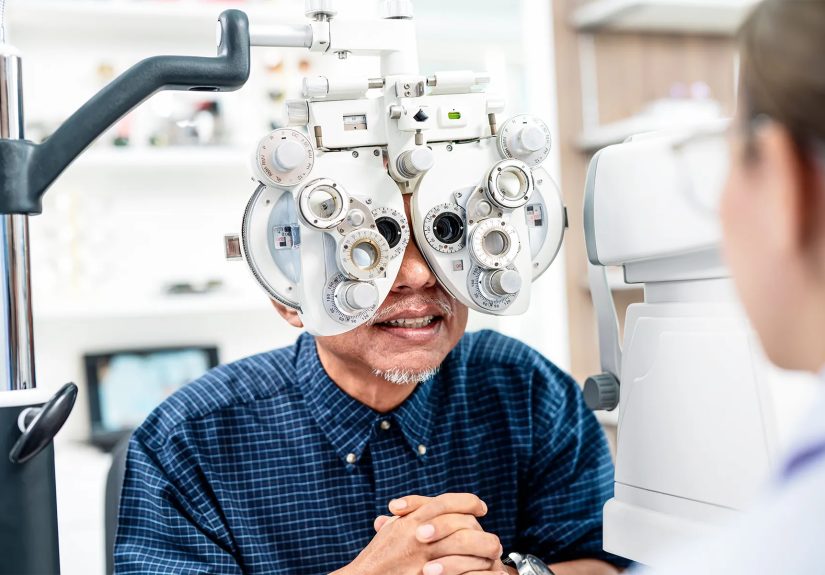
You can be seeing just fine and still have early stages of glaucoma, diabetic eye disease, or macular degeneration that only show up during a comprehensive dilated eye exam. During this exam, your eye doctor uses drops to temporarily widen your pupils, allowing a clear view of the retina and optic nerve.
General guidelines vary by age and risk, but a common pattern looks like this:
- Children: Vision screening in early childhood and before school, with comprehensive exams if anything looks off or if they’re at higher risk.
- Adults under 40: At least one comprehensive eye exam in your 20s and two in your 30s, or more often if you have risk factors like diabetes, high blood pressure, or a strong family history of eye disease.
- Adults 40 to 64: Exams every 2–4 years, more often if recommended by your eye doctor.
- Adults 65 and older: Exams about every 1–2 years, since risk of cataracts, glaucoma, and macular degeneration rises with age.
These are general suggestions; your own eye care professional may recommend a different schedule based on your health, medications, or family history. If you notice sudden changes in vision, flashes of light, a curtain-like shadow, severe eye pain, or a dramatic increase in floaters, seek urgent care immediately.
Everyday Habits That Quietly Support Healthy Eyes
Get Enough Sleep
Sleep gives your eyes a chance to rest, repair, and maintain a stable tear film. Skimping on sleep can leave you with dry, irritated, or twitchy eyes the next day not to mention fuzzy concentration that makes visual tasks harder.
Most adults do best with about 7–9 hours per night. Try to keep screens out of bed, as blue-rich light from devices can interfere with your natural sleep-wake cycle.
Keep Makeup and Tools Clean
If you use eye makeup, consider it a product you’re placing very close to a delicate surface because you are. To reduce irritation and infection risk:
- Replace mascara and liquid liners every 3 months or sooner if they dry out.
- Never share eye makeup with friends.
- Remove all makeup before bed so it doesn’t flake into your eyes overnight.
- Clean brushes and applicators regularly.
Know Your Family’s Eye Health History
Some eye conditions, like glaucoma or certain retinal diseases, run in families. Let your eye doctor know if close relatives have eye diseases, so they can tailor your screening and watch more closely for early signs.
Real-Life Experiences: How Eye-Healthy Habits Look in Everyday Life
Advice is great, but it becomes much more powerful when you can see what it looks like in real life. Here are a few everyday scenarios that show how people weave eye-healthy habits into busy schedules.
Case 1: The Office Worker Who Lived in Spreadsheets
Imagine Taylor, who works in finance and spends most of the day in front of a computer. By mid-afternoon, their eyes feel gritty, the words on the screen blur, and headaches are a regular thing. Taylor assumed this was “just part of the job” until a routine eye exam revealed mild nearsightedness and digital eye strain.
With a new pair of glasses designed for computer distance, a few desk changes, and the 20-20-20 rule, the difference was huge. Taylor raised the monitor so the top sat slightly below eye level, moved it back to arm’s length, turned down the brightness just a bit, and turned on a reminder app to blink and look away every 20 minutes. Within a couple of weeks, headaches were less frequent, and end-of-day eye fatigue went from “constant” to “occasional.”
Case 2: The Parent Navigating Kids, Screens, and Homework
Next, there’s Jordan, a parent of two school-age kids who love video games and shows as much as any other children. During the pandemic, their screen time skyrocketed, and over time, one child started squinting to see the TV and moving closer to read. A comprehensive eye exam revealed myopia.
Instead of banning screens completely (which would probably have sparked a small mutiny), Jordan created gentle guardrails: homework first, then recreational screen time with timers; a rule that every 20 minutes of screen use gets a 5-minute break; and at least an hour of outdoor play every day the weather allows. The kids initially protested, but once the new routine settled, eye strain complaints dropped. Regular checkups track whether their prescriptions are stable and whether habits need to be adjusted.
Case 3: The DIY Enthusiast Who Thought Safety Glasses Were Optional
Alex loves DIY projects building shelves, cutting tile, tackling the occasional backyard construction experiment. For years, safety glasses sat untouched in a toolbox. One afternoon, while cutting wood with a power saw, a tiny piece of debris flew into Alex’s eye. Luckily, a quick trip to urgent care and some eye drops prevented serious damage, but it was a wake-up call.
From then on, the “safety gear first” rule became non-negotiable. Goggles go on for everything from sanding to weed-whacking. It takes less than 10 seconds to put them on, but the peace of mind and lower risk of a repeat incident is worth every second.
Case 4: The Health-Conscious Adult Who Forgot the Eyes
Finally, consider Sam, who eats well, exercises regularly, and keeps up with dental cleanings but hadn’t had an eye exam since high school because “my vision is fine.” After turning 45, Sam noticed more trouble reading menus in dim restaurants and occasional eye strain when working late. A friend’s story about unnoticed glaucoma prompted an eye appointment.
The exam showed early presbyopia (the age-related shift that makes near tasks harder) and slightly elevated eye pressure. Neither was an emergency, but catching them early meant Sam could get the right lenses and a follow-up plan to monitor for changes. Now, eye exams are on the same annual checklist as physicals and dental visits.
These examples aren’t dramatic Hollywood stories, and that’s the point. Most eye-health wins happen quietly, through small, repeated choices: putting on sunglasses, following screen breaks, grabbing a salad with leafy greens, keeping that yearly eye exam. When you stack these habits together, they create powerful protection for your sight over time.
Bringing It All Together
Your eyes work hard for you from the moment you wake up to the second you fall asleep. Protecting them doesn’t require a complicated routine or expensive gadgets. It’s about consistent, evidence-based habits: nourishing them with a healthy diet, protecting them from UV light and injuries, managing screen time, staying active, avoiding tobacco, and seeing an eye care professional regularly.
You may not be able to control every factor that affects your vision, but you can absolutely stack the odds in your favor. Start with one or two changes maybe scheduling that overdue eye exam or setting up a 20-20-20 reminder and build from there. Your future self, reading comfortably and enjoying the world in sharp focus, will be glad you did.