Table of Contents >> Show >> Hide
- Who Is Keki Struggles, And Why Are Her Comics Everywhere?
- Themes Behind The 27 Comics: Why They Hit So Hard
- How Keki Fits Into The Larger World Of Slice-Of-Life Comics
- Why We Love Comics About Life’s Little Struggles
- How To Get The Most Out Of Relatable Comics Like Keki’s
- Personal Experiences: Living With Everyday Struggles In A Keki-Style World
- Conclusion
If you’ve ever tried to look productive on a Monday Zoom call while secretly
questioning all your life choices, you’re already living inside a
Keki Struggles comic. This artist has built a loyal online
following by turning everyday frustrations, awkward encounters, and quiet
anxieties into sharp, funny four-panel stories that feel a little too real.
In the Bored Panda feature “Life And Everyday Struggles: 27 Comics By Keki
Struggles”, Keki’s black-and-white drawings tap into the universal chaos
of modern adult life: commuting, work burnout, body image worries, social
awkwardness, mental health, and the strange comfort of staying home with a
cat instead of going out. At the same time, her comics sit inside a much
bigger wave of relatable, slice-of-life cartoons that tackle similar themes,
from other Bored Panda-featured artists to webcomics highlighted by outlets
like Book Riot, Demilked, Scary Mommy, and AOL.
Who Is Keki Struggles, And Why Are Her Comics Everywhere?
According to her Bored Panda interview, Keki started the
@kekistruggles Instagram account during the pandemic after
ranting about a very specific subway problem: people walking way too close,
even when there was plenty of space. She sketched the situation as a
four-panel comic, her coworkers found it painfully relatable, and the idea of
turning daily annoyances into a comic series was born.
Like many slice-of-life creators, she draws mostly from her own experiences
and from the random things she observes while walking around town, chatting
with friends, or scrolling through current trends. That approach echoes what
other modern cartoonists say about their work: the best ideas often come from
real life, especially the small, unpolished moments that never make it to
Instagram highlight reels.
The result is a feed full of comics that feel familiar even if you’ve never
met the artist. You don’t need to know her personally to get the joke about
zoning out during yoga, endlessly procrastinating, or realizing you’ve lost
yet another week to work and screen time. Her characters are intentionally
simple and expressive, with heavy-lidded eyes and flat reactions that
perfectly capture “emotionally exhausted but still functioning.”
Themes Behind The 27 Comics: Why They Hit So Hard
While the Bored Panda feature highlights 27 specific comics, they fold into
a few big themes that also show up in other popular “daily struggle” series:
work stress, social pressure, mental health, body image, technology overload,
and the weird joy of being a homebody.
1. Work, Burnout, And The Endless Week
One recurring idea in Keki’s comics is the feeling that every day blends into
the next. In one well-known panel sequence, the character appears at a
computer on Monday, again on Wednesday, again on Friday, and finally slumped
on the couch gaming on Saturday. The days change; the tired face doesn’t.
This is a common thread across many modern comics that depict adulthood as an
exhausting loop. Articles and collections on sites like Bored Panda and AOL
often highlight similar jokes about burnout, the Sunday Scaries, and the
feeling that we’re working just to stay slightly behind on everything.
Comics like these resonate because they treat burnout with honesty and humor:
they don’t glamorize hustle culture, but they also don’t turn every strip
into a lecture. Instead, they quietly say, “Yep, this is rough. You’re not
the only one dragging yourself through it.”
2. Social Anxiety, Public Spaces, And Escalator Chaos
Keki also leans into public-space awkwardnesscrowded subways, busy streets,
escalators, and the silent pressure to move confidently even when you’re
internally panicking. In one comic, the character rides an escalator, slowly
realizing everyone expects her to walk instead of just riding it. The final
panel is pure deadpan: “Sorry, I forgot how to walk.”
This kind of humor aligns with many other artists who draw comics about
social anxiety and feeling “wrong” in ordinary spaces. Demilked, Bright Side,
and Scary Mommy have all showcased comics in which everyday momentsshopping,
standing in line, or sitting on a busbecome epically stressful in the mind
of the main character.
For readers, it can be hugely validating to see those irrational worries
turned into something you can laugh at. The message is subtle but powerful:
you’re not the only one overthinking the escalator.
3. Mental Health, Overthinking, And the “Why Am I Like This?” Moment
Many of Keki’s comics live in that blurry space between mental clutter and
physical clumsiness. In one strip, her character is talking, sipping a drink,
and suddenly spills it down the front of her shirt before pausing with a
blank stare and thinking, “Why am I like this?”
That one question shows up across countless relatable comics online. Artists
featured on Bored Panda, Demilked, and similar platforms often depict
overthinking, self-doubt, and anxiety in a way that’s funny but still
emotionally honest. Some series even explicitly focus on anxiety and
depression and have been highlighted by outlets like Scary Mommy as helpful
conversation starters about mental health.
Keki doesn’t turn her comics into medical explanationsthese aren’t therapy
worksheetsbut the feelings are instantly recognizable. The humor comes from
the gap between how simple the situation looks on the outside and how messy
it feels on the inside.
4. Cats, Toothbrushes, And Domestic Disaster
A surprising number of the 27 comics are basically love letters to chaotic
housecats. In one, the main character reaches for a toothbrush, only to
discover it’s now a fuzzy, cat-hair-coated nightmare. The smug cat in the
corner says nothing, but the expression makes it clear: this was deliberate.
The combination of pet mischief and dry human reaction is a classic in
online comics. Bored Panda and other outlets have published whole lists of
strips about cats knocking things over, refusing to move, or treating the
litter box like a performance stage. Even when the specific scenario changes,
the punchline is the same: the cat is fine; the human is emotionally
destroyed.
By focusing on shared experiences like cleaning, brushing teeth, or scooping
litter, Keki keeps her humor accessible even if you’ve never seen her work
before. Everyone knows what it feels like when a tiny domestic moment goes
horribly, hilariously wrong.
5. Body Image, Beauty Standards, And Zoom Faces
Another thread in Keki’s comics is self-comparison. In one strip, her
character stares at a flawless face on a video callperfect skin, perfect
makeupthen cuts to her own tired reflection, wondering how anyone has the
time or energy to look that put-together.
Similar themes show up in many modern comics about women’s lives and appearance
expectations. Bored Panda and other platforms often highlight artists who
tackle body image, unrealistic beauty standards, and the pressure to look
“effortlessly” polished online.
Keki’s approach is gentle and self-aware. The joke is rarely “I’m ugly”; it’s
more “I’m tired and do not have the bandwidth for eyeliner today.” That
distinction matters, especially for younger readers who see comics as a
reflection of their own complicated relationship with appearance.
6. Movement, Motion, And Epic Non-Moments
Some of the funniest comics in the set play with expectation versus reality.
In one, the first panels show an epic, cinematic ridehooves pounding, heroic
music, wind in the hairbefore snapping suddenly to reality: it’s just a
bundled-up bike commute, complete with a leaf stuck in the wheel.
That structure is common across many gag comics online: build a grand
fantasy, undercut it in the final panel. Collections of darkly funny adult
comics on sites like Bored Panda and AOL use similar devices to poke fun at
our internal movie trailer versus our actual Tuesday afternoon.
It works because we all do this mentallyimagining our life as a dramatic
sequence and then remembering we’re just hunched over a bike, trying not to
get hit by a car.
How Keki Fits Into The Larger World Of Slice-Of-Life Comics
Keki Struggles is part of a much wider ecosystem of slice-of-life and
everyday-struggle comics that has exploded over the last decade. Book-centric
and comic-centric platforms have compiled lists of graphic novels and
webcomics about “nothing special”just work, friendship, relationships,
chores, and the quiet drama of being alive.
These works appear everywhere from Instagram and Webtoon to curated lists on
Book Riot, library recommendation pages, and lifestyle blogs. Many of them
share a few traits:
- Simple, expressive art styles that prioritize emotion over realism.
- Short, self-contained strips that you can read in seconds.
- Recurring characters who function as semi-autobiographical stand-ins for the artist.
- Themes around adulting, mental health, relationships, and daily annoyances.
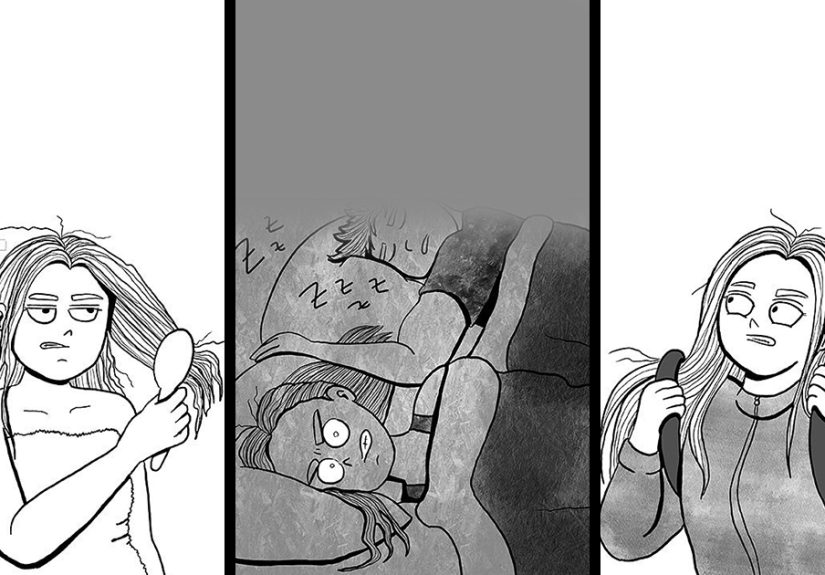
What sets Keki’s work apart is the combination of dry humor and quietly
cinematic framing. Even when the joke is about brushing hair or sitting on
the couch, panels are composed in a way that makes each moment feel strangely
epicand then hilariously small again.
Why We Love Comics About Life’s Little Struggles
There’s a reason lists of “relatable comics about life’s daily struggles”
perform so well across outlets like Bored Panda, Demilked, and Bright Side:
they offer something between pure entertainment and emotional validation.
For many readers, these comics:
- Normalize everyday anxiety. Seeing your own awkward habits drawn out in four panels makes them feel less like personal failures and more like common human glitches.
- Provide a low-pressure way to talk about mental health. Articles on sites such as Scary Mommy have noted how comics can spark conversations about anxiety and depression without requiring anyone to give a full TED Talk about their symptoms.
- Offer quick, scroll-friendly joy. In a sea of bad news, a 10-second comic about a cat in a litter box is a surprisingly powerful mood booster.
- Build online communities. Many artists talk about how the best part of sharing comics is meeting other creators and fans, creating a small but supportive network across platforms.
Keki’s comics sit right at the center of this trend. They’re sharp enough to
make you laugh, honest enough to make you feel seen, and simple enough to
share with a friend who “needs this today.”
How To Get The Most Out Of Relatable Comics Like Keki’s
While these strips are designed to be fun and easy to scroll through, they
can also be surprisingly useful tools for reflection. Here are a few ways
readers often use comics like Keki Struggles in their everyday lives:
Use Them As Tiny Check-Ins
If you find yourself drawn repeatedly to strips about burnout, social
exhaustion, or body image, that might be your brain waving a tiny flag. A
comic won’t fix chronic stress, but it can nudge you to ask, “Do I need more
rest? Do I need to set a boundary? Is it time to talk to someone?” Many
mental-health-oriented comics are created specifically to encourage that kind
of self-awareness.
Share, Don’t Self-Drag
It’s easy to use relatable comics as proof that you’re a mess, but they’re
actually a reminder that everyone is a mess. Instead of saying “this is so
me, I’m hopeless,” try sending a strip to a friend with “us.” It shifts the
mood from self-criticism to shared laughter.
Let Them Inspire Your Own Creative Outlets
Keki started by sketching one annoying subway moment, and it slowly turned
into a full comic account. Other artists featured on Bored Panda and similar
sites have similar origin stories: they just began doodling their feelings.
You don’t have to post your comics online or draw at the same level to
benefit. Journaling, doodling, or making silly four-panel strips just for
yourself can be a low-pressure way to process the weirdness of daily life.
Personal Experiences: Living With Everyday Struggles In A Keki-Style World
Even if you’ve never held a drawing tablet, you’ve probably lived through a
“Keki moment” this week. Maybe it was that time you stared at your inbox for
ten solid minutes without opening a single email, or the evening you swore
you’d do yoga and instead ended up lying on the mat scrolling your phone.
That’s the magic of comics like “Life And Everyday Struggles: 27 Comics
By Keki Struggles”: they mirror what modern life feels like from the
inside.
Think about a typical weekday. You wake up already tired, negotiate with
yourself about getting out of bed, and shuffle to the kitchen where your
coffee machine is now the most important relationship in your life. You open
your laptop and suddenly it’s dark outside, your back hurts, and you’re not
totally sure what you accomplished. A comic about “weekness”where every day
looks the samecaptures that spiral in four tiny drawings. You laugh, but you
also recognize something deeper: the silent, creeping fatigue that so many
adults live with.
Then there are the small social moments that feel huge in your head. Maybe
you’ve stood at the top of an escalator wondering if everyone is judging how
fast you move, or gotten stuck behind someone who suddenly stops walking in a
busy hallway. A comic that exaggerates this into full drama doesn’t mock you
for feeling awkwardit reassures you that lots of people replay these tiny
encounters in their heads for no logical reason.
And of course, pets. Anyone who’s ever shared a bathroom sink with a cat
knows the eerie mix of rage and affection when you realize your toothbrush
has mysteriously developed fur. Pet-themed comics are practically their own
subgenre online because animals are chaos wrapped in cuteness. You laugh at
Keki’s cat pushing boundaries, but you also remember that time your own pet
knocked a glass of water onto your laptop and stared at you like you
were the problem.
Many people also see themselves in Keki’s comics about appearance and effort.
Logging onto a video call and seeing someone who looks like they stepped out
of a magazine while you’re in an oversized hoodie can trigger a rush of
comparison. Her strip about staring at a flawless face and thinking, “How do
they even manage that?” captures that instant insecurity without shaming
anyone. It’s less about envy and more about solidarity: we’re tired, and the
standards are unrealistic.
Maybe the most powerful experience these comics offer, though, is the
feeling of being less alone. It’s one thing to know, logically, that burnout
and anxiety are common. It’s another to see hundreds of thousands of people
like and share a single panel about crying in shavasana or overthinking a
simple decision. You realize that your private weirdness is actually part of
a shared emotional language.
For some readers, that recognition is enough. They scroll, they laugh, they
move on. For others, a single comic can become the starting point for a
real-life conversation: sending a strip to a friend with “this is us,” or
using a panel about anxiety to finally say, “Hey, I’ve been feeling like
this a lot lately.” In that sense, series like “Life And Everyday
Struggles: 27 Comics By Keki Struggles” do more than entertainthey help
people translate their daily chaos into something they can share, talk about,
and maybe even change.
In the end, that’s what makes these comics so powerful. They don’t offer
solutions or step-by-step guides to adulthood. Instead, they give you a small
moment of recognition: “Oh. It’s not just me.” And on a hard day, that tiny
relief can feel like the biggest punchline of all.
Conclusion
Keki Struggles’ 27 comics featured on Bored Panda capture the messy,
hilarious, and surprisingly tender reality of modern adult life. By zooming
in on small, relatable momentswork fatigue, social awkwardness, pet chaos,
and quiet emotional overloadher work joins a wide field of slice-of-life
comics that help readers feel seen. Supported by similar trends across
graphic novels, webcomics, and online art communities, Keki’s comics prove
that sometimes the most ordinary struggles make the most extraordinary
stories.