Table of Contents >> Show >> Hide
- Who Is Existential Comics, And Why Are They Roasting Capitalism?
- Inside The Bored Panda Roundup: 30 Tweets From A Dystopian Present
- Why These “Funny” Tweets Feel So Uncomfortably Real
- Capitalism, Critique, And The Internet’s Gallows Humor
- What The Existential Comics Tweets Reveal About Our System
- Living Inside The Dystopia: Everyday Moments That Feel Like Existential Comics Tweets
- Conclusion: Laughing So We Don’t Cry (And Maybe So We Change)
If you’ve ever stared at your grocery receipt, your rent invoice, and your pay stub and thought, “Ah yes, the dystopia is going great,” congratulations: you’re already living in the world that Existential Comics jokes about every day. When Bored Panda rounded up 30 of the sharpest anti-capitalist tweets from the popular philosophy comic’s social feeds, the result was less “ha-ha funny” and more “nervous laughter while checking your bank balance.”
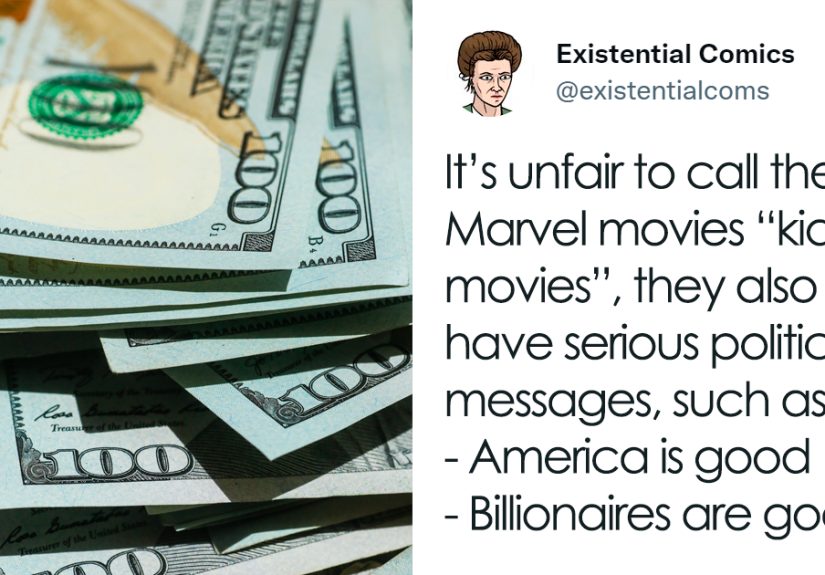
These tweets don’t imagine a sci-fi future where corporations own the moon. They point at the perfectly ordinary scenes we scroll past every day: workers juggling three jobs, billionaires joyriding to space, hospitals sending itemized invoices for breathing, and brands tweeting about “mental health” while squeezing their employees dry. In other words, they show how dystopic our capitalistic society already is, no special effects required.
Who Is Existential Comics, And Why Are They Roasting Capitalism?
Existential Comics is a webcomic and social media presence that uses philosophers, historical figures, and nerd-culture references to poke fun at modern life. The creator leans heavily into themes like absurdity, alienation, and power structuresexactly the sort of terrain where capitalism’s contradictions shine brightest.
On social platforms, the account often posts short, punchy lines that work perfectly as tweets or memes. One recurring bit is the brutally simple critique of capitalism itselfjokes about how “freedom” mysteriously looks like “obey your boss or starve,” or how we managed to convince entire populations that nonstop work is a moral virtue while rest is suspicious. The tone is playful, but the targets are serious: wage labor, corporate PR spin, and the way markets creep into every corner of life.
That mix of humor and philosophy is exactly why Bored Panda’s compilation of 30 Existential Comics tweets hit such a nerve. Each post compresses a big, messy economic conversation into a single, shareable gut punch.
Inside The Bored Panda Roundup: 30 Tweets From A Dystopian Present
Bored Panda’s article highlights a curated list of Existential Comics tweets that tackle capitalism from many angles: work, housing, healthcare, tech, education, and even Halloween candy. It’s like a crash course in “late-stage capitalism,” but with more jokes and fewer charts.
Work, Wages, And The “Freedom” To Choose Your Boss
A major theme running through these tweets is the disconnect between how capitalism describes work and how work actually feels. We’re told we’re “free” to choose our jobs. In practice, most people are just free to pick which form of underpaid exhaustion they want in order to survive.
Existential Comics repeatedly skewers this logic. Imagine a tweet that frames the job market as a bizarre game show: “Behind door one, no healthcare. Behind door two, no work-life balance. Behind door three, a ping-pong table and ‘unlimited’ PTO nobody can use.” It’s silly, but it tracks with reality: stagnant wages, record profits, and workers burning out while being told they just need better “mindset.”
Other tweets mock the heroic language used for basic labor. Cashiers become “frontline heroes” rather than people who deserve a living wage. Office workers get pizza parties instead of meaningful raises. The dystopia here isn’t a totalitarian government forcing you to work in a factory; it’s the gentle, pastel-colored email about “family culture” that quietly expects you to answer messages at 11 p.m.
Housing And The Paywall On Basic Survival
Another cluster of tweets call out how capitalism treats housing as an investment vehicle first and a human need second. The tone is often deadpan: jokes about landlords who proudly say, “I don’t really do anything, I just own property,” or about paying half your income to share a windowless “micro-studio” with a washing machine and three plants.
These jokes tap into a wider reality: in many places, rent has skyrocketed far faster than wages, homeownership is out of reach for large chunks of younger generations, and entire neighborhoods are being reshaped to maximize investor returns rather than livability. The tweets exaggerate just enough to make you laugh, then you look at local rental listings and realize they barely exaggerated at all.
Healthcare, Education, And Debt As Features, Not Bugs
Some of the most biting Existential Comics tweets zero in on how capitalism turns essential services into profitable mazes. Healthcare and education become subscription services with impossible terms: you can have care or schooling, but only if you’re willing to sign up for decades of debt.
The tweets often highlight the absurdity of pricing life itself. Picture a joke about getting an itemized hospital bill that includes charges for “oxygen,” “touching the bed,” and “existing near medical equipment.” It’s ridiculous, but for anyone who’s seen a real medical bill, it’s chillingly familiar. The dystopia exists in the fine print, not in a villain’s evil monologue.
Education gets a similar treatment. If learning is supposed to be empowering, why does it come with a price tag that locks people into financial chains? This question runs under many anti-capitalist tweets, not just from Existential Comics but from a whole online genre of memes about student loans, unpaid internships, and “entry-level” jobs that still require years of experience.
Branding, PR, And The Feel-Good Face Of Exploitation
One of the funniestand most disturbingpatterns in the tweets Bored Panda collected is their focus on corporate branding. Capitalism isn’t just an economic system; it’s a full-time marketing campaign. Companies wrap themselves in rainbow logos for a month, host a mindfulness webinar, and suddenly they’re “part of the solution.”
Existential Comics pokes holes in this corporate cosplay. Tweets joke about brands that have a lot to say about kindness and mental health, while also lobbying against labor protections and scheduling workers into chaotic, unstable shifts. It’s a kind of “dystopia with a smiley face,” where exploitation has a cute mascot and a social media manager.
The humor lands because we’ve all seen it: heartfelt commercials about “community” broadcast during events sponsored by companies known for union-busting; limited-edition products tied to social causes that quietly funnel most of the money back to shareholders. The tweets don’t need to name namesthey just point at the pattern and let your brain fill in the rest.
Why These “Funny” Tweets Feel So Uncomfortably Real
There’s an entire online aesthetic sometimes called the “boring dystopia”: images and posts that show how unsettling normal life can be when you look at it from just a slightly different angle. Bored Panda and other outlets have collected countless memes and photos in this vein“heartwarming” stories about coworkers donating sick days so a colleague can get chemotherapy, or customers crowdfunding their favorite barista’s rent so they don’t get evicted.
On the surface, these are stories about kindness. But the Existential Comics perspective flips them: why do we keep celebrating individual acts of generosity instead of asking why the system forces people to rely on them in the first place? Why is everyone one medical emergency away from collapse in a supposedly advanced and wealthy society?
That’s why the 30 tweets in the Bored Panda roundup hit a nerve. They capture the everyday weirdness of life under capitalism, where things are technically “working” and yet millions of people are stressed, insecure, and exhausted. It isn’t a Hollywood dystopia with flying cars and brutalist architecture. It’s a normal apartment with three roommates, a pile of bills, and a landlord raise-your-rent email drafted by AI.
Capitalism, Critique, And The Internet’s Gallows Humor
The internet has become a massive outlet for anti-capitalist critique, much of it delivered in joke form. You can scroll through feeds devoted to “late-stage capitalism,” “humans of capitalism,” or “dystopian capitalism horrors” and see post after post that makes you laugh and wince at the same time. The themes are familiar: low pay, skyrocketing costs, climate crisis, and corporate double-speak.
Existential Comics fits right into this ecosystem. The tweets that Bored Panda spotlighted are part of a broader conversation in which people use humor to cope, connect, and push back. Memes and jokes won’t overhaul global economic structures on their own, but they can puncture the myth that “this is just the natural way things are.”
Gallows humor has always thrived in hard times. What’s new is the speed and scale: a sharp tweet about capitalism can reach millions overnight. When you see thousands of people liking, sharing, and commenting “This is my life,” the joke becomes a tiny data point in a bigger pictureproof that your frustration isn’t just personal failure, it’s part of a pattern.
What The Existential Comics Tweets Reveal About Our System
Strip away the laugh lines, and the 30 tweets in Bored Panda’s article sketch out a pretty clear diagnosis of our current capitalist society. A few key points stand out:
- Power is wildly uneven. A small group of people and corporations wield enormous influence over everyone else’s time, income, and basic security.
- Basic needs are profit centers. Housing, healthcare, education, and even clean air and water are treated as opportunities for revenue first, human rights secondif at all.
- Myths keep the system running. Stories about meritocracy, “hustle,” and “personal responsibility” help justify structural inequalities by turning systemic problems into individual moral tests.
- Everything is up for sale. From your attention span to your genetic data, capitalism is very good at finding new things to commodifyand very bad at saying, “No, this should be off limits.”
The tweets don’t lecture you about these points in textbook language. Instead, they compress them into absurd little scenes: capitalism as a Halloween prank where the candy is replaced with Marx; capitalism as an operating system that charges you a micro-fee every time you breathe near a hospital bed; capitalism as a boss who calls you “family” but cuts your hours without warning.
Living Inside The Dystopia: Everyday Moments That Feel Like Existential Comics Tweets
One reason this Bored Panda collection resonates so strongly is because most of us can supply our own examples. You probably don’t need a degree in economics to recognize the patterns that Existential Comics keeps mockingyou just have to look at your daily life.
Maybe it’s the first time you realize your job’s “competitive salary” hasn’t actually kept up with rent in years. Your inbox fills with motivational quotes about “leaning in,” while your grocery bill quietly inflates. You joke with coworkers about needing a second job just to afford the gas that gets you to the first one. If you turned that conversation into a tweet, it would fit right into the anti-capitalist meme universe.
Or think about healthcare. You wake up with a strange pain and hesitate to see a doctor because you’re terrified of the bill. You consult search engines like they’re an alternative health system. Maybe you end up in the ER anyway, and weeks later an envelope arrives that looks suspiciously like a student-loan statement. It’s not hard to imagine an Existential Comics-style tweet about “advanced civilization” where a broken bone is easier to fix than the paperwork that follows.
Then there’s the gig economy. At first, the promise sounds liberating: “Be your own boss! Work whenever you want!” In practice, you’re refreshing an app at midnight hoping for one more ride request, calculating whether each trip is worth the wear on your car and the risk to your safety. You’re not so much “independent” as you are a tiny, replaceable cog in a vast algorithm tuned to maximize someone else’s profit. If that’s not dystopian, it’s at least suspiciously dystopia-adjacent.
Even entertainment gets weird under capitalism. Streaming platforms, games, and social networks are designed to keep you engaged just long enough to show you more ads and gather more data. A tweet about capitalism “not inventing the internet, just figuring out how to charge rent for parts of it” lands because it reflects what we feel when a once-open space becomes paywalled, subscription-based, or overloaded with tracking pixels.
And of course, there’s the constant rebranding of struggle as inspiration. You see feel-good stories about workers walking miles to their jobs, only to be rewarded by a generous boss with a car… which they can now use to commute even farther to underpaid work. You see fundraisers for basic surgeries framed as heartwarming proof of community spirit. The kindness is real; the underlying situation is also bleak. That double exposureheartwarming on the surface, horrifying underneathis exactly what “dystopic capitalism” content keeps pointing at.
In that sense, the Existential Comics tweets aren’t just jokes. They’re little mirrors. They invite you to hold your daily compromises up to the light and ask, “Wait, why is it like this?” Some people will shrug and say, “That’s just how the world works.” Others will see in those 30 tweets a quiet invitation to question, organize, or at least refuse to pretend that the current arrangement is the best we can do.
Conclusion: Laughing So We Don’t Cry (And Maybe So We Change)
The 30 tweets collected by Bored Panda show that you don’t need a sci-fi setting or a villain in a cape to tell a dystopian story. Our everyday capitalistic society supplies plenty of material: unstable work, overpriced housing, paywalled survival, and marketing campaigns that try to convince us it’s all empowering, actually.
Existential Comics takes those raw ingredients and distills them into sharp, funny, and uncomfortably honest jokes. We share them because they’re relatable. We keep thinking about them because they reveal something we already suspected: the dystopia isn’t on the horizon. It’s in the terms and conditions we already agreed to.
Humor alone won’t abolish student debt, fix healthcare, or cap rents. But it can help us stay sane, find each other, and name what’s wrong. And in a world where so much of the narrative is written by those who benefit most from the status quo, even a single sarcastic tweet that says, “No, actually, this stinks,” can feel like a tiny act of resistance.