Table of Contents >> Show >> Hide
- 1) David Bowie as Jareth the Goblin King (Labyrinth)
- 2) Tina Turner as Aunty Entity (Mad Max Beyond Thunderdome)
- 3) Sting as Feyd-Rautha Harkonnen (Dune)
- 4) Harry Connick Jr. as Daryll Lee Cullum (Copycat)
- 5) Common as Cassian (John Wick: Chapter 2)
- 6) Dwight Yoakam as Raoul (Panic Room)
- 7) Debbie Harry as Velma Von Tussle (Hairspray)
- 8) Tom Waits as Mr. Nick (The Devil) (The Imaginarium of Doctor Parnassus)
- 9) Kris Kristofferson as Charlie Wade (Lone Star)
- 10) Mandy Moore as Hilary Faye Stockard (Saved!)
- 11) Tupac Shakur as Roland Bishop (Juice)
- 12) Dean Martin as Alex Flood (Rough Night in Jericho)
- 13) Frank Sinatra as John Baron (Suddenly)
- 14) Madonna as Breathless Mahoney / “The Blank” (Dick Tracy)
- What Makes These Musician Villains Work So Well?
- Conclusion
- Experiences: Why Audiences Love Musicians as Movie Villains (Extra ~)
Movie villains come in all flavors: charming, chaotic, ice-cold, and “somehow wearing leather in a desert and still looking moisturized.”
But there’s a special category of cinematic troublemaker that hits different: the villain played by a famous musician.
These performances have an extra sparkpart stage presence, part vocal swagger, and part “I’ve headlined arenas, so yes, I can absolutely terrorize your protagonist.”
Musicians bring built-in charisma, instantly recognizable voices, and a sense of rhythm that can make even a simple line delivery feel like a hook.
Sometimes they lean into theatricality. Sometimes they go disturbingly quiet. Either way, it’s memorableand often a little bit delicious.
Below are 14 great movie villains (and villain-adjacent antagonists) played by famous musicians, each proving that a mic and a menace can coexist beautifully.
1) David Bowie as Jareth the Goblin King (Labyrinth)
David Bowie doesn’t just play Jarethhe curates him. Jareth is glamorous, manipulative, and weirdly persuasive for a guy running a goblin daycare.
Bowie’s performance turns the Goblin King into a walking temptation: elegant posture, razor-sharp confidence, and an air of “I’m the problem, and you’ll still sing along.”
The villainy here isn’t just cruelty; it’s seduction, bargaining, and power wrapped in glitter and menace.
2) Tina Turner as Aunty Entity (Mad Max Beyond Thunderdome)
Tina Turner’s Aunty Entity rules Bartertown with a polished smile and a steel trap underneath.
She isn’t a cartoon tyrantshe’s a leader who understands optics, leverage, and the fine art of getting what she wants without begging.
Turner makes Aunty feel like a force of nature: stylish, strategic, and absolutely not afraid to throw someone into a cage match to make a point.
3) Sting as Feyd-Rautha Harkonnen (Dune)
Sting’s Feyd-Rautha is all lethal vanitybeautiful, spoiled, and dangerous in the way a jeweled dagger is dangerous.
He doesn’t need to shout to be threatening; he just needs to stand there and radiate entitlement like it’s an inherited superpower.
The performance works because it feels proud of its own cruelty, like the character is auditioning for “Most Likely to Betray You at Dinner.”
4) Harry Connick Jr. as Daryll Lee Cullum (Copycat)
Harry Connick Jr. going full creepy is the kind of casting curveball that makes you sit up straight.
As Daryll Lee Cullum, he plays a killer who is chilling precisely because he doesn’t look like a monster at first glance.
Connick’s calm intensity gives the villain a frightening realismless “movie boogeyman,” more “this is why you lock the door even in daylight.”
5) Common as Cassian (John Wick: Chapter 2)
Common’s Cassian is the rare assassin antagonist who feels professional, poised, and still extremely bad news.
He’s not a mustache-twirlerhe’s a rival, a hunter, and a man who can exchange polite words one minute and attempt your elimination the next.
Common’s cool control sells the idea that villainy can come with manners… right up until the bullets show up.
6) Dwight Yoakam as Raoul (Panic Room)
Dwight Yoakam brings a jittery unpredictability to Raoul, the kind of criminal who makes everyone else in the room uneasyincluding his own team.
The menace here feels unstable, like the situation could snap from “tense standoff” to “very bad headline” in half a second.
Yoakam’s performance is unsettling because it’s grounded: no grand speeches, just a hard edge and a simmering threat.
7) Debbie Harry as Velma Von Tussle (Hairspray)
Debbie Harry’s Velma Von Tussle is villainy with hairspray and a grin.
She’s petty, status-obsessed, and determined to keep her world “the right way,” which in the story means excluding people and controlling the spotlight.
Harry nails the character’s smug confidenceshe’s not evil in a fantasy sense, she’s evil in the painfully believable sense.
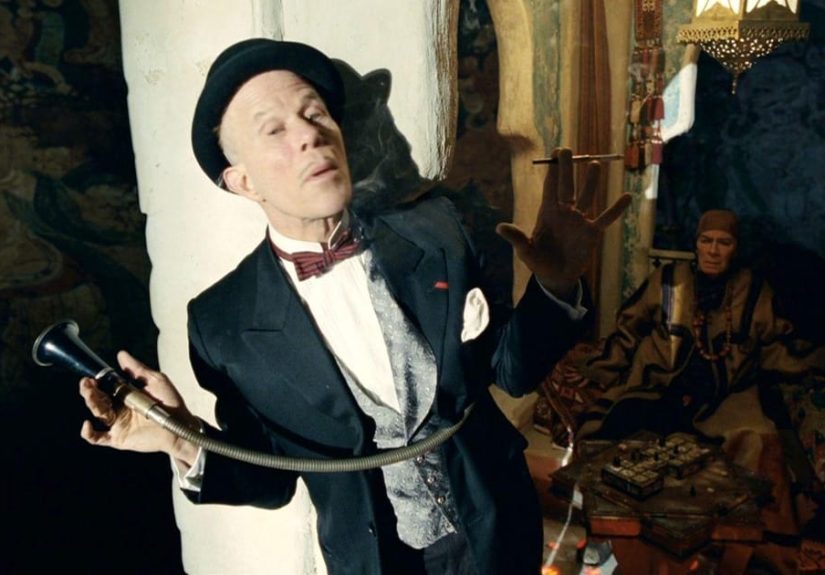
8) Tom Waits as Mr. Nick (The Devil) (The Imaginarium of Doctor Parnassus)
Tom Waits playing the Devil feels less like casting and more like the universe completing a sentence.
His Mr. Nick is playful, predatory, and delighted by human weaknesslike a con artist who never sleeps and always wins.
Waits’ gravelly voice and mischievous energy make the character entertaining, but never safe.
9) Kris Kristofferson as Charlie Wade (Lone Star)
Kris Kristofferson’s Charlie Wade isn’t a flashy villain; he’s the kind who poisons a whole town’s history.
Through flashbacks, the character’s cruelty and corruption hang over the story like a shadow that refuses to move.
Kristofferson brings a hard, intimidating presence that makes the villain feel chillingly humanpower used casually, violence treated like routine.
10) Mandy Moore as Hilary Faye Stockard (Saved!)
Mandy Moore flips her sweet pop-star image into something sharper: a judgmental, self-righteous teen queen with a religious costume change.
Hilary Faye doesn’t see herself as the villain, which is exactly what makes her so effectiveand so irritating (in the best way).
Moore’s performance is funny, cutting, and painfully recognizable if you’ve ever met someone who weaponizes “good intentions.”
11) Tupac Shakur as Roland Bishop (Juice)
Tupac’s Bishop is a slow-burn spiral into paranoia and violence, and it’s gripping because it feels emotionally real.
He starts as one of the guysthen power, fear, and ego twist into something dangerous.
Tupac brings charisma and volatility, making Bishop both magnetic and terrifying, the kind of villain who makes you understand the tragedy while still fearing the outcome.
12) Dean Martin as Alex Flood (Rough Night in Jericho)
Dean Martin playing a ruthless bad guy is a reminder that charm and cruelty can share the same face.
As Alex Flood, he’s not just “the antagonist”he’s the kind of man who thinks intimidation is a civic duty.
Martin’s cool persona makes the villainy sting more, because it’s delivered with confidence instead of cartoon fury.
13) Frank Sinatra as John Baron (Suddenly)
Frank Sinatra as an assassin is one of those roles that feels shocking even before the first threat is spoken.
John Baron is cold, calculating, and frighteningly determined, taking control of a home to set up a presidential killing.
Sinatra’s intensity gives the villain a sharp edgeless glamour, more dangerproving he could sell menace as convincingly as he sold a ballad.
14) Madonna as Breathless Mahoney / “The Blank” (Dick Tracy)
Madonna’s Breathless Mahoney is classic noir trouble: seductive, ambitious, and constantly slipping between ally and adversary.
She plays the character like a walking question markwhat does she want, who is she loyal to, and how close to disaster is she willing to stand?
Madonna’s cool confidence makes the role pop, turning every scene into a flirtation with danger (and fabulous lighting).
What Makes These Musician Villains Work So Well?
There’s a shared thread here: control. Musicians are trained performersthey know timing, silence, posture, and how to “hold the room.”
That translates perfectly to villain roles, where tension is often built with a look or a pause instead of a monologue.
Add in iconic voices and larger-than-life personas, and you get villains who feel instantly memorableeven when they’re barely raising their volume.
Conclusion
The best villains don’t just threaten the herothey steal your attention. Famous musicians, with their natural showmanship and bold identities, often slide into that role with ease.
Whether it’s Bowie’s enchanted menace, Turner’s iron leadership, or Tupac’s tragic volatility, these performances prove that the line between stage and screen can be wonderfully thin.
Next time a musician pops up in a movie, don’t assume they’re there for a cute cameosometimes they’re there to ruin lives in style.
Experiences: Why Audiences Love Musicians as Movie Villains (Extra ~)
One of the most fun experiences in movie-watching is the “wait… is that who I think it is?” momentwhen a villain steps into frame and your brain does a quick double-take.
With musicians, that recognition hits fast because the voice, the face, or the vibe is already part of pop culture muscle memory.
It adds an extra layer to the viewing experience: you’re not only reacting to the character, you’re reacting to the persona you already associate with the performer.
That’s especially true when the musician’s public image clashes with the role. Seeing someone known for romantic songs or upbeat hits suddenly embody cruelty can feel like a playful betrayal.
It’s the cinematic equivalent of hearing a cheerful jingle right before a horror-movie jump scare.
Your expectations are the first thing the movie weaponizes, and when the musician leans into that contrast, it becomes weirdly satisfying.
The performance doesn’t have to be subtle to be effectiveit just has to be committed.
Another common audience experience is noticing how “musical” the villain performance feels, even without singing.
Many musicians instinctively understand rhythm: when to speed up, when to pause, when to let silence do the heavy lifting.
In thrillers and action movies, that timing becomes tension. A villain who speaks slowly can feel more dangerous than one who shouts.
A villain who moves like they’re hitting marks in a choreography can make a simple walk across a room feel like an event.
Even viewers who can’t name the technique can feel the differencebecause it lands in the body before it lands in the brain.
There’s also the “rewatch upgrade” effect. The first time you watch, you might be caught up in the plot: who survives, who betrays whom, who’s hiding behind the mask.
On a rewatch, you start noticing performance detailshow a smile lingers too long, how a line is delivered like a punchline, how confidence is used as a weapon.
Musicians often excel here because they’re comfortable being watched. They know how to make a moment.
That’s why these villain roles keep getting shared, quoted, and memed: they’re built for replay value.
Finally, musicians as villains can feel like a special kind of movie magic because it’s a reminder that performance is performancedifferent stages, same electricity.
When it works, it doesn’t feel like a stunt. It feels like a new dimension of the artist.
And for the audience, that’s the best kind of surprise: the moment you realize the person you came to recognize has the range to genuinely unsettle you… and you’re enjoying it way more than you probably should.