Table of Contents >> Show >> Hide
- What Is Japanese Clam Soup (Ushiojiru / Sumashi-jiru)?
- Ingredients You’ll Need
- Step-by-Step: How to Make Japanese Clam Soup With Clear Broth
- Tips for Crystal-Clear, Flavorful Broth
- Easy Variations and Add-Ins
- Serving Suggestions
- Nutrition Snapshot (Approximate)
- FAQ: Japanese Clam Soup With Clear Broth
- Experiences and Cooking Stories With Japanese Clam Soup
If you love the gentle, ocean-y flavor of clams but don’t always want a heavy chowder, this Japanese clam soup with clear broth is about to be your new favorite. It’s light but deeply savory, elegant enough for a dinner party, and still easy enough to throw together on a weeknight. Think of it as a spa day for your tastebuds: calm, clean, and full of umami.
In Japan, clear clam soup is often served for celebrations and special occasions, but there’s no reason you can’t enjoy it on a random Tuesday night in sweatpants. With just a handful of ingredientsfresh clams, water or dashi, a strip of kombu, a splash of sake, and a pinch of saltyou can create a beautifully clear, restaurant-style broth at home.
This guide walks you through how to make authentic-style Japanese clam soup with clear broth (often called ushiojiru or asari no sumashi-jiru), including tips for purging sand, getting a crystal-clear soup, and simple variations to make it your own.
What Is Japanese Clam Soup (Ushiojiru / Sumashi-jiru)?
Japanese clear clam soup goes by a few names. When the main flavor comes from clams and sea salt, it’s often called ushiojiru (潮汁), literally “tide soup,” because it tastes like the clean, gentle flavor of the sea. When the style is focused on a transparent broth seasoned lightly with dashi and soy sauce, you’ll also hear the term sumashi-jiru or suimono, both referring to clear soups.
Unlike miso soup, which uses fermented soybean paste and is cloudy, this clam soup is all about clarity. The broth is transparent but packed with umami from clams, kombu, and sometimes katsuobushi (bonito flakes) or light soy sauce. The result is a subtle and refined soup that pairs beautifully with rice, grilled fish, or any Japanese-inspired meal.
Ingredients You’ll Need
For about 4 small bowls of Japanese clam soup with clear broth, gather:
- 1 pound (450 g) small clams in the shell (Manila clams or other small, hard-shell clams)
- 4 cups (1 liter) water or light dashi stock
- 1 small piece kombu (dried kelp), about 4 inches long
- 2–3 tablespoons sake (Japanese rice wine)
- 1–2 teaspoons light soy sauce (optional, for a sumashi-jiru style)
- Salt, to taste (preferably sea salt)
- Optional garnishes:
- Chopped scallions or chives
- Mitsuba (Japanese parsley), if available
- Very thin strip of lemon peel or yuzu peel
If you don’t have premade dashi, don’t panic. The clams themselves create a beautiful seafood stock while they simmer. The kombu is there to boost umami and give the broth a slightly more complex flavor, but the clams do most of the heavy lifting.
Step-by-Step: How to Make Japanese Clam Soup With Clear Broth
1. Clean and Purge the Clams
This is the most important step if you want to avoid unwanted “crunch” in your soup.
- Inspect the clams and discard any that are cracked or stay open when you tap them firmly.
- In a large bowl, mix cool water with salt to mimic seawaterabout 2 tablespoons salt per quart (liter) of water.
- Place the clams in a single layer if possible, or at least without piling them too high. Let them soak for 30–60 minutes so they can spit out sand and grit.
- Lift the clams out (don’t pour them out, or you’ll dump the sand back over them), then rinse gently under cold water to remove any surface grit.
Some clams sold in supermarkets may be labeled “pre-purged” or “ready to cook,” but a short soak still helps. Think of it as insurance against gritty surprises.
2. Build the Clam Dashi
- Place the clean clams in a medium pot.
- Add the kombu and the water (or very light dashi, if you’re using it).
- Start with cold water and set the heat to medium. Slowly bring it just up to a gentle simmer.
- As the water heats, the clams will begin to open and release their juices, turning the liquid into a delicate clam stock.
- Skim off any foam or scum that rises to the surfacethis will help keep the broth clear and clean-tasting.
Once most of the clams are open, turn the heat to low. Any clams that stubbornly stay closed should be discarded.
3. Season the Clear Broth
- Remove the kombu just before the soup comes to a full simmer. Leaving it too long can make the broth slightly slimy or overly strong.
- Add the sake and let the soup simmer very gently for 1–2 minutes to cook off the raw alcohol flavor.
- Taste the broth. Start with a small pinch of salt and add more as needed. If you want a sumashi-jiru style soup, add 1–2 teaspoons of light soy sauce for a hint of color and extra umami.
- Keep the heat low. You don’t want a rolling boiljust a gentle simmer. Overcooking can make the clams rubbery and the broth cloudy.
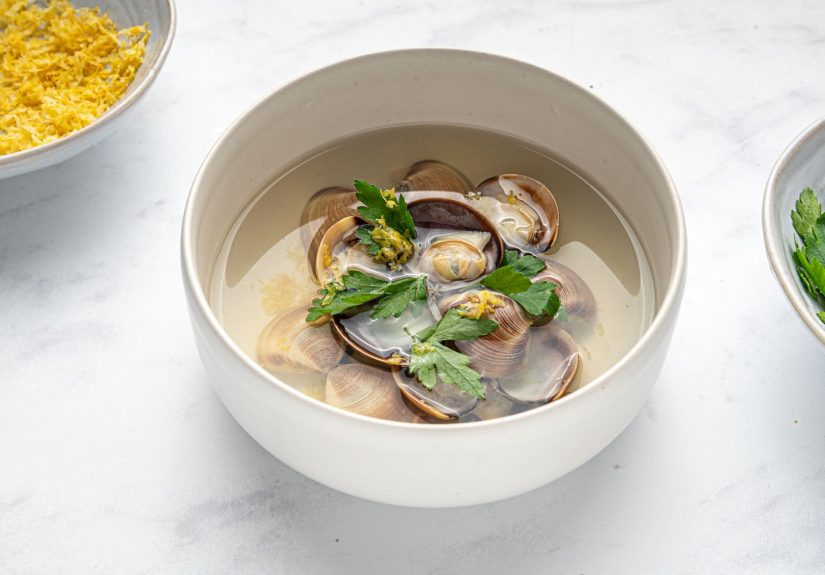
The goal is a crystal-clear broth that tastes delicately briny, not aggressive or salty.
4. Finish and Serve
- Once the broth tastes balanced, turn off the heat.
- Divide the clams among small soup bowls, then ladle the hot broth over them.
- Garnish with sliced scallions, mitsuba, or a tiny strip of citrus peel for aroma.
Serve immediately while the clams are plump and juicy and the broth is steaming-hot.
Tips for Crystal-Clear, Flavorful Broth
Clear soup looks simple, but it’s surprisingly easy to cloud it up if you rush things. These tips will help you get that elegant, restaurant-style look and flavor.
- Start with cold water. Putting clams into cold water and warming them slowly helps extract flavor gradually and keeps the broth more translucent.
- Skim as you go. Use a small ladle or spoon to remove foam and scum that form as the soup heats.
- Don’t overboil. A full rolling boil makes proteins coagulate quickly, clouding the broth and toughening the clams.
- Season gently. The clams are naturally briny, so always taste before adding more salt. A tiny splash of soy sauce goes a long way.
- Discard unopened clams. If a clam refuses to open after cooking, it’s a no-go. Don’t force it.
- Serve right away. The soup is at its best right after cooking. Reheating can make the clams rubbery and the broth less delicate.
Easy Variations and Add-Ins
Once you’ve mastered the basic Japanese clam soup with clear broth, you can play with subtle additions that keep the spirit of the dish while tailoring it to your taste.
1. Extra Umami With Dashi
Instead of plain water, use a light ichiban dashi (first-brew kombu and bonito stock) as your base. This gives the broth deeper flavor while still staying clear. Just reduce the amount of added salt, because dashi has its own savory character.
2. A Touch of Miso (When You Want It Cloudy)
If one day you’re okay with a less-than-clear broth, whisk in a spoonful or two of white miso paste right at the end, off the heat. You’ve officially crossed into clam miso soup territorydifferent dish, but incredibly comforting.
3. Vegetables and Noodles
- Thinly sliced mushrooms (shiitake, enoki, or shimeji) added toward the end of cooking.
- Glass noodles (harusame) simmered briefly in the broth for a more filling soup.
- Spinach or bok choy, added in the last minute just to wilt.
Just keep additions light and avoid starchy vegetables that might cloud the broth.
4. Make-Ahead and Storage
This soup is best fresh, but if you must, you can:
- Refrigerate leftover broth and clams in an airtight container for up to 1 day.
- Reheat gently over low heat until just warmdon’t boil.
- For longer storage, you can remove the clam meat from the shells, strain the broth, and freeze the broth separately. Add fresh clams when you actually serve the soup for the best texture.
Serving Suggestions
Japanese clam soup with clear broth is usually served in small portions, almost like a refined starter or side dish rather than a huge main course. Try pairing it with:
- Steamed rice and grilled salmon or mackerel
- A simple cucumber salad with rice vinegar
- Assorted tempura or karaage (Japanese fried chicken)
- Sushi, sashimi, or a minimalist rice bowl
Because the soup is delicate, it plays best with dishes that aren’t overwhelmingly spicy or strongly flavored. Let it be the quiet, elegant friend at the table.
Nutrition Snapshot (Approximate)
Exact nutrition varies based on your ingredients, but for a small bowl (about 1 cup of broth plus clams), you can expect roughly:
- Calories: low, often around 60–90 per serving
- Protein: 8–12 grams from the clams
- Fat: very low, usually under 2 grams
- Carbs: minimal, unless you add noodles or vegetables
- Sodium: depends on how much salt and soy sauce you usetaste as you go
It’s a light, protein-rich option that fits nicely into heart-conscious or lower-calorie eating patterns, especially if you pair it with steamed rice and veggies rather than heavy fried foods.
FAQ: Japanese Clam Soup With Clear Broth
Can I use frozen clams?
Frozen clams in the shell can work if they were frozen fresh, but they may release less flavor than live clams. If your clams are already out of the shell, you’ll get less of that briny “from the tide” character, so consider using a stronger dashi base to make up for it.
Why did my broth turn cloudy?
Common causes include boiling the soup too hard, not skimming foam, or using very sandy clams that weren’t well-purged. Next time, soak the clams longer in salted water and keep the heat to a gentle simmer.
Can I make this soup without sake?
Yes. You can skip sake entirely or substitute a small splash of mirin plus extra water. The flavor will be slightly different (less complex and aromatic), but still delicious.
What kind of clams are best?
Small, sweet clams with thin shellslike Manila clams, littlenecks, or short-neck clamswork best. Larger, tougher clams are better suited for chowders or longer-cooked dishes.
Experiences and Cooking Stories With Japanese Clam Soup
Japanese clam soup with clear broth is one of those dishes that looks modest in the bowl but leaves a lasting impression. Many home cooks describe the first spoonful as “tasting the ocean, but in a polite way.” It doesn’t shout; it whispers. That quiet subtlety is exactly what makes this soup so special.
For families with Japanese roots, clam soup often shows up at holidays and celebrations. It might appear on the table for Girls’ Day in early March, served in lacquer bowls alongside chirashi sushi and colorful side dishes. Kids sometimes start by chasing the clams around the bowl with their chopsticks before they realize the broth is the real star.
Even if you didn’t grow up with it, this soup can quickly become a comfort food. Picture a chilly, rainy evening: instead of defaulting to something heavy and creamy, you simmer a pot of clear clam broth. The kitchen fills with a gentle, seaside aroma, and the steam feels like a mini facial every time you lift the lid. You sip the hot broth, bite into a plump clam, and suddenly the weather doesn’t seem so gloomy.
From a cooking perspective, this recipe is also a great teacher. It encourages patience and attention. You learn to watch for the first tiny bubbles at the edge of the pot instead of waiting for a rolling boil. You notice how the color of the liquid shifts from plain water to a faintly milky, pale gold as the clams release their juices. You taste repeatedly and discover how just a drop too much soy sauce can overwhelm such a delicate base. It’s like a masterclass in “less is more.”
Many people are surprised by how quickly this soup comes together. Once the clams are purged, the actual cooking time is short. That makes it a wonderful “I want something special, but I don’t want to cook for an hour” recipe. You can start the soup while rice cooks in the rice cooker and a simple vegetable side roasts or steams, and everything will finish at roughly the same time.
It’s also a fun dish to share with friends who love seafood but are more familiar with Western-style soups. Serving Japanese clam soup before a sushi night or a casual Japanese-inspired dinner immediately sends the message: “This meal is going to be thoughtful and a little bit fancy, but still relaxed.” People often ask how you managed to get so much flavor out of so few ingredients, and you get to shrug and say, “The clams did most of the work.”
On a more practical level, learning this recipe can change the way you think about using shellfish. Instead of drowning clams in cream, garlic, and butter every time, you get comfortable highlighting their natural sweetness in lighter preparations. That skill carries over to other disheslike simple steamed clams, light seafood stews, or even pasta tossed with clam broth and olive oil.
Most of all, Japanese clam soup with clear broth is about appreciation. Appreciation for good ingredients, for quiet flavors, for the kind of cooking that doesn’t require a ton of equipment or fancy techniques. You clean the clams, warm them gently in water with kombu and sake, and let time and heat unlock their flavor. In a world of complicated recipes and endless ingredient lists, there’s something deeply satisfying about standing over a pot of simple, clear soup and knowing you’ve done just enoughand not too much.