Table of Contents >> Show >> Hide
- What Is the Teti Wall / Ceiling Light?
- A Brief Design History: Why Teti Became an Icon
- Key Features of the Teti Wall / Ceiling Light
- Where the Teti Lamp Works Best
- How to Style a Teti Light in Different Interiors
- Practical Considerations: Installation, Bulbs, and Maintenance
- Is the Teti Wall / Ceiling Light Right for You?
- 500-Word Experience: Living with the Teti Wall / Ceiling Light
- Conclusion
If you’ve ever looked at a bare light bulb and thought, “You deserve better,” the Teti wall / ceiling light is basically the elegant comeback to that thought. Designed by Italian legend Vico Magistretti for Artemide in the late 1960s–early 1970s, this compact fixture proves that a simple plastic base and a single bulb can be just as iconic as a sculptural chandelier.
What Is the Teti Wall / Ceiling Light?
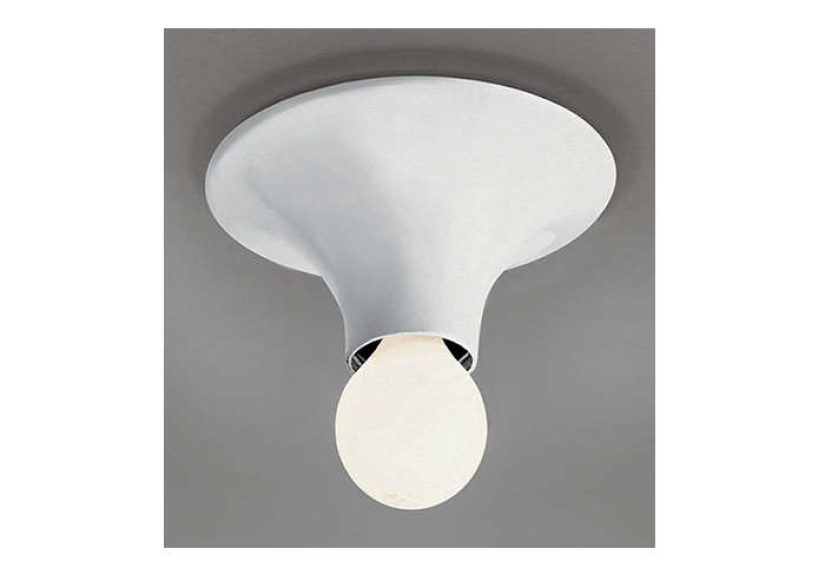
The Teti is a minimalist wall or ceiling light consisting of a small, funnel-shaped base made from thermoplastic or polycarbonate and a single exposed bulb. It mounts flush to the wall or ceiling, with the “flare” of the base cradling the bulb like a tiny trumpet or chess pawn.
Originally designed by Vico Magistretti for the Italian lighting brand Artemide, the Teti lamp quickly became a staple of mid-century and 1970s interiors. Its compact size (about 5.5 inches / 14 cm in diameter and roughly 2.75 inches / 7 cm deep) makes it ideal for hallways, entries, stairwells, and any space where you need light without a bulky fixture.
A Brief Design History: Why Teti Became an Icon
Magistretti was known for turning ordinary everyday objects into clever, friendly design. The Teti wall / ceiling light is a perfect example of his philosophy: strip everything down to essentials, keep the form playful, and let the light do the talking.
The lamp was launched around 1967–1970 during a period when plastic was the star material of contemporary design. Thermoplastic resin and polycarbonate allowed designers to create smooth, sculptural forms that were durable, lightweight, and easy to mass-produce. Magistretti used these advantages to create a fixture that felt futuristic at the time but now reads as timeless.
Today, the Teti is still in production and also widely available as a vintage piece. You’ll find it on high-end design resale platforms and in design shops that specialize in mid-century and 1970s lighting, often in classic white, anthracite gray, or punchy orange tones.
Key Features of the Teti Wall / Ceiling Light
1. Versatile Mounting: Wall or Ceiling
One of the main advantages of the Teti is its flexibility. You can install it as a ceiling light to create a simple flush-mount solution, or mount it on the wall like a compact sconce. Designers often use multiples of Teti in a grid along a corridor, clustered on a ceiling, or arranged at different heights on a wall to create a graphic, architectural effect.
2. Compact, Space-Saving Design
With a diameter of about 5.5 inches and a depth of roughly 2.75 inches, the Teti wall / ceiling light is great for tight spaces: low ceilings, narrow halls, compact bathrooms, or tiny entryways that can’t handle a pendant or bulky flush mount.
Because it hugs the wall or ceiling, you get functional lighting without the risk of bumping your heador knocking off a shadeevery time you pass by.
3. Durable Thermoplastic or Polycarbonate Body
The Teti’s body is formed from thermoplastic resin or polycarbonate, materials chosen for their strength and light weight. These plastics are resistant to impact and everyday wear, making the Teti a practical choice in family homes, rental spaces, and high-traffic areas like stairwells or apartment corridors.
4. Color Options for Different Interiors
While the most iconic version is whiteperfect for minimalist, Scandinavian, or modern interiorsthe Teti wall / ceiling light also comes in anthracite gray, orange, transparent, and transparent orange, depending on the retailer and edition.
- White: Clean, discreet, blends into light walls and ceilings.
- Anthracite: Adds contrast and a more industrial, graphic feel.
- Orange or transparent orange: A bold, retro statement and a nod to 1970s pop design.
- Transparent: Visually light, perfect when you want the bulb and glow to be the star.
5. A Fixture That Celebrates the Bulb
Unlike many fixtures that hide the bulb behind a shade, the Teti puts the lamp front and center. This means you can transform the character of the piece simply by changing the bulb:
- Use a frosted globe bulb for soft, diffused light.
- Use a mirrored-top bulb to reduce glare and bounce light onto the ceiling for a moodier effect.
- Use a warm-toned LED globe for cozy ambient lighting in bedrooms or living rooms.
Because the Teti uses a standard E26/E27-style base (check your specific model and region), you can choose energy-efficient LED bulbs that deliver the same brightness with significantly lower energy use than old incandescent lamps.
Where the Teti Lamp Works Best
Hallways and Corridors
Line a hallway with multiple Teti wall / ceiling lights to create a repeating rhythm of glowing bulbs. Their small size keeps the space from feeling cluttered, while the repetition adds a gallery-like feel. Designers often stagger them along the wall or in two rows on the ceiling to play with perspective.
Entryways and Mudrooms
In tight entry halls where a pendant would hang too low, a Teti ceiling light gives you plenty of illumination without visually shrinking the space. A white or anthracite version blends into most décor styles, while a bright orange Teti can act like a cheerful design handshake as soon as you open the door.
Bathrooms and Powder Rooms
Because it’s compact and easy to clean, the Teti wall / ceiling light is a solid option for bathrooms and powder rooms, especially above a mirror or near the shower entrance (just ensure it’s installed in a location appropriate to its IP rating and safety guidelines). Its open bulb design means good general illumination for small rooms.
Stairwells and Transitional Spaces
Stairwells are notorious for awkward ceiling heights and tricky angles. Mounting Teti fixtures on the walls or low ceilings along the stairs gives you continuous light without the hazard of dangling fixtures. Using multiple lights along the stair run adds both safety and style.
Clustered Installations for a Statement Look
For a dramatic effect, you can cluster several Teti wall / ceiling lights together on a single ceilingalmost like a constellation of glowing bulbs. Designers sometimes pair the single-bulb Teti with the triple “Triteti” ceiling light for variety and a more sculptural composition.
How to Style a Teti Light in Different Interiors
Mid-Century and Retro Spaces
In a mid-century modern interior, orange or transparent orange Teti lights fit right in with teak furniture, geometric patterns, and low-slung sofas. They echo the playful optimism of 1960s and 1970s Italian design while still feeling surprisingly current.
Minimalist and Scandinavian Homes
Choose white or anthracite Teti fixtures for minimalist spaces that favor clean lines and neutral palettes. Pair them with white walls, pale wood floors, and soft textiles. The lamps quietly complement the space instead of demanding attention, yet their sculptural shape still rewards a closer look.
Industrial and Loft Interiors
In more industrial settings with exposed brick, concrete, and visible ductwork, Teti wall lights can act as compact accents. Use darker finishes like anthracite and bulbs with visible filaments or warm LED “Edison” styles to match the industrial aesthetic while keeping the footprint small.
Colorful, Eclectic Rooms
If your design style is more “maximalist mood board” than “minimalist monk,” bright Teti colors are your friend. Mount a row of orange or mixed-color Teti lamps along a painted accent wall or against patterned wallpaper to add another dynamic layer to the room.
Practical Considerations: Installation, Bulbs, and Maintenance
Installation Basics
The Teti wall / ceiling light is designed to mount to a standard junction box. As with any hardwired fixture, installation should follow local electrical codes and is often best handled by a licensed electrician. The simplicity of the design usually translates into a straightforward installation: mount the base, connect the wiring, attach the body, and screw in the bulb.
Choosing the Right Bulb
Because the bulb is exposed, your choice dramatically affects both the look and the performance of the Teti. Many product listings recommend lower-wattage LED bulbsoften around 8–12W LED, equivalent to 40–60W incandescentto balance brightness with comfort.
Some quick guidelines:
- For cozy ambient light: Choose a warm white bulb (around 2700K–3000K) with a frosted finish.
- For brighter task or hallway light: Opt for a neutral white (around 3000K–3500K) globe-style bulb.
- To reduce glare: Consider a silver-tipped or mirrored bulb that redirects light toward the ceiling.
Cleaning and Care
Cleaning the Teti is refreshingly simple compared with multi-arm chandeliers or intricate pendants. Most care instructions for plastic or polycarbonate fixtures recommend dusting regularly with a soft, dry cloth and using a lightly dampened cloth with mild soap for more stubborn dirt. Avoid harsh chemicals or abrasive pads, which can scratch or cloud the plastic.
As always, turn off power to the fixture before cleaning, remove the bulb if needed, and make sure everything is completely dry before turning the power back on.
Is the Teti Wall / Ceiling Light Right for You?
The Teti wall / ceiling light is ideal if you:
- Love mid-century and 1970s Italian design.
- Need a compact, low-profile fixture for ceilings or walls.
- Appreciate fixtures that highlight the bulb as part of the design.
- Want the flexibility to use a single piece or multiple units in a configuration.
If you prefer heavily shaded fixtures or fully concealed bulbs, the Teti’s “naked bulb” look may take some getting used to. However, with the right bulb choice and placement, it delivers a warm, inviting glow that feels both functional and stylish.
500-Word Experience: Living with the Teti Wall / Ceiling Light
So what is it actually like to live with a Teti wall / ceiling light day to day? Imagine coming home at night, flicking on a switch, and seeing a row of glowing orbs along your hallwaysimple, bright, and surprisingly cheerful. That’s the Teti experience in a nutshell.
One of the first things people usually notice is how small the fixture is in person. Photos can make it look larger, but at just over five inches across, it has a “jewel” quality when installed on the wall or ceiling. In an entryway, a single Teti ceiling light can be enough to greet you with a soft glow, especially when paired with a mirror or light-colored walls that bounce the light around.
In real-world use, flexibility is the Teti’s secret weapon. Let’s say you start with one in the hallway. A few months later, you realize you’d love more light along the stairs. Instead of hunting for a completely new fixture line, you can just add two or three more Teti units and create a subtle lighting “path” up the wall. The design is so minimal that adding more doesn’t visually overwhelm the space.
Another everyday benefit is how easy it is to change the bulb. There’s no shade to remove, no tiny screws to fumble withjust unscrew the old bulb and screw in a new one. This sounds trivial until you’re precariously balanced on the third step of a ladder, trying not to drop a glass shade onto the tile below. With Teti, swaps are quick and drama-free.
Homeowners also tend to appreciate how the fixture plays well with evolving décor. You might start with a white Teti in a minimal apartment and then move it to a bolder interior with patterned wallpaper or a stronger color palette. The form is neutral enough that it rarely clashes. If you choose a colored version, like orange or transparent orange, it becomes more of a focal pointgreat for adding a pop of personality to kid’s rooms, creative studios, or playful kitchens.
From a practical standpoint, the exposed bulb design encourages you to think more deliberately about light quality. If the light feels too harsh in a small space, switching to a lower-output, warm LED globe bulb instantly softens the atmosphere. If a hallway feels a bit gloomy, upgrading to a brighter bulb or adding a second Teti further down the corridor can make a big difference. It’s a fixture that invites experimentation without requiring any complicated adjustments.
Cleaning is another area where real-world experience matches the promise. A quick dusting during your regular cleaning routine is usually enough. Every few weeks, you might power off the fixture, let the bulb cool, and wipe the body and bulb with a soft cloth. That’s itno disassembling, no soaking glass shades in the sink, no wrestling with fragile parts. For busy households, this low-maintenance aspect is a quiet but important perk.
Finally, there’s an emotional side to living with a Teti wall / ceiling light: it has a way of making ordinary moments feel a bit more “designed.” Turning on the lights before guests arrive, you catch that little row of chess-pawn-shaped bases and glowing bulbs and think, “Okay, this looks good.” You’re not just illuminating a spaceyou’re adding a piece of design history that still feels fresh decades after it was created.
In short, the Teti wall / ceiling light is more than a compact plastic fixture. It’s a small-but-mighty design object that proves you don’t need an enormous chandelier to make a thoughtful lighting statement at home.
Conclusion
The Teti wall / ceiling light nails the balance between functional lighting and timeless design. With its compact size, flexible mounting options, durable thermoplastic body, and iconic exposed-bulb silhouette, it slides into almost any spacefrom retro hallways to minimalist bathrooms and eclectic studios. Whether you use a single lamp as a quiet accent or create a cluster for dramatic effect, the Teti delivers reliable, character-filled illumination that feels as relevant today as it did in the late 1960s.