Table of Contents >> Show >> Hide
- What the Cannock Faucet Is (and What It Isn’t)
- Quick Specs That Matter in the Real World
- Why Two Lever Handles Still Make Sense
- Where the Cannock Faucet Fits Best
- Rough Plate Finish: The “Industrial Look” Explained
- Installation Planning: Measure First, Celebrate Later
- Accessibility and Lever Handles
- Lead-Free, Low-Lead, and Why the Internet Sometimes Disagrees
- Maintenance: Keep It Tough, Not Crusty
- Troubleshooting Common Issues
- How the Cannock Compares to Other Utility Faucets
- Buying Checklist: Is the Cannock the Right Choice?
- Real-World Experiences With the Cannock (About )
- Conclusion
Utility sinks don’t ask for much. They just want a faucet that shows up, does the work, and doesn’t throw a tantrum when you
rinse paint brushes, wash out a mop bucket, or blast garden soil off your hands like you’re erasing evidence. That’s the
lane the Cannock Double Lever Handle Wash Sink Faucet was built for: sturdy, commercial-leaning hardware that
looks appropriately “industrial” and handles heavy, everyday use without acting precious.
In this guide, we’ll break down what the Cannock faucet is, what the specs actually mean in real life, how to plan a clean
installation, and how to keep it running smoothly for years. (Yes, we’ll talk about the “rosespray” spoutbecause it sounds
like a Victorian perfume, but it’s actually about your water stream.)
What the Cannock Faucet Is (and What It Isn’t)
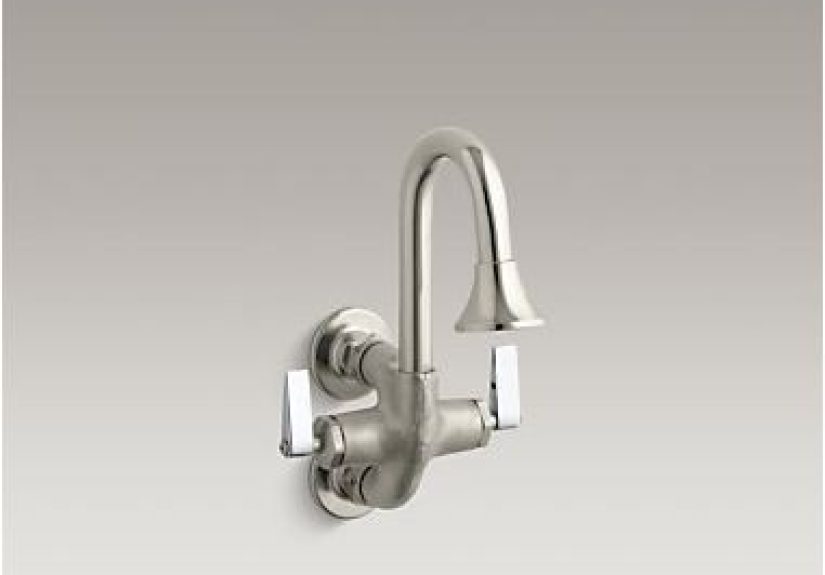
The Cannock Double Lever Handle Wash Sink Faucet is a two-handle, wall-mount wash/utility sink faucet designed
for hardworking spaces: laundry rooms, workshops, janitorial closets, art studios, classrooms, light commercial back rooms
anywhere a deep sink and a reliable faucet do the messy jobs the “pretty” bathroom faucet would rather not discuss.
This style is intentionally straightforward: separate hot and cold lever handles, a short spout made for close-in utility sinks,
and connection details that suit exposed or serviceable plumbing. It’s not a high-arc “Instagram kitchen” faucet. It’s a
“my hands are covered in potting mix and I need water immediately” faucet.
Quick Specs That Matter in the Real World
Product listings can feel like they were written by a robot who has never seen a sink. Here are the key Cannock specs translated
into plain English:
- Two lever handles: separate control for hot and cold; lever style is easier to operate than round knobs.
- Wall-mount, 8-inch centers: built for common two-hole utility sink/wash sink setups (measure your rough-in!).
- 4-inch spout with “rosespray”: a short-reach spout that delivers a spray-like, shower-ish stream pattern.
- 8-3/8-inch wall-to-spout outlet: how far the water outlet sits from the wallcritical for sink compatibility.
- 1/2-inch NPT outside threaded couplings: a standard plumbing connection style often used in commercial/utility installs.
- Adjustable flanges: helps dial in a cleaner fit against the wall even if the rough-in is a little “real life.”
- Solid brass construction + brass valve bodies: durability focus; built for repeated use.
- Rough Plate finish: an intentionally industrial look (not polished, not delicate, very “I mean business”).
Why Two Lever Handles Still Make Sense
Single-handle faucets are convenient, but in a utility or commercial setting, two-handle designs remain popular for a few
practical reasons:
1) More precise temperature control (especially with gloves)
With separate levers, you can “micro-adjust” temperature without overshooting. If you’re wearing work gloves, lever handles
are easier to operate than small knobs, and separate hot/cold control can feel more predictable when your hands are wet,
soapy, orlet’s be honestcovered in mystery sludge.
2) Familiar operation for shared spaces
In shared environments (studios, schools, commercial utility rooms), people understand two-handle operation immediately.
That matters when the sink is used by lots of different hands with lots of different urgency levels.
3) Serviceability and longevity
Many commercial-style two-handle faucets are built around durable internal valve assemblies and replaceable service parts.
When something eventually wears down, the goal is “repair,” not “replace the whole faucet and pretend the leak never happened.”
Where the Cannock Faucet Fits Best
The Cannock is a strong match when you want a faucet that is:
- Appropriately sized for a wash sink or utility sink (not overly tall, not overly fancy).
- Durable enough for frequent use in a workspace.
- Easy to operate with lever handles that can support accessibility needs.
- Visually aligned with an industrial aestheticunfinished-look walls, exposed piping, concrete floors, stainless sinks, etc.
Practical examples where this faucet can shine:
- Laundry room utility sink: rinsing stains, handwashing delicates, soaking shoes, washing pet bowls.
- Workshop sink: cleaning brushes, degreasing parts, scrubbing hands after sanding or painting.
- Garage/mudroom sink: washing boots, rinsing sports gear, cleanup after yard work.
- Light commercial back room: general cleanup where reliability matters more than mirror selfies.
Rough Plate Finish: The “Industrial Look” Explained
“Rough Plate” is not trying to be shiny. It’s a finish that leans into a raw, utilitarian vibethink exposed hardware, honest
materials, and a faucet that looks like it could survive a mild apocalypse and still turn on.
Who typically loves this look?
- People building a workshop, studio, or mudroom that feels intentionally practical.
- Designers mixing industrial elements with warmer materials (wood shelving, vintage tile, brick walls).
- Homeowners who don’t want fingerprints and water spots to become a daily emotional event.
Who should skip it?
- If you want a uniform polished chrome look throughout your home.
- If your space is ultra-minimal, high-gloss, or “hotel bathroom perfect.”
- If you’re easily offended by the phrase “patina happens.”
Installation Planning: Measure First, Celebrate Later
Wall-mount faucets are fantastic when they’re planned correctly…and legendary sources of frustration when they’re not. Before
you buy, measure these items:
Confirm 8-inch centers
Many wash sinks/utility sinks use an 8-inch spread (center-to-center distance between hot and cold inlets). Don’t eyeball it.
Measure it. This is not the time for optimism.
Check wall-to-spout outlet vs. your sink basin
The Cannock’s wall-to-spout outlet dimension is a big deal because it determines where the water lands in the sink. Too short
and you’ll splash the back wall; too long and you can overshoot the basin on a shallow sink. Compare the faucet’s wall-to-spout
dimension to your sink’s depth and bowl placement.
Understand NPT connections
NPT (National Pipe Thread) connections are common in plumbing. The Cannock uses external NPT connections, and many installs
will involve threaded adapters, shutoff valves, and sealing methods (like thread sealant tape or pipe dopeused appropriately,
per code and manufacturer guidance).
Use adjustable flanges to your advantage
Adjustable flanges can help cover minor wall imperfections and create a more finished look. Translation: if your wall is not
perfectly flat or your rough-in is slightly off, the faucet gives you a little “forgiveness.”
DIY or plumber?
If you’re replacing an existing wall-mount faucet with the same rough-in and your shutoffs are good, a confident DIYer can
often handle it. If you’re changing rough-in spacing, dealing with old galvanized lines, missing shutoffs, or questionable
plumbing that looks like it came from a haunted househire a licensed plumber.
Accessibility and Lever Handles
Lever handles are widely used in accessible design because they’re typically easier to operate without tight grasping,
pinching, or twisting. That’s helpful for a lot of people: arthritis, limited grip strength, temporary injuries, or just the
reality of operating a faucet when your hands are full.
Important note for any “ADA-compliant” discussion: compliance depends on proper installation and the broader context (mounting
heights, reach ranges, clear floor space, and other requirements). The handles can support accessible operation, but the
installation details still matter.
Lead-Free, Low-Lead, and Why the Internet Sometimes Disagrees
Here’s where things get spicy: some older third-party product writeups may claim a faucet is “not lead-free,” while current
manufacturer specification sheets may state compliance with modern low-lead requirements. This can happen for a few reasons:
older product versions, old inventory, outdated pages, or changes in certification and regulations over time.
In the U.S., “lead free” for plumbing products is defined in terms of a weighted average lead content across
wetted surfaces. Many modern compliant products are certified to standards related to lead content (for example, NSF/ANSI/CAN 372),
and manufacturers may also state compliance with the Safe Drinking Water Act lead-free requirements.
What you should do as a buyer:
- Read the current spec sheet for the exact model number you’re buying.
- Buy from reputable sellers who are more likely to move current inventory.
- If compliance is critical (schools, childcare facilities, healthcare), verify certification and product documentation before installation.
Maintenance: Keep It Tough, Not Crusty
Utility faucets tend to live a harder life than bathroom faucets: more debris, more splashes, more mineral buildup, and more
“I just rinsed grout off a trowel” moments. A simple maintenance rhythm goes a long way.
Clean gently, consistently
The goal is to remove grime and mineral deposits without damaging the finish. Use non-abrasive cleaners and soft cloths. If you
have hard water, periodic descaling (following manufacturer guidance) helps prevent buildup on the spout outlet.
Rosespray outlet: watch for clogs
Spray-style outlets can collect mineral scale faster than a wide-open spout. If the stream starts spraying sideways like a
tiny, chaotic lawn sprinkler, it’s time to clean the outlet.
Stop a drip early
A slow drip seems harmless until you remember it runs 24/7. Many two-handle faucets use serviceable valve assemblies; fixing
a drip early is usually cheaper (and less annoying) than waiting until it becomes a full-time soundtrack.
Troubleshooting Common Issues
Problem: Dripping from the spout
- Likely cause: worn valve components or seals.
- Practical fix: identify the leaking side (hot or cold), then consult the service parts diagram for the correct valve/stem replacement.
Problem: Weak flow or uneven spray
- Likely cause: mineral buildup in the outlet, clogged supply stops, or debris in the line.
- Practical fix: clean the outlet; confirm shutoffs are fully open; flush lines if needed.
Problem: Water splashes everywhere
- Likely cause: sink depth vs. outlet position mismatch, or too much pressure for the basin shape.
- Practical fix: confirm faucet placement and compatibility; consider adjustments that reduce splash (sink mat, flow control solutions if code-appropriate, or changing how the stream hits the basin).
How the Cannock Compares to Other Utility Faucets
Cannock vs. tall gooseneck utility faucets
Gooseneck faucets give more clearance for filling buckets and washing large items, but they can also increase splashing and
may not fit tight utility rooms. Cannock’s more compact spout approach is often better when you want controlled flow in a
smaller basin.
Cannock vs. single-handle utility faucets
Single-handle can be faster, but two levers can feel more precise and more durable in high-use environments. If you value
simple operation, serviceability, and a classic commercial vibe, Cannock makes a strong case.
Cannock vs. touchless/sensor faucets
Touchless is great for hygiene and high-traffic public restrooms, but utility sinks often demand manual control: longer rinse
times, variable temperatures, and zero interest in batteries dying at the worst possible moment.
Buying Checklist: Is the Cannock the Right Choice?
- ✅ Your sink setup supports an 8-inch wall-mount faucet configuration.
- ✅ You want lever handles for easy operation and accessibility-friendly control.
- ✅ You like (or at least respect) the Rough Plate industrial look.
- ✅ You want brass construction and a faucet designed for heavy, frequent use.
- ✅ You’ve checked the wall-to-spout outlet dimension against your sink basin to avoid splash city.
Real-World Experiences With the Cannock (About )
When people choose a faucet like the Cannock, the “experience” usually starts with a small moment of honesty: this sink is not
decorative. It’s here to do work. In laundry rooms and workshops, that mindset changes what “good” looks like. Nobody is
judging the faucet by how it photographs; they’re judging it by how it behaves when you’re rinsing out a paint tray at 10 p.m.
or scrubbing garden tools before the mud dries into a permanent fossil.
A common first impression is how deliberate the two-handle operation feels. In a utility setting, separate levers
can actually reduce frustrationespecially if multiple people use the sink. One person likes cooler water for delicates; another
wants hot water for grease; someone else is trying to soak a mop head without turning the basin into a sauna. With two levers,
users quickly develop a “muscle memory” for the mix they want, and the faucet becomes predictable instead of fussy.
The rosespray-style stream tends to be a pleasant surprise. Instead of a harsh, narrow jet that ricochets off the
stainless basin like it’s practicing parkour, a spray-like outlet can feel more controlleduseful for rinsing soap off hands and
tools without sending water onto the backsplash, the wall, and your socks. That said, hard-water households often report that
outlet cleaning becomes part of life. Not “daily chore” lifemore like “every few weeks, spend five minutes before it turns into
a sideways sprinkler” life.
Installation experiences vary mostly based on preparation. People who measured their rough-in spacing and compared outlet
distance to the sink bowl typically report a smooth swap. People who didn’t measure often end up in a classic utility-room
sitcom: the faucet arrives, looks great, and then the water lands too close to the back wall, or the sink isn’t centered under
the outlet, or the old shutoff valves choose that exact day to retire. The lesson: with wall-mount faucets, the best “tool” is a
tape measure, followed closely by patience.
Aesthetic-wise, Rough Plate finish tends to win over even skeptical buyers once it’s installed. In real spacesunfinished
laundry areas, garages, studio sinksthe industrial look can feel intentionally cohesive, especially with exposed supply lines or
utilitarian shelving. It also has a practical upside: many owners feel less pressure to obsess over tiny spots and fingerprints.
In a room meant for messy work, that’s a gift.
Over time, the most repeated compliment is simply that it feels built for the job. If you treat it like a utility
faucetkeep it clean, address small drips early, and don’t ignore mineral buildupit tends to reward you with steady performance.
The Cannock experience, in short, is not glamorous. It’s dependable. And in the utility-sink world, dependable is the new fancy.
Conclusion
The Cannock Double Lever Handle Wash Sink Faucet is for people who value function first: solid construction, a serviceable
two-handle design, and installation details meant for utility and commercial-style wash sinks. If your sink is a work zonelaundry,
workshop, garage, studioCannock is a practical upgrade that can feel like it was designed by someone who actually understands
what utility sinks go through.