Table of Contents >> Show >> Hide
- Complementary vs. Alternative: The One-Minute Safety Talk
- The Most Evidence-Friendly Options (and What They’re Best For)
- 1) Mindfulness and Meditation (for anxiety, stress, sleep, and mood)
- 2) Guided Imagery and Progressive Muscle Relaxation (for tension and sleep)
- 3) Yoga (for fatigue, mood, sleep, flexibility, and that stiff, achy feeling)
- 4) Acupuncture and Acupressure (for nausea, pain, hot flashes, dry mouth, and sometimes neuropathy)
- 5) Massage Therapy (for stress, muscle tension, and sleep)
- 6) Tai Chi and Qigong (for balance, gentle strength, fatigue, and calm)
- 7) Music Therapy and Art Therapy (for mood, anxiety, and emotional processing)
- Symptom-by-Symptom: Matching Therapies to What You’re Actually Dealing With
- Nutrition, Supplements, and Herbal Products: Helpful, Hypey, and Sometimes Risky
- How to Choose a Practitioner (So You Don’t End Up With the “Crystal-Only Chemotherapy” Person)
- A Sample “Complementary Toolkit” Week (Adjust to Your Energy)
- Experiences From the Real World (Composite Stories, Not Medical Advice)
- Conclusion
Breast cancer treatment can feel like a full-time job you did not apply for: appointments, side effects, paperwork,
and the emotional roller coaster you never bought a ticket for. Complementary therapies can’t “cure” breast cancer
(and anyone promising that is waving a red flag the size of a stadium), but they can help many people manage
stress, pain, fatigue, nausea, sleep problems, and the general “my body is doing a lot right now” feeling.
This guide focuses on complementary therapiesthings you use alongside your oncology care,
not instead of it. Think of these as supportive teammates: they don’t replace surgery, radiation, chemo, targeted therapy,
or hormone therapy. They help you function, cope, and recover.
Complementary vs. Alternative: The One-Minute Safety Talk
Let’s get crystal clear: complementary approaches are used with standard treatment.
Alternative approaches are used instead of standard treatment. That difference isn’t just semanticsit’s safety.
If you’re considering any therapy that requires you to delay or skip oncology care, pause and talk with your oncology team.
Before you try anything, do these three things
-
Tell your oncology team what you want to tryespecially if it involves supplements, herbs, detoxes,
restrictive diets, or anything that touches your skin with needles or intense pressure. -
Match the therapy to a goal (sleep, anxiety, nausea, hot flashes, pain, fatigue, mood, neuropathy).
The best integrative plans are targetednot “throw everything at the wall and hope it sticks.” -
Start small and track results for 2–4 weeks. If you can’t tell whether it helps, it’s hard to justify
the cost, time, and energy.
The Most Evidence-Friendly Options (and What They’re Best For)
Research in integrative oncology tends to support a handful of approaches more consistently than others.
In plain English: some therapies show real promise for symptom relief and quality of life, while others are still “maybe”
or mostly anecdotal.
1) Mindfulness and Meditation (for anxiety, stress, sleep, and mood)
Mindfulness practiceslike mindfulness-based stress reduction (MBSR), breath-focused meditation, or body scansare popular
for a reason: they’re relatively low-risk, can be adapted to your energy level, and don’t require special equipment.
Many people use them to reduce anxiety before scans (“scanxiety”), calm racing thoughts at night, and build a sense of control
when everything feels uncertain.
Try this: Set a timer for 3 minutes. Inhale for 4 seconds, exhale for 6 seconds. Repeat.
It’s not magic, but it’s a surprisingly effective “nervous system reset” you can do in a waiting room without anyone noticing.
2) Guided Imagery and Progressive Muscle Relaxation (for tension and sleep)
Guided imagery uses focused mental pictures (like walking a beach or floating in warm water) to reduce stress.
Progressive muscle relaxation (PMR) is more mechanical: you tense and relax muscle groups from head to toe.
These are great if you’re not “into meditation” but still want something that lowers physical tension.
Best moment to use it: bedtime, pre-treatment, or during long infusionswhenever your body says,
“I’m bracing,” even if your mouth says, “I’m fine.”
3) Yoga (for fatigue, mood, sleep, flexibility, and that stiff, achy feeling)
Yoga during breast cancer treatment is usually about gentle movement, breathing, and restoring range of motionnot acrobatics.
It can be especially helpful after surgery when you’re rebuilding mobility and trying to get your body to feel like yours again.
Chair yoga and restorative yoga are good starting points if you’re dealing with fatigue or limited movement.
Safety note: If you’ve had lymph node surgery or you’re at risk of lymphedema, ask about safe progression,
compression guidance, and any movement precautions. A cancer rehab PT can be a game-changer here.
4) Acupuncture and Acupressure (for nausea, pain, hot flashes, dry mouth, and sometimes neuropathy)
Acupuncture uses very thin needles placed at specific points; acupressure uses pressure instead of needles.
In cancer care, these approaches are often used to help with nausea, pain, anxiety, hot flashes, and dry mouth.
Some people also explore acupuncture for nerve symptoms (like tingling or numbness), though results vary.
Try this at home: For nausea, ask a clinician to show you the P6 wrist point (often used for nausea).
Some people use acupressure bands designed for motion sickness as a low-effort option.
Safety note: If your white blood cell count is low, you’re on blood thinners, or you bruise easily,
your oncology team should weigh in before you start.
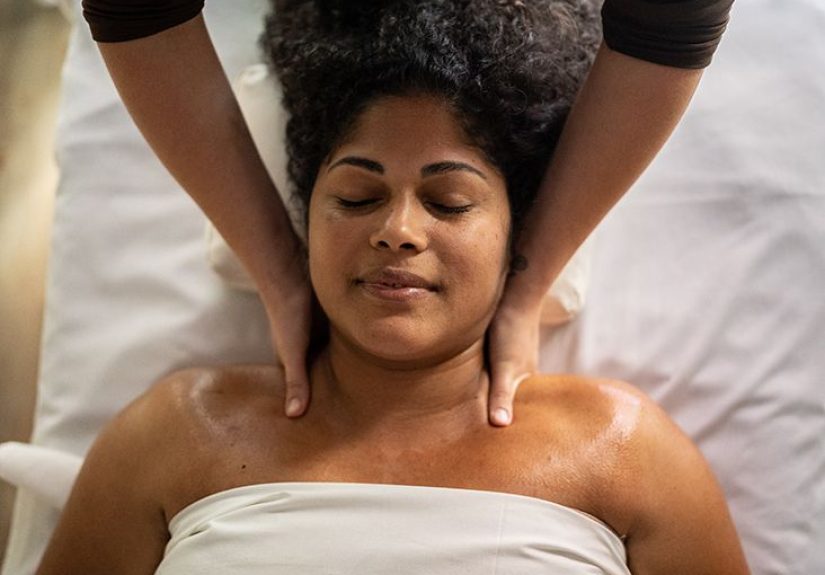
5) Massage Therapy (for stress, muscle tension, and sleep)
Massage can be deeply calming when your body has been poked, prodded, scanned, and generally treated like a science project.
Oncology massage is typically lighter and more targeted than a deep-tissue sports massage, with attention to surgical sites,
ports, bone pain, neuropathy, and lymphedema risk.
What to ask for: “Oncology-trained massage therapist” or “massage therapist experienced with cancer patients.”
If you have a port, recent surgery, radiation skin changes, bone metastases, or lymphedema risk, the technique should be adapted.
6) Tai Chi and Qigong (for balance, gentle strength, fatigue, and calm)
Tai chi and qigong are slow, controlled movement practices that combine balance, breathing, and body awareness.
They’re often easier to tolerate than higher-intensity exercise when fatigue is heavy, and many people find them mentally soothing.
If yoga doesn’t feel like “your thing,” tai chi can be a great alternative.
7) Music Therapy and Art Therapy (for mood, anxiety, and emotional processing)
Music therapy isn’t just “listening to relaxing songs.” A trained music therapist can guide breathing, relaxation,
and emotional expression through music. Art therapy can help when you’re tired of talkingand you want a different way
to express what you’re carrying.
Low-cost version: Build two playlists: one for “I need energy,” one for “I need calm.” Your nervous system
responds to cues, and music is one of the most accessible cues you can control.
Symptom-by-Symptom: Matching Therapies to What You’re Actually Dealing With
Anxiety, stress, and “scanxiety”
- Mindfulness meditation, breathing practices, MBSR
- Guided imagery, PMR
- Yoga, tai chi, qigong
- Music therapy, counseling, support groups
Nausea (chemo, anesthesia, or just the whole experience)
- Acupuncture or acupressure (including wrist-point techniques)
- Guided imagery and breathing during waves of nausea
- Ginger or peppermint may help some people, but check safety with your care team before using concentrated products
Pain (surgical pain, muscle tension, joint aches)
- Acupuncture
- Oncology massage
- Gentle yoga or stretching programs designed for cancer recovery
- Mind-body skills (breathing, PMR) to reduce the “pain + stress” feedback loop
Fatigue (the kind that laughs at a full night of sleep)
- Gentle movement: walking, yoga, tai chi, qigong
- Energy pacing: doing less at once, but more consistently
- Sleep hygiene basics (more below)
- Nutrition counseling to support adequate protein and calories during treatment
Hot flashes (often with hormone therapy)
- Acupuncture (some people report fewer or less intense hot flashes)
- Mindfulness/breathing for the “heat wave + panic” combo
- Layering, cooling strategies, and reducing triggers like alcohol or spicy foods if those affect you
Neuropathy (tingling, numbness, burning)
- Acupuncture may help some people; results vary
- Gentle movement and balance training to reduce fall risk
- Discuss medications, dose adjustments, and protective strategies with your oncology team early
Nutrition, Supplements, and Herbal Products: Helpful, Hypey, and Sometimes Risky
Nutrition support is a cornerstone of integrative oncology because it’s practical: eating enough protein and calories can help
maintain strength, support healing, and stabilize energy. But supplements and herbs are a different categorybecause “natural”
does not automatically mean “safe,” and interactions can be real.
What’s usually worth considering
- Nutrition counseling to manage appetite changes, nausea, taste changes, or weight shifts.
- Food-first strategies for nutrients when possible (protein, fiber, hydration, balanced meals).
- Vitamin D testing if your clinician recommends itcommon, individualized, and easy to monitor.
What to be cautious about
-
High-dose antioxidants during chemotherapy or radiation: the theory is complicated, and recommendations vary by situation.
This is a “talk to your oncologist” zone, not a “TikTok told me” zone. -
Herbal blends and detox products: ingredients can be unclear, and some can affect liver enzymes that process cancer drugs.
Even “harmless” teas can be potent at high doses. -
Phytoestrogen supplements (and concentrated extracts): because hormone signaling matters in many breast cancers,
you want professional guidance, not guesswork.
If you want a simple rule: Bring every supplement bottle (or a list with doses) to an appointment and ask your oncology pharmacist
or clinician to check interactions. It’s one of the most protective things you can do.
How to Choose a Practitioner (So You Don’t End Up With the “Crystal-Only Chemotherapy” Person)
Green flags
- They use language like “supportive care,” “symptom management,” and “integrative oncology.”
- They ask about your diagnosis, treatments, blood counts, surgery history, and medications.
- They encourage coordination with your oncology team and respect medical boundaries.
- They can explain risks and benefits in plain English without making wild promises.
Red flags
- They claim they can cure cancer.
- They advise you to stop treatment or “skip toxins.”
- They sell expensive supplement bundles as the “real solution.”
- They shame you for choosing standard care.
A Sample “Complementary Toolkit” Week (Adjust to Your Energy)
Here’s a realistic, non-heroic planbecause your life is not a montage, and fatigue is not impressed by your ambition.
- Daily: 3–10 minutes of breathing or meditation (yes, 3 minutes counts).
- 2–3 times/week: gentle movement (walking, restorative yoga, tai chi, or a PT-guided routine).
- 1 time/week: acupuncture or oncology massage if approved and accessible.
- As needed: guided imagery during nausea or pre-appointment stress.
- Once/month (or as available): nutrition check-in if appetite, taste, or weight is changing.
The goal is not to become a “wellness influencer.” The goal is to build small supports that add uplike stacking bricks,
not throwing boulders.
Experiences From the Real World (Composite Stories, Not Medical Advice)
Everyone’s breast cancer experience is different, but certain themes come up again and again. The stories below are
composites based on commonly reported experiences in cancer careshared to help you imagine what these therapies
can feel like in daily life, not to promise specific results.
“I didn’t need one more appointment… until I tried acupuncture.”
One person described walking into acupuncture feeling skeptical and exhaustedlike, “If this doesn’t help, I’m going to be mad
in three different time zones.” Their goal wasn’t enlightenment; it was nausea control and sleep. The first session didn’t
magically erase symptoms, but it created a surprising window of calm. They noticed they weren’t clenching their jaw all day,
and the nausea felt less “spiky.” Over a few weeks, the benefit wasn’t just physical; it was psychological: they had a tool
they could schedule, something proactive that didn’t involve new medications. Their best takeaway was practical:
“I learned which days it helps mostright after chemo and when hot flashes ramp up.”
“Yoga looked impossible… until someone offered chair yoga.”
Another person associated yoga with complicated poses and impossible flexibility. After surgery, their shoulder range of motion
was limited, and they felt frustrated that their body had “changed the rules.” A cancer-focused class reframed yoga as breath
plus gentle movement, done in a chair with modifications. The first win was tiny: lifting the arm a little higher without pain.
The second win was bigger: they slept better on nights they practiced. They also noticed mood shiftsless of that edgy, wired feeling.
Their honest review: “It wasn’t dramatic. It was steady. And steady is underrated.”
“Massage made me feel human again.”
A third person talked about how treatment made their body feel like public propertyhands, scans, needles, tape, instructions.
Oncology massage felt different because it was consent-based and adaptive: pressure was lighter, positions were adjusted,
and the therapist avoided sensitive areas without making it awkward. The biggest benefit was not “pain went to zero.”
It was the nervous system downshift: shoulders dropped, breathing slowed, and for an hour they weren’t performing bravery.
They described leaving with a strange but welcome thought: “My body isn’t just a battleground. It can still be a place I live.”
“Meditation didn’t stop my fear, but it changed my relationship with it.”
Many people don’t start meditation because they feel calmthey start because they feel the opposite. One person said meditation
didn’t remove fear; it made fear less bossy. They learned to recognize the pattern: scan scheduled → mind spirals → doom scroll →
terrible sleep → miserable next day. With a short breathing practice, they could interrupt the loop. Sometimes the practice lasted
two minutes, sometimes ten. The win wasn’t perfection. The win was noticing: “I’m spiraling,” and choosing a different next step.
If you see yourself in any of these stories, consider this your permission slip to try small, realistic changes. Complementary
care works best when it’s doable, repeatable, and matched to a specific problem you actually want to solve.
Conclusion
Complementary therapies can be powerful allies during breast cancer careespecially for stress, sleep, nausea, pain, fatigue,
hot flashes, and emotional wellbeing. The best approach is evidence-informed, coordinated with your oncology team, and tailored
to your symptoms and energy level. Start with low-risk options (mindfulness, breathing, gentle movement), add targeted therapies
(acupuncture or oncology massage) when appropriate, and be extra cautious with supplements or herbal products. Your goal isn’t to
do “everything.” Your goal is to feel betterstrategically.