Table of Contents >> Show >> Hide
- Quick Jump
- The Fast Rules That Make an “After” Look Expensive
- 15 Before-and-After Bathroom Remodels
- 1) The Builder-Grade Beige Box Becomes Clean and Modern
- 2) The Tiny Powder Room Goes Bold (Because It’s Allowed To)
- 3) The Cramped Tub/Shower Combo Turns Into a Bright Walk-In Shower
- 4) The Dark, Dated Small Bath Goes Airy With a Light Palette
- 5) The “No Storage” Bathroom Gets a Smart Vertical Upgrade
- 6) The “Everything Is White” Bath Gains Personality With Tile Strategy
- 7) The Sink Area Gets a Face-Lift With Better Lighting (and Better Angles)
- 8) The Awkward Door Swing Gets Replaced (and Everyone Stops Fighting)
- 9) The Dated Vanity Becomes “Custom” With Paint + Hardware
- 10) The Shower Gets a Niche That Looks Built-In (Because It Is)
- 11) The Floor Changes, and Somehow the Whole Bathroom Changes
- 12) The “Too Many Finishes” Bathroom Gets a Simple Metals Rule
- 13) The Bathroom Gets Taller (Without Raising the Ceiling)
- 14) The “Always Steamy” Bathroom Gets a Ventilation Glow-Up
- 15) The “Looks Fine but Feels Bad” Layout Gets Micro-Fixed
- A Fast Checklist Before You Remodel (So Your “After” Doesn’t Become a “Why”)
- Real-World Remodel Experiences (the stuff you only learn mid-chaos)
- 1) Your “before” photos will be embarrassingand that’s a gift
- 2) Lighting is the most underrated “after” (until you have good lighting)
- 3) Small bathrooms reward bold moves (because the commitment is contained)
- 4) The “messy middle” is real, so plan your survival
- 5) Storage isn’t about having moreit’s about having it in the right places
- 6) Steam and humidity will bully your finishes if you let them
- 7) Your best “after” is usually a series of small, correct choicesnot one giant flex
- 8) The final 10% is where the “after” lives
- Wrap-Up: How to Choose Your “Before-and-After” Path
- Where These Ideas Come From
Bathroom remodels are basically a reality show in your own house: there’s drama (demo day), plot twists (why is that pipe there?),
and a finale where you stand in the doorway whispering, “So this is what joy feels like.”
To help you get to the happy ending faster, this guide synthesizes the best patterns from real U.S. remodel case studies, design roundups,
and pro planning guidancethen rewrites them into 15 “before-and-after” transformations you can steal shamelessly (that’s called inspiration,
not theft, and we are very classy people).
The Fast Rules That Make an “After” Look Expensive
Most impressive bathroom “afters” aren’t magicalthey’re strategic. Across dozens of remodels, the glow-ups usually come from the same
handful of moves:
- Light gets layered: overhead + flattering face-level light + a little mood (yes, your bathroom deserves ambiance).
- Visual clutter disappears: fewer items on counters, smarter storage, calmer lines.
- One bold decision replaces ten random ones: statement tile, dramatic paint, or a “wow” vanitypick your hero.
- Layout friction gets fixed: doors stop colliding, towel hooks make sense, you’re not doing yoga to reach toilet paper.
- Materials look intentional: matching metals, consistent undertones, and tile that feels chosennot “whatever was left.”
Keep those in mind as you read the 15 transformations below. Each one includes the “before problem,” the “after solution,” and the exact idea
you can borrow.
15 Before-and-After Bathroom Remodels
1) The Builder-Grade Beige Box Becomes Clean and Modern
Before: a 1990s/early-2000s “fine, I guess” bathroom: big mirror, bland vanity, forgettable lighting, and a general vibe of “dentist office waiting room.”
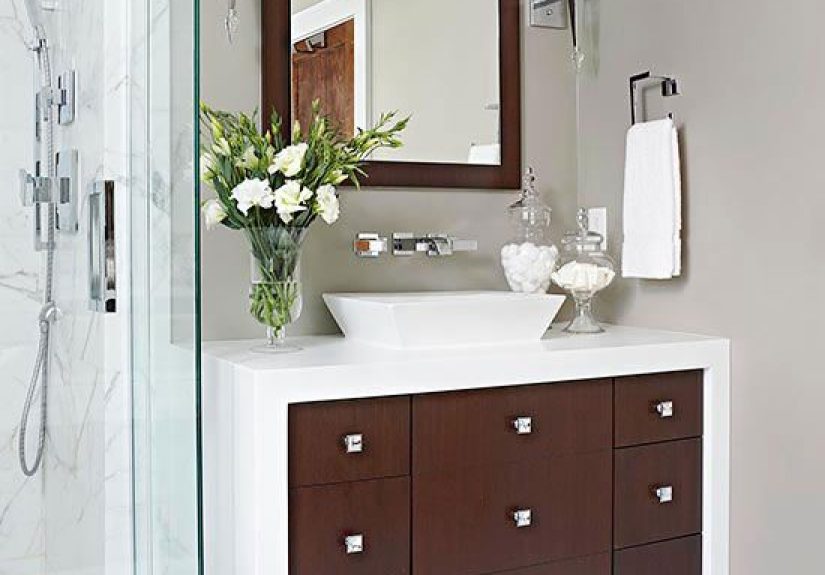
After: a calmer, more modern space with a furniture-style vanity, updated hardware, a framed mirror, and lighting that doesn’t make everyone look like they’re auditioning for a vampire movie.
Steal this idea: Swap the mirror + vanity light together. It’s the fastest “I remodeled!” signal without touching plumbing.
2) The Tiny Powder Room Goes Bold (Because It’s Allowed To)
Before: a small half-bath with plain paint and a lonely pedestal sinkfunctional, but emotionally unavailable.
After: dramatic wallpaper or deep paint, a punchy mirror, and a compact vanity or shelf that adds storage.
Steal this idea: Use the powder room as your “statement laboratory.” It’s small, so your budget stretchesand bold choices feel intentional, not overwhelming.
3) The Cramped Tub/Shower Combo Turns Into a Bright Walk-In Shower
Before: a bulky tub/shower insert, a heavy curtain, and corners that are impossible to clean (you know the ones).
After: a glass-enclosed shower with larger-format tile and a cleaner visual line. The room instantly feels bigger because your eyes can travel.
Steal this idea: Go with clear glass (or minimal framing) and keep shower wall tile simplelet one feature (floor tile, niche, or hardware) do the talking.
4) The Dark, Dated Small Bath Goes Airy With a Light Palette
Before: dark vanity, dim fixture, and too many finishes fighting for attention.
After: lighter paint, brighter lighting, and a vanity in light wood or crisp white that bounces light around.
Steal this idea: If you can’t add a window, “add light” with reflectionbigger mirror, glossier tile, and brighter finishes.
5) The “No Storage” Bathroom Gets a Smart Vertical Upgrade
Before: toiletries camping on every surface like they’ve claimed squatters’ rights.
After: a recessed medicine cabinet, a slim tower cabinet, and/or floating shelves placed where they’re actually useful.
Steal this idea: Mix closed + open storage: closed for chaos, open for the pretty stuff (or the items you want to pretend are pretty).
6) The “Everything Is White” Bath Gains Personality With Tile Strategy
Before: white tile everywhere, but not in the charming waymore like “rental neutral.”
After: classic tile stays, but a patterned floor, a shower accent, or a niche with contrasting tile adds depth.
Steal this idea: Choose one tile moment: patterned floor or bold shower wall or statement niche. One star, not a whole orchestra.
7) The Sink Area Gets a Face-Lift With Better Lighting (and Better Angles)
Before: a single overhead light that throws shadows where your confidence used to be.
After: sconces or a wider vanity light placed at a flattering height, plus a mirror that fits the vanity scale.
Steal this idea: Face-level lighting on both sides of the mirror (or a well-placed fixture above) is the “after” that people feel, not just see.
8) The Awkward Door Swing Gets Replaced (and Everyone Stops Fighting)
Before: the bathroom door collides with the vanity, the towel bar, and your will to live.
After: a pocket door, barn-style slider (used thoughtfully), or a re-hung swing direction that clears the space.
Steal this idea: Fixing a door swing can feel like you added square footagewithout adding square footage.
9) The Dated Vanity Becomes “Custom” With Paint + Hardware
Before: an okay vanity with tired stain and builder knobs.
After: painted vanity (rich color or soft neutral), upgraded pulls, and a new faucet that matches the rest of the metals.
Steal this idea: Paint is the budget superhero. Pair it with hardware that has some weight and shape, and it reads “high-end” fast.
10) The Shower Gets a Niche That Looks Built-In (Because It Is)
Before: shampoo bottles on the tub ledge, plus a wire caddy that slowly rusts while judging you.
After: a tiled shower niche (or two) that stores essentials neatlysometimes blended seamlessly so it feels architectural.
Steal this idea: Align niche placement with grout lines whenever possible. It looks calmer and more intentional (and calmer is the new luxury).
11) The Floor Changes, and Somehow the Whole Bathroom Changes
Before: cracked tile, dated vinyl, or slippery surfaces that feel cold and uncaring.
After: refreshed flooringporcelain, patterned tile, or quality vinyl in the right stylepulls the room into the present.
Steal this idea: If the room is small, consider a fun floor pattern. Small bathrooms can handle visual energy better than big ones.
12) The “Too Many Finishes” Bathroom Gets a Simple Metals Rule
Before: chrome faucet, brushed nickel light, bronze shower trim, and a towel bar from a different universe.
After: one primary metal + one secondary (optional), repeated consistently so everything looks like it belongs together.
Steal this idea: Match the “big three”: faucet, shower trim, and lighting. If those agree, the room looks cohesive even if a few small items don’t.
13) The Bathroom Gets Taller (Without Raising the Ceiling)
Before: paint stops early, tile ends awkwardly, and the room feels squashed.
After: tile goes higher in the shower, paint goes to the ceiling, and the shower curtain/door line is kept clean and vertical.
Steal this idea: Take shower tile higher than you think, especially in small baths. It visually stretches the walls upward.
14) The “Always Steamy” Bathroom Gets a Ventilation Glow-Up
Before: lingering steam, peeling paint, and that suspicious corner that keeps “coming back,” no matter how much you clean it.
After: a properly sized exhaust fan (sometimes humidity-sensing) and better moisture habitsplus materials that can handle real-life showers.
Steal this idea: Don’t spend on fancy finishes and then skip ventilation. Moisture always wins if you let it.
15) The “Looks Fine but Feels Bad” Layout Gets Micro-Fixed
Before: the bathroom technically works, but it’s awkward: towels too far, toilet paper misplaced, no landing spot for anything.
After: small but mighty upgrades: a hook where your towel actually belongs, a shelf at arm height, a mirror that fits, and clear space that feels breathable.
Steal this idea: Do a “morning routine audit.” Stand in your current bathroom and act out brushing teeth, washing face, showering, and grabbing a towel. Every annoying moment becomes a to-do list.
A Fast Checklist Before You Remodel (So Your “After” Doesn’t Become a “Why”)
Measure like you mean it
Bathrooms punish guesswork. Measure walls, door swings, window trim, plumbing locations, and the exact footprint of your future vanity.
If you’re changing layout, check common planning guidance for clearances around fixtures and shower entry space. [1]
Pick your “hero,” then support it
Decide what you want people to notice first: tile, vanity, shower, or lighting. Then choose everything else to support that choice.
Remodels look expensive when they look intentional.
Protect the boring stuff (waterproofing + ventilation)
The prettiest tile in the world can’t outsmart bad moisture management. Plan waterproofing correctly behind wet zones and make sure ventilation
fits the room’s humidity reality. [2]
Budget reality check
Costs vary wildly by region and finish level, but many U.S. estimates cluster by scope (refresh vs partial vs full remodel) and by square-foot ranges. [3]
Use that as a sanity check, then get real quotes before you commit to “handmade imported unicorn tile.”
Real-World Remodel Experiences (the stuff you only learn mid-chaos)
You asked for “experiences,” so here are the lessons that show up again and again in real before-and-after storiesthings homeowners and pros
mention after the dust settles (literally), the caulk cures (eventually), and everyone stops showering at the gym (hopefully).
1) Your “before” photos will be embarrassingand that’s a gift
The biggest transformations usually start with a bathroom that’s not just dated, but actively working against you: poor lighting, awkward storage,
surfaces that always look dirty, or layouts that make daily routines feel clunky. Taking brutally honest “before” photos helps you identify what’s
actually wrong. Is it the vanity? The mirror scale? The shower curtain line? Or is it the fact that there’s nowhere to put anything, so the bathroom
looks messy even when it’s clean? Once you name the real problem, your “after” decisions get easier.
2) Lighting is the most underrated “after” (until you have good lighting)
People think tile is the starand it can bebut lighting is the director, producer, and entire camera crew. The difference between “meh” and “wow”
often comes down to layered light: a good overhead fixture for general illumination, plus vanity lighting that flatters faces and reduces shadows.
Many successful makeovers focus on updating outdated fixtures and improving vanity lighting placement. [4] If you’re choosing where to spend,
don’t blow the whole budget on finishes and then keep the same sad bulb situation.
3) Small bathrooms reward bold moves (because the commitment is contained)
A powder room is the perfect place to do something dramatic: moody paint, a patterned wallpaper, a sculptural light, or a playful floor.
In a larger bathroom, a bold pattern can feel like a lot. In a small bath, it feels curatedlike you meant to do it. That’s why so many “after”
photos from small remodels look high-end: they embrace personality instead of fighting the footprint.
4) The “messy middle” is real, so plan your survival
Even organized remodels have a chaotic phase where nothing looks right. Tile is half-done. The mirror is missing. You’re washing hands in the kitchen
like you’re camping indoors. The remodels that go smoother usually have a simple survival plan: staged deliveries, a temporary storage bin for daily
essentials, and a clear timeline for when the shower is offline. If it’s your only bathroom, that timeline matters more than aesthetics for a minute.
5) Storage isn’t about having moreit’s about having it in the right places
The happiest “after” bathrooms don’t necessarily have more cabinets. They have smarter storage: a recessed medicine cabinet so the wall does the work,
a drawer-based vanity so small items don’t become countertop clutter, and a couple of hooks where towels naturally land. Many design roundups emphasize
mixing closed storage (to hide chaos) with open elements (to keep the room airy). [5] This is the difference between a bathroom that looks nice
on reveal day and one that still looks nice on a random Tuesday morning.
6) Steam and humidity will bully your finishes if you let them
A lot of “before” bathrooms show the same damage patterns: peeling paint, mildew at caulk lines, foggy mirrors, and musty smells. The remodels that last
treat moisture like a design requirement, not an afterthought: good ventilation, materials that handle humidity, and habits that reduce lingering moisture.
Pros commonly recommend prioritizing ventilation and proper wet-area protection to prevent mold and maintenance headaches. [2] It’s not glamorous,
but it’s the difference between “spa retreat” and “why is that corner dark again?”
7) Your best “after” is usually a series of small, correct choicesnot one giant flex
Yes, a gorgeous vanity can transform a room. So can stunning tile. But the bathrooms that feel truly elevated usually win on a dozen small decisions:
matching finishes, choosing the right mirror size, repeating a color tone, aligning tile edges, placing towel bars where they’re reachable, and making sure
the door doesn’t hit anything. That’s why “before and after” inspiration is so usefulit shows how the small stuff adds up.
8) The final 10% is where the “after” lives
Accessories and finishing details are what make the photo look finished: towels that match the palette, a tray that corrals daily items, art that’s properly
framed, and hardware that feels intentional. Many budget-friendly refresh guides focus on swaps like mirrors, lighting, faucets, and accessories because those
choices deliver outsized impact. [6] Translation: if your remodel budget is tight, you can still get a strong “after” by nailing the final layer.
Wrap-Up: How to Choose Your “Before-and-After” Path
If you’re overwhelmed, start here: decide whether your bathroom needs a refresh (surfaces and fixtures), a partial remodel
(new vanity + lighting + floor, maybe shower updates), or a full remodel (layout, plumbing, full tile work). Then pick one hero decision
and build a simple, cohesive plan around it.
Your goal isn’t to copy someone else’s after photo. It’s to solve your bathroom’s “before” problems with choices that fit your space, your routine,
and your budgetso the room looks great and behaves itself.
Where These Ideas Come From
This article synthesizes patterns and guidance commonly featured in U.S. home design and remodeling resources, including:
- National Kitchen & Bath Association (NKBA) bath planning guidelines. [1]
- This Old House (bath remodel planning, moisture prevention, and real remodel case studies). [2]
- Angi (cost ranges and remodel scope comparisons). [3]
- Better Homes & Gardens (before/after makeovers, small-bath upgrades, and lighting ideas). [4]
- HGTV (before/after remodel galleries and small-bath solutions). [5]
- Real Simple (budget-friendly upgrades and modern bathroom ideas). [6]
- Martha Stewart (tile and shower niche inspiration). [7]
- Architectural Digest (before/after features and small bathroom design ideas). [8]
- Houzz (before/after small-bath makeovers and design browsing). [9]
- Dwell (renovation inspiration and designer-led makeovers). [10]
- BobVila.com (remodel planning and common mistakes to avoid). [11]
- Family Handyman (do’s/don’ts, especially around ventilation and planning). [12]
- Home Depot & Lowe’s idea hubs (vanity, lighting, and remodeling idea guides). [13]
- The Spruce (humidity/steam fixes and practical bathroom maintenance tips). [14]
- House Beautiful (trend-and-timeless remodel idea roundups). [15]