Table of Contents >> Show >> Hide
- Fertilizer 101: What It Is (and What It Isn’t)
- Start With a Soil Test (Because Guessing Is Expensive)
- Pick the Right Fertilizer for Your Plant and Your Life
- Timing: Feed When Plants Are Hungry
- How to Apply Fertilizer Correctly (Without Turning Leaves Crispy)
- Spotting Problems Early: Underfeeding vs. Overfeeding
- Fertilize Responsibly: Keep Plants Happy and Waterways Cleaner
- A Quick Fertilizer Cheat Sheet
- Conclusion: A Simple Plan That Works
- Real-World Experiences: What Gardeners Learn (Usually After a Small Disaster)
- 1) The “one more scoop” temptation is real
- 2) Watering changes everything
- 3) Containers teach humility fast
- 4) Compost is wonderful… and also not magic
- 5) Side-dressing feels like a cheat code for veggies
- 6) “Greener” isn’t always “healthier”
- 7) Labels become your best friend (after they stop being annoying)
- 8) The calm garden is the measured garden
Fertilizer is basically plant “meal prep.” Done right, it helps roots explore, leaves photosynthesize like champs,
and flowers and fruit show up on schedule. Done wrong, it’s like feeding your plants an energy drink and a pizza
at 2 a.m.things get weird, fast.
This guide breaks fertilizer down into plain-English choices and practical steps, with the kind of details that
actually prevent crispy leaf tips, wasted money, and the classic “Why does my tomato plant look personally
offended?” moment.
Fertilizer 101: What It Is (and What It Isn’t)
Fertilizer is nutrients, not “better soil”
Fertilizer supplies nutrientsmostly nitrogen (N), phosphorus (P), and potassium (K)that plants need to grow.
But it doesn’t magically fix poor soil structure, drainage, compaction, or lack of organic matter. If your soil
is basically construction debris with dreams, fertilizer alone won’t turn it into a thriving garden bed.
Decoding N-P-K without needing a lab coat
Those three numbers on a fertilizer bag (like 10-10-10) are the percentage by weight of N, P, and K. In broad
strokes:
- Nitrogen (N): leafy growth, green color, overall vigor.
- Phosphorus (P): roots, early growth, flowering support (especially if soil is low).
- Potassium (K): hardiness, stress tolerance, disease resistance, and quality of blooms/fruit.
Many fertilizers also include secondary nutrients (calcium, magnesium, sulfur) and micronutrients (like iron,
manganese, zinc). Think of those as the “vitamins and minerals” that matter a lotbut usually in smaller amounts.
pH: the hidden bouncer at the nutrient club
Soil pH influences nutrient availability. You can have plenty of nutrients present, but if pH is way off, plants
may not be able to access them. That’s why fertilizing without knowing pH can feel like buying groceries and then
locking them in your car trunk.
Start With a Soil Test (Because Guessing Is Expensive)
What a soil test tells you
A lab soil test typically reports pH and levels of key nutrients such as phosphorus and potassium, plus guidance
on how much to apply. Many soil tests also provide notes about organic matter and other factors that affect
fertility. The big win: you stop throwing fertilizer at problems that are actually pH, drainage, or organic
matter issues.
When to test and how often
A smart routine is: test when starting a new bed or lawn, then re-test every few years (or sooner if plants
struggle, you’ve heavily amended soil, or you’re intensively growing vegetables). Testing ahead of the season
gives amendments time to work.
How to sample soil like you mean it
- Take multiple small samples across the bed (not just the “best-looking” corner).
- Mix them in a clean bucket to make a composite sample.
- Avoid unusual spots (pet zones, compost piles, under downspouts) unless you’re testing those specifically.
- Follow your local Extension lab instructions for depth and amount.
Pick the Right Fertilizer for Your Plant and Your Life
Granular vs. liquid
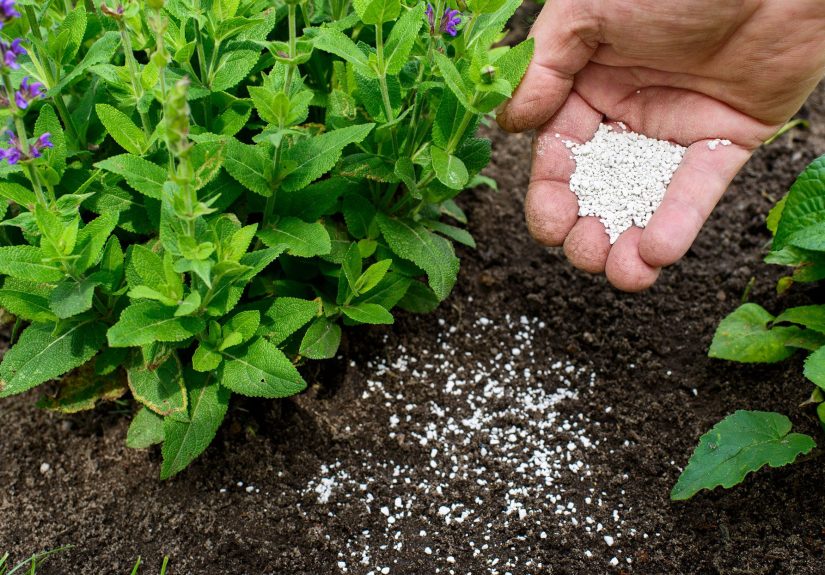
Granular fertilizers are sprinkled on soil and watered in. They’re great for beds, lawns, and
larger areas because they’re easy to distribute evenly and can feed over time (depending on formulation).
Liquid or water-soluble fertilizers are mixed with water and applied when you want quicker
delivery or more control (especially in containers and houseplants).
Slow-release vs. quick-release
Quick-release fertilizers deliver nutrients fast, which can be useful when plants are actively
growing or when you need a timely boost. The tradeoff: they’re easier to overdo.
Slow-release products (often coated or time-release) feed more graduallysometimes over several
monthsmaking them more forgiving and helpful for steady growth, especially in containers and landscapes.
Organic vs. synthetic
“Organic” fertilizer usually means nutrients come from plant/animal sources (compost, manure-based products,
fish emulsion, bone meal, etc.). “Synthetic” usually means manufactured mineral salts. Both can grow excellent
plants, and both can cause fertilizer burn if used too heavily. The practical difference is often speed and
predictability:
- Organic: tends to release more slowly and depends on soil microbes; also adds some soil-building benefits.
- Synthetic: often more immediately available and precise; can be easier to overapply.
Balanced vs. targeted
If your soil test doesn’t flag specific deficits, a balanced fertilizer can work for general feeding. But when
a soil test suggests “you’re fine on phosphorus,” adding a high-P product can be wasteful and environmentally
unhelpful. Targeted fertilizers are like ordering exactly what your plants need instead of buying the entire
menu.
Timing: Feed When Plants Are Hungry
Rule of thumb: fertilize during active growth
Fertilizer works best when plants are growing and can use the nutrients. Feeding dormant plants is like mailing
a care package to someone who moved three months agosomebody might get it, but it’s probably not who you intended.
Vegetable gardens: the “split application” advantage
Many vegetables benefit from applying some nitrogen early and then adding more later (“side-dressing”) as growth
accelerates. Heavy feeders like corn, peppers, and many leafy crops can respond well to a mid-season nitrogen
boost, especially in sandy soils or after heavy rain.
For transplants (tomatoes, peppers, lettuce), some gardeners use a diluted starter solution at plantingcarefully
placed and watered into reduce stress and encourage early establishment.
Flowers, shrubs, and ornamentals: steady and sensible wins
Annual flowers and fast-growing ornamentals may appreciate periodic feeding through the growing season, especially
in low-fertility soils. Shrubs and perennials often do best with moderate feedingenough to support healthy growth
without pushing soft, vulnerable new growth at the wrong time.
Houseplants: spring-to-summer is the main event
Indoor plants typically need fertilizer most when they’re putting out new growth (often spring through early fall).
Many houseplant care guides recommend either occasional full-strength feeding during growth or more frequent
“weakly” feeding with a diluted solution. In winter, when light is lower and growth slows, fertilizer needs
usually drop sharply.
How to Apply Fertilizer Correctly (Without Turning Leaves Crispy)
Golden rule: read the labelthen do a little less
Fertilizer labels include rates for specific plant types and application methods. A safe approachespecially for
containers and houseplantsis to start at a lower rate and watch plant response. You can add more later; you can’t
un-dump a scoop of salts from a root zone without consequences.
Water first, fertilize second (especially in pots)
Applying fertilizer to bone-dry soil raises burn risk. Moist soil helps distribute nutrients and reduces the
“salt shock” to roots. For container plants, pre-watering before liquid feeding is one of the simplest ways to
prevent damage.
Choose the right method for the job
- Broadcasting: spread evenly over the surface, then water in (common for lawns/beds).
- Incorporation: mix into soil before planting (good for garden beds during prep).
- Banding: place a narrow band near rows (keeps nutrients closer to roots, used carefully).
- Side-dressing: sprinkle along the side of a row mid-season, then water in (vegetable classic).
- Top-dressing: apply around established plants (shrubs/perennials), keep away from stems.
- Foliar feeding: spray nutrients on leaves (use only when appropriate and follow label directions).
Rate math that saves plants and money (simple example)
Let’s say your soil test (or Extension guidance) suggests adding 0.2 pounds of nitrogen per 100 square feet.
You have a fertilizer labeled 16-0-0 (meaning it’s 16% nitrogen by weight). How much product delivers 0.2 lb N?
Calculation: needed fertilizer = 0.2 ÷ 0.16 = 1.25 pounds of 16-0-0 per 100 sq ft.
That’s it. Not “a generous handful.” Not “a vibe.” Actual math.
If you switch to a different product, you re-do the math. That’s how you avoid accidentally doubling phosphorus
or starving plants of potassium.
Containers and raised beds: why they’re different
Potting mixes don’t hold nutrients the same way native soil does, and watering leaches nutrients faster. That’s
why container plants often benefit from slow-release fertilizer mixed in at planting (plus occasional supplemental
feeding). Raised beds can behave like “in-between soil,” depending on what they’re filled withso testing and
observation matter.
Spotting Problems Early: Underfeeding vs. Overfeeding
Common signs plants need nutrients
Nutrient deficiencies can look like pale leaves, slow growth, small foliage, or weak flowering/fruiting. Nitrogen
deficiency often shows up as yellowing that starts on older leaves. But here’s the catch: overwatering, poor
drainage, root damage, disease, and pH problems can mimic deficiency symptoms. That’s why “fertilize first” is a
risky guess.
Fertilizer burn: the “too much love” problem
Too much fertilizer can cause leaf scorch (browned edges), wilting, stunting, and sometimes a white crust of salt
on the soil surfaceespecially in pots. This happens because excess soluble salts pull water away from roots.
What to do if you suspect overfertilizing:
- Stop fertilizing immediately.
- Water thoroughly to leach excess salts (especially in containers with drainage).
- Remove visibly damaged foliage if it’s dead, but don’t over-prune a stressed plant.
- If severe in a pot, consider repotting into fresh mix after gently removing some of the salty medium.
Fertilize Responsibly: Keep Plants Happy and Waterways Cleaner
Prevent runoff and wasted nutrients
Nutrients that don’t get used by plants can move with water. A few practical habits reduce runoff and protect your
garden budget:
- Don’t fertilize right before heavy rain.
- Keep fertilizer away from sidewalks, driveways, and storm drainssweep up spills.
- Water efficiently (soaker hoses and drip lines help keep nutrients where you want them).
- Use phosphorus only when soil tests show it’s needed.
- Store fertilizers sealed and dry; dispose of containers as directed.
More fertilizer doesn’t equal more flowers
Overfeeding can push lush leaves at the expense of blooms, make plants more attractive to pests, or create weak,
floppy growth. “Flourish” means balanced growth, not a leafy bodybuilding phase that ends in collapse.
A Quick Fertilizer Cheat Sheet
Use this as a starting pointthen refine with soil tests, labels, and plant response.
- Vegetables: fertilize at planting or bed prep; side-dress nitrogen for heavy feeders mid-season.
- Annual flowers: moderate feeding through active growth, especially in lean soils or containers.
- Perennials & shrubs: lighter feeding; focus on soil health and avoid pushing late tender growth.
- Trees: only fertilize if growth is poor and you’ve ruled out soil/moisture issues; avoid guesswork.
- Houseplants: fertilize mainly spring–early fall; use diluted liquid feeds or time-release options.
- Succulents/cacti: minimal feeding; too much nitrogen can cause weak, stretched growth.
Conclusion: A Simple Plan That Works
Fertilizer works best when you treat it like a toolnot a personality trait. Start with a soil test, match the
product to what your plants actually need, apply at the right time, and water it in properly. When in doubt,
apply less and observe. Plants can’t file a complaint form, so they use yellow leaves, scorched edges, and a
general vibe of disappointment to communicate.
Do the basics consistently, and your plants will flourish with fewer surprisesexcept the good kind, like that
zucchini that suddenly thinks it’s training for the Olympics.
Real-World Experiences: What Gardeners Learn (Usually After a Small Disaster)
Gardeners love to share success stories, but the lessons that stick are often the ones learned after a “whoops.”
Here are some common experiences people report when they start using fertilizer more intentionallyand the
takeaways that help plants flourish without the drama.
1) The “one more scoop” temptation is real
Many gardeners admit the same moment: you’re already holding the scoop, the bed looks a little tired, and your
brain whispers, “Just a bit extra.” That extra is how leaf tips turn brown, especially in containers. The
takeaway: if you want more growth, split the dose. Feed half now, then reassess in two to three weeks. Plants
respond to consistency, not surprise parties.
2) Watering changes everything
People are often shocked at how much “fertilizer problems” are actually “watering problems.” Fertilizer that
isn’t watered in can sit on the surface, concentrate near roots, or burn leaves if it splashes onto foliage.
The fix is surprisingly unglamorous: water in granular fertilizer, apply liquid fertilizer to already-moist soil,
and avoid fertilizing when plants are wilted from heat stress.
3) Containers teach humility fast
In garden beds, soil buffers mistakes. In pots, mistakes show up by Thursday. Gardeners commonly find that a
time-release fertilizer at planting plus light supplemental feeding works better than occasional heavy doses.
Another “aha” moment: salt buildup can happen in pots, so periodic deep watering (letting water run out of the
drainage holes) helps flush excess minerals and keeps roots healthier.
4) Compost is wonderful… and also not magic
Lots of gardeners start with compost (great choice!) and assume it covers every nutrient need forever. Compost
improves structure and supports soil life, but it may not provide enough nitrogen for heavy-feeding vegetables or
fast-growing annuals. The experienced approach is “compost + targeted fertilizer.” Compost builds the house; a
well-chosen fertilizer helps pay the electric bill.
5) Side-dressing feels like a cheat code for veggies
People growing corn, peppers, squash, and leafy greens often notice that mid-season side-dressing gives plants a
clean second windespecially after heavy rain. The key experience-based tip: keep fertilizer a few inches away
from stems, apply along the row, and water it in. Side-dressing is about feeding roots, not seasoning stems.
6) “Greener” isn’t always “healthier”
Gardeners frequently learn that too much nitrogen can create a gorgeous leafy plant that forgets to flower or set
fruit. Tomatoes can look like a lush jungle and still produce fewer tomatoes. If you’re getting leaves but not
blooms, review your fertilizer choice and timingyour plant may be “overfed” in the leafy direction.
7) Labels become your best friend (after they stop being annoying)
The most consistent “level-up” moment is when gardeners start calculating rates (even roughly) instead of
eyeballing. Once you’ve seen how different 10-10-10 vs. 16-0-0 really are, you stop treating fertilizer like
confetti. Plants respond with steadier growth, and gardeners report fewer pest flare-ups and fewer mystery
meltdowns.
8) The calm garden is the measured garden
The final experience many people share: fertilizing becomes less stressful when it’s part of a simple routine
soil test every few years, add organic matter annually, feed during growth, and adjust based on results. The goal
isn’t perfect control. It’s fewer surprises and more harvests, blooms, and “wow, that looks healthy” moments.