Table of Contents >> Show >> Hide
- What Is a Foot Reflexology Chart?
- How Foot Reflexology Is Thought to Work
- Basic Foot Reflexology Zones You Should Know
- How to Read a Foot Reflexology Chart Step by Step
- Sample Foot Reflexology Chart (Text Version)
- Safety, Limits, and What Science Says
- Tips for Using a Foot Reflexology Chart at Home
- Real-Life Experiences: What It’s Like to Use a Foot Reflexology Chart
- Conclusion: Turning a Colorful Chart Into a Practical Tool
If you’ve ever seen a colorful foot reflexology chart and thought, “Why do my toes look like a subway map?”, you’re in the right place. Foot reflexology can look intimidating at first, but once you understand the basic zones and how to read the chart, it becomes a fun, relaxing way to tune in to your body.
In this guide, we’ll break down what a foot reflexology chart is, how it’s traditionally supposed to work, the major zones you should know, and a simple step-by-step method to read a chart. We’ll also walk through a text-based “sample chart” so you can practice without needing a fancy poster. Finally, we’ll talk about what science says about reflexology plus some real-life experiences to help you set realistic expectations.
What Is a Foot Reflexology Chart?
A foot reflexology chart is basically a map of your feet. Instead of showing streets and landmarks, it shows reflex points that are believed to correspond to organs, glands, and body systems. By pressing on certain areas of the foot, reflexology practitioners say you may help support relaxation, circulation, and overall balance in the body.
Most charts have the same big idea in common:
- Toes represent the head, brain, sinuses, and neck area.
- The ball of the foot corresponds to the chest and upper back, and often the lungs and heart.
- The arch is associated with digestive organs like the stomach, liver, pancreas, and intestines.
- The heel is linked with the lower back, sciatic area, and pelvic region.
Think of the chart as a legend that helps you decode which area of the foot you’re working on and what part of the body it’s believed to influence.
How Foot Reflexology Is Thought to Work
Reflexology comes from ancient traditions, especially those linked to traditional Chinese medicine (TCM), which emphasizes the flow of energy (often called qi) through meridians in the body. In reflexology, the feet are seen as a micro-map of that whole system.
Common explanations for how foot reflexology is supposed to work include:
- Energy pathways: Stimulating points on the feet may help clear blockages in meridians and restore energetic balance.
- Nerve stimulation: The feet are full of nerve endings. Applying pressure may signal the nervous system to relax muscles, calm the stress response, or modulate pain perception.
- Circulation and relaxation: Like other forms of massage, reflexology may improve local circulation and activate the body’s relaxation response, which can affect how you feel overall.
It’s important to note that scientific evidence is mixed. Some studies suggest reflexology may help reduce anxiety, stress, and perceived pain for certain people, especially as a complementary therapy, but it’s not a cure for medical conditions. Always see reflexology as supportive, not as a replacement for proper medical care.
Basic Foot Reflexology Zones You Should Know
Before you dive into detailed charts, it helps to memorize a few “big picture” zones. Most foot reflexology charts use a combination of horizontal bands and vertical zones.
Horizontal Bands (Head to Pelvis)
- Zone 1: Head and neck (toes)
The tips and pads of the toes are often associated with the brain, sinuses, and head. The base of the toes can relate to the neck and upper spine. - Zone 2: Chest and upper back (ball of foot)
This area corresponds to the lungs, heart, and upper back in many charts. - Zone 3: Upper abdomen (upper arch)
Often linked to the stomach, liver, gallbladder, and pancreas. - Zone 4: Lower abdomen (lower arch)
Typically mapped to small and large intestines, kidneys, and bladder. - Zone 5: Pelvis and lower back (heel)
Associated with the lower spine, sciatic nerve, reproductive organs, and pelvic floor area.
Vertical Zones (Left vs. Right Side)
Many reflexology systems also divide the body into vertical slices:
- Right foot usually connects to organs mainly on the right side of the body (like the liver and gallbladder).
- Left foot often links to organs on the left side of the body (like the heart and spleen).
- Some reflexes cross over, but as a beginner you can keep it simple: left foot = left side emphasis; right foot = right side emphasis.
Once these major zones feel familiar, the chart stops looking random and starts to feel logicalalmost like a topographic map of your whole body.
How to Read a Foot Reflexology Chart Step by Step
Ready to actually use a chart? Here’s a straightforward, beginner-friendly way to read a foot reflexology chart and put it into practice.
Step 1: Get Oriented
Most charts show the soles of the feet facing you, with the toes at the top and the heel at the bottom. The left foot is usually on your left, the right foot on your right. Check the legendmany charts color-code areas like digestive organs, musculoskeletal areas, and glands.
Step 2: Locate the General Region
Decide what body area you’re interested in. For example:
- Stress and mental tension? Start with the toes (head/brain area) and the solar plexus region (center of the foot just under the ball).
- Digestive discomfort? Look at the arch (stomach, liver, intestines) on both feet.
- Lower back tightness? Focus on the heel and the inner edge of the foot along the arch (spinal reflexes).
Find that region on the chart first instead of trying to memorize every tiny point right away.
Step 3: Narrow Down to Specific Reflex Points
Once you know the general band, zoom in on specific organs or areas listed on the chart. For example:
- Solar plexus: Usually located in the center of the foot, just below the ball. Many people press this point for calming and deep relaxation.
- Liver and gallbladder: Often shown on the right foot, in the upper arch area toward the outer side.
- Heart: Typically mapped on the left foot, around the upper ball of the foot.
- Kidneys: Usually in the middle of the arch on both feet, slightly toward the inner side.
Look for labels or a key on your chart. As you practice, you’ll start remembering your favorite points by feel.
Step 4: Apply Gentle, Steady Pressure
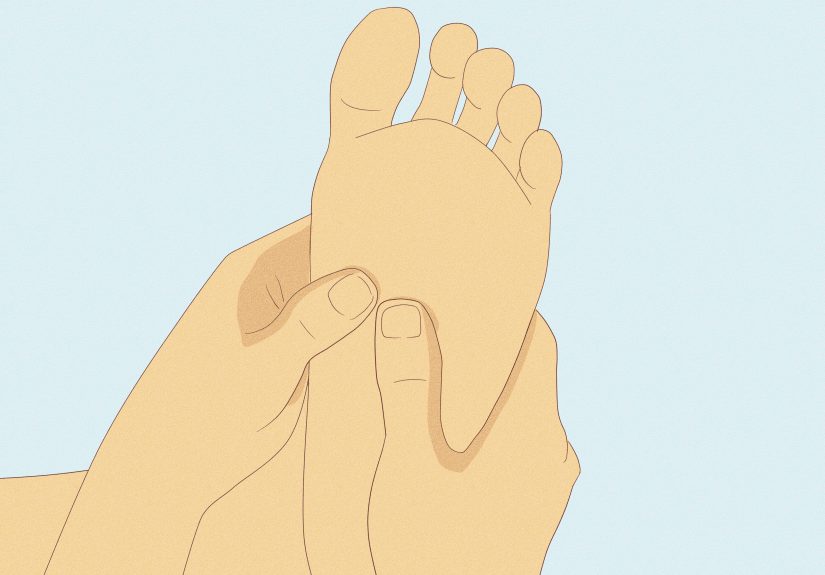
Use your thumb or knuckles to apply gentle, firm pressure. Move slowly and breathe normally. You’re not kneading bread doughthink “firm but kind” instead of “aggressive attack.”
- Press for 3–10 seconds, then release.
- Circle slowly over the point or glide along a zone if the chart suggests it.
- If a spot feels tender, lighten the pressure or shorten the time.
Step 5: Work Symmetrically When Possible
Whenever you see the same reflex on both feet (like kidneys or spine), try to work both sides. You can alternate feet or have a partner help with the second foot. Symmetry can help create a more balanced, “whole-body” feeling.
Step 6: Finish With Soothing Strokes
After focusing on individual reflex points, gently massage the entire foot using long, slow strokes from toes to heel. This helps your nervous system shift into relaxation mode and wraps up the reflexology session on a comforting note.
Sample Foot Reflexology Chart (Text Version)
While a visual chart is ideal, you can start practicing with this simple text-based “sample chart” that shows common reflex areas. Imagine you’re looking at the bottom of each foot:
Toes (Both Feet)
- Tips of toes: Head, brain, sinuses
- Base of toes: Neck, upper spine, throat
- Big toe pad: Pituitary, pineal, and other head-related reflexes (varies by chart)
Ball of Foot
- Center of ball (both feet): Chest, lungs, upper back
- Left foot, inner ball: Heart
- Right foot, outer ball: Shoulder and arm
Arch of Foot
- Upper arch, left foot: Stomach, spleen
- Upper arch, right foot: Liver, gallbladder
- Middle arch (both feet): Pancreas, kidneys, adrenal glands
- Lower arch (both feet): Small intestine, parts of the large intestine
Heel and Inner Edge
- Heel (both feet): Lower back, sciatic area, pelvic organs
- Inner edge from big toe down to heel: Spine (cervical to lumbar)
This is a simplified sample chart, but it mirrors many of the core ideas you’ll see in professional diagrams. When you finally look at a detailed poster, your brain will say, “Oh hey, I know these neighborhoods already.”
Safety, Limits, and What Science Says
Reflexology is generally considered gentle and low risk for most healthy people. Still, there are a few important cautions:
- Don’t use reflexology as a substitute for medical care. It’s a complementary practice, not a replacement for diagnosis, treatment, or medication.
- Be extra careful if you have foot injuries or conditions. If you have fractures, severe arthritis, open wounds, infections, or diabetic neuropathy, talk with a healthcare professional before trying reflexology.
- Pregnancy: Some practitioners avoid certain pressure points in pregnancy. If you’re pregnant, see someone trained in maternity reflexology or ask your provider first.
- Know the evidence is still evolving. Some research suggests foot reflexology may help reduce stress, anxiety, and perceived pain in certain settings, but results can vary, and not all studies are high quality.
Bottom line: reflexology can be part of a self-care routine focused on relaxation and comfort, but it shouldn’t replace medical advice from your doctor or licensed healthcare team.
Tips for Using a Foot Reflexology Chart at Home
If you’re new to all this, here are some practical tips to make your first experiments more enjoyable.
1. Start With Short Sessions
You don’t need an hour-long session right away. Begin with 5–10 minutes per foot. Focus on just a few key areas: toes (for stress and head tension), solar plexus, stomach area, and heel/spine.
2. Use a Little Lotion or Oil (If Safe for You)
A small amount of unscented lotion or carrier oil can help your thumbs glide more easily. If you’re sensitive to fragrance or have skin conditions, patch-test first or skip products entirely and work on clean, dry feet.
3. Check In With Your Body
Reflexology pressure should feel “good-hurty” at most, never sharp or overwhelming. If you notice pain, numbness, or tingling that doesn’t feel right, stop and talk with a professional.
4. Pair Reflexology With Relaxation Rituals
Warm up with a short foot soak, put on calming music, or practice deep breathing while you follow the chart. The more relaxed you are, the more your nervous system can benefit from the quiet time.
5. Don’t Chase Perfection
Your first attempts won’t be textbook-perfectand that’s okay. You’re not taking an exam; you’re learning how your feet and body respond. Over time, you’ll remember your favorite points “by feel” and won’t need to stare at the chart the whole time.
Real-Life Experiences: What It’s Like to Use a Foot Reflexology Chart
Most people don’t start reflexology thinking, “I’m about to master an ancient mapping system.” They start because their feet are tired, their brain is wired, or they saw a pretty chart on social media and got curious.
The First-Timer Experience
Imagine this: you’re sitting on the couch with a warm towel wrapped around your feet. You open your reflexology chart and think, “I will never remember all this.” So you pick one kind of stress you’re dealing withmaybe jaw tension from clenching your teeth or nervous energy before a busy week.
You find the head and neck areas on the toes. You gently press and roll your thumb across the pads of each toe, paying attention to any tender spots. You don’t feel anything magical, but you notice that focusing on your breath and a specific point on your body quiets your thoughts for a few minutes. That, right there, is part of the value.
Using the Chart for Evening Wind-Down
Over time, many people turn reflexology into a mini bedtime ritual. Instead of scrolling endlessly on your phone, you spend 10–15 minutes doing the following:
- Pressing the solar plexus point (that soft spot under the ball of the foot).
- Working along the arch where the digestive reflexes are located, especially if you’ve had a long day or a heavy dinner.
- Finishing with soothing strokes from toes to heel to tell your nervous system, “We’re done for today; you can relax now.”
Even if you’re not sure how much is reflexology and how much is simply taking time to unwind, many people report better sleep and a deeper sense of calm after making this a habit.
What Beginners Often Notice
As you keep practicing with your chart, a few patterns tend to show up:
- “Hot spots” that surprise you: You might notice specific areas, like the kidney or spine reflexes, are tender even when you don’t feel pain there in daily life. Some people see this as a sign to pay more attention to that area; others simply log it mentally as “interesting” and lighten the pressure.
- A growing sense of body awareness: When you repeatedly link a feeling in your foot to a region of the body on the chart, you start noticing more about how your body is doing overall. For example, you might become more aware of how stress affects your digestion or breathing.
- Emotional release: Because reflexology emphasizes relaxation, it’s not unusual to feel emotions ariserelief, sadness, or just “finally calm.” This is normal when your nervous system shifts from high alert to rest mode.
Partner Reflexology: Turning the Chart Into a Shared Ritual
One of the most enjoyable ways to use a foot reflexology chart is with a partner or friend. You can take turns playing “reflexologist” with these simple rules:
- Agree on a time frame (for example, 10 minutes per foot).
- Tell the giver which areas you’d like them to focus on (stress, digestion, lower back, etc.).
- Keep feedback gentle and clear: “That’s a little too strong,” or “Can you spend more time on the arch?”
Having someone else work on your feet while following the chart can make the whole concept click faster. It becomes more interactive and less like trying to decode a complicated diagram alone.
Realistic Expectations
It’s important to keep your expectations grounded. Some people feel noticeably lighter, calmer, or more comfortable after a session. Others just enjoy it as a relaxing form of foot massage that gives them time to slow down.
Think of using a foot reflexology chart like learning to meditate or stretch: the benefits tend to build gradually. You might not feel dramatic changes every time, but you’re giving yourself regular moments of focused caresomething most of us don’t do often enough.
Conclusion: Turning a Colorful Chart Into a Practical Tool
Learning how to read a foot reflexology chart doesn’t require special talentjust curiosity, patience, and a willingness to listen to your own body. By understanding the basic zones, using a simple step-by-step approach, and practicing with a sample chart, you can turn those mysterious diagrams into a practical self-care tool.
Use foot reflexology as a way to relax, reconnect with your body, and support your overall well-being. Keep your expectations realistic, stay in touch with your healthcare team, and let your reflexology chart be what it does best: a guide, not a diagnosis.