Table of Contents >> Show >> Hide
- What Exactly Is Fractal Insect Art?
- Why Fractals and Insects Go Together So Well
- Inside the Creative Process: Generative Meets Intentional
- Why This Type of Art Feels So Relaxing
- How Fractal Insect Art Connects Science, Nature, and Play
- of Real-Life Experience With Fractal Insects
- Conclusion: Tiny Creatures, Infinite Patterns
If you’ve ever stared at a butterfly’s wings and thought, “This looks like a math problem that escaped the classroom,” you’re already halfway to understanding fractal insect art. Now imagine that instead of real beetles and dragonflies, an artist uses pure mathematics and a fractal-rendering program to “grow” entirely new digital bugsglowing, geometric, and just a little bit otherworldly. That’s the magic behind “Insect Art Made With Fractals (12 Pics),” a series that feels like nature, sci-fi, and high school geometry all collided in the most delightful way.
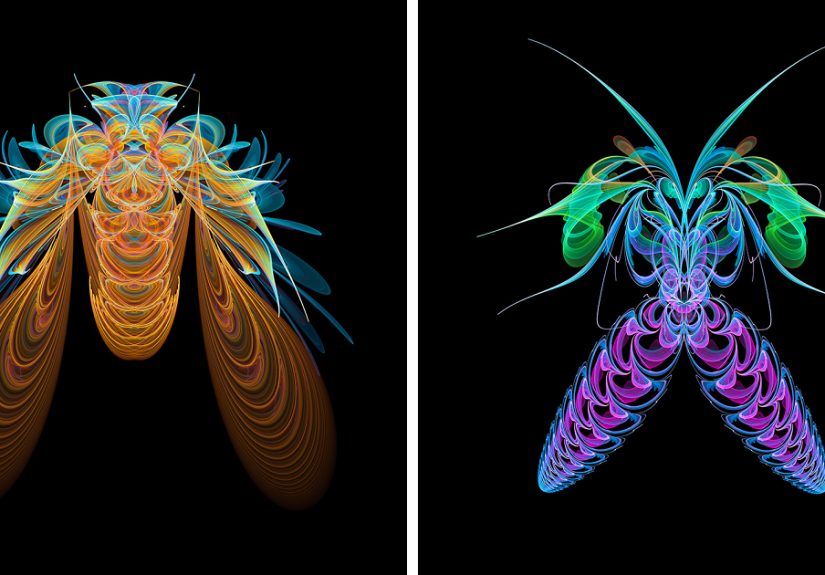
In this kind of artwork, insects aren’t just subjects; they’re blueprints for wildly intricate designs. The artist starts with fractalsrepeating mathematical patternsand nudges them into shapes that resemble beetles, moths, and dragonflies. The result is a gallery of neon-bright, ultra-detailed creatures that look like they flew out of a cyberpunk garden.
These pieces first caught attention on Bored Panda, where 12 “insects” rendered with fractal software were showcased as NFT-ready artworks. They look like they were built from stained glass, electric lightning, and galaxy swirls, yet each still reads instantly as “bug”: wings, antennae, segmented bodies, the whole entomology starter packjust with way more glow and fewer mosquito bites.
Whether you’re here for the math, the art, or just some satisfyingly strange eye candy, fractal insect art gives you all three. Let’s dive into how these digital creatures are made, why fractals feel so natural (even when they’re computer-generated), and what makes this type of art so oddly relaxing and addictive to look at.
What Exactly Is Fractal Insect Art?
At its core, fractal insect art is a mash-up of three things: mathematics, digital rendering, and our very real love of bugs. A fractal is a pattern that repeats itself at different scales. Zoom in or zoom out, and you keep seeing similar shapes: spirals within spirals, branches off branches, or intricate lace-like forms that never quite simplify.
Artists working with fractals use specialized software to generate these patterns using mathematical formulas. Instead of drawing every line by hand, they tweak parameterslike zoom levels, angles, colors, and iterationsuntil the chaos of the equation begins to suggest something recognizable. In this case: thoraxes, wings, and segmented legs.
The creator behind “Insect Art Made With Fractals (12 Pics)” described these pieces as “insects” made with a fractal rendering program and released them as NFTs, complete with high-resolution downloads for collectors. Each image blends the symmetry we associate with real insectsbilateral wings, mirrored patternswith the wild complexity of fractals: glowing veins, nested spirals, and repeating motifs that look both organic and futuristic at the same time.
From Equations to Antennae
The process usually starts with experimenting inside fractal software such as Mandelbulb3D, Apophysis, or similar tools. The artist plays with formulas and transformations until a pattern emerges that has a “body.” It might look like a central sphere with mirrored shapes on either sideperfect for a beetle. Or long, tapering curves that suggest dragonfly wings.
Once that underlying shape appears, the artist refines it: adjusting symmetry, layering fractals on top of one another, and editing the image in a graphics program to emphasize insect-like details. A pair of glowy nodes becomes eyes. Repeating arcs look like overlapping wing segments. A cluster of lines can mimic delicate leg joints. The end result: creatures that feel like they could exist in some bioluminescent alien forest, yet still clearly belong in the “insect” family.
Why Fractals and Insects Go Together So Well
If the pairing of fractals and insects feels surprisingly natural, that’s because it is. Nature is full of fractal patterns: branching trees, lightning, coastlines, clouds, and even the structure of our lungs. Insects themselves, while not textbook fractals, often display repeating geometrythink of segmented bodies, vein networks in wings, or the mirrored patterns on butterflies and moths.
When an artist uses fractals to build insect forms, they’re basically taking nature’s favorite design tendencies and dialing them up. The wings in these images might be made of nested, flame-like curves or spiraling motifs, but they still echo real insect anatomy. The effect is familiar yet heightened, like seeing nature through a high-resolution dream filter.
There’s also a psychological reason these images are so satisfying. Studies on fractal patterns suggest that humans tend to find them aesthetically pleasing and even calming, especially when the patterns have a certain level of complexitydetailed, but not overwhelmingly chaotic. Combine that with the recognizable silhouette of a dragonfly or beetle, and you get artwork that’s both intriguing and oddly soothing.
Color, Light, and “Alien Nature” Vibes
One thing that makes the “12 pics” stand out is the color palette. Instead of earthy browns and greens, these insect fractals glow in electric blues, vivid magentas, neon yellows, and deep space blacks. The contrast between dark backgrounds and luminous lines gives each insect an almost holographic presence, as if they’re made of pure light.
This approach taps into a niche that digital art and NFT communities love: “alien nature.” The pieces feel like field notes from a world where evolution took a more psychedelic route. You can still spot the anatomywings, bodies, antennaebut the materials look like glass, plasma, or energy fields instead of chitin or scales.
The result is a sweet spot between realism and fantasy. These insects are believable enough to feel like creatures, but wild enough to feel like a discovery every time you look closer. The deeper you zoom into the details, the more patterns you seetiny arcs, spirals, and filigree repeating endlessly, just like fractals are famous for doing.
Inside the Creative Process: Generative Meets Intentional
Fractal insect art might look like the computer did all the work, but there’s a lot more human decision-making involved than you’d think. Generative art tools can spit out thousands of variations, but choosing the ones that actually feel like convincing insectsand then sculpting them into a coherent seriesis where the artist’s eye comes in.
First, the artist explores mathematical spaces: changing formulas, mutation settings, and iteration depths until an interesting structure appears. This “happy accident” stage is all about experimentation. Many of the results will look like abstract explosions of shapes and colors, but a few runs will hint at something more figurative: a body, a pair of wings, a head-like shape.
After that, the process becomes more intentional. The artist may:
- Dial in symmetry so the fractal shape lines up like a real insect seen from above.
- Layer multiple fractals to give the image depth, like overlapping wings or a glowing exoskeleton.
- Adjust color gradients to highlight “veins,” joints, or segments.
- Use image-editing software to crop, sharpen, and refine the final composition.
In the “Insect Art Made With Fractals” series, this process results in 12 distinct pieces, each one its own creature but clearly part of the same visual universe. One might look like a neon dragonfly mid-flight; another might resemble a beetle made of stained glass. The shared language is in the fractal textures: repeating arcs, spirals, and glowing filaments that make you want to zoom in forever.
From Screen to Collectible
Because the pieces are digital and fractal-based, they scale beautifully. Zoomed-out, you get a striking insect silhouette. Zoomed-in, you get endless abstract patterns. That makes them ideal for high-resolution prints or large digital displays without losing sharpness. It also fits perfectly with the NFT world, where collectors value both visual uniqueness and technical quality.
The original series was offered on a popular NFT marketplace with unlockable full-size downloads. That means fans can not only admire the images online but also print them, display them on screens, or use them as large-format digital art in their homes. It’s a very 21st-century way of collecting “specimens”no glass cases or pins required.
Why This Type of Art Feels So Relaxing
There’s something oddly meditative about scrolling through fractal insect art. Part of it comes from the regularity of the patterns. Our brains like to recognize structure, and fractals provide just enough order with just enough surprise. The designs repeat, but not in a boring way. There’s always a new twist, a new spiral, a new detail the eye can latch onto.
Add to that the symmetry of insect bodies. Humans are drawn to symmetrical forms; we tend to interpret them as harmonious and pleasing. When fractal symmetry lines up with insect symmetry, you get images that feel balanced and complete, even when the colors and textures are wildly surreal.
Finally, there’s the simple joy of seeing math turn into something beautiful. Many people grew up thinking of equations as cold and abstract. Fractal insect art flips that narrative. It says: “Actually, math can look like glowing dragonflies and ornate beetles.” And that’s just inherently satisfying.
How Fractal Insect Art Connects Science, Nature, and Play
One of the coolest things about this series is how effortlessly it bridges different worlds. On one side, you have fractal geometry and digital toolsconcepts that belong in computer science and mathematics. On the other, you have insects, ecology, and the aesthetics of the natural world. Then, layered on top of both, you have internet culture, NFTs, and Bored Panda’s love of quirky, visually striking content.
For science and math enthusiasts, these images can be a gateway to conversations about patterns, complexity, and how nature seems to “know” about fractals long before we gave them a formal name. For art lovers, they’re a reminder that inspiration doesn’t have to come from traditional brushes and canvases; it can come from formulas, software, and a willingness to let randomness play a role.
And for everyone else, they’re simply fun. You don’t need to understand Mandelbrot sets to appreciate a neon beetle with wings like stained glass or a digital moth that looks like it flew through the Aurora Borealis on its way to your screen. You just need curiosityand maybe the brightness on your device turned up a little higher than usual.
of Real-Life Experience With Fractal Insects
Looking at the “Insect Art Made With Fractals” series is one thing. Experiencing it over timecoming back to it on a tired afternoon, showing it to friends, or even trying fractal art yourselfadds a whole new layer of appreciation. Here’s what it feels like when these glowing bug-creatures start creeping into your everyday life (in a good way).
First, there’s the initial scroll. You see the thumbnail of a bright, symmetrical shape on a black background and think, “Cool butterfly.” Then you click, and the details hit you. The wings aren’t just patterned; they’re built from nested curves and loops that seem to fold into themselves. The body isn’t just a solid shape; it’s made of light trails, like someone stitched a beetle out of tiny neon comets. You zoom in, and instead of things getting blurry, the patterns stay sharp. It’s like discovering that a simple doodle is actually a full-blown universe.
Share these images with a friend, and you get fun reactions. The bug lover in your group will start comparing them to specific species (“That one looks like a dragonfly, that one’s totally a scarab”). The gamer in the group will swear they look like bosses from a sci-fi RPG. Someone else might say they look like stained glass windows in a cathedral designed by aliens. That mix of associations is part of the charmthe art is specific enough to feel like insects, but abstract enough that everyone sees something different.
Spend a little more time with the series, and you start noticing how it affects your mood. These images are intense, but not in a stressful way. The consistent symmetry and the repeating, flowing lines have a surprisingly calming effect. It’s easy to catch yourself staring at a single piece for longer than you meant to, tracing the curves with your eyes like you’re following a glowing maze. In a screen-heavy world, it’s refreshing to look at something digital that isn’t shouting for your attentionit just quietly invites you to explore.
If you’re the DIY type, fractal insect art also nudges you toward experimentation. You find yourself hunting down fractal software, watching tutorials, and realizing that you don’t need to be a traditional painter to make something visually stunning. The first time you generate your own fractal and tweak it into something that sort of looks like a bug, there’s this tiny thrill of recognition. You’ve coaxed meaning out of math. You’ve grown a digital creature out of formulas and sliders.
Even if you never open a fractal program, just following artists who create this kind of work changes how you see real insects and patterns in nature. Suddenly, the veins on a leaf look like miniature fractals. The way a dragonfly’s wings catch the light feels strangely familiar. You might find yourself thinking, “This looks like a low-key, real-world version of that wild neon beetle I saw online.”
And that might be the most powerful “experience” this art offers: it subtly tunes your brain to notice beauty in both directions. The digital insects make the natural world seem more magical. The natural world, in turn, makes the art feel more grounded. You start to realize that the line between math and nature isn’t as sharp as you were taught in schooland that somewhere between the code and the caterpillars is a space where creativity thrives.
So yes, on the surface “Insect Art Made With Fractals (12 Pics)” is a quirky, visually stunning post you might stumble across while procrastinating. But if you let it, it becomes something morea quiet reminder that even the smallest creatures and the most complex equations can meet in the middle and turn into pure visual joy.
Conclusion: Tiny Creatures, Infinite Patterns
“Insect Art Made With Fractals (12 Pics)” shows just how far a simple idea can go when you mix curiosity with creativity. Take insects, take fractals, and let a digital artist play with both. The result isn’t just a series of pretty picturesit’s a conversation between math, nature, and imagination.
These fractal insects are part science, part art, and part internet-era experiment. They sit comfortably on a platform like Bored Panda, where unusual visuals and clever concepts are celebrated, but they also belong in any discussion about generative art and the future of digital creativity. They’re proof that even formulas can have flairand that sometimes, the best way to appreciate nature is to reinvent it in glowing, impossible colors.
And who knows? After spending some time with these twelve digital bugs, you might find yourself looking a little more closely at the next real dragonfly you see. Not just at its wings, but at the patterns hiding within themand at the quiet, fractal logic that seems to run through the whole natural world.