Table of Contents >> Show >> Hide
- Who Was Pierre Bernard, and Why Was He on Late Night in the First Place?
- The Pre-Recliner Spark: A Mild Man Learns He Can Be Loud Without Raising His Voice
- The Birth of the Recliner: An Office Waiting Room, a Chair, and a Perfectly Petty Problem
- The Format: How the Segment Worked (and Why It Was So Addictive)
- What Pierre Raged About: A Museum of Micro-Outrages
- The Stargate Effect: When a Late-Night Rant Turned Into a Sci-Fi Cameo
- Side Quest: “Pierre Bernard: Serial Killer” and the Comedy of Not Letting a Camera Crew Into Your Home
- Why the Recliner Worked: The Comedy Mechanics Behind “Comfortable and Furious”
- How the Bit Aged: Why People Still Share It
- What Creators Can Learn from Recliner of Rage (Without Buying a Recliner)
- Quick FAQ
- Extra Addendum: of “Comfortable and Furious” Experiences (Because the Recliner Lives in All of Us)
- Conclusion
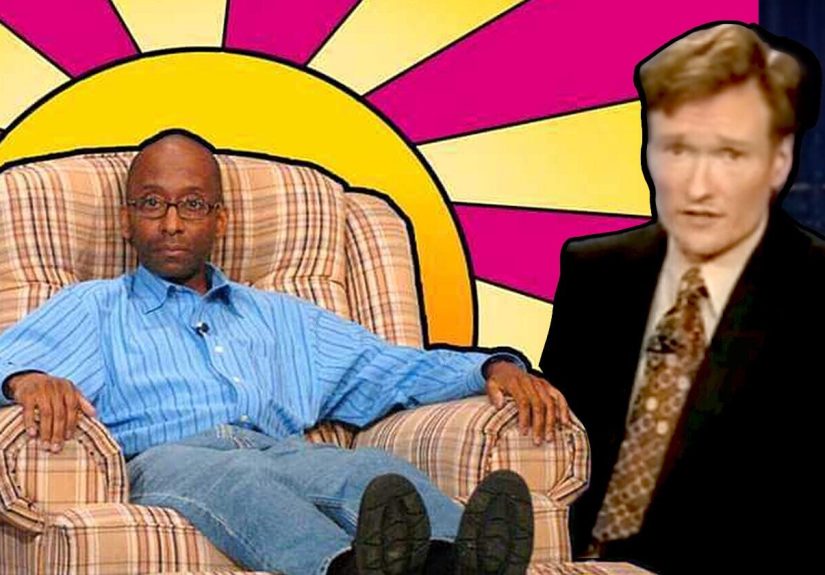
If you’ve never seen Pierre Bernard’s Recliner of Rage, here’s the vibe: a soft-spoken graphic designer sits in a recliner like he’s about to read you a bedtime story…
and then calmly explains why America must immediately fix something extremely specific, extremely nerdy, and (somehow) extremely important.
The magic wasn’t just the punchlines. It was the contrastan unbothered voice paired with a soul that is, in Pierre’s own immortal phrasing, “comfortable and furious.”
What follows is an in-depth, story-driven oral historyassembled from interviews, archives, and production recollectionsof how a humble chair became a pop-culture pressure valve.
Who Was Pierre Bernard, and Why Was He on Late Night in the First Place?
On Late Night with Conan O’Brien, the writers weren’t the only ones making TV. The show’s ecosystem included camera operators, stage managers, and the graphics departmentthe people
responsible for everything from on-screen titles to visual gags that flashed by so quickly your brain barely had time to laugh before the next weird thing arrived.
Pierre Bernard Jr. was one of those behind-the-scenes pros: a working graphic designer and illustrator whose day job was making the show look like the show.
His official bio later emphasized the long arcNew York to Los Angeles, NBC to TBS, life drawing, convention events, and morebut fans latched onto something simpler:
Pierre was the rare staffer who became a recurring character without ever feeling like he was “doing a character.”
In other words, he didn’t walk in wearing a wig and shouting. He walked in looking like the guy who might politely hold the elevator door…
and then privately seethe for 15 minutes about a discontinued art pen.
The Pre-Recliner Spark: A Mild Man Learns He Can Be Loud Without Raising His Voice
Like many great late-night bits, Recliner of Rage didn’t start as a “segment idea.” It started as a workplace observation: Pierre was mild-mannered, but he could get genuinely annoyed
not in a performative way, but in a real “I have researched this and I’m disappointed in the world” way.
The “Wait, That’s My Design” Moment
In the show’s lore, an earlier on-air appearance helped establish Pierre as someone who could be funny simply by being himself.
A writer (and later multiple accounts) described a situation where Pierre’s joke design work for a bit ended up being sold elsewhere, which annoyed him.
That annoyance became comedy fuel: the idea was essentially, “What if the sweetest guy at work had a legitimate grievanceand we let him air it?”
Once the room realized Pierre could deliver frustration with total calm, a new kind of segment became possible: anger without volume.
Rage as a whispered sermon.
The Birth of the Recliner: An Office Waiting Room, a Chair, and a Perfectly Petty Problem
The origin story that emerges across interviews and recollections is wonderfully un-glamorous: someone noticed a chair.
Not an iconic TV prop at firstjust a recliner sitting around like it belonged in a dentist’s waiting room.
A writer remembered thinking: What if Pierre was seated in maximum comfort while talking about something that bothered him?
That juxtapositionplush relaxation paired with simmering outragewas the whole engine.
The iPod-era Complaint That Turned Into a Template
The first Recliner of Rage episode is remembered as being pulled directly from Pierre’s real life. In a telling anecdote, a writer called Pierre
anduncharacteristically for a busy showasked about his weekend and whether anything was bothering him.
Pierre explained a very early-2000s tech headache: he had bought new gear to convert records to digital files, and compatibility issues meant he’d need to spend even more money
just to make the setup work the way he expected. The irritation wasn’t dramatic. It was practical. It was the kind of consumer frustration that makes you stare at a receipt
and whisper, “This is how it starts.”
Then came the crucial step: “Write it down and email it.” Pierre did. Later he was called for blocking. Cue cards appeared. A recliner appeared.
And a half-hour before airtime, he learned he was about to read his own annoyance to America.
The result worked immediately: Conan enjoyed it, the audience understood it, and the show discovered a new recurring structure that was endlessly refillable
because Pierre’s life contained an infinite supply of very specific problems.
The Format: How the Segment Worked (and Why It Was So Addictive)
Pierre Bernard’s Recliner of Rage had a recognizable rhythmone that fans could quote even years later.
The segment typically played like this:
- The Setup: Pierre appears seated in a recliner, calm enough to be mistaken for someone waiting for his soup to cool.
- The Rant: He explains his grievance in precise, slightly obsessive detailoften about pop culture, collectibles, art supplies, sci-fi, anime, or technology.
- The Signature Pivot: He adjusts upright and addresses a second camera.
- The Ultimatum: “Bottom line, America…” followed by a demand that is both wildly specific and weirdly persuasive.
That last part mattered. The segment didn’t end on a throwaway joke. It ended on a mock-policy statement, like Pierre was the nation’s calmest emergency broadcaster.
His issue wasn’t “some people are annoying.” His issue was “here is the fix, here is why it’s reasonable, and here is why you should feel bad for not doing it already.”
The comedy lived in the seriousness. Pierre delivered niche passions the way other people deliver breaking news.
And because he sounded so measured, the audience leaned inthen realized they were agreeing with a man demanding justice for a snack cake.
What Pierre Raged About: A Museum of Micro-Outrages
The topics were the point. A good Recliner of Rage rant wasn’t genericit was personal, concrete, and uncomfortably relatable.
The show didn’t need Pierre to be “angry.” The show needed Pierre to be right in a way that only a devoted fan, collector, or hobbyist can be right.
1) Seasonal Injustice: The Mallomars Problem
If you want a single example of why the segment became a cult classic, it’s Mallomars: a snack with a distribution pattern that feels like it was designed by a villain.
Pierre’s frustration was essentially a consumer’s version of existential dreadwhy is this thing available only at certain times, in certain places,
like it’s migrating?
The humor lands because it’s both ridiculous and familiar. Replace “Mallomars” with “that limited-edition drop” or “the only moisturizer that works,”
and suddenly Pierre is speaking for half the country.
2) Nerd Culture Heartbreak: When Your Favorite Show or Anime Gets Moved, Cut, or Replaced
Several memorable rants centered on fandom issuesespecially the kind that feel small until you realize how much they structure your comfort.
In recollections of the segment’s run, Pierre’s grievances included anime availability and scheduling changes, and at least one rant that touched a nerve with sci-fi fans:
he had strong feelings about Stargate SG-1 and a particular character’s return.
What made these rants different from typical “TV complaints” was how deep they went.
Pierre wasn’t doing a broad parody of fan culturehe was documenting the exact logic a real fan uses:
character dynamics, story momentum, the way one choice affects the type of action you get from week to week.
3) The Collector’s Curse: Bobbleheads, Box Sets, and the Rage of Too Many Versions
Pierre’s annoyances often came from collectingwhere joy and frustration live in the same box.
One story involves buying a big batch of bobbleheads only to discover that some… didn’t bobble.
That detail is so specific it feels fake, which is exactly why it’s funny. Reality is always weirder than a writer’s room.
Another collector headache: confusing release strategies for beloved series. In one widely remembered example, Pierre described trying to finally own a complete version of
Robotechonly to find multiple formats and competing releases that made it unnecessarily hard to know what he was actually buying.
The rant didn’t just roast a company; it mapped the psychological spiral of “I just want the definitive version, why is this so hard?”
And thenbecause the universe loves a punchlinethere’s the reported aftermath: the company sent Pierre a complete set.
But as a collector, he didn’t even open it. Which is either the funniest ending possible or the most collector-brained sentence ever spoken on Earth.
Possibly both.
4) Art Supply Drama: The Battle for the Perfect Tool
Art supplies are where rational adults go to become feral. If you’ve ever had a favorite pen discontinued, you already understand the segment.
Pierre’s rants about specific materials worked because they had real stakes:
the tool you use changes your work, your routine, your identity.
The show treated this with the gravity it deserved, which is to say: it treated it like a national crisis delivered from a recliner.
The Stargate Effect: When a Late-Night Rant Turned Into a Sci-Fi Cameo
Every long-running TV bit hopes for one thing: escape velocity.
Not just “people liked it,” but “the world responded to it.”
For Recliner of Rage, that moment came via Stargate SG-1.
In the most perfectly on-brand chain of events imaginable, Pierre’s critique of the show didn’t get him ignoredit got him invited.
Accounts describe Pierre receiving communication from the Stargate production side, initially suspecting it might be an elaborate joke.
But it wasn’t. He ended up traveling to Vancouver, appearing on the set, and meeting cast members associated with the show.
The comedic beauty here is that Recliner of Rage wasn’t “celebrity cross-promotion.”
It was fandom logic turning real: you complain about a show so intensely that the show says, “Fine. Come here.”
The segment became a bridge between late-night comedy and sci-fi community cultureproof that the bit wasn’t mocking nerds from a distance.
It was nerds making TV from inside the building.
Side Quest: “Pierre Bernard: Serial Killer” and the Comedy of Not Letting a Camera Crew Into Your Home
If the recliner was “calm rage,” another Pierre-related moment went in a different direction: suspicion.
Years later, Pierre recalled a situation where producers wanted to shoot a segment at his home to see his collectibles, and he didn’t want a crew coming in.
That reluctanceperfectly normal behavior, honestlywas transformed into a news-magazine parody where Conan interrogates Pierre like a serious investigative report.
Pierre’s recollection of that day highlights a key behind-the-scenes truth: by then, he understood editing, tone, and how a segment can “find” a story.
His attempt to be careful only made it funnier, because cautious answers in an interrogation format can sound accidentally incriminating.
It wasn’t violent comedy. It was “format comedy”a parody of how TV can make someone look guilty simply by choosing the right music and asking the right questions.
And it fit perfectly alongside the recliner: Pierre as the calm man whose calmness makes everything weirder.
Why the Recliner Worked: The Comedy Mechanics Behind “Comfortable and Furious”
1) Contrast Is a Cheat Code
Comedy loves opposites. The recliner is comfort. Rage is discomfort. Pierre delivered both at once.
The segment is basically a physics experiment: what happens when the most soothing visual (a recliner) contains the least soothing emotional energy (pure complaint)?
The answer is laughterbecause the brain can’t reconcile the mismatch fast enough.
2) Specificity Makes It True (Even When It’s Absurd)
“I’m mad about technology” is nothing. “I bought a device for a small amount of money and now I have to spend more than a hundred dollars to make it work” is a story.
“Snacks are annoying” is nothing. “This particular cookie is seasonal like it’s a rare bird” is a worldview.
Pierre’s rants were packed with concrete details that made them feel lived-in rather than written.
3) It Didn’t Punch Down at NerdsIt Let Nerds Speak
A lot of mainstream comedy treats fandom as a costume: put on the glasses, say something about comic books, laugh at the weird person.
Recliner of Rage worked because the show wasn’t laughing at Pierre’s interests; it was laughing at the human condition inside those interests.
Pierre wasn’t “the joke.” The joke was how deeply any of us can care about something that seems tiny to everyone else.
4) It Felt Like an Office Myth That Escaped the Building
Many late-night recurring bits are built from a premise. This one was built from a coworker.
That gave it a different texturelike you were watching the show’s internal culture leak onto television.
Pierre didn’t feel cast. He felt discovered.
How the Bit Aged: Why People Still Share It
The internet’s favorite comedy is often “a person sincerely overreacting to something specific.”
That’s basically the mission statement of Recliner of Rage, created before social media turned micro-rants into a daily food group.
Years after the segment’s original run, fans still swap clips, reference catchphrases, and point newcomers toward the best examples.
Modern pop-culture roundups of Conan’s most memorable moments frequently include Pierre’s segments, because they represent something distinctive about Conan-era comedy:
a willingness to let a weird niche premise play out patiently, without rushing to the next punchline.
And Pierre himself has remained publicly connected to the legacyacknowledging the recurring bits on his own site and continuing to participate in creative projects
that align with the same interests the recliner made famous: illustration, pop culture, sci-fi community spaces, and the joyful seriousness of nerd life.
What Creators Can Learn from Recliner of Rage (Without Buying a Recliner)
Make the Stakes Emotional, Not Global
Pierre wasn’t trying to solve the world. He was trying to fix his world. That’s why it connected.
People relate to passion. They relate to routines being disrupted. They relate to the feeling of, “I can’t believe this is the hill I’m dying on, but here we are.”
Let the Audience Do the Math
The segment rarely said, “Isn’t this funny?” It just presented Pierre’s argument with sincerity and let the audience realize the comedy themselves.
That trustletting viewers recognize the absurdity while also recognizing the truthis why the bit never feels like a cheap joke.
Give It a Ritual
Catchphrases and structure aren’t fluff. They’re comfort. The recliner, the calm tone, the pivot, the “Bottom line, America”that ritual turned a rant into a recurring event.
Fans didn’t just watch; they anticipated.
Quick FAQ
Was Pierre Bernard a writer on the show?
Pierre’s primary role was in graphics and visual design, but he became an on-air favorite through recurring segments and staff-driven comedy bits.
Did the rants come from real life?
Accounts of the segment’s creation emphasize that the grievances were typically rooted in real annoyancesthen shaped for television with edits and structure.
Why do people remember it so vividly?
Because it feels like the most relatable form of comedy: taking something small, treating it like it matters, and accidentally revealing how our brains really work.
Also: recliners are funny when they’re used as podiums.
Extra Addendum: of “Comfortable and Furious” Experiences (Because the Recliner Lives in All of Us)
The easiest way to understand Recliner of Rage is to notice how often real life tries to turn you into Pierre Bernard.
Not the TV version with a title graphicjust the human version who is one minor inconvenience away from addressing a second camera that isn’t there.
Experience #1: You walk into a craft store with a coupon that feels like a legal document. You have done the math. You have planned the purchase.
Then the register system decides your coupon is “not eligible,” which is corporate-speak for “we are choosing chaos today.” You don’t shout.
You don’t cause a scene. You simply feel your soul sit down in an invisible recliner and whisper, Bottom line, America… consistency matters.
Experience #2: You discover your favorite seasonal snack is backexcept it’s back in exactly two locations within a 20-mile radius, and both are mysteriously out of stock.
You begin forming theories. You start blaming logistics. You start blaming society. You start blaming the concept of time.
You realize you are now emotionally negotiating with a cookie.
Experience #3: A streaming service removes a show you were halfway through. Not a new showa comfort show. A “play it while I fold laundry” show.
The removal isn’t tragic in a global sense, but it’s tragic in the way that your brain experiences routine: like somebody moved your kitchen sink.
You don’t write an email. You don’t protest outside a building. You simply become calm in the most suspicious way.
Experience #4: You buy a collectible because it represents joy. You take it home. Something is wrongsomething tiny, like a part that doesn’t move the way it’s supposed to.
The object still “works,” technically, but you know the truth. You paid for delight, and you received almost delight.
That difference is the entire universe to a collector. And now you understand why “some bobbleheads don’t bobble” is a punchline and a tragedy at the same time.
Experience #5: You fall in love with a toola pen, a brush, a keyboard, a piece of softwarethat fits your brain perfectly. Then it gets discontinued, redesigned,
or “improved” in a way that makes it worse. This is where normal people shrug. This is where Pierre Bernard is born.
Because when something helps you create, it stops being an object and starts being a partner. Losing it feels personal.
Experience #6: You explain one of these problems to a friend, and they stare at you like you’re describing a crisis on a distant planet.
That momentthe gap between how much you care and how little the world caresis the emotional core of the segment.
Recliner of Rage made that gap funny, not humiliating. It basically said: yes, this is ridiculous. Yes, it matters to you anyway.
And yes, you deserve a plush chair while you process it.
That’s the real legacy. The recliner wasn’t just a prop. It was permission.
Permission to admit that modern life is full of tiny frictions that add up, and sometimes the healthiest thing you can do is name them,
make them absurdly specific, and laughcalmlywhile you remain absolutely, deeply, enthusiastically furious.