Table of Contents >> Show >> Hide
- First, a quick clarification: not that June Taylor
- The Still-Room: a modern workshop with old-world roots
- How a sociologist became a preserver
- The June Taylor method: craft, science, and a little stubbornness
- Why June Taylor’s preserves taste different
- How to use June Taylor preserves like a pro
- What home preservers can learn from June Taylor
- The “political choice” inside a jar
- Farewell to the market stand, not to the legacy
- Experience: of what June Taylor’s “queen of preserves” energy feels like
- Conclusion
There are people who “make jam,” and then there are people who make you question every jar you’ve ever
politely accepted at the holidays. June Taylor belongs to the second category. In the Bay Area, her name has
long been spoken the way some folks say “handmade pasta” or “single-origin chocolate”with reverence, a
little hunger, and the faint suspicion that you may not be worthy.
Taylor built a reputation for preserves that taste like fruit turned up to full volume: bright, layered,
sometimes bracingly bitter (in a good way), and never the sticky-sweet cartoon version many of us grew up
spreading on toast. Her work helped define what “artisan preserves” can meansmall batches, thoughtful
sourcing, and techniques that respect both tradition and the science of setting a jam. If you’ve ever wondered
why some marmalades taste like perfume and pennies while others taste like sunshine and a well-written love
letter, June Taylor is a big part of the answer.
First, a quick clarification: not that June Taylor
If you search the name, you might stumble into a different universe (show business loves a June Taylor).
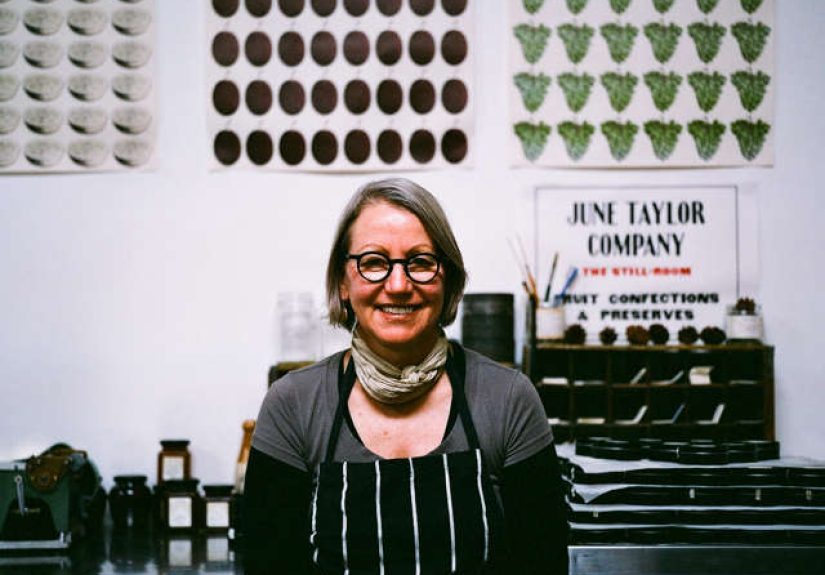
This article is about June Taylor the preserverthe London-born, Berkeley-based craftsperson behind
June Taylor Company (often called June Taylor Jams) and her famed production space known as the Still-Room.
The Still-Room: a modern workshop with old-world roots
“Still room” isn’t just a cute brand flourish. Historically, the still room in English manor houses was a
separate space devoted to preserving, distilling, medicinal preparations, specialty baking, and tending to the
yields of gardens and orchards. Taylor revived the term because it matches the spirit of what she does:
preserving isn’t a side questit’s a craft with its own rhythm, tools, and quiet intensity.
In profiles and interviews over the years, the Still-Room comes across as equal parts kitchen and studio:
a place where the color of the fruit matters, where the light matters, and where the work is as tactile as it is
exacting. It’s not a factory floor. It’s a space designed for attentionbecause attention is the whole point.
How a sociologist became a preserver
Taylor’s path into preserves wasn’t the typical “I always loved making jam with Grandma” origin story.
She was born and raised in working-class London, later coming to the United States in the early 1980s.
She worked in restaurants (including notable Bay Area spots) before building a business that started, like many
good food legends do, in the real world: trying to make a living while raising a child.
She began selling marmalade at farmers markets, and eventually became a fixture at the San Francisco Ferry
Plaza Farmers Market. Over time, her output scalednot into mass production, but into a disciplined
small-batch operation. Even at her peak, the work remained intensely hands-on: cooking, testing for set,
filling jars, labelingrepeating the same high-focus actions until “a jar of jam” stops sounding quaint and
starts sounding like a minor miracle of time management.
The June Taylor method: craft, science, and a little stubbornness
Fruit first: local, organic, and sometimes delightfully obscure
Taylor’s approach begins with fruit that deserves preservation in the first place. She sought out organically
grown fruit from within the United States (much of it from Northern California), often working directly with
small farms and prioritizing heirloom or hard-to-find varieties. In the New York Times, she was described as
using fruits many people rarely see freshbergamots, Kadota figs, Santa Rosa plumsalongside more familiar
seasonal staples.
What makes this more than foodie bragging rights is the underlying logic: if your fruit tastes flat, your jam will
taste flatonly now it’s flat forever in a jar. Taylor’s insistence on quality fruit is less romanticism and more
ruthless practicality.
Small batches cooked fast for fresher flavor
One of Taylor’s signature choices was cooking in very small quantities per potoften around seven jars’ worth.
That small scale lets the mixture boil rapidly and reach the gel point before it tastes “cooked” in the dull,
over-reduced way many preserves do. Think of it like searing a steak: you want intensity without turning the
whole thing into leather.
Her process blends intuition with measurement. She uses visual cues and classic tests (like the “plate test”),
but also pays attention to temperature ranges that correspond to setting. The point isn’t to worship a number;
it’s to know when the jam is readywhen texture and flavor line up and you can stop before the fruit loses its
spark.
Natural pectin only (and a complicated relationship with store-bought shortcuts)
Many commercial jams rely on added pectin for a firm, consistent set. Taylor built her reputation doing the
opposite. She favored naturally occurring pectinsespecially those found in citrus membranes and seedsand
used tools like jelly bags to extract what she needed. Her own site emphasizes minimal sugar and no commercial
pectin, and other coverage highlights her use of citrus membranes as a source of natural pectin for marmalades.
This matters because pectin is not neutral. Added pectin can create a set that feels more like gel candy than
fruit. Taylor’s preserves tend toward a softer, more luxurious setspreadable, yes, but still fruit-forward rather
than Jell-O-forward.
Less sugar, more nuance
Sugar is doing several jobs in preserves: sweetness, preservation, and texture. Taylor treated it as a tool, not a
crutch. In the New York Times feature, her jams were described as dramatically lower in sugar than many
traditional formulationsan approach that makes the fruit’s acidity, bitterness, and aromatics more visible.
The result is preserves that can taste “complex and layered” rather than simply “sweet.”
This is also why her work can surprise people: if you expect jam to be dessert-in-a-jar, a bright citrus
marmalade with an assertive bitter edge can feel like meeting a very charming person who refuses to laugh at
your bad jokes. It’s not rude. It’s honest.
Whole-fruit thinking and low-waste habits
Taylor’s preserves are often described as whole-fruit projects. Citrus peel isn’t “scrap”; it’s flavor, aroma,
bitterness, and texture. Membranes and seeds aren’t garbage; they’re pectin. Peel can become candied. Even the
act of sorting fruitdeciding what becomes jars, what becomes marmalade, what becomes juicereflects a
kitchen economy that values what the ingredient can do at every stage.
Flavors that behave like culinary jazz
Taylor is also known for pairings that make sense once you taste them: fruit with herbs, flowers, and leaves.
Coverage of her work highlights combinations like nectarine with lavender and grapefruit marmalade touched
with floral notes. Her own product lists read like a garden walk with a shopping basket: aprium with lavender,
fig leaf and almond, peach with lemon verbena, Santa Rosa plum with rose geranium. These aren’t random
“fancy” add-insthey’re ways to amplify what the fruit already whispers.
Why June Taylor’s preserves taste different
The simplest way to explain it: Taylor optimizes for flavor first, then texture, and only then for convenience.
A firmer set is easy to achieve with added pectin and higher sugar. A softer set that still feels intentional
not runny, not syrupy in a sad wayrequires careful fruit selection, careful cooking, and the willingness to
work in small batches.
You can see this philosophy in her marmalades especially. Marmalade is a balancing act: acid, sugar, water,
pectin, peel, timing. Get it wrong and you’ll have bitterness without brightness, sweetness without lift, or a
gummy set that chews like regret. Get it right and you’ll have something that makes toast feel like a special
occasion on a random Tuesday.
How to use June Taylor preserves like a pro
1) Toast is fine, but don’t stop there
Yes, spread it on toast. But Taylor’s own marmalade notes suggest broader uses: whisk a spoonful into a
vinaigrette for instant citrus depth, add it to a marinade, or use it as a glaze for meat or fish. Marmalade’s
bittersweet backbone plays especially well with roasted poultry, grilled pork, and salmon.
2) Upgrade a cheese board in 10 seconds
The fastest “I totally planned this” move: pair a floral stone-fruit conserve with a nutty aged cheese, or match
a bitter citrus marmalade with a creamy, buttery cheese. The jam becomes the bridge between fat and acid,
sweet and savory.
3) Put a little in drinks (responsibly)
Citrus preserves can add body and complexity to cocktails or mocktails. Stir a small spoonful into sparkling
water with lemon, or shake it with citrus juice and ice for a brighter, richer drink. It’s like adding a bass line
to a song that was previously all tambourine.
What home preservers can learn from June Taylor
Start with the “why”: preserve flavor, not just produce
Preserving can be about thrift, tradition, or sheer abundance. Taylor’s work argues for another reason: to
capture peak flavor at its best. That’s why fruit quality matters so much, and why small batches make sense
even when they’re inconvenient.
Safety isn’t scary when you understand the basics
One of the most reassuring ideas often repeated in jam-making education is that high-acid fruit preserves are
generally safe from botulism risk because acidity is the key factor. June Taylor is famously quoted joking that
the only way you can hurt someone with a jar of jam is if you hit them over the head with itwhich is both
funny and a helpful reminder that fruit preserves are a different safety category than low-acid foods.
That said: jam safety still requires clean practices, proper sealing (if canning), and respect for mold. The goal
is confidence, not chaos. You don’t need to panicyou just need to pay attention.
Use the tools, but don’t worship them
Thermometers, plate tests, jelly bagsthese are there to support your judgment, not replace it. Taylor’s work
shows that “set” is not a single moment; it’s a relationship between temperature, evaporation, pectin, acid,
and time. The more you make, the more you recognize the signs.
The “political choice” inside a jar
Taylor has framed her work as more than commerce: choosing small farms, organic methods, and heirloom fruit
can be a way of supporting a food culture that values biodiversity, seasonality, and craft. In other words, the
jar isn’t just a productit’s a vote for a certain way of eating and growing.
You don’t have to agree with every philosophy to appreciate the result. But it does help explain why her
preserves have such a devoted following: people aren’t only buying flavor. They’re buying a set of values made
tangiblesomething you can open, spoon out, and taste.
Farewell to the market stand, not to the legacy
When Taylor announced she was stepping back after decades of preserving, it felt like a chapter closing for a
particular era of Bay Area food. Yet her influence is all over the modern preserves world: today, “small-batch”
is practically a required label, low-sugar approaches are widely embraced, and fruit-and-herb combinations are
mainstream enough to show up in fancy grocery stores without anyone fainting.
The best sign of a craftsperson’s impact is when their once-unusual standards become the new baseline.
June Taylor helped raise that baseline. She didn’t just make jam. She made it harder to accept mediocre jam
ever againwhich is, frankly, a public service.
Experience: of what June Taylor’s “queen of preserves” energy feels like
If you’ve never encountered June Taylor’s world, here’s the closest thing to an “experience” without hopping a
flight or borrowing a time machine: imagine walking up to a farmers market stand where the jars look like
stained glass in sunlight. Not neon, not candy-coloredmore like the honest shades of fruit you’ve actually
eaten. The labels don’t scream; they quietly inform. And the flavor names read like a poem written by someone
who owns both a garden and a very sharp knife.
The first time many people taste a true small-batch marmalade, they do a double take. There’s sweetness, sure,
but it doesn’t smother everything else. There’s acidity that wakes up the sides of your tongue. There’s bitter
peel that makes the whole thing taste grown-up, the way a good coffee tastes grown-up: not “pleasantly
bland,” but interesting. You might start with a polite half-spoon and end with the kind of reckless scooping you
normally reserve for peanut butter when nobody’s watching.
Then the jar follows you home, and this is where the “June Taylor effect” really kicks in. Suddenly, toast feels
like an underachiever. You try it on warm buttered bread and it’s great, but you keep thinking, “What else can
this do?” So you put a spoonful into yogurt and realize you’ve been living in a black-and-white movie. You
smear it on a simple cake layer and it turns dessert into a conversation. You pair it with cheese and discover a
new personality trait: you are, apparently, someone who “pairs cheese.”
The next step is inevitable: you start eyeing fruit like it’s a project. Peak-season plums? “Preserveable.”
Slightly-too-many apricots? “Potentially legendary.” A bag of citrus in winter? “Marmalade time.” And if you
actually try making your own, you learn the same lesson Taylor built her business on: the work is simple in
ingredients but not simple in attention. You stir. You skim. You watch the boil change character. You do the
plate test and feel like a scientist who also owns potholders. You discover that “done” is a moment you can
miss if you scroll your phone for 90 seconds.
Even if your first batch isn’t perfect, you come away understanding why a truly great jar costs what it costs.
It isn’t just fruit and sugarit’s sorting, timing, knowledge, and restraint. It’s knowing when the flavor is at
its brightest and stopping right there. It’s making something that tastes like a season and then giving yourself
permission to open it on an ordinary day. That, more than anything, is what “Queen of Preserves” really means:
not luxury, not hypejust the rare ability to make fruit taste unmistakably like itself, only more so.
Conclusion
June Taylor’s legacy isn’t only the jars she madeit’s the way she helped redefine what preserves can be:
fruit-forward, thoughtfully sourced, expertly cooked, and brave enough to let bitterness, acidity, and floral
notes share the spotlight. Whether you’re a devoted fan, a curious home preserver, or someone who simply
wants a better breakfast, her work is a reminder that the best “simple foods” are often the ones made with the
most care.