Table of Contents >> Show >> Hide
- Quick refresher: what “blood type” actually means
- The easiest ways to find your blood type (no new testing)
- Getting a blood type test at a clinic or lab
- At-home blood type tests: what they can (and can’t) do
- What about genetic tests that “tell you” your blood type?
- Understanding your results: ABO and Rh in everyday language
- Blood type compatibility: why matching matters (and when it’s “reversed”)
- Can your blood type change?
- How to store your blood type so it’s actually useful
- Frequently asked questions
- Bottom line
- Experiences: real-life moments when knowing your blood type suddenly matters
Your blood type is one of those facts that feels weirdly “basic”… until it suddenly becomes extremely important.
It’s like knowing your phone’s passcode: most days, it doesn’t change your life. But the moment you need it,
you really need itand guessing is not a cute look.
The good news: finding out your blood type is usually easy, often inexpensive, and sometimes even free.
The slightly-less-fun news: not every method is equally reliable, and the “I saw it on a chart once” approach
is not a medically recognized testing strategy.
In this guide, you’ll learn the practical ways to find your blood typechecking records, getting a lab test,
donating blood, and using at-home kitsplus how to store the info so you can actually access it when it matters.
Quick refresher: what “blood type” actually means
Most people mean two things when they say “blood type”:
- ABO type: A, B, AB, or O
- Rh factor: positive (+) or negative (–)
Put them together and you get the common “eight types” like O+, A–, AB+, and so on. ABO is based on markers
(antigens) on your red blood cells. Rh is based on whether you have the Rh (D) antigen. Your body can react
strongly if it receives incompatible bloodso accuracy matters.
The easiest ways to find your blood type (no new testing)
1) Check your medical records (especially if you’ve had surgery, pregnancy care, or transfusions)
If your blood type has ever been clinically relevantthink pregnancy labs, major surgery, organ donation workups,
or anything involving a “type and screen”it may be in your chart. Start with:
- Your hospital or clinic’s patient portal (look under lab results or transfusion services)
- Discharge paperwork from a hospital stay
- OB/GYN records (Rh factor is commonly checked early in pregnancy)
Pro tip: If you can’t find it, ask your doctor’s office for your most recent lab summary or request your records.
Many systems can provide them electronically.
2) Donate blood and check your donor profile
Blood donation is one of the most satisfying ways to learn your type because you’re helping someone else at the same time.
Many blood centers provide your blood type after donationoften through a donor card, email, or online account.
If you donate through the American Red Cross, your blood type is typically available in your donor account after processing.
Bonus: you walk away with snacks and the quiet confidence of someone who has done a good deed.
(Also: the cookie count may vary by location. Life is unpredictable.)
3) Ask your parents… but verify if it’s important
Families sometimes know blood types from childbirth records or past medical events. That can be a helpful lead,
but it’s not the same as documentation. If your blood type will affect medical decisions (pregnancy, surgery,
transfusion planning), get confirmation via a clinical test.
Getting a blood type test at a clinic or lab
What test to request
If you want a straightforward answer, ask for ABO/Rh blood typing (sometimes listed as “blood type and Rh factor,”
“ABO group and Rh type,” or “type and screen” in certain settings).
What happens during a lab test (in plain English)
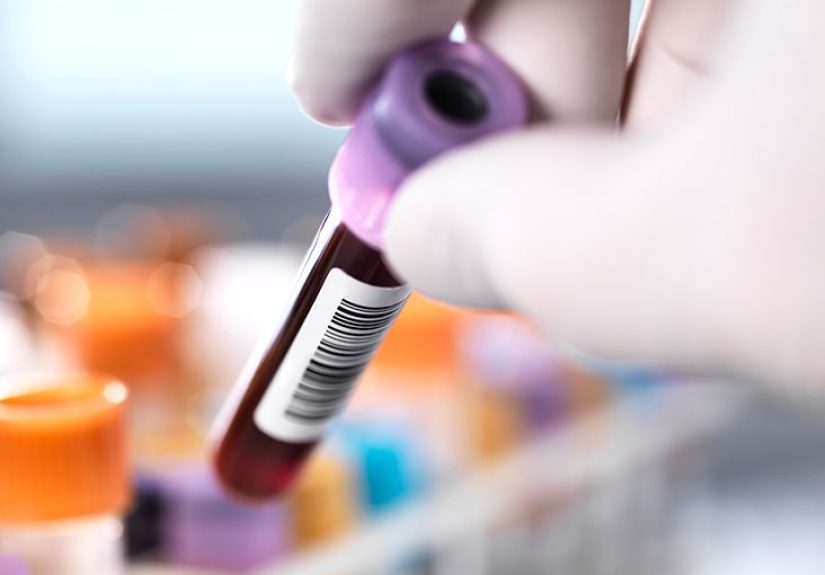
A small blood sample is collected and tested for how it reacts with antibodies. In ABO typing, the sample is mixed with
anti-A and anti-B reagents to see whether the cells clump (agglutinate). Rh testing checks for reaction with anti-D.
Labs may also use confirmatory methods (like reverse typing) depending on the setting and protocols.
Where you can get tested
- Primary care clinic: convenient if you’re already doing labs
- Hospital outpatient lab: common, especially if you’re having a procedure
- Direct-to-consumer lab testing: some services let you purchase an ABO/Rh test and visit a nearby collection site
When labs are the best choice
If your blood type will be used for anything beyond curiositylike pregnancy planning, surgery prep, or transfusion readiness
a certified lab test is the gold standard. It’s also the easiest “no-drama” way to get results you can put into a medical record.
At-home blood type tests: what they can (and can’t) do
At-home blood typing kits exist, and some are designed to identify ABO and Rh using a finger-stick sample and a test card.
Certain products have long-standing regulatory history as blood grouping systems.
How at-home kits generally work
Most kits use a card or slide with pre-applied reagents (anti-A, anti-B, and anti-D). You place a small blood sample as directed,
mix according to the kit instructions, and look for clumping patterns. The pattern corresponds to A, B, AB, or O and whether Rh is present.
If you’ve ever seen a science demo where one solution clumps and another stays smooth, it’s that conceptjust with higher stakes and better labeling.
Safety and accuracy tips (without turning your bathroom into a lab)
- Follow the kit instructions exactly (timing and sample size matter).
- Use single-use supplies and never share lancets or testing materials.
- Keep everything clean: wash hands, use the provided alcohol prep if included, and dispose of materials safely.
- Don’t use home results for emergencies: if a hospital needs your blood type, they will test it themselves.
- Repeat or confirm if anything looks unclear: “Maybe I’m A-ish?” is not a real blood type.
Who should skip at-home kits and go straight to a lab
- Anyone who’s pregnant or planning pregnancy and needs Rh information for care decisions
- Anyone with a history of transfusions, transplants, or blood disorders
- Anyone who needs results recorded for medical procedures
- Anyone who gets an unclear result at home
What about genetic tests that “tell you” your blood type?
The ABO blood group is strongly tied to genetics, and it’s possible to infer ABO type from certain genetic markers.
That said, clinical blood typing is based on how your blood cells react in real life, not just what your DNA predicts.
For medical decisionsespecially transfusion safetyserology-based blood typing in a lab is the standard.
Think of it this way: DNA can tell you what ingredients are on the shopping list. Blood typing tells you what’s actually in the fridge.
Both can be useful, but they’re not identical tools.
Understanding your results: ABO and Rh in everyday language
ABO basics
- Type A: A antigen on red cells; anti-B antibodies in plasma
- Type B: B antigen; anti-A antibodies
- Type AB: A and B antigens; no anti-A/anti-B antibodies (in ABO system)
- Type O: no A/B antigens; both anti-A and anti-B antibodies
Rh basics
If you have the Rh (D) antigen, you’re Rh positive. If you don’t, you’re Rh negative. Most people are Rh positive.
Rh status is especially important during pregnancy and transfusions.
Blood type compatibility: why matching matters (and when it’s “reversed”)
Compatibility rules depend on what’s being transfused (red cells vs plasma), and hospitals use strict protocols to prevent reactions.
A common headline fact is that O negative red cells are often treated as “universal donor” red cells in emergencies,
and AB positive individuals can receive a wide range of red cell types. But real-life transfusion decisions consider
many factors beyond ABO/Rh (including antibody screens and product availability).
Also interesting: the compatibility rules for plasma are essentially the reverse of red cells, which is why blood banks
are very specific about what product is being given.
Can your blood type change?
For most people, ABO and Rh stay the same for life. However, blood type can change in rare situationsmost notably after certain
stem cell or bone marrow transplants, where the donor’s blood-forming cells take over and can shift the recipient’s blood group over time.
This is uncommon, but it’s a real reason medical teams re-check blood type in specific scenarios rather than relying on old records.
How to store your blood type so it’s actually useful
Once you have a reliable result, store it in more than one place:
- Phone Medical ID: add it to your emergency information
- Wallet card: keep a note with ABO/Rh and the date/source (lab, donor center, etc.)
- Tell a trusted person: the friend or family member who would show up at the ER with you
A gentle warning: avoid “permanent” solutions like tattoos for medical data. Medical guidance and your health situation can change, and
hospitals will test you anyway.
Frequently asked questions
Is blood type included in routine blood work?
Usually, no. Blood typing is done when it’s medically necessary (pregnancy, transfusion planning, certain procedures) or when you request it.
Do siblings always have the same blood type?
Not necessarily. ABO type is inherited, and siblings can end up with different combinations depending on what they each inherited from their parents.
If I’m O, does that mean I’m automatically “healthy”?
Blood type doesn’t give you a health hall pass. It’s mainly about transfusion compatibility and certain specific medical contexts.
If anyone tries to sell you a personality profile based on ABO, enjoy it as entertainment, not science.
Bottom line
If you want the most reliable answer, get an ABO/Rh lab test or learn your type through a reputable blood donation center.
At-home kits can be a convenient curiosity-solver, but if the result will impact healthcare decisions, confirm it through a certified lab.
Once you know it, store it somewhere you can find it quicklybecause the worst time to go digging through portals is when you’re stressed,
sleep-deprived, and trying to remember your login password from 2019.
Experiences: real-life moments when knowing your blood type suddenly matters
Most people don’t wake up thinking, “Ah yes, today feels like a strong day to memorize my ABO/Rh.” Blood type awareness usually arrives the same way
most “adult knowledge” arrives: inconveniently, and with paperwork. One common moment is the first time someone donates blood. They go in expecting a
quick appointment and a juice box, and come out with a donor profile that quietly reveals a brand-new identity: “Hello, I am apparently B+.”
Suddenly, blood type stops being a trivia question and becomes a tiny badgeespecially if it’s rare. People who discover they’re O negative or AB negative
often find themselves fielding texts from friends like, “So… how do you feel about being everyone’s emergency backup plan?”
Another big “oh, this matters” moment is pregnancy care. Early prenatal visits often include blood work that checks Rh factor, because it can affect how
pregnancy is managed in certain situations. Even if everything is routine, learning Rh status makes the concept of blood type feel less abstract. People
who previously thought of blood type as a fun fact suddenly start thinking like a logistics manager: “If I ever needed blood, what would be compatible?”
It’s not panicit’s just awareness leveling up.
Then there’s the hospital scenario: a scheduled surgery, an unexpected ER visit, or even a family member needing a transfusion. Hospitals don’t rely on
guesswork, and they don’t rely on “my cousin told me I’m A positive.” They test. Still, patients often feel calmer when they already know their type,
because it turns one unknown into a known. It’s the same reason people like to know where the exits are in a movie theater: you probably won’t need them,
but your brain likes options.
At-home blood typing kits tend to show up in two types of households. First: the “I’m curious and I want to know now” household. Second: the “school project”
householdwhere someone bravely volunteers a finger-stick in the name of science. When used carefully and as directed, kits can feel oddly empowering.
There’s a small thrill in watching a result appear and realizing your body carries a biological label you’ve never actually seen before. The smartest users
treat it like a helpful hint, not a medical credential: they record it, and if it ever matters clinically, they confirm it through a lab.
Finally, there are the everyday-life momentstravel, sports, or just organizing personal health infowhere knowing your blood type fits into a bigger “be prepared”
mindset. Some people add it to their phone’s Medical ID after hearing a story about an accident where emergency responders checked the patient’s phone.
Others learn it because a family member needed blood and it sparked a chain reaction of curiosity. However it happens, the experience tends to end the same way:
with someone saying, “Honestly, that was easier than I thought,” and then immediately forgetting the password to their patient portal again.