Table of Contents >> Show >> Hide
- Why the Marines Needed a New “Ship-to-Shore” Ride in the First Place
- A Long, Bumpy Road: How the Marine Corps Got to “Yes”
- Meet the New Amphibious Ride: What the ACV Brings to the Table
- So What’s “Finally” About It? The AAV Era Is Closing
- Firepower Gets Real: The ACV-30 and the “More Than a Taxi” Debate
- What the ACV Means for Force Design and Future Amphibious Ops
- The Not-So-Fun Parts: Sea States, Testing, and Sustainment Reality
- Conclusion: The Marines Didn’t Just Pick a VehicleThey Picked a Direction
- Field Notes: What “Living With the New Amphibious Ride” Actually Feels Like
- SEO Tags
After decades of false starts, canceled programs, and “just one more upgrade” optimism, the Marine Corps has a real successor to its old amphibious workhorseand it’s already rolling (and swimming) into the fleet.
Why the Marines Needed a New “Ship-to-Shore” Ride in the First Place
Amphibious vehicles live a complicated life. One minute they’re bobbing in saltwater, the next they’re grinding through sand, then bouncing across broken terrain,
all while carrying a full load of Marines and gear. That job description is basically “be a boat, a truck, and a bunkerat the same time.”
For decades, the Marine Corps relied on the tracked Assault Amphibious Vehicle familyoften called the AAV, and affectionately nicknamed like a gator for
obvious reasons. The AAV’s roots go back to an era when “Bluetooth” sounded like a dental problem and the internet was still science fiction. It entered service in the early 1970s,
and while multiple upgrades kept it useful, time eventually won the argument.
The modern fight demands better protection, better reliability, and better networkingplus a vehicle that can keep up with evolving Marine concepts like distributed operations,
rapid littoral maneuver, and expeditionary missions that don’t come with neat roads and perfect weather forecasts.
The Big Problem With “Just Keep Upgrading It”
There’s a point where upgrades stop being smart and start being vehicle cosplay. You can swap engines, improve transmissions, and bolt on new weapon stations,
but you can’t change the fact that the platform was designed for the threat environment, survivability expectations, and technology base of a different century.
- Survivability: Modern threats (mines, blasts, and precision weapons) reward better hull design, seating, and armor integration.
- Reliability and sustainment: Aging fleets tend to become parts-hunting expeditions with wheels (or tracks).
- Capacity vs. protection tradeoffs: Adding armor and systems often eats payload and drives maintenance complexity.
- Modern “digital battlefield” demands: Command-and-control and situational awareness require space, power, cooling, and integration.
In other words: if your amphibious vehicle needs more babysitting than a golden retriever puppy, it’s time for a replacementnot another patch.
A Long, Bumpy Road: How the Marine Corps Got to “Yes”
The Marine Corps didn’t wake up one morning and casually decide to buy a brand-new amphibious combat vehicle. This decision was shaped by years of trial,
shifting requirements, and lessons learned about what actually works when saltwater, sand, and schedules collide.
From Big Dreams to Practical Reality
Over the years, the Marines explored ambitious approaches to replacing the AAV. But amphibious programs are notoriously hard: they involve ship integration,
ocean performance, land mobility, armor, and survivabilityall wrapped into one platform. When budgets tighten or requirements expand, these programs can stall fast.
The eventual answer was a more pragmatic path: field a modern, protected amphibious platform that can handle real-world ship-to-shore demands and continue inland,
while also supporting multiple mission variantsbecause the “one-size-fits-all” vehicle rarely fits anything perfectly.
Enter the Amphibious Combat Vehicle “Family”
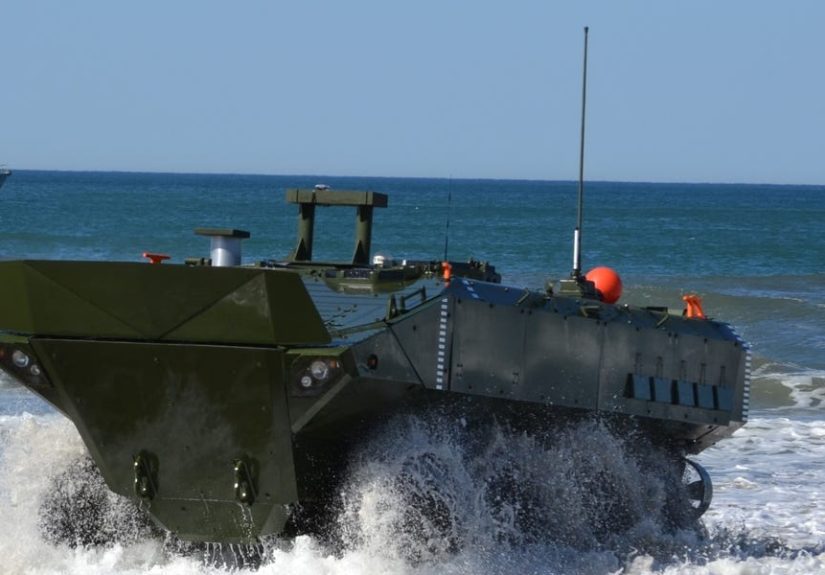
The chosen replacement is the Amphibious Combat Vehicle (ACV), an 8×8 wheeled amphibious vehicle that’s become the Marine Corps’ next-generation
ship-to-shore connector with armored bite. Instead of trying to do everything with one configuration, the ACV program emphasizes a family of variants
designed for different roles.
That matters because amphibious units don’t just need troop carriers. They need command vehicles to run a fight, recovery assets to pull damaged vehicles out of bad places,
and firepower variants to provide more than “strong opinions” when things get loud.
Meet the New Amphibious Ride: What the ACV Brings to the Table
The ACV is designed to move Marines from ship to shore and keep going inlandwithout the awkward moment where the vehicle looks at the beach and says,
“I’ve done my part. Good luck, everyone.”
The Core Idea: Protected Mobility, From Water to Land
At its heart, the ACV is about protected mobilitymoving Marines and equipment while improving survivability and integrating into modern operations.
The Marine Corps has treated it as a primary mobility tool for infantry forces at sea and ashore, emphasizing that it should provide direct fire support potential,
not just transportation.
The Variants That Make It a Real Replacement (Not a Single-Trick Pony)
The ACV program has planned multiple variants to cover the kinds of jobs amphibious formations actually do:
- ACV-P (Personnel): Built to carry a crew plus a combat-loaded infantry squad-sized element and sustainment essentials.
- ACV-C (Command & Control): A command post on wheelsworkstations, communications, and battle-management space.
- ACV-R (Recovery): Built to recover and support vehicles in the field, so a breakdown doesn’t become a multi-day drama.
- ACV-30: Adds a stabilized 30mm remote turret for improved lethality without turning the troop compartment into a cramped apology.
Capacity, Protection, and “Room to Do the Job”
A key part of the ACV story is balancing protection with carrying capacity. The Marine Corps has described the ACV-P as carrying a three-person crew and
a passenger load that supports infantry movement along with equipment and supplies, while retaining the ability to transition between water and land operations
as part of real amphibious missions.
The ACV-C variant matters just as much: amphibious assaults and littoral operations are coordination-heavy, and a command vehicle that can keep communications and
situational awareness humming is the difference between “organized violence” and “group project gone wrong.”
So What’s “Finally” About It? The AAV Era Is Closing
The biggest sign that the Marine Corps truly “picked” its successor is that the old fleet is being formally put out to pasture. The AAV didn’t just fade away quietly;
it received official decommissioning milestones and ceremonies that marked a clear transition to the ACV as the next platform.
Why Retirement Matters More Than Headlines
Defense acquisition can look like a slow-motion parade from the outsidecontracts, test articles, initial deliveries, more contracts, more tests, more deliveries.
What makes this moment meaningful is that the Marine Corps is not treating the ACV like a science experiment anymore. It’s a program with variants, production contracts,
deployments, and a growing operational footprint.
That’s the difference between “we might replace the AAV someday” and “we are replacing it now.”
Firepower Gets Real: The ACV-30 and the “More Than a Taxi” Debate
One of the most common arguments about armored troop carriers is whether they should be “battle taxis” or whether they should contribute meaningfully to the fight.
The Marine Corps has been explicit that the ACV family includes an improved lethality optionthe ACV-30.
Why a 30mm Remote Turret Changes the Conversation
The shift to a stabilized 30mm remote turret matters for three reasons:
- Stand-off and precision: More reach and accuracy than older light weapon stations typically provide.
- Protection: Remote operation helps keep crew under armor rather than exposed.
- Role flexibility: Helps the platform contribute to suppressive fires and threat engagement in complex terrain.
Importantly, the Marine Corps’ approach has aimed to add firepower without sacrificing the core reason the vehicle exists: moving Marines and equipment.
That’s a classic amphibious design tensionevery pound added to lethality and protection is a pound you can’t spend elsewhere.
Production Momentum: Contracts and Scaling
The ACV-30 moved through testing and into production decisions as the Marines worked through cost, integration, and procurement pacing.
The result is a program that’s now stacking ordersan unglamorous but deeply important sign that the vehicle isn’t stuck in “PowerPoint phase.”
What the ACV Means for Force Design and Future Amphibious Ops
The ACV isn’t just a replacement; it’s a piece of a broader modernization effort. Under Force Design thinking, the Marine Corps has emphasized agility,
distributed operations, and the ability to operate in contested littorals. Amphibious vehicles fit that world because they let Marines move between sea and land
without waiting for perfect ports, perfect roads, or perfect timelines.
Why “Wheels” Are a Feature, Not a Bug
Some people hear “wheeled amphibious vehicle” and picture something that belongs at a beach resort. In practice, wheels bring advantages:
road speed, reduced track maintenance burdens, and easier long-distance movement once ashore. Tracks have their own strengths,
but the Marine Corps’ ACV choice reflects a desire for a balanced platform that can deploy, swim, and then cover distance inland efficiently.
Variant Strategy: Building a Real Amphibious Team
A single vehicle type can’t do everything well. The ACV family strategy means amphibious units can build task-organized packages:
- Personnel carriers to move infantry and supplies
- Command vehicles to coordinate fires, maneuver, and communications
- Recovery vehicles to keep the formation moving when things break
- 30mm variants to bring improved direct fire capability
That mix is how a formation stays combat-credible over timenot just in the first hour of an operation, but in the frustrating middle parts where maintenance,
resupply, and coordination decide whether you’re advancing or stuck.
The Not-So-Fun Parts: Sea States, Testing, and Sustainment Reality
Amphibious operations are an unforgiving stress test. Water doesn’t care that you had a great acquisition strategy.
It cares about surf, weight, buoyancy, and whether you remembered that saltwater is basically nature’s way of speed-running corrosion.
Surf and Open-Ocean Rules Exist for a Reason
The ACV has gone through training incidents and operational pauses that led to revised operating guidance and a return to open-ocean operations.
That’s not a sign the program is failing; it’s a sign the Marine Corps is treating amphibious performance seriously and adjusting rules based on data.
Maintenance and Parts: The Quiet Battle
New vehicles don’t automatically mean easy sustainment. Any modern platform depends on a supply chain, repair parts, and trained maintainers.
Program reports have highlighted sustainment considerations and long-lead parts challengesexactly the sort of thing that never trends on social media,
but absolutely determines whether a vehicle is actually available when units need it.
Costs and Quantities: Why “How Many” Keeps Changing
One of the most misunderstood parts of defense acquisition is that quantities can shift not because a program is broken, but because the force structure changes.
The Marine Corps’ modernization decisions have reshaped how many vehicles are needed, which variants matter most, and how procurement is paced.
The ACV program’s planned objective has been described as aligning with modernization efforts rather than the older, larger-number fleet assumptions.
Conclusion: The Marines Didn’t Just Pick a VehicleThey Picked a Direction
Replacing a legacy amphibious fleet isn’t like buying a new pickup. It’s more like replacing a floating, armored ecosystem that has to work with ships,
training pipelines, logistics, and doctrine. The Marine Corps’ ACV decision is “final” in the only way that matters in real life:
the vehicle is in the force, scaling through production, expanding into variants, and taking over the mission as the AAV era ends.
The ACV family is built around a realistic view of amphibious warfare: Marines need protected mobility from ship to shore, command-and-control that can move with the fight,
recovery capability that prevents small problems from becoming mission kills, and (in the ACV-30) a boost in lethality that helps the formation do more than just arrive.
If the AAV was the tough old gator that carried generations of Marines, the ACV is the modern upgrade with better protection, better integration, and a modular approach that
fits how the Marine Corps expects to operate next. It’s not flashy for the sake of being flashy. It’s practicalby Marine standards, that’s basically romantic.
: experiences section
Field Notes: What “Living With the New Amphibious Ride” Actually Feels Like
The internet loves specs. Marines love something simpler: “Does it work when the day goes sideways?” Because the day always goes sideways. In real units,
“experience” with a new amphibious vehicle isn’t a cinematic montageit’s wet boots, long checklists, and the kind of learning that happens when a vehicle meets
saltwater, surf, and a timeline that does not care about your feelings.
Start with the basics: embarkation and ship integration. Amphibious vehicles don’t just drive out of a garage; they live in the ecosystem of Navy ships,
well decks, and embarkation schedules. Crews get used to the choreography: staging, loading, securing, and then the moment the ramp drops and the vehicle becomes a boat.
That transition is where confidence is builtor where you discover which procedures everyone needs to rehearse one more time. The Marine Corps has adjusted rules and guidance
after training incidents, and that kind of institutional muscle memory shows up in how carefully units approach sea conditions and drills.
Then there’s the surf zone, the place where physics turns into an unpaid supervisor. Operators talk less about “maximum speed” and more about how the vehicle
behaves when the water is messy. The practical experience is learning how to keep spacing, how to read the water, and how to execute immediate-action drills so that if something
goes wrong, it becomes a controlled problem instead of a chaotic one. When guidance changeslike surf limitationsunits feel it in training plans, risk decisions, and
the way leaders brief missions. It’s not glamorous, but it’s what keeps amphibious operations real.
Ashore, experience becomes a story about mobility and endurance. An 8×8 platform changes the rhythm of movement compared to older tracked vehicles.
On roads and hardpack terrain, crews appreciate the ability to cover distance without the same “track-life drama” that can dominate maintenance schedules.
On rough ground, the vehicle still has to prove itself: can it keep up with the formation, handle long movements, and keep systems stable when everything is shaking?
That’s where driver training, preventative maintenance, and crew discipline matter more than internet arguments.
The command-and-control experience is a quiet revolution. A command variant isn’t exciting until you’re the one trying to track friendly units, manage
communications, and maintain situational awareness while moving. When it works, it feels like the fight has structure; when it doesn’t, everything becomes slower and riskier.
Operators tend to value space, power, and reliable comms integration because those are the things that keep a distributed amphibious formation from becoming disconnected.
Finally, there’s the part nobody puts on a recruiting poster: maintainers. New platforms create new habits. Mechanics learn the vehicle’s “personality”
what breaks first, what needs constant attention, which parts are long-lead, and how quickly a minor issue can cascade if ignored. Program reporting has highlighted supply and
repair-part realities, and in the fleet that translates into practical workarounds: tighter inspections, smarter parts forecasting, and a culture that treats readiness like
a daily job, not a quarterly metric. When a recovery variant enters the mix, it changes the lived experience of a unit because it reduces the number of “all-hands
improvisation” moments needed to get a deadlined vehicle moving again.
Put all that together and the experience of “the Marines finally picked a new amphibious vehicle” stops being a headline and becomes a pattern: more training reps, better
procedures, more predictable sustainment, and vehicles that show up ready to work. In Marine terms, that’s the highest compliment available: the ACV becomes boring in the best way
because it’s doing its job.