Table of Contents >> Show >> Hide
- Meet the Dupont de Ligonnès Family
- The Murders Beneath the Terrace
- The Last Known Trail of Xavier
- Police Work, False Leads, and a Global Manhunt
- Inside the Mind of a Suspected Family Annihilator
- Why This Case Won’t Let Go of the Internet
- Lessons We Can Take From the Case
- Experiences and Reflections on a Vanishing Suspect
- Conclusion
- SEO Summary and Meta Information
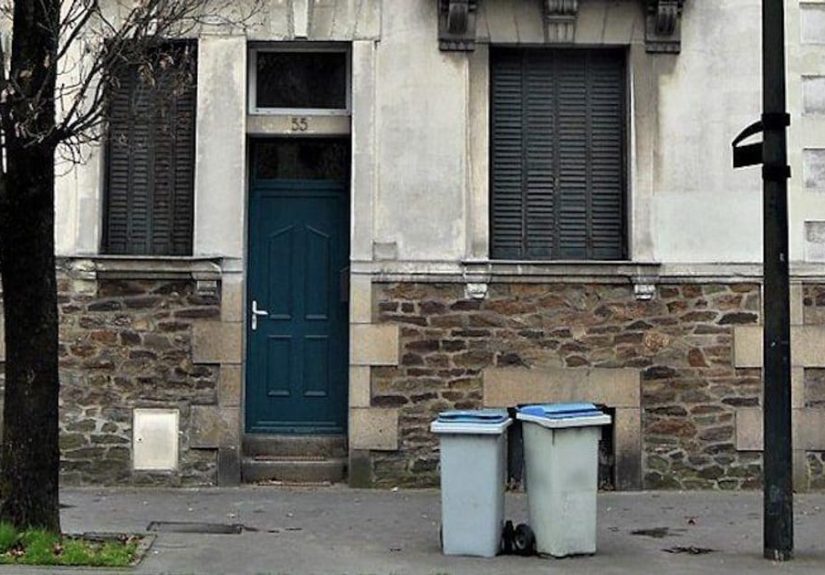
In April 2011, police in the French city of Nantes made a grim discovery under the back terrace of a seemingly ordinary townhouse: the bodies of a mother, her four children, and the family’s two dogs. The father, 50-year-old businessman Xavier Dupont de Ligonnès, was nowhere to be found. Within days he went from “concerned missing parent” to the prime suspect in what the media quickly dubbed a “house of horror.” And then, just as suddenly, he vanished too.
More than a decade later, “What happened to Xavier?” is still one of the biggest true-crime questions in Europe. Was he a meticulous family annihilator who executed an escape plan worthy of a spy movie? Did he die in the French countryside, his body never found? Or is he quietly living under a new identity, occasionally popping up in suspicious Facebook photos and blurry supermarket sightings?
This deep dive unpacks the case of the Dupont de Ligonnès family murders, the eerie disappearance of Xavier, the worldwide manhunt, and the still-growing internet obsession with an unsolved mystery that refuses to fade. Along the way, we’ll look at the theories, the media misfires, and what this case reveals about money, image, and the pressure to appear “perfect” at any cost.
Meet the Dupont de Ligonnès Family
Before the headlines, the family looked like a comfortable, upper-middle-class clan. Xavier came from a long line of aristocratic French ancestors and had grown up with a strong sense of status and pride in his family name. He presented himself as a businessman and entrepreneur, juggling small companies and consulting gigs that didn’t always pay the bills.
His wife, Agnès, worked at a Catholic school and was described by colleagues as kind and devoted, if sometimes anxious. Their four children Arthur, Thomas, Anne, and Benoît were teenagers and young adults: into music, films, school, and normal life. The family attended Mass, sent their kids to Catholic schools, and lived in a neat townhouse in Nantes with two Labrador dogs. On paper, they looked like a postcard version of stability.
In reality, the family’s finances were crumbling. Xavier’s ventures weren’t bringing in steady income, debt collectors were knocking, and the family was living above their means. Friends later described Xavier as proud, secretive, and increasingly stressed a man who seemed trapped between an expensive lifestyle and the harsh reality of unpaid bills.
The Murders Beneath the Terrace
In early April 2011, the family’s routines quietly broke. One by one, the children stopped showing up at school or college. Agnès didn’t return to work. Neighbors noticed closed shutters and an eerie stillness in the house. But instead of sirens and chaos, there were letters and excuses.
Schools and employers received messages saying the family was moving to Australia for an urgent job transfer. A typed letter to relatives claimed something even stranger: that Xavier had secretly been working for the U.S. Drug Enforcement Administration and the whole family had entered witness protection in America. It sounded like a TV plot which is exactly why, at first, some people didn’t know what to believe.
When police finally entered the house in mid-April, they saw an oddly tidy, partly emptied home and some curious building work on the back patio. When officers looked beneath the freshly laid terrace, they discovered the bodies of Agnès and the four children, buried with the family dogs and covered with quicklime. Autopsies later suggested the victims had likely been drugged and then shot while in bed, using a .22-caliber rifle that Xavier had inherited from his father a few months earlier.
By the time the bodies were found, there was one person missing: Xavier himself.
The Last Known Trail of Xavier
Once the bodies were discovered, the clock started ticking. Investigators quickly retraced Xavier’s steps. CCTV and bank records showed him leaving Nantes, driving south through France, and staying in a series of budget and mid-range hotels.
- He rented hotel rooms under his own name and a variation of it.
- He paid with his own bank card not exactly subtle fugitive behavior.
- He was last clearly seen on camera at a low-cost hotel in Roquebrune-sur-Argens, near the Mediterranean coast.
On April 15, 2011, he checked out of that hotel, left his car in the parking lot, and disappeared on foot into the surrounding countryside. That’s the last confirmed, undisputed sighting of Xavier Dupont de Ligonnès.
After that, the theories start multiplying:
- Suicide theory: Some investigators and experts believe he may have killed himself in a remote area, and his remains were simply never found. The terrain around Roquebrune-sur-Argens includes forests, rocky hills, and caves places where a body could easily go unnoticed.
- On-the-run theory: Others think the trip south was the start of a carefully planned escape, not the end of the road. The letters about witness protection, the closure of bank accounts, the sale of belongings, and the methodical murders suggest preparation, not panic.
- Religious retreat theory: Because of Xavier’s contacts with religious groups and his mother’s involvement in a small mystic-Catholic circle, some suspect he might have hidden in a monastery or religious community under another name.
Police Work, False Leads, and a Global Manhunt
From 2011 on, French authorities treated Xavier as the main suspect in the murders. An international arrest warrant was issued, his face went up on wanted lists across Europe, and tips began to pour in. People claimed to have seen him in France, Spain, Italy, South America basically everywhere with a café and a coastline.
The most spectacular twist came in October 2019, when Scottish police arrested a man arriving at Glasgow Airport on a flight from Paris. Early reports loudly announced that the long-sought fugitive had finally been captured. The French press and global media ran with the story: “Xavier has been found!”
Except he hadn’t. After fingerprint and DNA testing, authorities admitted the obvious: the man was not Xavier, but an entirely innocent French retiree visiting his Scottish wife. The media had to walk back the story, while the poor man had to deal with the unique trauma of being globally mistaken for a suspected family annihilator.
The Glasgow fiasco became a textbook example of how true-crime obsession, 24-hour news, and incomplete information can combine into a perfect storm of “Oops.” Academic analyses have since used that episode to highlight how newsrooms can correct course (or fail to) when they fall for a sensational narrative.
The tips haven’t stopped. In 2024, French media reported that police were checking information about a possible sighting of a man resembling Xavier at a convent in eastern France another reminder that the case is still very much open. As of late 2025, however, there is still no confirmed trace of him.
Inside the Mind of a Suspected Family Annihilator
Why would a father who appeared close to his children and concerned about status, faith, and family reputation choose to wipe them all out? There’s no single answer, but several overlapping factors show up across analyses of the case:
- Financial collapse: Xavier’s business failures and mounting debt put him under intense pressure. He had bailiffs at the door and no realistic way to maintain the lifestyle he’d cultivated.
- Image and shame: Friends say he feared humiliation and losing status. To someone whose identity is built on pride and social image, public financial ruin can feel like a kind of social death.
- Religious and mystical beliefs: Recent psychological work on the case has emphasized a possible “mystical” dimension suggesting Xavier may have seen the killings as a twisted way to “save” his family from dishonor or apocalypse, rather than face reality.
None of this explains or excuses the brutality. But it does fit a pattern seen in other family-annihilation cases: a controlling parent, mounting stress, a secret crisis, and a catastrophic decision fueled by ego, desperation, and distorted beliefs.
The chilling detail is how methodical it appears. The purchase of lime and DIY materials, the letters, the careful staging of a move abroad these actions suggest planning over panic. It’s the cold, administrative side of horror: canceling school enrollments, closing accounts, signing resignation letters, all while the bodies are literally hidden under the terrace.
Why This Case Won’t Let Go of the Internet
Plenty of tragic family murder cases fade from public view. This one hasn’t, and there are a few reasons:
- The “vanishing act” factor: The last clear image Xavier walking calmly out of a budget hotel feels like the end of a thriller right before the credits roll. It leaves viewers with a permanent question mark.
- The double mystery: We don’t just ask “Why were they killed?” but also “Where is he now?” That double layer of unknown keeps the story alive.
- The social-media era: The case has been featured in documentaries, podcasts, and shows like Unsolved Mysteries, sparking waves of online sleuthing, new “sightings,” and intense Reddit-level speculation.
- False closure moments: Incidents like the Glasgow misidentification temporarily convince people the story is over, only for it to snap back open again.
Add in the aristocratic background, the religious overtones, the witness-protection letter, and the eerie normality of the family photos, and you get a case that feels almost scripted except it isn’t.
Lessons We Can Take From the Case
While most of us will (thankfully) never encounter anything remotely like this in real life, the Dupont de Ligonnès case highlights some uncomfortable truths:
- Appearances can be dangerously misleading. A church-going family in a decent neighborhood, with polite children and a smart-looking father, can hide deep financial and psychological cracks.
- Financial shame is powerful. In many societies, people will go to extreme lengths rather than admit financial failure. It doesn’t lead most people to homicide, of course but it does drive secrecy, stress, and sometimes desperate choices.
- Media responsibility matters. The Glasgow incident showed how quickly the hunger for a neat ending can override caution. Real people get hurt when headlines outrun facts.
- Communities notice more than they think. Neighbors had noticed strange details closed shutters, howling dogs, sudden silence. In hindsight, these red flags seem glaring; in the moment, they’re easy to rationalize away.
Ultimately, this story serves as both a mystery and a cautionary tale about pride, secrecy, and how far someone might go to control the narrative of their own life even if it means destroying everything in it.
Experiences and Reflections on a Vanishing Suspect
Beyond the timeline and the theories, the Dupont de Ligonnès case is also about lived experiences those of investigators, relatives, neighbors, and even ordinary people who’ve followed the story from afar. If you’ve ever found yourself deep in a late-night rabbit hole about this case, you’re not alone.
The Investigators’ Long Shadow
For detectives, an unsolved case doesn’t simply “end.” Many officers who worked on the Nantes murders have spent years revisiting tips, checking potential sightings, and returning to the same few unanswered questions: Did they miss a clue in those first days? Did Xavier have help? Is he alive, or are they chasing a ghost?
Imagine being the officer who reviewed the terrace work the first time, or the one responsible for tracking Xavier’s last known movements. Every new lead from the Glasgow airport drama to rumors of a monastery sighting pulls the case out of the filing cabinet and back onto the desk. There’s a kind of emotional whiplash: hope for closure, followed by the letdown when DNA or fingerprints say, “No, not him.”
In long-running cases like this, investigators talk about feeling a strange mix of professional stubbornness and personal attachment. Even if they move on to other assignments, the name “Dupont de Ligonnès” still has the power to make them pause and wonder: “Did we ever really get close?”
Neighbors Living With a Crime Scene
Then there are the people who lived on the same street the ones who used to wave at the family on their way to school. Their experience is another layer of this story. For them, the house isn’t just a headline; it’s a physical place they pass on walks, a property that has changed hands, a patio that once hid a secret no one wants to imagine.
Some former neighbors have spoken about the guilt of hindsight: the dogs howling at night, the closed shutters, the mysterious silence. At the time, those details were odd but not necessarily alarming. After the discovery, every little memory feels like a missed warning sign. That emotional backtracking “Should I have called the police sooner?” is a heavy weight for people who were, in reality, just living their lives.
The house itself becomes almost haunted in a social sense. Even years later, people still point it out to visitors: “That’s the place.” It’s a reminder that sensational crimes leave lingering marks not just on families, but on entire neighborhoods.
Online Sleuths and True-Crime Fans
If you’ve ever joined a forum thread or Reddit discussion about this case, you already know how intense the online community can be. Amateur sleuths analyze photos from the last hotel stay, pore over the wording of the letters, and compare witness accounts like they’re running their own cold-case squad.
On the positive side, online communities can keep a case alive, share translations of French-language reporting, and sometimes surface new details or contacts. People who follow the case over years develop a kind of emotional investment a desire for justice, empathy for the victims, and curiosity about the truth.
But there’s a darker side too. False identifications and over-confident “he’s definitely this guy on Facebook” posts can drag innocent people into the spotlight. The Glasgow airport fiasco is a high-profile example of how quickly that can happen when rumor outruns confirmation. In smaller ways, every wild theory about “this man in a blurry supermarket CCTV clip” has a real person on the other end.
For readers, the healthiest way to engage with a case like this is with a mix of curiosity and humility: being interested, but also remembering that behind every plot twist are real human beings victims, relatives, and sometimes wrongly accused bystanders.
What It Feels Like to Follow an Unfinished Story
Part of the fascination with the Dupont de Ligonnès case is emotional, not just intellectual. It’s the feeling of living with an open tab in your mental browser. Every time you see a headline about an update a new book, a rumored sighting, a fresh analysis by a psychiatrist you click, wondering: “Is this finally it?”
And yet, so far, the answer is always “no.” That pattern creates a rhythm of low-grade suspense. It’s not the intense shock of breaking news; it’s the steady, background hum of an unsolved story. For some people, that hum is a reminder of how fragile normal life can be. For others, it sparks uncomfortable questions about how well we know the people closest to us, and how much stress a person can hide behind a polite smile.
In the end, following this case is like reading a novel with the last chapter missing. You learn everything you can about the characters, the setting, the motives, and the foreshadowing. You speculate, argue, make lists of favorite theories. But unless there’s a dramatic breakthrough a body found, a confession, a definitive identification you have to live with the possibility that the final answer may never arrive.
That, strangely enough, might be the most human part of the whole story. Real life doesn’t guarantee closure. The Dupont de Ligonnès case reminds us that some questions remain hanging in the air, no matter how much we analyze them. The best we can do is honor the victims, stay critical of easy narratives, and treat unsolved mysteries with the seriousness they deserve even when they’re compelling enough to binge-watch.
Conclusion
The murders of the Dupont de Ligonnès family and the disappearance of Xavier sit at the intersection of family tragedy, financial collapse, religious obsession, media spectacle, and the modern true-crime machine. We know a lot about what happened in Nantes in April 2011. We know the bodies were buried under the family terrace, that the father carefully closed accounts and sent letters, and that he walked away from a hotel in southern France and vanished into thin air.
What we don’t know where he is, what ultimately became of him, and what went through his mind as he carried out each step is what keeps this case alive. Until there’s a definitive answer, “Xavier Dupont de Ligonnès vanished after his family was murdered” will remain less a headline and more a haunting, unfinished sentence.
SEO Summary and Meta Information
meta_title: Xavier Dupont de Ligonnès Vanished After His Family Was Murdered
meta_description: Inside the unsolved case of Xavier Dupont de Ligonnès, the Nantes family murders, and the global hunt for a father who vanished after his family was killed.
sapo: In 2011, a seemingly ordinary French family vanished from their Nantes townhouse. Days later, police found the bodies of a mother, four children, and two dogs buried under the back terrace but the father, businessman Xavier Dupont de Ligonnès, was gone. Suspected of methodically killing his family and then staging their disappearance, Xavier walked out of a budget hotel in southern France and was never seen again. This in-depth guide unpacks the chilling timeline, the psychological and financial pressures behind the case, the media’s biggest missteps, and the enduring mystery of a suspect who may have died in the woods or could still be hiding in plain sight.
keywords: Xavier Dupont de Ligonnès, Nantes family murders, French unsolved mystery, vanished after killing family, house of terror case, true crime France, missing fugitive story
: