Table of Contents >> Show >> Hide
- Welcome to the Internet’s Most Unexpected Treasure Hunt
- What Is This Online Group All About?
- Types of Unexpected Finds That People Love to See
- Why We Love Sharing Unexpected Finds Online
- How to Capture and Share Your Own Unexpected Discoveries
- What These Random Discoveries Quietly Teach Us
- Real-Life Experiences: Living in a World Full of “Plot Twists”
- Final Thoughts
Every now and then, the universe throws us a curveball: a mysterious metal box hidden under the floorboards, a newspaper from 1912 stuffed behind a wall, or a perfectly preserved pendant that hasn’t seen daylight in centuries. Most of us would snap a photo, freak out a little, and immediately ask the internet, “Okay, what did I just find?” That’s exactly the energy behind the viral Bored Panda feature, “50 Times People Found Such Unexpected Things, They Just Had To Share The Pics In This Online Group.”
The photos in that gallery come from a niche but surprisingly active online community, where people post the coolest, strangest, and most unexpected things they stumble across in everyday life. Think of it as a constantly updated time capsule curated by random strangers with good cameras and even better luck.
In this deep dive, we’ll unpack what makes these unexpected discoveries so addictive to scroll through, why people feel compelled to share them, and how you can capture and share your own “wait, what?!” moments in a way that delights your followers and respects the story behind each find.
Welcome to the Internet’s Most Unexpected Treasure Hunt
The Bored Panda article highlights an online group that feels like a cross between a museum, a detective club, and your grandparent’s attic. Many of the pics are sourced from communities like the “Took You Long Enough” group and similar subreddits dedicated to unexpected finds, where tens of thousands of members post photos of things they unearthed in old houses, flea markets, construction sites, and dusty storage units.
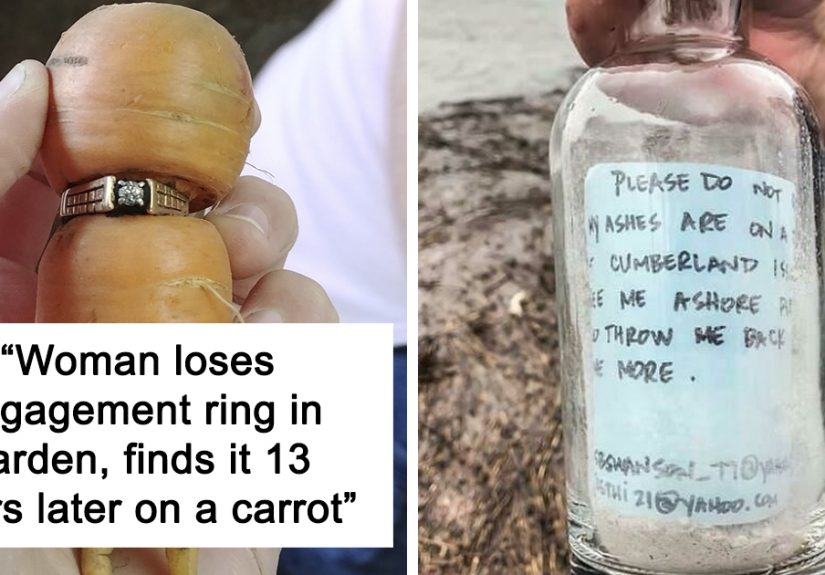
One minute, you’re looking at an old coin purse lost 100+ years ago; the next, you’re staring at a newspaper from a world-changing day, or a ring recovered from a garden after who knows how many decades. These aren’t polished museum pieces. They’re everyday objects that somehow slipped through time and landed in our feeds.
That mix of history, mystery, and serendipity is exactly what makes people stop scrolling and lean closer to the screen.
What Is This Online Group All About?
From Attics to Job Sites: Where the Magic Happens
The charm of this online group is that there’s no “right” place to find something cool. People post unexpected things they’ve discovered:
- Inside walls and under floors – Old wallets, handwritten letters, ration books, or toy cars that probably caused huge drama when they were “lost forever.”
- In the dirt – Vintage coins, pendants, military tags, or fragments of pottery dug up while gardening or working on a construction site.
- At thrift stores and flea markets – One-of-a-kind handmade items, oddly specific photo albums, or clothing with personal notes still in the pocket.
- In inherited houses or barns – Bins of photos, carefully folded letters, or tools that tell a story about a life lived in another era.
None of these finds were discovered in a perfectly curated museum display. They were sitting quietly in a wall, a box, a field, or a dusty corner of a garage, waiting for someone curious enough to notice.
The Spirit of “Took You Long Enough”
A recurring theme in posts from this community is the sense that the item has been waiting a long time to be found. The caption practically writes itself: “Well, this took a while.”
When someone unearths a coin purse from over a century ago or a pendant dated 1790-something, it doesn’t just feel like a cool object. It feels like the universe just handed them a mini time capsule. Comment sections quickly fill with people trying to identify dates, makers’ marks, symbols, and historical context. Suddenly, what was just “some old thing in the dirt” becomes a group research project.
That collaborative curiosity is a big part of the group’s appeal: you’re not just scrolling, you’re low-key co-investigating.
Types of Unexpected Finds That People Love to See
The original Bored Panda collection showcases a wide range of surprising discoveries. While the exact photos vary, most of them fall into a few irresistible categories that tend to go viral again and again.
1. Forgotten Time Capsules from Everyday Life
Some of the most popular posts involve things that were clearly never meant to be famous. Think:
- Grocery lists from the 1940s, with prices that make modern shoppers cry a little.
- Old class photos tucked behind a dresser, complete with mysterious names scribbled on the back.
- Receipts or pay stubs from long-gone companies that once anchored a town’s economy.
These finds don’t look dramatic at first glance, but they quietly answer questions like: What did people buy? How much did they earn? What did a normal day look like 60 or 100 years ago? For history lovers, it’s like hitting the jackpot in the middle of a renovation project.
2. Objects That Survived Against All Odds
Another fan favorite: items that simply should not have survived as long as they did. You’ll see posts featuring:
- Leather purses and bags that somehow stayed intact under floorboards for generations.
- Photographs with only minor fading, despite being wedged in a wall cavity for decades.
- Jewelry or medals that still gleam after being buried underground.
These pieces humanize the past. You can’t help but think about the person who last held that object and wonder when they realized it was goneor if they ever did.
3. Historical Oddities and “What Is This Thing?” Mysteries
Then there are the mystery objects: strange tools, mechanical parts, or symbolic trinkets that no one under 60 recognizes at first glance. Posters upload a photo along with a plea:
“Internet, what on earth is this?”
The comments inevitably fill with theories: some wild, some educated, some hilariously wrong. Eventually, a retired electrician, a historian, or a hyper-specific hobbyist shows up and says something like, “That’s a 1920s voltage tester used in early rural electrification projects.” Boommystery solved.
That collective “aha!” moment is part of what makes these posts so shareable. People love watching strangers work together to crack a tiny puzzle from the past.
4. Personal Stories Hidden in Everyday Stuff
Some finds are less about the object and more about the story attached to it:
- A love letter hidden in a book, never mailed.
- Photobooth strips tucked into a box of junk, showing a couple laughing decades ago.
- A child’s drawing carefully folded and stored inside an old coat pocket.
These are the posts that make you unexpectedly emotional at 2 a.m. They remind us that every house, every thrift-store shelf, every attic holds echoes of people who lived whole lives before we ever arrived.
Why We Love Sharing Unexpected Finds Online
The popularity of galleries like “50 Times People Found Such Unexpected Things” isn’t just random. There’s actual psychology behind why these posts are so appealingand so shareable.
Research on social media behavior has shown that we tend to share content that:
- Sparks strong emotions like awe, amusement, or curiosity.
- Helps us express who we arefor example, “I’m the kind of person who loves history and weird facts.”
- Makes us feel connected to others who enjoy the same kind of content.
- Feels novel or surprising, breaking through the sameness of our feeds.
Unexpected discoveries tick all those boxes. They’re visually interesting, emotionally engaging, and just strange enough to stand out amid selfies, food pics, and the usual algorithm-driven chaos.
When someone shares a photo of a century-old item they just found, they’re not just saying “look at this thing.” They’re saying, “Look at this tiny piece of human history the universe dropped in my lapand now I’m dropping it into yours.”
How to Capture and Share Your Own Unexpected Discoveries
You may never stumble across a 227-year-old pendant or a forgotten wartime ration bookbut odds are, you’ll find something surprising at some point. Here’s how to share it in a way that resonates with people and respects the story behind it.
1. Take Clear, Respectful Photos
- Use natural light when possible. A window or open door is your best friend.
- Photograph from multiple angles so details like dates, logos, or engravings are visible.
- Include context if appropriatea bit of the wall, the soil, or the room where it was found can help tell the story.
- Avoid showing identifying information about private individuals who might not want their details online (addresses, phone numbers, full names, etc.).
2. Write a Short but Engaging Caption
A good caption can turn a “neat object” into a “wow, I need to share this” moment:
- Set the scene: “Found this behind a wall while renovating our 1920s house.”
- Add key details: date stamps, names, or any markings you can read.
- Ask for help: “Any idea what this tool was used for?” invites engagement.
- Stay humble: You don’t have to pretend to be an expert; curiosity is more relatable.
3. Respect the History (And the People)
Not every find is just a quirky trinket. Some may have personal or cultural significance:
- If you find military tags or personal documents, consider whether they can be returned to a family or local historical society.
- Be cautious about sharing sensitive content that could embarrass or harm someone, even if they’re no longer around.
- If the find relates to a specific culture or community, take a moment to research before making assumptions or jokes.
Treat discoveries like stories you’ve been temporarily trusted withnot just content for clicks.
What These Random Discoveries Quietly Teach Us
At first glance, a gallery of unexpected finds is just fun, scrollable content. But if you sit with it for a minute, there’s a deeper theme running through all those photos.
- Nothing is truly “gone”it’s just hiding. Lost items, long-forgotten letters, and buried objects keep existing quietly until someone curious enough rediscovers them.
- Every place has layers. Your home, your neighborhood, that old building downtownthey’re all built on top of other people’s stories.
- The ordinary can become extraordinary with time. Today’s grocery receipt might be tomorrow’s fascinating artifact.
That’s part of why galleries like “50 Times People Found Such Unexpected Things” are so compelling: they remind us that we’re part of an ongoing story, not just isolated characters scrolling our phones.
Real-Life Experiences: Living in a World Full of “Plot Twists”
You don’t have to be a professional historianor even particularly luckyto experience the magic of unexpected discoveries. Many people have small but memorable “Bored Panda moments” in their everyday lives. They might not all make it into a viral gallery, but they shape how we see the world.
Maybe you’ve had one of these experiences:
- The thrift-store time warp: You pick up a random jacket, slip your hand into the pocket, and pull out a decades-old movie ticket or a handwritten note. Suddenly, you’re wondering who wore it, where they were going, and whether the night went the way they hoped.
- The renovation surprise: You peel back a layer of wallpaper and find another pattern underneath itand then another. Each layer is its own era, its own taste, its own family trying to make the same space feel like home.
- The family attic reveal: A dusty box that someone meant to organize “someday” turns out to be filled with letters, recipes, or photos that answer questions you didn’t even know you had about your relatives.
- The sidewalk mystery: You spot a tiny metal plaque, an oddly shaped brick, or some faint lettering on stone that hints at a business, event, or person long gone.
These kinds of small discoveries change how you move through the world. Instead of seeing your environment as static, you start to understand it as layered. The coffee shop used to be a hardware store. The apartment used to be a family home. The park might have been farmland, or even something else entirely.
When you share these moments onlinewhether it’s in a big community or just with a handful of friendsyou’re doing more than posting a cool picture. You’re inviting other people to see their own surroundings as potential story mines. You might even inspire someone to finally check what’s in that old box in the basement, or to look twice at the odd symbol on a brick downtown instead of walking past it.
You’re also contributing to a collective archive. Viral galleries like Bored Panda’s “50 unexpected things” features show that when enough people share their finds, we end up with an informal, crowd-sourced museum. It’s messy, sure. There’s no perfect catalog system, and half the labels are just guesses. But it’s also democraticanyone can participate, and you don’t need a curator’s degree to add something meaningful.
On a personal level, these experiences can shift your mindset in subtle but powerful ways:
- You become more observant, noticing details that others overlook.
- You develop a quiet appreciation for “old stuff,” even if you’re not a hardcore antique collector.
- You feel a little more connected to people you’ve never met, simply because you’re literally holding something they touched or used.
That’s the secret thread connecting all those unexpected finds: they’re about connection. Connections across time, across places, and across the internet, where someone on the other side of the world can gasp out loud at the same photo you just took in your basement.
So the next time you’re cleaning out a closet, renovating a room, or just wandering through a thrift store, remember: an ordinary-looking object might be waiting to become the next screenshot-worthy post in someone’s feed. And if you do find something weird, wonderful, or unexpectedly moving? Take the picture. Share the story. You never know who might need that little spark of curiosity or nostalgia that day.
Final Thoughts
“50 Times People Found Such Unexpected Things, They Just Had To Share The Pics In This Online Group” isn’t just a catchy Bored Panda headline. It’s a snapshot of how we use the internet to turn random moments into shared experiences. Each surprising discovery reminds us that the world is full of hidden stories, just waiting for the right person to notice.
Keep your eyes open. Pay attention to the details. And if you happen to find something that makes you say, “Okay, I have to show someone this,” there’s a whole online universe that’s ready to be amazed right along with you.