Table of Contents >> Show >> Hide
- Quick Snapshot: What American Mary Is (No Big Spoilers)
- Why Rankings for This Movie Get Spicy
- The Big Ranking: Scoring American Mary in 8 Categories
- Top 7 Things Fans Rank Highly
- 1) Mary as a protagonist you don’t forget
- 2) The film’s look: “cold glamour” with a pulse
- 3) Body modification portrayed as subculture, not punchline
- 4) Dark humor that actually sharpens the discomfort
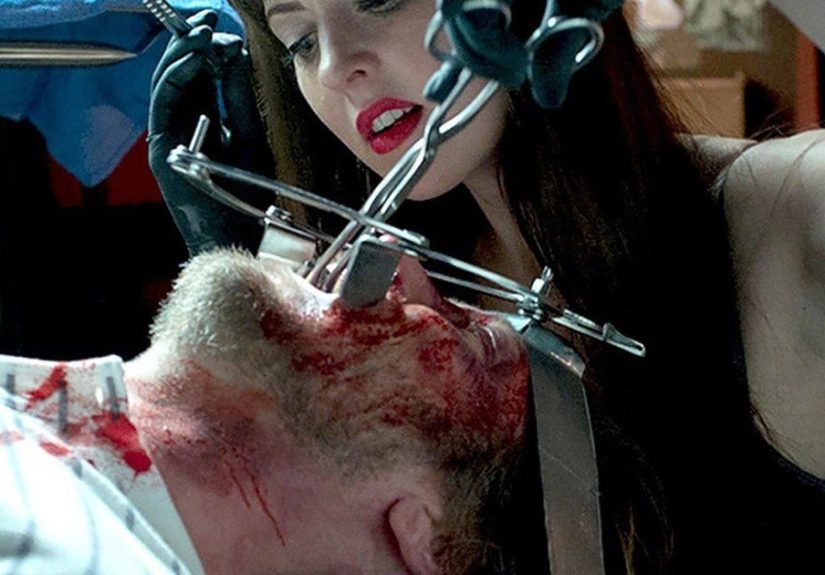
- 5) Practical effects that feel “too close”
- 6) A willingness to talk about power without turning into a lecture
- 7) It’s “genre-blended” in a way that feels personal
- 5 Common Critiques (and Whether They Hold Up)
- Critics vs. Fans: The Opinion Map
- Where American Mary Ranks in the Body-Horror Conversation
- My Practical Ranking: Who Should Watch It (and Who Should Skip It)
- If You Like American Mary, What to Watch Next
- Final Verdict: The One-Sentence Pitch + The Ranking
- Viewer Experiences (): How People Watch, Rank, and React to American Mary
- Conclusion
Some horror movies arrive like a polite RSVP. American Mary shows up uninvited, rearranges your furniture, and somehow leaves you debating
ethics, aesthetics, and “why am I still thinking about that lighting?” a week later. It’s a stylish, polarizing body-horror thriller with a
cult reputationand the kind of movie where rankings get heated fast, because people aren’t just rating “scary” anymore. They’re rating tone,
theme, performance, and whether the film’s final stretch sticks the landing.
In this guide, we’re doing what the internet was invented for: ranking American Mary across the things viewers actually argue about,
comparing critic-vs-audience reactions, and explaining why the same movie can earn both “underrated gem” and “messy missed opportunity” in the
exact same comment thread.
Quick Snapshot: What American Mary Is (No Big Spoilers)
American Mary (2012; U.S. release in 2013) is a Canadian body-horror thriller written and directed by Jen and Sylvia Soska
(aka the Soska Sisters). It stars Katharine Isabelle as Mary Mason, a medical student with serious surgical talent and serious financial pressure.
When she gets pulled into an underground world of extreme body modification, her skills become valuable in ways her textbooks never prepared her for.
The movie blends dark humor, stylized visuals, and a grim sense of consequences. It also isn’t shy about adult subject matter (it’s rated R in the U.S.),
so it’s not a “cozy horror” pick. If you’re sensitive to violence, sexual content, or assault themes, this is the moment to check content warnings first.
Why Rankings for This Movie Get Spicy
Here’s the most honest explanation: American Mary is built like a confident first impression and a debated second date.
Many viewers praise its striking look, pitch-black humor, and commitment to body-horror atmosphere. Others feel the story gets uneven, especially
as the film pushes toward its endgame.
That split shows up in major aggregator snapshots. Rotten Tomatoes reflects a “mixed-to-positive” critical lean, while Metacritic lands closer to
“mixed,” with audiences often reacting more warmly than some critics. In plain English: plenty of people like it, plenty of people don’t, and a lot of
folks like parts of it intensely.
And that’s exactly why rankings are useful here. If you only ask, “Is it good?” you’ll get a fight. If you ask, “What’s it good at?”
you’ll get clarity.
The Big Ranking: Scoring American Mary in 8 Categories
These scores reflect a synthesis of common critic notes and repeat fan talking pointsplus a “how it plays in real life” factor (rewatchability,
emotional aftertaste, and whether the movie’s style is doing meaningful work or just posing for the camera).
| Category | Score (1–10) | Why It Lands There |
|---|---|---|
| Lead Performance (Katharine Isabelle) | 8.5 | A controlled, watchable center that makes Mary feel like a personnot a horror prop. |
| Direction & Visual Style | 8.0 | Bold palette, composed imagery, and a consistent mood that feels intentionally crafted. |
| Concept & Worldbuilding | 7.5 | The underground surgery/body-mod angle is memorable and unusually specific for horror. |
| Practical Effects & “Body Horror” Credibility | 7.5 | Often convincing and tactile, more “clinical discomfort” than cartoonish splatter. |
| Screenplay Structure | 6.5 | Strong setup; the latter portion can feel like it’s juggling tones and threads. |
| Pacing | 6.5 | Deliberate early momentum; later beats can feel abrupt or under-developed. |
| Themes (Agency, Power, Exploitation) | 7.0 | The film clearly wants to say somethingsome critics love it, others call it muddled. |
| Rewatch Value | 7.0 | Not “comfort rewatch,” but rewarding if you like analyzing style and intent. |
Overall ranking score (average): ~7.3/10. That’s the sweet spot for “cult favorite with debate baked in.”
If you love stylish, character-driven horror-thrillers, you may rate it higher. If you need a tight, clean third act, you may rate it lower.
Top 7 Things Fans Rank Highly
1) Mary as a protagonist you don’t forget
Horror is full of characters who exist to scream, run, and make the worst possible decision in the worst possible shoes.
Mary is different: she’s competent, ambitious, and increasingly hardened. Even people who dislike the movie often concede the lead is a strong anchor.
2) The film’s look: “cold glamour” with a pulse
American Mary has a distinct visual identityclean compositions, bold color choices, and a controlled darkness that feels curated rather than accidental.
It’s the kind of movie that makes you notice lighting the way you notice a good song drop: you feel it before you explain it.
3) Body modification portrayed as subculture, not punchline
One of the film’s most-discussed choices is that many of the body-mod clients aren’t presented as “monsters.”
They’re people making choicessometimes extreme oneswithout the movie automatically treating them as villains or jokes.
That framing is a big reason the film stands out from more exploitative “shock-value only” entries.
4) Dark humor that actually sharpens the discomfort
The humor here isn’t a goofy relief valve. It’s more like a nervous laugh at the edge of something grim.
When it works, it makes scenes feel more unsettlingbecause the world doesn’t pause to reassure you.
5) Practical effects that feel “too close”
The film’s surgical vibe tends to play as clinical and tactile. Even when you can tell it’s movie magic,
it’s still the kind of movie that makes some viewers sit up straighter and reconsider snacks.
6) A willingness to talk about power without turning into a lecture
The Soska Sisters frame the story around power dynamics: who has it, who exploits it, and what it costs to take it back.
Viewers who connect with the film often cite that undercurrent as the reason it sticks.
7) It’s “genre-blended” in a way that feels personal
Horror, thriller, crime-noir energy, and revenge elements swirl together. If that sounds messy, it can be.
But for fans, that blend feels like an authorial fingerprintan idiosyncratic voice rather than a committee-built product.
5 Common Critiques (and Whether They Hold Up)
1) “The ending is underwhelming.”
This is the most consistent complaint across mainstream and genre-press reactions. Many critics praise the film’s early confidence,
then argue the story doesn’t fully pay off its ideas. If you’re the kind of viewer who treats Act Three like a promise, you may feel shorted.
2) “The tone is unevenserious themes next to pulpy spectacle.”
The film wants to be stylish, nasty, funny, tragic, and pointedsometimes in the same ten-minute stretch.
For fans, that’s the appeal. For critics, it can read as the movie not deciding what it wants to be.
3) “Some performances around the edges feel inconsistent.”
Even supporters sometimes call out supporting roles as hit-or-miss. The lead performance is the steadier element; the surrounding cast
occasionally leans heightened, which can clash if you prefer realism over grindhouse energy.
4) “It’s provocative, but not all ideas are fully developed.”
The movie introduces multiple threadsprofessional ambition, exploitation, subculture, vengeance, moralityand doesn’t linger equally on all of them.
That can feel like a feature (lean and impressionistic) or a bug (unfinished), depending on your taste.
5) “It’s not for casual horror viewers.”
This isn’t a jump-scare rollercoaster. It’s more like a slow walk down a hallway where the wallpaper is gorgeous,
and every door you pass makes you slightly more uneasy. People expecting a conventional horror rhythm can bounce off it hard.
Critics vs. Fans: The Opinion Map
When you zoom out, the discourse tends to cluster into three camps:
Camp A: “Stylish cult classic.”
This group praises the look, the lead performance, and the film’s willingness to explore agency and subculture. They often describe it as
a body-horror entry with a voicemessy in places, but memorable in a way slicker films aren’t.
Camp B: “Great first half, wobbly finish.”
These viewers like the setup and atmosphere but feel the later story choices don’t land with the same confidence.
Their ranking usually ends up around “good, not great,” with specific praise for Isabelle and the Soskas’ style.
Camp C: “All vibe, not enough story.”
This group sees the film as more pose than payoff. They may call it exploitative, thinly written, or structurally scattered.
Their rankings drop the most when they weigh story coherence more than imagery and mood.
Where American Mary Ranks in the Body-Horror Conversation
Body horror is often treated like a dare: “Can you handle it?” But the best entries use the body to talk about identity, control,
and the social rules we’re forced to live inside. American Mary aims for that more thematic laneespecially in how it frames
bodily autonomy and the negotiation of consent (even when the context is morally messy).
That’s why the film frequently comes up in discussions of horror directed by women and “feminist-forward” genre work.
It doesn’t make everyone agreenothing doesbut it makes people argue about meaning, not just mechanics.
In other words: it’s a film that gets ranked not only against horror movies, but against ideas.
And ideas are notoriously hard to score out of ten without somebody yelling in the comments.
My Practical Ranking: Who Should Watch It (and Who Should Skip It)
You’ll probably rate it high if you like:
- Stylized horror-thrillers with a strong mood and bold visual choices
- Character-driven stories where the protagonist changes (and not gently)
- Body-horror themes that connect to identity, control, and autonomy
- Cult films you can debate for an hour afterward
You’ll probably rate it low if you prefer:
- Tight, classical storytelling with clean setup/payoff mechanics
- Horror that stays in one lane (pure scare ride, pure satire, etc.)
- Minimal sexual content or intense adult themes
If You Like American Mary, What to Watch Next
Without turning this into a 40-title doom scroll, here are a few “adjacent vibe” picksmovies that share DNA with American Mary in theme,
atmosphere, or body-horror sensibility:
- “Dead Ringers” (clinical unease, identity, obsession)
- “Audition” (slow-burn dread and escalating intensity)
- “Raw” (body transformation as metaphor, coming-of-age horror)
- “Excision” (uncomfortable, character-driven, darkly comedic horror)
Different films, different boundariesso check ratings and content notes if you’re sensitive to intense material.
Final Verdict: The One-Sentence Pitch + The Ranking
One-sentence pitch: American Mary is a stylish, divisive body-horror thriller powered by a compelling lead and bold visuals,
with a story that hooks hard early and sparks debate late.
My overall ranking: 7.3/10 (with the honest footnote that your personal score could swing a full two points depending
on how much you value “vibe + theme” over “tight plot clockwork”).
Viewer Experiences (): How People Watch, Rank, and React to American Mary
Because American Mary lives in that cult-movie space, the “experience” of it often matters as much as the film itself.
Not everyone watches it the same wayand your setting can quietly change your ranking.
The solo, late-night watch is the classic route. In that mode, the film’s visual control hits harder: the lighting looks moodier,
the silence feels heavier, and Mary’s emotional distance can feel almost contagious. Viewers who watch it alone often describe it as more of a
slow-burn descent than a conventional horror ride. You’re not waiting for a monster to pop out; you’re watching a person’s life narrow into a tunnel.
That can be gripping… or it can be frustrating if you want the movie to “move.”
The watch-party version is almost a different genre. In a group, people tend to talk about the film as a collection of moments:
the look, the boldness, the “did you catch that detail?” energy. The dark humor lands more openly, and the movie can feel like a midnight crowd-pleaser
even when it’s thematically heavy. This is also where the ranking debates get fun: one friend scores it a 9 because it’s memorable and stylish,
another scores it a 6 because the ending doesn’t feel fully earned, and someone else keeps saying, “Okay, but the color palette though.”
(The palette usually wins. The palette always wins.)
The “genre-history” watch happens when someone comes to the movie after hearing it mentioned in conversations about women-directed horror,
body-horror evolution, or films about bodily autonomy. In that context, viewers often rate it higher because they’re tracking what it’s attempting,
not only what it perfects. They’ll notice how the film treats its body-mod community as more than a gag, how it uses clinical imagery for discomfort
rather than cheap shock, and how it frames power as something that can be taken, traded, or weaponized. Even skeptics sometimes admit: it’s trying for
something bigger than “gross-out.”
The “rewatch after a cool-down” is where opinions flip. On first watch, some people get stuck on intensity or adult content and rate it low.
On rewatch, with fewer surprises, they pay attention to craft: the staging, the tone shifts, the way Mary’s choices stack up. Others flip the opposite way:
they’re wowed at first, then notice structural issues more clearly the second time. Either way, American Mary is the kind of film where your second
rating is often more confident than your first.
Finally, there’s the “community discussion” experience: reading reviews, seeing polarized takes, and realizing the movie has become a
personality test. If your friends love it, you may lean into its strengths; if your group hates it, you might defend it out of pure spite, which is a
time-honored tradition and basically the foundation of cinema culture. However you watch it, the film’s legacy isn’t just “did you like it?”
It’s “what did you value enough to forgive its flaws?” And that’s why the rankings never stop.
Conclusion
American Mary isn’t universally belovedand that’s part of its identity. It’s a film with a strong aesthetic, a memorable lead performance,
and themes that invite real debate. If you want a clean, traditional horror structure, you may feel let down. If you want a stylized, uncomfortable,
conversation-starting body-horror thriller, you may find yourself ranking it higher than you expected… and still arguing about it later.