Table of Contents >> Show >> Hide
- What Is the Ground Control Double USB-C Port?
- Quick Specs (The Stuff You Actually Want to Know)
- The Design Case: Why This Exists (Beyond “Because It’s Pretty”)
- The Charging Reality: What “Fast” Means Here
- Installation: Planning Before You Drill Like a Cartoon Character
- Where It Shines: Real-World Use Cases
- How It Compares to Alternatives
- Finishes, Aesthetics, and the “Does It Match My Space?” Question
- Care and Longevity: Keeping It Looking Like the Upgrade It Is
- Buying Tips: Make Sure You’re Getting the Right Ground Control
- FAQ
- Conclusion
- of Real-World “Living With It” Experiences (Scenarios & Lessons)
If your desk looks like a tech museum gift shop explodedrandom chargers, mystery cables, a dongle you swear you didn’t buymeet the
Ground Control Double USB-C Port: a built-in, furniture-mounted charging grommet that tries to make your workspace feel less like a snake pit
and more like… well… mission control (but with fewer astronauts and more spreadsheets).
This isn’t your typical plastic desk grommet with a flimsy flap. Ground Control’s whole vibe is “design object that happens to charge your stuff.”
Think: solid metal, clean geometry, and a deliberate “this belongs here” lookespecially in home offices, conference rooms, libraries, and hospitality spaces
where cable chaos is basically a daily tradition.
What Is the Ground Control Double USB-C Port?
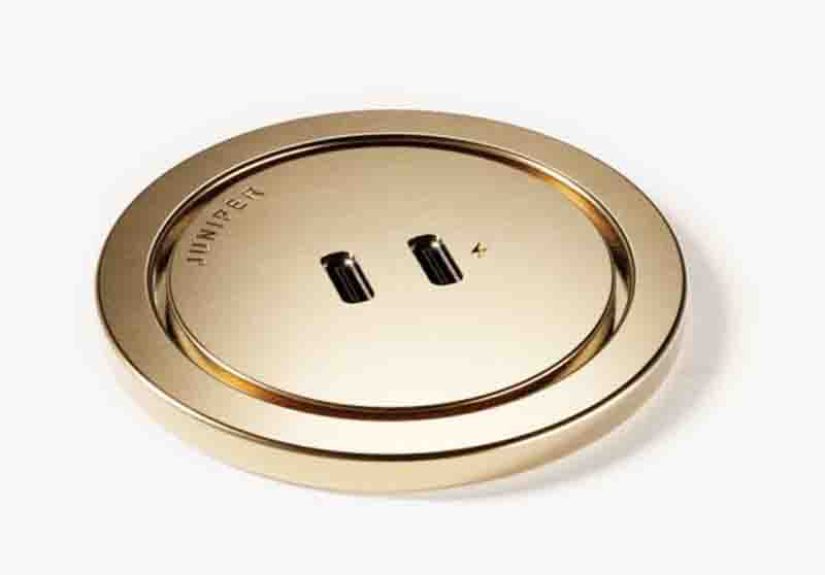
The Ground Control Double USB-C Port is a furniture-mounted USB-C charging unit designed to sit flush in a desk, table, or panel.
It gives you two USB-C ports right where you work, so you can plug in a phone or tablet without hunting for an outlet behind a plant
(or behind the plant behind the outlet).
It’s part of Juniper’s Ground Control collectionpower and control accessories inspired by mid-century “launch operations” aesthetics. Translation:
it looks like it belongs on a vintage control console, but it’s meant for modern devices.
Quick Specs (The Stuff You Actually Want to Know)
| Type | Furniture-mounted dual USB-C charging port |
| Size | About 2.5″ diameter × 2.2″ tall |
| Install cutout | 2″ diameter hole in desk/table |
| Desk thickness | Up to ~1.5″ (varies by installation requirements) |
| Materials | Solid brass + other supporting materials (steel/ABS depending on version) |
| Power focus | Phones and tablets (not laptops) |
| Typical output | Per-port output in the “phone/tablet charging” range (roughly 12–15W depending on version) |
The big headline is the last line: this is not a laptop charger. If you’re shopping specifically to run a MacBook, Windows laptop, or
power-hungry tablet at full speed, you’ll want a USB-C Power Delivery (PD) solution with higher wattage.
Ground Control Double USB-C is intentionally tuned for everyday device chargingconvenient, clean, and built-in.
The Design Case: Why This Exists (Beyond “Because It’s Pretty”)
Most charging gear is designed like it’s ashamed to be seen. It hides under the desk, behind the nightstand, or inside a power strip that’s held together
with hope and dust. Ground Control flips that logic: power becomes a visible, intentional part of the space.
1) It’s a “built-in,” not an “add-on”
A desk grommet charger means your charging point stays putno more power bricks wandering off into someone else’s bag during a meeting.
This is especially useful in shared spaces like:
- Conference tables (where the nearest outlet is always “somewhere over there”)
- Hotel desks and bedside tables (where you need charging access without crawling)
- Libraries and study rooms (where quiet productivity is sacred… but batteries are not)
- Home offices (where aesthetics matter because it’s also your living space)
2) It’s intentionally material-forward
Solid brass (and the collection’s finish options) changes the whole feel. This is the difference between “office accessory” and “hardware detail.”
If you’re already choosing cabinet pulls, lighting finishes, or plumbing fixtures with a point of view, a cheap plastic USB hub can feel like a record scratch.
3) It plays well with a modular ecosystem
Ground Control is designed as a family: USB charging, outlets, toggles, and dimmers can be placed together to create a tidy “control zone.”
That matters for desks with integrated task lighting, shared worktables, and hospitality millwork where the goal is a clean, consistent experience.
The Charging Reality: What “Fast” Means Here
Let’s talk expectationsbecause USB-C is a connector, not a promise. A USB-C port can be anything from “gentle trickle charge” to “power a laptop and a monitor.”
The Ground Control Double USB-C Port lives squarely in the phone/tablet convenience lane.
So what will it charge well?
- Phones: Excellent for topping up throughout the day, keeping you out of the red-zone panic.
- Tablets: Great for casual charging and maintenance charging during use (reading, notes, browsing).
- Accessories: Headphones, e-readers, portable speakers, and other “USB-C life” gear.
What won’t it do?
It won’t reliably replace a dedicated laptop charger. Most modern laptops charge best with USB-C PD at higher wattage. Even if a laptop “accepts some power,”
low-watt charging can be slow, inconsistent, or simply not supported. Ground Control is honest about its role: it’s built for phones and tablets, not for
workstation-level power demands.
Installation: Planning Before You Drill Like a Cartoon Character
Installing a desk-mounted USB-C port is straightforward, but it rewards a little planning. The port typically mounts into a 2-inch diameter hole
and needs clearance underneath for cabling and the unit body.
A practical checklist
- Pick the location: Aim for “easy reach” but not where coffee spills routinely happen (your desk has patterns; respect them).
- Confirm thickness: Many furniture-mounted units have a maximum surface thickness around 1.5″.
- Check under-desk clearance: Make sure drawers, cable trays, and support rails won’t block it.
- Plan cable routing: Decide where the power supply/plug will live so the cable run looks intentional, not accidental.
- Cut cleanly: Use the right hole saw and go slownobody wants a “rustic oval.”
If you’re installing into expensive wood, stone, or custom millwork, consider a professional installer. Not because it’s complicated
because the phrase “I’ll just wing it” has ended many a beautiful tabletop.
Where It Shines: Real-World Use Cases
Home office: the “no more reaching behind the desk” upgrade
If you frequently charge your phone while working, a built-in double USB-C port becomes one of those small conveniences that feels instantly normal
like it always should’ve been there. You plug in, you move on. No scavenger hunt.
Conference rooms: the “stop borrowing my charger” solution
Two USB-C ports built into a table helps guests and coworkers charge without unplugging someone else’s laptop brick. It’s also easier to maintain:
fewer loose chargers walking out the door.
Hospitality and guest rooms: premium detail that guests actually use
Guests may not notice the thread count, but they will notice when they can’t charge their phone near the bed. A built-in charging port is a practical,
high-satisfaction upgradeespecially when the design feels intentional rather than “we bought the cheapest thing in bulk.”
How It Compares to Alternatives
Versus a cheap desk grommet charger
Budget grommets can work fine, but they often lean on lightweight plastics, inconsistent charging performance, and a look that screams “office supply aisle.”
Ground Control competes on materials, finish quality, and design integrationand that matters when the unit is visible every day.
Versus a high-watt USB-C PD desk hub
If you need to charge laptops at the desk, look at a PD hub (often 65W–100W+). Those are performance-first. Ground Control is integration-first:
it makes charging feel like part of the furniture, but it’s not meant to be a universal powerhouse.
Versus a power strip under the table
Power strips are the “I’ll deal with it later” of workspace design. Later never comes, dust accumulates, and the strip becomes a permanent resident.
A built-in port is cleaner, easier to access, and less likely to become an accidental footrest.
Finishes, Aesthetics, and the “Does It Match My Space?” Question
One of the reasons Ground Control stands out is finish selection. Instead of forcing you into “black plastic” or “off-white plastic,” it offers hardware-like finishes
that can align with lighting, pulls, and other metals in the room. If you care about cohesive interiors, this isn’t fluffit’s the whole point.
Pro tip: choose a finish that echoes something else already in the room (desk legs, lamp accents, cabinet pulls). That’s how the port reads as “built-in” instead of “stuck on.”
Care and Longevity: Keeping It Looking Like the Upgrade It Is
- Dust and crumbs: A soft brush or compressed air keeps ports clean (especially on worktables that moonlight as snack stations).
- Finish care: Use gentle cleaners; avoid abrasive pads that can dull metal finishes.
- Cable sanity: Pair it with a short, high-quality USB-C cable so your desk doesn’t look like it’s preparing for a stage dive.
Buying Tips: Make Sure You’re Getting the Right Ground Control
“Ground Control” can refer to multiple configurations and generations. Before you buy, confirm:
- Mounting type: Furniture-mounted (desk/table) versus hardwired wall systems.
- Power expectations: Phone/tablet charging versus laptop-grade USB-C Power Delivery.
- What’s included: Power supply and cabling can vary by version and installation approach.
- Finish: Select a finish that fits your space and other hardware.
If your top priority is charging a laptop at full speed, you may be better served by a high-watt USB-C PD option.
If your priority is beautiful, built-in charging for phones and tabletsGround Control Double USB-C Port is exactly in its element.
FAQ
Will the Ground Control Double USB-C Port charge a laptop?
Generally, noat least not in the way people mean “charge a laptop.” It’s designed for phones and tablets, with per-port output in the lower-watt range.
Laptops typically expect USB-C Power Delivery at higher wattage.
Is it good for iPhone and Android fast charging?
It will charge phones well for everyday use. True “fast charging” on many newer phones often requires USB-C PD at 20W+ and compatible negotiation.
Think of this port as a reliable, convenient chargernot a high-watt PD brick replacement.
Is it hard to install?
If you’re comfortable drilling a clean 2-inch hole and planning clearance underneath, it’s approachable. For premium millwork, hire helpyour desk deserves a dignified outcome.
Conclusion
The Ground Control Double USB-C Port is what happens when someone decides charging shouldn’t be an afterthoughtor an eyesore.
It’s a sleek, furniture-mounted solution built for the devices you actually reach for constantly: phones, tablets, and the everyday USB-C ecosystem.
If you want a built-in charging point that looks like it belongs, this is a strong contenderespecially for home offices, conference tables, and hospitality spaces
where “clean and intentional” beats “tangled and temporary.” Just go in with the right expectations: it’s a premium convenience charger, not a laptop power station.
of Real-World “Living With It” Experiences (Scenarios & Lessons)
Living with a built-in desk charger is a lot like living with a dishwasher: you don’t realize how many tiny annoyances it removes until it’s there,
quietly doing its job, making you wonder why you tolerated the old way for so long. The biggest day-to-day change is psychological:
charging stops feeling like a task and starts feeling like a background habit. You sit down, you plug in, you move onno crawling under the desk,
no unplugging a monitor to steal its outlet, no “where did my brick go” detective work.
In a home office, it becomes the default landing pad. Phone at 28%? Plug it in while you answer emails. Tablet you use for notes?
Plug it in during meetings. Headphones between calls? Plug them in for a quick top-up. Over time, the desk stays cleaner because you stop keeping
backup chargers in a drawer “just in case.” The cable you choose matters here: a short, good-quality USB-C cable looks tidy and feels intentional,
while a long cable can turn your nice desk into a lasso practice range.
In a conference room, the experience is less about you and more about everyone else. Two USB-C ports are surprisingly diplomatic:
one person charges a phone, another tops up a tablet, and nobody has to ask, “Do you have a charger?” (which is corporate for “Please solve my problem
while I pretend it’s casual.”) The port also reduces “charger attrition.” Loose chargers disappear in shared spaces; built-in ports don’t.
It’s a small detail that can make a room feel more considered and more professional.
In hospitality or guest spaces, convenience is the whole game. Guests arrive with different devices, but almost everyone can use USB-C now
(or at least has a USB-C cable). A built-in port near a bed or desk reduces the classic hotel frustration: the only outlet is behind the nightstand
and guarded by a lamp that weighs as much as your suitcase. Guests may not say, “Nice power accessory,” but they’ll feel the differenceand that’s the point.
The main “lesson learned” is expectation management. If someone assumes USB-C automatically equals laptop charging, they’ll be disappointed.
Once you treat it as a premium phone/tablet charging station, it shines. The other lesson is placement: put it where you naturally set your devices down.
If you install it in the far corner of a desk because it looked symmetrical, you’ll quietly resent symmetry forever. In short: design matters, but ergonomics wins.
When you get both right, Ground Control feels less like an accessory and more like a permanent upgradelike your furniture finally joined the modern world.