Table of Contents >> Show >> Hide
- What Is Neurofibromatosis?
- The Main Types of Neurofibromatosis
- Symptoms: What NF Can Look Like in Real Life
- Causes and Genetics: Why NF Happens
- Diagnosis: How Clinicians Put the Puzzle Together
- Treatments: What Helps (and What’s Actually Available)
- Living With NF: Practical Tips That Actually Matter
- Experiences: What People Often Describe (and What Helps)
- Conclusion
- References
Neurofibromatosis (NF) is a family of genetic conditions that can cause tumors to grow along nerves and in the brain or spinal cord. The good news: many of these tumors are benign. The tricky part: “benign” doesn’t always mean “harmless,” especially when a lump decides to set up camp on a nerve that controls hearing, vision, or movement. So NF is less like a single diagnosis and more like a spectrumone that ranges from “mostly skin changes” to “needs a specialized care team and regular monitoring.”
This guide breaks down the main types of neurofibromatosis, the symptoms that tend to show up (and when), why it happens, and what treatment looks like todayincluding newer targeted medications for certain NF1 tumors. Along the way, we’ll keep it human, practical, and just a little bit wittybecause if your nervous system is already complicated, your reading experience shouldn’t be.
Important note: This article is for education and general awareness, not a diagnosis. If you suspect NF, a clinicianoften a geneticist, neurologist, dermatologist, ENT, ophthalmologist, or an NF specialty cliniccan help you sort out next steps.
What Is Neurofibromatosis?
Neurofibromatosis refers to a group of tumor predisposition syndromes caused by changes (variants) in specific genes that help regulate cell growth. When those growth-control signals are disrupted, certain supportive cells around nerves can overgrow and form tumors. NF can affect the skin, eyes, bones, peripheral nerves, and the central nervous system.
NF is typically inherited in an autosomal dominant pattern (meaning one altered copy of the gene can cause the condition), but many people are the first in their family to have it due to a new (“de novo”) genetic change. Even within the same family, symptoms can vary widely. Translation: NF doesn’t always “run in the family” in the obvious way, and it doesn’t always read the same instruction manual from one person to the next.
The Main Types of Neurofibromatosis
Today, most clinical resources describe three major categories: Neurofibromatosis type 1 (NF1), NF2-related schwannomatosis (often still called NF2 in everyday conversation), and schwannomatosis (which includes genetic subtypes such as SMARCB1-related and LZTR1-related schwannomatosis).
1) Neurofibromatosis Type 1 (NF1)
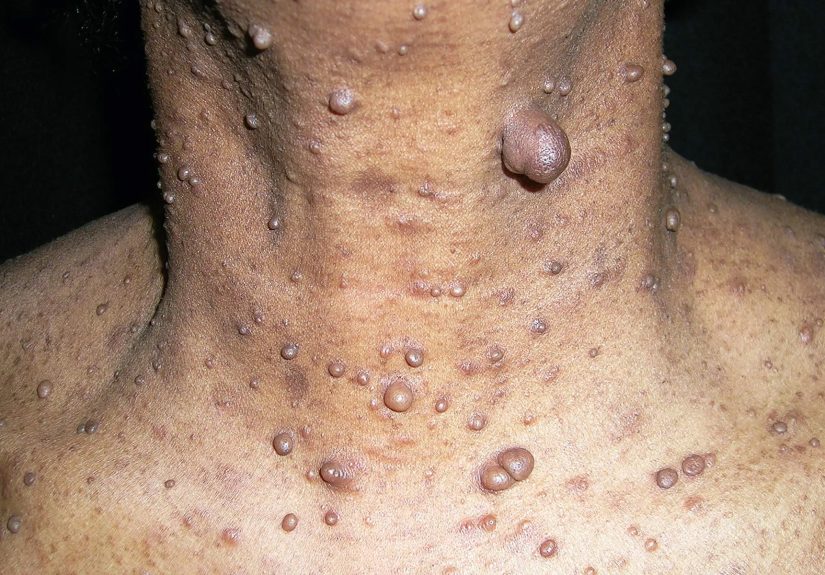
NF1 is the most common form. It often becomes noticeable in childhood and is known for skin findings like café-au-lait spots and freckling in skin folds, along with benign nerve tumors called neurofibromas. Some people develop larger, deeper tumors called plexiform neurofibromas, which can cause pain, functional problems, or visible changes depending on location.
- Typical “early clues”: multiple café-au-lait macules, freckling in the armpit/groin areas
- Other possible features: Lisch nodules (iris hamartomas) or choroidal abnormalities, optic pathway glioma, bone changes, learning/attention challenges
- Gene involved: NF1
2) NF2-Related Schwannomatosis (Often Called “NF2”)
NF2-related schwannomatosis is best known for vestibular schwannomastumors on the nerve involved in hearing and balance. These tumors can lead to tinnitus, hearing loss, and balance problems, often beginning in the teen years or early adulthood. People may also develop other schwannomas, meningiomas, and ependymomas.
- Common issues: hearing changes, ringing in the ears, dizziness/imbalance
- Other possible tumors: meningiomas, spinal tumors, schwannomas on other nerves
- Gene involved: NF2
3) Schwannomatosis
Schwannomatosis is characterized by multiple schwannomas (tumors of Schwann cells), often presenting with significant pain. Certain genetic forms are linked to variants in SMARCB1 or LZTR1. Unlike NF2-related schwannomatosis, vestibular schwannomas are not the defining feature for most schwannomatosis types, and the pattern of tumors can be different.
- Most common complaint: localized or widespread pain
- Typical tumor locations: peripheral nerves and spinal nerves
- Genetic subtypes: SMARCB1-related, LZTR1-related (and others under newer classification systems)
Symptoms: What NF Can Look Like in Real Life
Skin and eye findings (often the first sign in NF1)
In NF1, multiple café-au-lait macules can be present early in life, sometimes before a child even starts kindergarten. Freckling in the armpits or groin may appear later. Neurofibromas on or under the skin often increase with age and can become more noticeable around puberty or adulthood. Eye findings (like Lisch nodules or certain retinal/choroidal changes) may support diagnosis.
Nervous system symptoms
NF tumors can affect nerves responsible for sensation, movement, balance, and hearing. For NF2-related schwannomatosis, vestibular schwannomas can gradually impact hearing and stability. In schwannomatosis, pain is often the headline symptomeven when tumors are small.
Bone, growth, and other body systems
NF1 can involve bone differences (such as certain long-bone or skull changes) and may be associated with growth differences. Some people experience headaches, scoliosis, or other complications that require targeted evaluation and follow-up.
Learning, attention, and everyday functioning
Many people with NF1 do well academically and socially, but learning disabilities and attention challenges can occur. The right supportschool accommodations, neuropsychological evaluation when needed, and early interventionscan be a game-changer.
When tumors act suspicious
While most NF-related tumors are benign, some people with NF1 have an increased risk for certain malignancies. A key practical takeaway is to pay attention to a mass that changes quickly or comes with new concerning symptoms. If a tumor becomes rapidly enlarging, persistently painful, unusually firm, or causes new weakness/numbness, it deserves prompt medical evaluation.
Causes and Genetics: Why NF Happens
NF conditions arise from variants in genes involved in controlling cell growth and tumor suppression. NF1 is classically inherited in an autosomal dominant pattern, and about half of cases occur due to a new variant (meaning no prior family history). NF2-related schwannomatosis and schwannomatosis can also be inherited or arise de novo, and “mosaic” forms may occur when the variant is present in only some cells of the body.
What genetic testing can (and can’t) do
Genetic testing can help confirm a diagnosis, clarify subtype, and inform family counselingespecially when clinical signs overlap. But it doesn’t always predict severity. NF is famously variable: two people with the same diagnosis can have very different experiences. That’s why genetics is often paired with ongoing clinical monitoring.
Diagnosis: How Clinicians Put the Puzzle Together
NF is diagnosed using a combination of physical findings, family history, eye exams, imaging, and (in many cases) genetic testing. Diagnostic criteria have been updated in recent years, so specialists often rely on the most current consensus guidelines.
NF1: common criteria clinicians look for
NF1 diagnosis typically requires at least two characteristic features, which can include multiple café-au-lait macules, axillary/inguinal freckling, neurofibromas (including plexiform neurofibroma), specific eye findings, optic pathway glioma, distinctive bone lesions, a pathogenic NF1 variant, or an affected parent.
NF2-related schwannomatosis and schwannomatosis
NF2-related schwannomatosis is often suspected when vestibular schwannomas and associated symptoms appear, especially if tumors are bilateral or there are additional characteristic tumors. Schwannomatosis is often considered when multiple schwannomas and pain dominate the picture, and genetic testing can help identify specific schwannomatosis subtypes.
Treatments: What Helps (and What’s Actually Available)
There is no single cure that “turns off” NF across the board. Treatment is usually about managing symptoms, monitoring for complications, and using surgery or medication when tumors cause pain, functional problems, or risks to vital structures. Many people do best with a coordinated, multidisciplinary teambecause NF doesn’t politely limit itself to one body system.
Monitoring and watchful waiting
Some tumors are slow-growing and may not need immediate intervention. Regular follow-ups help track growth, assess symptoms, and catch complications earlyespecially in childhood NF1 (vision, growth, blood pressure, learning) and in NF2-related schwannomatosis (hearing and balance).
Surgery and targeted procedures
Surgery may be recommended for tumors that are compressing nerves or organs, causing significant pain, or threatening important functions (like vision or hearing). For vestibular schwannomas, approaches can include microsurgery and, in selected cases, radiation-based optionsdecisions that require careful individualized discussion with experienced specialists.
Targeted medicines for NF1 plexiform neurofibromas
A major advance in NF1 care is the availability of MEK inhibitors for symptomatic plexiform neurofibromas that can’t be completely removed with surgery.
- Selumetinib (Koselugo): FDA-approved for pediatric patients with NF1 and symptomatic, inoperable plexiform neurofibromas. The FDA expanded approval in 2025 to include children as young as 1 year old (with specific formulations).
- Mirdametinib (Gomekli): FDA-approved in 2025 for adults and pediatric patients (age 2 and older) with NF1 and symptomatic plexiform neurofibromas not amenable to complete resection.
These medications aren’t for every NF1 tumor, and they come with potential side effects and monitoring requirements. But for some patients, they can reduce tumor volume and improve symptomsan important option when surgery isn’t feasible.
Hearing-focused treatment in NF2-related schwannomatosis
When vestibular schwannomas affect hearing, treatment may include hearing aids, cochlear implants in selected situations, or other specialized interventions. Some evidence supports the use of bevacizumab (a VEGF inhibitor) in certain patients for tumor control and/or hearing outcomes, although risks and benefits must be weighed carefully by specialists.
Pain management in schwannomatosis
Because pain can be a major issue in schwannomatosis, treatment plans often combine targeted tumor removal when appropriate, nerve-focused pain management strategies, physical therapy, and coordinated care with pain specialists. The goal is to reduce pain while protecting nerve function and quality of life.
Living With NF: Practical Tips That Actually Matter
- Build the right team: NF is multidisciplinary by nature. Specialty NF clinics can streamline care and surveillance planning.
- Track what changes: New neurologic symptoms, sudden vision changes, new or rapidly changing masses, or worsening hearing/balance should prompt medical review.
- Don’t ignore school/work needs: When learning or attention challenges show up, accommodations and early support can help a lot.
- Genetic counseling helps: Whether you’re newly diagnosed or planning a family, counseling can clarify inheritance, testing options, and what variability really means.
Experiences: What People Often Describe (and What Helps)
NF isn’t just a medical diagnosisit’s a long-term relationship with uncertainty, appointments, and the occasional “Wait, is that new?” moment in the mirror. Experiences vary widely, but several themes come up again and again in patient communities and specialty clinics. (The vignettes below are composite examples based on common patterns, not real individuals.)
The “spot-to-specialist” journey. For many families dealing with NF1, it starts with skin findingscafé-au-lait spots that a pediatrician notices at a well visit. At first, it can feel surreal: “We came in for a height check and left with a genetics referral.” That early referral is often a gift, because it opens the door to proactive monitoring (like vision screening in childhood) and support if learning or attention challenges appear later. Parents often say the hardest part isn’t the diagnosis itselfit’s the waiting to see what the diagnosis will mean for their child.
Living with “visible” symptoms. Teens and adults sometimes describe the emotional weight of skin neurofibromas or other visible differences. Even when growths are benign, they can affect confidence, social comfort, and how someone is treated in public. People often find it helpful to have a clinician who takes body image seriously (not as vanity, but as quality of life), and to connect with others who “get it” without needing a 20-minute explanation and a PowerPoint.
When pain becomes the main character. For some people with schwannomatosis, pain is the symptom that drives everythingsleep, mood, work, and family life. A common frustration is that pain may be present even when scans don’t look dramatic to a non-specialist. Many patients describe real improvement when their care team treats pain as a central medical issue (not an afterthought) and uses a layered approach: targeted surgery when appropriate, nerve-friendly pain strategies, physical therapy, and mental health support that focuses on coping skills without dismissing the physical reality.
Hearing changes and the “adaptation season.” People with NF2-related schwannomatosis often describe hearing changes as both practical and emotional. It’s not just “turn up the volume”it’s missing parts of conversations, working harder in noisy places, and dealing with fatigue from constant concentration. Helpful supports can include early hearing evaluations, assistive listening tech, captioning tools, and workplace/school accommodations. Many people say they wish they’d sought hearing support earlierbecause adapting is easier when you’re not doing it in crisis mode.
The relief of a plan. One of the most repeated “wins” in NF care is simple: having a clear surveillance plan and knowing what symptoms should trigger a call. People often feel less anxious when they understand what’s being monitored (and why), and when they have a clinic or point person who can connect the dots between symptoms and the right specialist. In a condition known for unpredictability, a thoughtful plan doesn’t remove uncertaintybut it makes uncertainty manageable.
If you or someone you love is living with NF, consider this your permission slip to ask for what you need: second opinions, specialty clinics, pain management, hearing support, school accommodations, counseling, and community. NF is complex, but you shouldn’t have to navigate it alone.
Conclusion
Neurofibromatosis is a group of genetic conditions that can lead to nerve-related tumors and a wide range of symptomsfrom skin findings in NF1 to hearing and balance issues in NF2-related schwannomatosis to pain-dominant schwannomatosis. While there’s no universal cure, care has advanced: modern monitoring reduces risk, multidisciplinary clinics improve coordination, and targeted therapies (like MEK inhibitors for certain NF1 plexiform neurofibromas) offer new options when surgery isn’t possible. The most practical next step is also the simplest: get the right diagnosis, build the right care team, and follow a plan that matches your symptoms and your life.
References
- National Institute of Neurological Disorders and Stroke (NIH): Neurofibromatosis overview
- MedlinePlus (NIH): Neurofibromatosis, NF1, NF2, Schwannomatosis summaries
- GeneReviews (NIH/NCBI Bookshelf): NF1 and NF2-related schwannomatosis chapters
- U.S. Food and Drug Administration (FDA): Selumetinib (Koselugo) approval updates
- U.S. Food and Drug Administration (FDA): Mirdametinib (Gomekli) approval
- Children’s Tumor Foundation: NF overview and diagnostic criteria summaries
- Cleveland Clinic: Neurofibromatosis overview and clinical features
- Johns Hopkins Medicine: NF type descriptions and symptoms
- Children’s Hospital of Philadelphia (CHOP): NF program and care model
- Boston Children’s Hospital: Multidisciplinary NF program resources
- National Organization for Rare Disorders (NORD): NF1 overview
- Peer-reviewed literature on updated diagnostic criteria and selected NF2 therapies