Table of Contents >> Show >> Hide
- When DNA Decides to Get Creative
- 30 People Whose Genetics Made Them Unique
- 1. The Girl With Galaxy Eyes (Heterochromia)
- 2. The Extra-Toes Trail Runner (Polydactyly)
- 3. The Super Taster Who Hates Bitter Greens
- 4. The Person Who Thrives on Four Hours of Sleep
- 5. The Freckle Constellation Kid
- 6. The Sun Sneezers
- 7. The Redhead in a Sea of Brunettes
- 8. The Gentle Giant With Extra Height
- 9. The Person With “Golden Blood”
- 10. The Friend Who Never Gets Brain Freeze
- 11. The White-Streak Hair Icon
- 12. The Mirror-Image Twin
- 13. The Hyperflexible Contortionist
- 14. The Person With One-of-a-Kind Fingerprints
- 15. The Naturally Muscular “Without the Gym” Type
- 16. The Person Whose Hair Never Tangles
- 17. The Mosquito-Proof Camper
- 18. The Person Who Flushes Bright Red After One Drink
- 19. The Left-Handed Family
- 20. The Human Patchwork (Mosaic or Segmental Pigmentation)
- 21. The Person With Small Ears but Big Hearing
- 22. The Naturally Tan, All-Year-Round Friend
- 23. The Human Compass Who Never Gets Lost
- 24. The Cilantro-Equals-Soap Crowd
- 25. The Person Who Rarely Puts on Weight
- 26. The Friend Who Went Silver in Their 20s
- 27. The Person With Super Dense Bones
- 28. The Person With Ultra-Sharp Hearing
- 29. The Person Who Hardly Ever Gets Cavities
- 30. The One-in-a-Billion Combination
- Living With Unique Genetics: Real-Life Experiences & Gentle Advice
- Final Thoughts: Celebrate the Genes That Make You You
Most of us inherit the usual starter pack from our parents: two eyes the same color, ten fingers, ten toes, and a family nose that everyone insists you’ll
“grow into.” But for some people, genetics goes off-script in the best, quirkiest way possible. From different-colored eyes to extra digits and rare blood
types, these unique traits are like nature’s limited-edition prints.
In classic Bored Panda spirit, let’s celebrate fascinating, often harmless genetic quirks that make people stand out in a crowd. We’ll talk about the science
behind them in simple language, share what day-to-day life can look like with these traits, and gently remind everyone that “unusual” is not the same as
“wrong” or “less than.” It just means your DNA decided to have a little fun.
When DNA Decides to Get Creative
Your body is basically a walking, talking instruction manual made of DNA. Most of the time, those instructions are very conservative: Keep this human alive,
help them digest pizza, and don’t let them walk into too many doors. But sometimes, tiny variationscalled mutationschange how those instructions play out.
Some genetic changes can cause serious medical conditions and need careful treatment. Others are completely harmless and simply make a person look or function
a little differently, like having two different colored eyes, extra flexibility, or unusual patterns in skin pigmentation. These differences can be rare, but
they’re very realand they’re part of what makes human beings unbelievably diverse.
With that in mind, here are 30 examples of people whose genetics gave them memorable, conversation-starting features. Think of them as the limited-run
“collector’s edition” humans we’re lucky to share a planet with.
30 People Whose Genetics Made Them Unique
1. The Girl With Galaxy Eyes (Heterochromia)
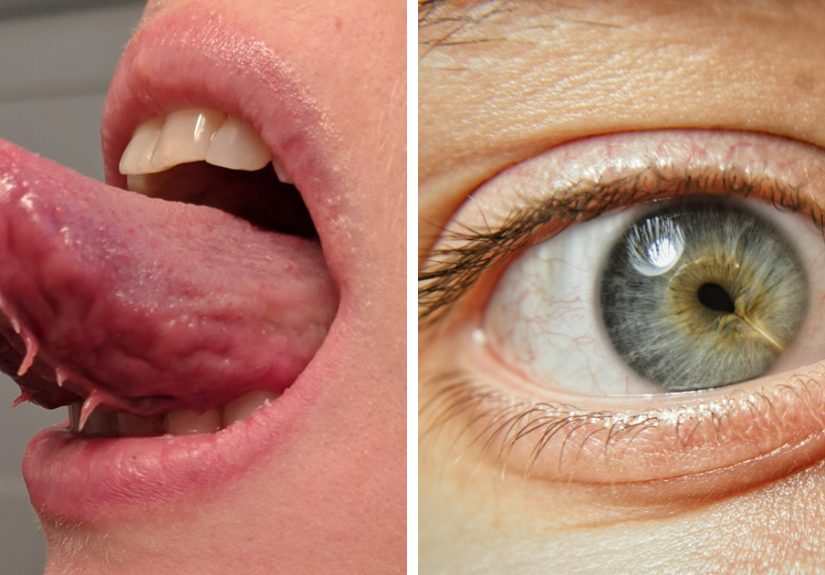
Imagine looking into someone’s face and seeing one brown eye and one blue eyeno colored contacts, no filters, just pure genetics. People with
heterochromia have different-colored irises or patches of different color in the same iris. In many cases, it’s simply a benign genetic
variation that affects how pigment is distributed in the eyes. It looks dramatic, but often doesn’t affect vision at all.
For the person who has it, the biggest side effect may just be answering “Yes, they’re natural” a hundred times.
2. The Extra-Toes Trail Runner (Polydactyly)
Some people are literally born with a bonus toe or finger thanks to a trait called polydactyly. It typically appears as an extra digit on
the hands or feet and is usually present from birth. In many cases it’s caused by inherited changes in genes that direct limb development in the womb.
Extra digits can sometimes be removed surgically for comfort or function, but in other families, it’s just “how our hands look.” There are even stories of
people joking that their extra toes give them better balance or “built-in” trail-running upgrades.
3. The Super Taster Who Hates Bitter Greens
If you’ve ever met someone who insists cilantro tastes like soap or who finds dark leafy greens painfully bitter, they might be a
supertaster. Certain gene variants can make taste buds extra sensitive to bitter compounds. These people aren’t being dramaticthey really
are tasting something different.
On the bright side, supertasters often find subtle flavors in food that others miss. On the not-so-bright side, broccoli might always be the enemy.
4. The Person Who Thrives on Four Hours of Sleep
We’re not talking about tired people pretending they’re fine. A tiny number of people carry genetic variants that help them function well on significantly
less sleep than the usual seven to nine hours. These so-called short sleepers wake up refreshed after four or five hours and stay sharp all
day.
For everyone else: please don’t try this at home. If you didn’t win the genetic lottery on sleep, you just end up exhausted with extra under-eye circles.
5. The Freckle Constellation Kid
Some people inherit skin that freckle-responds to sunlight with impressive enthusiasm. Thanks to variants in genes that influence melanin, they develop
freckles in distinctive clustersacross the nose, shoulders, arms, or even in patterns that look like star maps.
They might get more “Wow, your freckles are so cool!” photos than they ever expected, but they also have to be serious about sunscreen.
6. The Sun Sneezers
Ever walked out of a dark movie theater into bright sunlight and immediately sneezed three times? That’s the photic sneeze reflex, which
tends to run in families. It’s not fully understood, but it seems to involve inherited wiring in the nervous system that mixes up light signals and sneezing
triggers.
It’s harmlessbut it does make sunglasses a smart accessory.
7. The Redhead in a Sea of Brunettes
Natural red hair is less common globally, and it’s often linked to variations in the MC1R gene that influence melanin production. People
with these variants tend to have lighter skin, freckles, and that iconic red hair. They may also be more sensitive to sunburn and sometimes even to certain
types of pain.
The upside: their hair color becomes a built-in conversation starter pretty much everywhere they go.
8. The Gentle Giant With Extra Height
When you meet someone who’s well over six and a half feet tall, there’s a good chance genetics is part of the story. Height is influenced by dozens (maybe
hundreds) of genes, plus environment. Rarely, certain genetic or hormonal conditions can cause extreme tall stature and may need medical follow-up.
Whether they’re the star of a basketball team or just constantly ducking under doorframes, towering humans often grow up negotiating a world that wasn’t
designed for their size.
9. The Person With “Golden Blood”
Most of us know basic blood types like A, B, AB, and O, but there are other systems too. A rare combination called Rh-nullsometimes
nicknamed “golden blood”is extremely uncommon and considered valuable for certain medical uses because it can sometimes be given to people with many other
rare Rh types.
It doesn’t make someone superhuman, but it does mean they’re part of a very, very small club.
10. The Friend Who Never Gets Brain Freeze
Some people can inhale a giant milkshake in thirty seconds and feel nothing, while others are knocked out by instant “ice cream headache.” Differences in
nerve sensitivity and blood vessel responseboth influenced by geneticsmay explain why certain people never experience brain freeze at all.
If that’s you, just know the rest of us are jealous when you’re chugging frozen drinks like it’s nothing.
11. The White-Streak Hair Icon
A striking white streak of hair at the frontsometimes paired with cool patterns of lighter skinis often linked to genetic conditions that affect pigment
cells. In some people it’s associated with specific syndromes; in others, it’s just a stable, harmless feature.
Either way, it’s hard not to look instantly iconic, like a real-life comic book character.
12. The Mirror-Image Twin
In some twin pairs, one is basically the mirror image of the other: parting their hair on opposite sides, reversed birthmarks, even mirrored dental
patterns. This “mirror twinning” isn’t a separate medical condition but can happen early in development when the embryo splits at a particular time.
It makes for fun party tricks and very confusing group photos.
13. The Hyperflexible Contortionist
People with unusually flexible joints often have differences in their connective tissue. For some, it’s just a benign traitgreat for yoga, dance, or
grabbing that remote without leaving the couch. In others, extreme flexibility can be part of a medical condition and may come with joint pain or
instability.
Either way, when your elbows bend further than everyone else’s, you get used to hearing, “Wait, do that again!”
14. The Person With One-of-a-Kind Fingerprints
Everyone’s fingerprints are unique, but some people have particularly unusual patternslike extremely whorled ridges or rare arrangements known to forensic
experts. These patterns are influenced by many genes and the conditions in the womb when the skin on the fingertips is forming.
They probably won’t become a master jewel thief, but if they did, crime dramas would have a hard time writing around it.
15. The Naturally Muscular “Without the Gym” Type
We all know that person who seems to gain muscle just by walking past a dumbbell. Certain gene variants affect how muscles grow and recover, how much
myostatin (a protein that limits muscle growth) the body produces, and how efficiently a person’s body responds to exercise.
It’s not that they never work outbut their starting point and gains can look wildly different from someone with less muscle-friendly genetics.
16. The Person Whose Hair Never Tangles
Hair texture is another genetic masterpiece. Some people inherit ultra-smooth strands that rarely knot, thanks to the shape of their hair shafts and how
their scalp produces oil. While others fight daily with tangles and breakage, these folks brush once and call it a day.
They may not realize how rare that is until a stylist says, “You know people would pay a lot of money for this, right?”
17. The Mosquito-Proof Camper
The friend who never gets bitten at summer barbecues isn’t just lucky. Differences in body odor, skin chemistry, and immune responseall influenced by
geneticscan make someone less attractive to mosquitoes compared with the rest of us.
Good for them. The rest of us will be over here, marinating in bug spray.
18. The Person Who Flushes Bright Red After One Drink
Some people carry genetic variants that affect how their bodies process alcohol, especially in enzymes that break down alcohol byproducts. As a result, they
might flush bright red, feel their heart race, or get nauseous after even a small amount of alcohol.
It’s not just a quirky party trickit can be a sign to drink cautiously and talk with a healthcare professional about risks.
19. The Left-Handed Family
Left-handedness tends to cluster in families, suggesting a genetic component along with environmental factors. Meeting one left-handed person is ordinary;
meeting an entire family that writes, throws, and eats with their left hand feels like spotting a rare alignment of the stars.
Also: they’ve spent their whole lives navigating a right-handed world of scissors, desks, and can openers.
20. The Human Patchwork (Mosaic or Segmental Pigmentation)
Some people have clear lines or patches of different skin tones or areas of depigmentation that follow a pattern on the body. These can be caused by
mosaicismwhere different cells in the body carry slightly different genetic informationor by conditions that affect pigment-producing
cells.
The result is a natural “patchwork” effect that can be visually stunning, though people may also face questions, staring, or assumptions.
21. The Person With Small Ears but Big Hearing
Ear size and shape are heavily influenced by genetics. Some people have very small or unusually shaped outer ears while still having perfectly normal
hearing. For them, jokes about “little ears” get old fast, but audiology charts are often completely boringand that’s a good thing.
22. The Naturally Tan, All-Year-Round Friend
People with higher baseline levels of melanin often appear more tan even without sunbathing. Their genetics help protect their skin from some types of sun
damage, although they’re not immune and still need sun protection.
They may be the envy of their sunscreen-slathered friends, but skin cancer screenings are still just as important.
23. The Human Compass Who Never Gets Lost
Spatial navigation skills seem to have a genetic component, influenced by brain structure and function. Some people just intuitively know where north is,
can mentally rotate maps, and rarely lose track of where they parked.
For them, GPS is optional. For the rest of us, it’s survival.
24. The Cilantro-Equals-Soap Crowd
If cilantro tastes fresh and citrusy to you, congratsyou’re in the majority. For others, a variation in certain smell receptors makes cilantro taste like
soap or crushed bugs. It’s not pickiness; their brain is sincerely getting a totally different flavor signal.
This is why “extra cilantro, please” can cause real emotional damage at the dinner table.
25. The Person Who Rarely Puts on Weight
Some people have a faster metabolism, different appetite signals, or other genetic factors that make it easier to stay lean, even without intense dieting.
Their bodies may burn more energy at rest or respond differently to the same foods.
It might look effortless from the outside, but it doesn’t automatically mean they’re healthier. Genetics is just one piece of the health puzzle.
26. The Friend Who Went Silver in Their 20s
Premature graying can run in families, with genetics affecting melanin production in hair follicles. Some people see their first silver strands in their
teens or twenties, while others barely gray in their 60s.
Once they embrace it, that early salt-and-pepper look can turn into a seriously stylish signature.
27. The Person With Super Dense Bones
Variations in genes that regulate bone density can make some people’s bones naturally stronger and denser than average. In rare cases, this shows up in
imaging tests as unusually thick bones.
On the plus side, their fracture risk might be lower. On the minus side, dentists and radiologists may keep calling colleagues over to say, “You’ve got to
see this X-ray.”
28. The Person With Ultra-Sharp Hearing
Just as some people inherit hearing loss, others may have heightened sensitivity to sounds. Differences in the structure and function of the inner ear and
auditory pathways can make everyday noises feel incredibly loud or detailed.
These people hear the tiny background beeps and hums that everyone else tunes outgreat for music and language, not so great for noisy open-plan offices.
29. The Person Who Hardly Ever Gets Cavities
Teeth are partly luck of the genetic draw: enamel strength, saliva composition, and oral bacteria all have genetic influences. Some people seem
astonishingly cavity-resistant, even with only okay dental habits.
Dentists everywhere would like to remind them: brush and floss anyway.
30. The One-in-a-Billion Combination
Finally, there are people whose uniqueness isn’t one headline trait but the combination of many: a particular face shape, hair texture, voice, gait, and
personality that no one else in the world shares. Every human being is technically a genetic originaleven identical twins develop subtle epigenetic
differences over time.
Some traits are rare enough to make internet headlines. Others just quietly shape how a person moves through the world. Together, they add up to someone
whose “normal” can’t be found anywhere else.
Living With Unique Genetics: Real-Life Experiences & Gentle Advice
Having a rare or visible genetic trait can be a mixed experience. On one hand, you get compliments, curiosity, and maybe a little internet fame when a
photo goes viral. On the other hand, you may also get stares, invasive questions, or unkind comments from people who don’t understand what they’re seeing.
Many people with noticeable genetic differences say that the hardest part isn’t the trait itselfit’s other people’s reactions. A teenager with vitiligo or
a white hair streak may spend years trying to conceal it with makeup or hats, not because it hurts, but because they’re tired of being treated as
“different” before they even open their mouth.
Over time, though, a lot of individuals report a shift. What started out as something they wanted to hide becomes part of their story: a reminder that
bodies aren’t supposed to be copy-paste identical. Some find supportive online communities where people share photos of their unique features, swap
coping strategies, and celebrate each other’s looks instead of critiquing them.
Representation helps, too. Seeing models, actors, influencers, and everyday people with vitiligo patterns, limb differences, albinism, or unusual eye
colors changes the mental picture of what “normal” is supposed to look like. Suddenly the trait that made you feel like the odd one out becomes something
you’re proud to showbecause you know there are thousands of others who look a little like you.
Friends and family can make a big difference. Asking respectful questions instead of staring, avoiding jokes about someone’s body, and following their lead
about what they’re comfortable discussing all help create a safer space. Something as simple as learning the correct name for a condition and not treating
it like a punch line can turn an awkward interaction into a supportive one.
For people living with genetic traits that come with medical challengeslike vision issues, joint pain, or heart risksthe journey may also include
frequent doctor visits, scans, and ongoing care. In those cases, “unique” is not just aesthetic, it’s a genuine health factor. Learning to advocate for
yourself, finding specialists who understand your specific condition, and connecting with patient groups can provide both information and emotional backup.
And what about the kids growing up with these traits today? Many are learning from a younger age that their bodies are not problems to fix, but stories to
tell. Parents are sharing children’s differences gently and positivelyteaching them words to explain what makes them distinctive, and reminding them that
every playground is filled with quiet quirks: birthmarks, scars, allergies, and features no one else shares.
The heart of it all is this: genetics might make you stand out, but it doesn’t define your worth. Whether your uniqueness is immediately visible or hidden
in your cells, it’s one part of a bigger picture that includes your kindness, talents, humor, and dreams.
Final Thoughts: Celebrate the Genes That Make You You
Human genetics is not a strict dress code; it’s more like a giant, chaotic, beautiful collage. Most people fall somewhere in the middle of the bell curve,
but others land at the edges, where eye colors, skin patterns, body shapes, and abilities look a little different. Far from being “mistakes,” these
variations are proof that evolution doesn’t believe in boring.
Whether it’s a rare eye color, an extra digit, a patch of striking skin tone, or a trait no one can see from the outside, every unusual feature has a
story. Some of those stories come with challenges. Some come with superpowers (real or perceived). All of them underscore the same point: there is no
single template for how a human body should look.
Next time you see someone whose genetics clearly took the scenic routetwo different eyes, a dramatic streak of white hair, a body that’s unusually tall or
smallconsider this your reminder to respond with curiosity and respect, not judgment. The person in front of you has spent their whole life in that body.
The least the rest of us can do is treat it, and them, with kindness.