Table of Contents >> Show >> Hide
If you spend any time wandering around the modern houses of Northern California
(in person or via late-night Pinterest binges), there’s a good chance you’ve
already “visited” architect Nick Noyes without realizing it. His work shows up
in glossy magazines, on Remodelista house tours, and in those sun-drenched
vineyard cabins that make you question every life choice that doesn’t involve
a pair of muddy boots and a stack of design magazines.
“Architect Visit: Nick Noyes – Remodelista” is more than a pretty-photo
headline. It is shorthand for a particular kind of American residential
architecture: modest in form, rigorous in detail, and laser-focused on how
people actually live. From Healdsburg cabins set among vineyards to coastal
retreats shaped by wind and fog, his projects balance rural simplicity with
crisp modern lines and light-filled interiors. In this visit we will look at
who Nick Noyes is, what defines his architecture, and how homeowners can borrow
his Remodelista-friendly approach for their own projects.
Meet Nick Noyes: Quiet Star of California Residential Architecture
Based in San Francisco, Nick Noyes founded his namesake firm in the early
1990s and has spent decades focused almost entirely on residential work. His
studio operates out of a converted warehouse in the Dogpatch/Potrero district,
but many of his projects are scattered through wine country, coastal hills,
and older city neighborhoods. Instead of chasing flashy towers or speculative
mega-projects, the office concentrates on new houses, renovations, and rural
retreats designed for real families with real budgets.
The firm’s portfolio ranges from compact coastal cabins to multi-building
courtyard compounds. What ties them together is a commitment to simple forms,
honest materials, and a sense of place. A vineyard house might recall
agricultural barns; a San Francisco remodel might respect the rhythm of a
historic street while completely transforming the interiors. Noyes often
describes design as a collaborative process in which the architect listens
carefully instead of dictating a singular “vision.”
The Remodelista Connection
Remodelista has returned to Noyes’s work again and again over the years,
profiling his vineyard cabins, flex-house concepts, and modern rural
retreats. One early feature highlighted his “Flexahouse” for Houseplans.com,
a series of gabled forms that can be adjusted for different sites, budgets,
and lifestyles—like a customizable kit of parts for real-world
homeowners, not just design-magazine fantasy.
Another celebrated project in Healdsburg shows how Noyes looks to local barns
and farmhouses for inspiration, then refines those vernacular forms into
clean, modern silhouettes. Copper-roofed wings, corrugated metal, and simple
gabled roofs nod to agricultural buildings, while glassy connectors and
steel-framed entries pull the composition firmly into the 21st century.
The Remodelista lens focuses on livability and detail—how cabinetry
meets a window, how a breezeway frames a view, how a porch becomes an outdoor
living room. In Noyes’s work, those details are never afterthoughts. They are
the architecture.
Key Traits of Nick Noyes Architecture
1. Simple Forms, Carefully Composed
Scroll through his projects and you see a recurring cast of characters:
gabled roofs, orthogonal wings, and small bridges or breezeways linking
volumes. Whether it is the Vineyard Road Residence with its clean gable forms
and courtyard layout, or the Trellis House perched on a Sonoma knoll, the
basic shapes are straightforward.
This simplicity is deliberate. Simple volumes age well, are easier to build,
and leave room in the budget for upgraded windows, cabinetry, and finishes.
It also makes the houses feel timeless. Instead of being locked into a narrow
“trend,” they read as contemporary interpretations of familiar rural and
coastal structures.
2. Light, Views, and Breezeways
Noyes’s floor plans often center on light and long views. In the Healdsburg
Residence, four metal-roofed wings are connected by glassy links and breezeways
that frame distant hills and vineyards.
At Trellis House, an open living wing with full-height sliding doors turns
decks into extensions of the interior, dissolving the boundary between house
and landscape.
Breezeways show up again and again: simple, covered passages that funnel air,
edit views, and provide a cool place to stand with a cup of coffee while
deciding whether the day calls for work or another lap in the pool.
3. Honest, Textured Materials
Instead of chasing ultra-slick minimalism, Noyes tends to layer concrete
floors, cedar siding, zinc or galvalume roofs, steel windows, and warm wood
ceilings. At Vineyard Road Residence, fiber-cement siding and corrugated
metal roofs create a tough, low-maintenance shell, while cedar fences and
carefully detailed outdoor rooms soften the composition.
Many interiors pair white walls with exposed structure and custom cabinetry in
natural wood species. At the Santa Barbara Residence, a light-flooded living
room becomes a social “town square,” while rich wood detailing and a sculpted
counter add warmth and character.
4. Sustainability woven into the design
Noyes is not loudly “eco-branded,” but his projects quietly integrate
sustainable strategies: thoughtful orientation for solar gain, cross-ventilation,
thermal mass, and appropriate shading. The Occidental Residence, for example,
combines passive solar concepts, radiant heating, and careful overhangs to
maintain even temperatures throughout the year.
This approach fits perfectly with Remodelista’s ethos of long-lasting,
low-drama design: build something simple, efficient, and durable, then let it
settle comfortably into the landscape.
Case Studies: A Few Notable Houses
Healdsburg Residence: A Cluster of Modern Farmhouses
The Healdsburg Residence in Sonoma County sits high on Fitch Mountain, looking
out over the Alexander Valley. Four crisp, white gabled wings are linked by
transparent connectors and an open breezeway. From the arrival court, the
house feels like a small cluster of farm structures; once inside, it opens
up into airy rooms wrapped in light and views.
The plan separates public and private zones while maintaining constant visual
connection to the outdoors. One wing might hold bedrooms, another the kitchen
and living room, another guest spaces. The breezeways are not wasted square
footage; they become outdoor corridors, sheltered patios, and framed views.
It is a master class in making circulation space do double and triple duty.
Vineyard Road Residence: Modern Agrarian Calm
At Vineyard Road Residence, Noyes works with a 3,490-square-foot program on a
site defined by vineyards and mature trees. Three gabled forms, clad in white
siding and metal roofs, surround a central court and create a village-like
composition. The driveway passes between tall cedar fences and flanking wings
to reveal an unexpectedly calm interior courtyard.
Inside, the palette is restrained: concrete floors, white walls, and wood
ceilings give art and furniture a quiet backdrop. The result feels neither
rustic nor starkly modern, but something in between—the sweet spot
where Remodelista readers tend to live (or at least dream).
Trellis House and Dry Creek Residence: Life Lived Outdoors
Dry Creek Residence arranges gabled and shed volumes around a long pool and
open courtyard, creating a “village” in the landscape. The main living wing
opens to covered outdoor walks and terraces that extend everyday life into
the vineyards beyond.
Trellis House takes the indoor-outdoor idea even further. Perched on a knoll
in Geyserville, the house is composed of three gabled volumes joined by a
deep trellis. Sliding glass doors transform the living wing into a breezy,
open pavilion, while the trellis frames an outdoor lounge that functions as a
second living room. The entire project is essentially a carefully detailed
platform for watching the changing light over the Alexander Valley.
What Homeowners Can Learn from a Nick Noyes Project
Design Around One Big Idea
Many Noyes houses are built around a single strong concept: a central tree
framed by glass, a main courtyard that organizes circulation, or a “string of
barns” stepping across a site. One Remodelista-featured project uses a
mature oak tree as the anchoring element for both interior and exterior
spaces, turning an ordinary living room view into a daily event.
For your own project, pick one anchor idea: maybe everything faces a garden,
or a long skylight defines the heart of the home, or a breezeway becomes the
family’s unofficial mudroom and social space. Then keep other decisions
simple so that big move can shine.
Spend on Windows, Not Weird Shapes
Because Noyes keeps rooflines and massing efficient, clients can often invest
in better glazing, more durable siding, and custom cabinetry. Long runs of
windows, steel doors, and well-built decks have more impact than a pile of
zig-zagging rooflines no one will enjoy cleaning.
If you are renovating, consider simplifying the exterior form while upgrading
openings: align windows vertically, create clear doorways to outdoor spaces,
and add shading where needed. The result is calmer, brighter, and surprisingly
more luxurious.
Let the Landscape Lead
Whether the site is a narrow San Francisco lot or a 40-acre vineyard, Noyes
starts with what the land offers: sun angles, prevailing winds, views, and
natural features. Houses are oriented for solar performance and outdoor
living, not just curb appeal.
You can channel that thinking by asking a few simple questions early on:
Where does the sun rise and set? Where do you want to drink your morning
coffee? Where is shade most valuable at 4 p.m. in August? Let those answers
drive your floor plan more than what is trending on social media.
of Practical Experience: Visiting a “Nick Noyes” House in Spirit
You do not need a plane ticket to Napa to learn from a Nick Noyes project.
You can “visit” one conceptually and reverse-engineer what makes it work,
then apply those lessons at home. Think of this as an experiential walk-through
inspired by the Remodelista features.
Start at the approach. In many Noyes houses, the driveway or path does not
simply crash into the front door. Instead, you are guided along a sequence:
fence, gate, court, breezeway, entry. Imagine pulling up to a simple gravel
drive, stepping out under a shade structure, and walking past a low wall that
hides the main outdoor terrace. By the time you reach the front door, your
eyes have adjusted to tree-filtered light and long views. You have already
slowed down.
Now picture stepping inside. The entry is often compact but visually open,
with a view straight through the house toward landscape or sky. There is usually
one strong gesture—a tall window, a skylight, or a framed view of a
tree or distant hill. Lighting is soft, with daylight doing the heavy lifting.
The finishes are tactile but not precious: warm wood beneath your hand on the
railing, concrete underfoot, maybe a steel door handle cool to the touch.
As you move further in, the plan becomes intuitive. The kitchen and living
room share light and views; circulation routes double as galleries for art or
family photos. Sliding doors encourage you to step outside without thinking
of it as a big transition. In a climate like coastal California, indoor and
outdoor rooms are simply parts of the same sequence: living room, deck,
courtyard, pool terrace, vineyard rows.
Here is where the Remodelista mindset really kicks in. Rather than packing
every surface with statement pieces, the space relies on a few well-chosen
elements: a long farmhouse table that can host both work and dinner, a built-in
bench under a window, a single dramatic pendant over the kitchen island. The
background architecture is calm, so everyday objects—books, ceramics,
a bowl of lemons—feel like part of the design rather than clutter.
Even if your home is a small suburban house or a city apartment, you can
capture this experience by editing instead of adding. Clear out “visual
noise” near windows, simplify wall colors, and line up furniture so light and
sightlines flow. Create one or two “breezeways” in spirit—a hallway
with art and a view at the end, or a balcony that acts as an outdoor room
rather than a storage shelf for forgotten sports equipment.
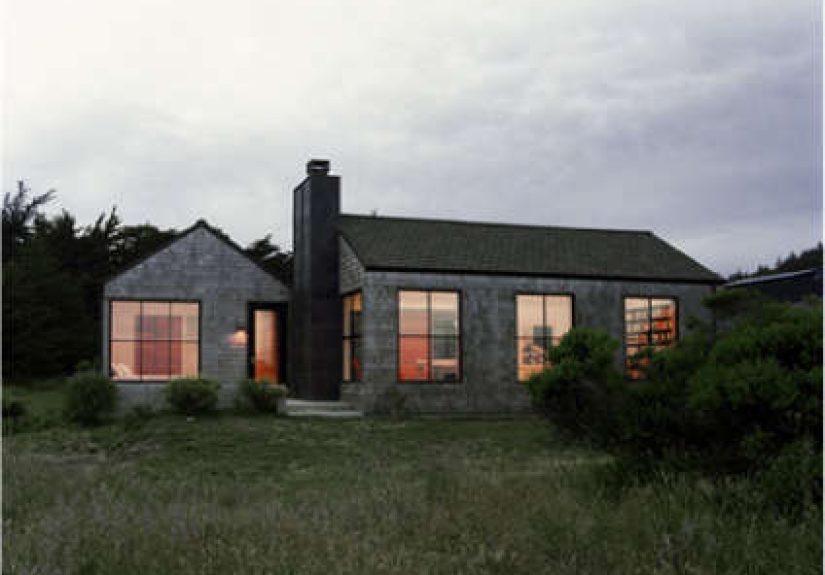
Finally, consider how the house feels at night. In many of Noyes’s projects,
warm interior glows spill out onto porches, courts, and decks. Exterior
lighting is understated: step lights, sconces at doors, maybe a strand of
soft string lights over an outdoor table. Aim for that same calm, lantern-like
quality. Replace a few harsh fixtures with dimmable, warmer bulbs; let
darkness and shadow do some of the design work for you.
When you put all of these experiences together—the sequence of
arrival, the framed views, the honest materials, the easy connections between
inside and out—you begin to understand why “Architect Visit: Nick
Noyes – Remodelista” resonates with so many design-minded readers. It is not
about fantasy square footage or experimental shapes. It is about clarity,
comfort, and houses that quietly support daily life while staying firmly
rooted in their surroundings.
Conclusion
A Nick Noyes house, as seen through Remodelista’s lens, offers a useful
blueprint for anyone planning a new build or serious renovation. Start with
simple forms, invest in light and views, lean on durable materials, and let
the landscape lead the design. Add thoughtful details—breezeways,
porches, outdoor rooms—and your home can feel both contemporary and
deeply grounded.
Whether you are a design professional, a homeowner collecting inspiration, or
simply someone who enjoys scrolling through beautifully lit cabins while
procrastinating, the work of Nick Noyes shows that good architecture does not
have to shout. It just has to listen carefully: to the site, to the climate,
and to the people who will call it home.