Table of Contents >> Show >> Hide
- Meet the Mind Behind the Cartoons
- Why Classic Literature Is Perfect Cartoon Material
- Inside “Artist Pokes Fun At Literature Classics In 30 Cartoons”
- Are These Cartoons “Spoilers” or Just Honest Summaries?
- Why Readers Love Seeing Their Favorite Books Roasted
- How People Actually Use These Cartoons in Real Life
- Extended Reflections: Experiences Around Literary Cartoons
- Conclusion
If you’ve ever stared at a 600-page “must-read” classic and thought, “There has to be a shortcut,” you’re going to love the way one artist tackles literature. Instead of dense pages, he gives you punchy, single-panel cartoons that roast, summarize, and lovingly poke fun at iconic novels in just a few clever lines and doodles.
The viral Bored Panda feature “Artist Pokes Fun At Literature Classics In 30 Cartoons” shines a spotlight on Canadian cartoonist John Atkinson, the mind behind the “Wrong Hands” comics. His minimalist drawings reduce everything from sweeping epics to existential dramas into a handful of words and a simple illustrationbasically, meme culture for book nerds.
These aren’t substitutes for reading. They’re playful “book spoilers” that invite readers to laugh at the stories they already love (or feel guilty for never finishing). And as silly as they look at first glance, Atkinson’s cartoons actually show deep understanding of theme, tone, and charactera surprisingly sharp form of literary criticism disguised as jokes.
Meet the Mind Behind the Cartoons
Who Is John Atkinson?
John Atkinson is a Canadian illustrator and cartoonist who studied fine art, later worked in graphic design, and eventually found his sweet spot in single-panel comics. His series “Wrong Hands” has been featured multiple times on Bored Panda and similar outlets, where he’s known for poking fun at everything from grammar and social media to science, art, andof courseclassic literature.
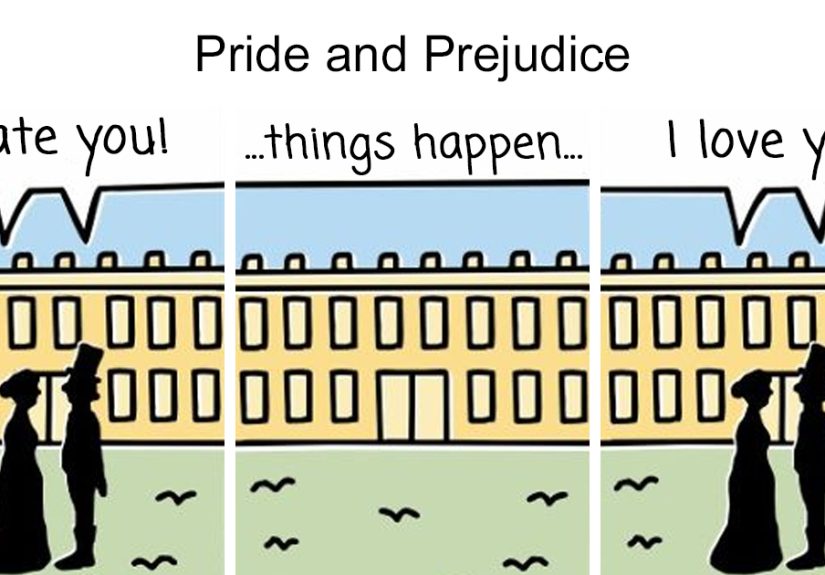
Atkinson’s style looks deceptively simple: minimal lines, basic shapes, and a short caption. But that simplicity is part of the comedy. When you compress something as sacred as Moby-Dick or Pride and Prejudice into a tiny, deadpan panel, the contrast between the cartoon and the original book is what makes people snort-laugh into their coffee.
The “Wrong Hands” Signature
Across his body of work, Atkinson tends to:
- Condense huge stories into one quick, witty line.
- Use simple characters and stick-figure–style designs.
- Play with labels, diagrams, and charts (perfect for book nerds and teachers).
- Highlight the parts of a story that everyone remembers but no one says out loud.
The literature cartoons featured on Bored Panda sit right at the intersection of fandom and parody. If you’ve read the books, the jokes feel delightfully accurate. If you haven’t, you still get enough context to laughand maybe feel a little called out.
Why Classic Literature Is Perfect Cartoon Material
Classic books are cultural landmarks, but let’s be honest: they’re also easy targets. They’re often long, slow, and full of symbolism your high-school teacher promised would “all make sense later.” That’s exactly why they work so well in cartoon form.
Big Themes, Tiny Panels
Classic novels usually revolve around huge ideaslove, obsession, class, war, identity, fate. Cartoons can shrink those themes down to a single, punchy moment. A book like Frankenstein becomes a quick gag about playing God with terrible project-management skills. Romeo and Juliet can be reduced to “two teenagers make every possible bad decision in under a week.”
This kind of visual summary is similar to what graphic adaptations and literary comics do more broadly: they reinterpret well-known works through a different medium, using imagery and design to clarify or critique the original. Educators and critics note that comics and graphic novels can open classic literature up to new audiences by simplifying structure and emphasizing key conflicts without dumbing the story down.
Relatable, Even If You’ve Never Read the Book
One of the reasons Atkinson’s cartoons spread so quickly on social media is that they work on multiple levels:
- For readers: they’re in-jokes that reward you for knowing the plot.
- For non-readers: they’re mini “explainers” that translate intimidating titles into simple, everyday language.
- For students: they’re a way to remember which classic is which before a test (no shame).
In a world where attention spans are under constant pressure from feeds and notifications, compressing a classic into a single joke is weirdly on-brand for modern reading culture.
Inside “Artist Pokes Fun At Literature Classics In 30 Cartoons”
The original Bored Panda piece pulls together 30 of Atkinson’s literary cartoons as a scrolling gallery. The selection hits many of the titles people bump into in school or on “100 books to read before you die” lists.
What the Cartoons Actually Do
Instead of retelling the entire plot, each panel:
- Boils the book down to its most recognizable conflict or twist.
- Uses blunt, almost spoiler-level honesty (“this character is doomed,” “everyone’s terrible,” and so on).
- Highlights the absurdity of the situation once you strip away the poetic language.
For example, a sweeping adventure story might become a joke about “walking… and more walking… and even more walking.” A romance novel might be reframed as a chart of bad decisions and miscommunication. You don’t get the nuance, but you definitely get the vibe.
Why People Share These Panels Nonstop
The comments and reposts around the feature show a familiar pattern:
- Readers tag friends: “This is the book I’ve been yelling about for years.”
- Teachers say they’re printing the cartoons for classroom walls.
- Book club members joke that this is the “cheat sheet” they always wanted.
Bored Panda has done similar roundups of witty, single-panel comics from multiple artists, and the formula rarely fails: short, highly shareable panels + a topic people already care deeply about = guaranteed engagement.
Are These Cartoons “Spoilers” or Just Honest Summaries?
Atkinson’s literature comics are often described as “book spoilers,” but they function more like humorous shorthand. Yes, they reveal major themes and outcomes, but for most classics, the ending is already baked into pop culture. You probably know how Dracula, Romeo and Juliet, or The Great Gatsby end even if you’ve never cracked the spine.
Why Spoilers Don’t Really Hurt Classics
With classic books, the “what happens” is less important than the “how” and “why.” Readers show up for:
- The language and style.
- The emotional build-up.
- The historic or cultural context.
- The slow reveal of character motivations.
A single cartoon can’t replace that experience. Instead, it acts as a playful teaser or a reminder. If you already love the book, you get to laugh at its most extreme traits. If you’ve been meaning to read it, the cartoon might actually nudge you closer.
Cartoons as Entry Points, Not Replacements
Educators who use comics and graphic adaptations in the classroom often describe them as “bridges” to full-length texts. They help:
- Reduce fear around “difficult” books.
- Clarify key themes and conflicts visually.
- Engage visual learners and reluctant readers.
A one-panel joke is obviously a much thinner bridge than a full graphic novel, but the principle is similar. By poking fun at literature classics, Atkinson makes them feel less like sacred relics and more like stories you’re allowed to engage with, critique, and laugh about.
Why Readers Love Seeing Their Favorite Books Roasted
There’s a special kind of joy in seeing a book you spent weeks reading turned into one snarky line. It’s like an inside joke between you, the author, and the cartoonist.
Nostalgia with a Wink
Many of the novels featured in these cartoons are ones people associate with school: late-night cram sessions, annotated pages, and essay deadlines. When you see a cartoon bluntly summarize a book you once struggled through, it validates the effort you put inand lets you laugh about it.
That nostalgia factor matters. Nostalgic mediawhether it’s cartoons referencing old shows, memes about childhood games, or comics about classic bookstends to perform extremely well online because it blends comfort with humor.
Intellectual Humor Without the Snobbery
“Literary humor” can sometimes feel elitist, filled with inside references that only English majors catch. Atkinson’s approach is the opposite. The jokes are smart but accessible:
- No heavy theory, just honest observations about plot and character.
- Plenty of exaggeration and absurdity.
- A warm tone that suggests affection, not hostility, toward the books.
That balance makes the cartoons perfect for platforms like Bored Panda, where the audience includes hardcore readers, casual browsers, teachers, students, and people who just love clever, bite-sized content.
How People Actually Use These Cartoons in Real Life
The appeal of “Artist Pokes Fun At Literature Classics In 30 Cartoons” doesn’t end at scrolling and sharing. People find real-world uses for these panels, especially in education and book culture.
In the Classroom
Teachers and professors have mentioned using Atkinson’s literature cartoons to:
- Kick off discussions about theme and tone (“Is this a fair summary?”).
- Compare the cartoon’s interpretation with students’ own impressions.
- Help students quickly differentiate between multiple novels they’re studying at once.
Because comics and illustrations have been widely recognized as useful tools for engaging students with classic texts, it’s not surprising that teachers reach for these panels when trying to make 19th-century prose feel less distant.
In Book Clubs and Reading Groups
Book clubs love conversation starters, and nothing gets people talking faster than a cartoon that “oversimplifies” their favorite story. Members might:
- Debate whether the cartoon nails the book’s core message.
- Rewrite the joke to reflect their personal interpretation.
- Create their own cartoon summaries as a creative activity.
It turns the reading experience into a collaborative game, not just a quiet assignment.
Extended Reflections: Experiences Around Literary Cartoons
Beyond the viral headline and the quick laughs, there’s a deeper layer of experience around “Artist Pokes Fun At Literature Classics In 30 Cartoons.” These comics don’t just exist in isolation; they become part of how people remember, revisit, and relate to beloved (and sometimes dreaded) classics.
Remembering the First Time You “Met” a Classic
Think back to the first time you encountered a big-name novel. Maybe it was in high school, when a teacher assigned a book that felt older than the furniture in the classroom. Or maybe it was a self-imposed challenge in adulthood: “This year, I’m finally reading all the big classics.” Fast forward to seeing that same book turned into a gentle roast in one of Atkinson’s cartoons.
For many readers, the cartoon triggers a flood of memory:
- The friend who swore they finished the book but only read the summary.
- The moment a plot twist finally made sense on the third reread.
- The satisfying feeling of turning the last page after weeks of slow progress.
When a cartoon collapses all of that effort into a single punchline, it doesn’t erase the experienceit crystalizes it. The book becomes easier to talk about, and the memory feels lighter and funnier.
How Literary Cartoons Make Classics Feel More “Ours”
Classic literature can sometimes feel like it belongs to museums and academic journals instead of everyday readers. But cartoons like these pull the books down from their glass display cases. When someone doodles a simple character labeled “brooding romantic hero” or “obsessed sea captain,” they’re claiming a little piece of that story and saying, “This is how it looks from where I sit.”
That’s powerful. Stories become part of living culture when people feel free to remix, parody, and reinterpret them. Whether it’s anime series based on famous novels, graphic novel adaptations, or one-panel jokes, each new version keeps the originals in circulation for new generations.
Readers often report that after laughing at a cartoon, they feel more curious about the book behind it. It’s less intimidating to pick up a title when you’ve already seen someone play with it. Instead of feeling like homework, the novel becomes a puzzle you actually want to solve: “Is the book really that dramatic?” “Is the character truly as messy as the cartoon suggests?”
Using Humor to Process Heavy Themes
Many literary classics wrestle with heavy topicswar, injustice, death, obsession, betrayal. Humor doesn’t erase the seriousness of those themes, but it gives readers a way to process them without feeling overwhelmed. A light-hearted cartoon can act as emotional pressure relief after a particularly intense chapter or a bleak ending.
Readers sometimes share that these kinds of cartoons helped them talk about difficult books in therapy, support groups, or classrooms. It’s easier to say, “This cartoon really captures how hopeless that ending felt,” than to launch straight into an academic analysis. Humor becomes a doorway into deeper conversation rather than a distraction from it.
Inspiring People to Create Their Own Cartoons
Another experience tied to the “30 cartoons” concept is creative inspiration. When people see how simple and effective Atkinson’s panels are, many think, “I could try that.” You don’t need art-school-level drawing skills to sketch a stick figure and write a short line of text underneath.
Book lovers, teachers, and students sometimes create their own one-panel summaries as:
- A study tool before exams.
- An icebreaker activity in literature classes.
- A fun social media post to share with fellow fans.
In that sense, “Artist Pokes Fun At Literature Classics In 30 Cartoons” isn’t just a gallery you scroll through once. It’s a prompt. It quietly invites readers to question, condense, and reinterpret what they readand to accept that it’s okay to laugh at serious books while still respecting them.
The Lasting Impact of a Single Panel
Years from now, many people won’t remember every chapter of every classic they’ve read. But they might remember one tiny drawing that nailed the essence of a book in a single joke. That mental image can be what nudges them to reread the novel, recommend it to a friend, or recognize its themes in modern stories and adaptations.
That’s the quiet magic behind Atkinson’s work and the Bored Panda feature that boosted it: you come for the laughs, but you leave with a sharper, more confident relationship to the classics themselves. The books don’t get smallerbut they do feel closer.
Conclusion
“Artist Pokes Fun At Literature Classics In 30 Cartoons | Bored Panda” is more than a scrollable collection of jokes. It’s a bridge between highbrow literature and everyday humor, a reminder that even the most revered books can handle a little playful teasing. By condensing big themes into small panels, John Atkinson makes classics feel accessible, memorable, and surprisingly funeven if you still haven’t quite finished reading them.
As long as readers keep discovering and sharing these cartoons, classic literature will continue to live not just on dusty shelves, but in news feeds, group chats, classrooms, and sketchbooks. And if a single cartoon is what finally convinces someone to pick up that intimidating novel they’ve been avoiding? That sounds like a happy ending.
sapo: Classic literature doesn’t always have to feel like an academic workout. In “Artist Pokes Fun At Literature Classics In 30 Cartoons | Bored Panda,” Canadian cartoonist John Atkinson turns heavyweight novels into light, clever single-panel jokes that still capture each story’s core. From school reading-list staples to iconic epics, these cartoons roast, celebrate, and reintroduce beloved books to modern readers, showing how humor, minimal art, and sharp insight can make even the most intimidating classics feel fun, familiar, and wonderfully shareable.