Table of Contents >> Show >> Hide
- What Makes a Library “Beautiful” (Besides the Obvious)
- How I Shot These (Without Being “That Tourist”)
- The 22 Pictures
- Picture 1: George Peabody Library (Baltimore, Maryland, USA)
- Picture 2: Library of Congress, Thomas Jefferson Building (Washington, D.C., USA)
- Picture 3: New York Public Library, Rose Main Reading Room (New York City, USA)
- Picture 4: Boston Public Library, Bates Hall (Boston, Massachusetts, USA)
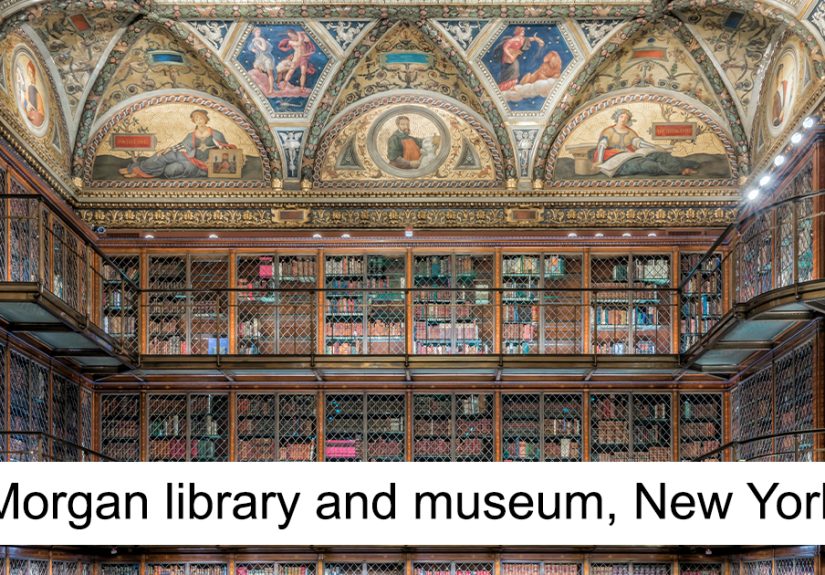
- Picture 5: The Morgan Library (New York City, USA)
- Picture 6: Beinecke Rare Book & Manuscript Library (New Haven, Connecticut, USA)
- Picture 7: Seattle Central Library (Seattle, Washington, USA)
- Picture 8: Los Angeles Central Library (Los Angeles, California, USA)
- Picture 9: San Diego Central Library (San Diego, California, USA)
- Picture 10: Trinity College Dublin, The Long Room (Dublin, Ireland)
- Picture 11: Biblioteca Joanina (Coimbra, Portugal)
- Picture 12: Mafra Palace Library (Mafra, Portugal)
- Picture 13: Admont Abbey Library (Admont, Austria)
- Picture 14: Austrian National Library, State Hall (Vienna, Austria)
- Picture 15: Strahov Monastery Library (Prague, Czechia)
- Picture 16: Bibliothèque Sainte-Geneviève (Paris, France)
- Picture 17: Stuttgart City Library (Stuttgart, Germany)
- Picture 18: Tianjin Binhai Library (“The Eye”) (Tianjin, China)
- Picture 19: Biblioteca Vasconcelos (Mexico City, Mexico)
- Picture 20: Royal Portuguese Cabinet of Reading (Rio de Janeiro, Brazil)
- Picture 21: Bibliotheca Alexandrina (Alexandria, Egypt)
- Picture 22: Baroque Library of Metten Abbey (Metten, Germany)
- Final Thoughts
- Extra : Postcards From the Stacks
Some people collect fridge magnets. I collect librariesthe kind that make you whisper even when you’re alone,
because the room itself feels like it has a “quiet mode” button. On my travels, I started taking photos of
beautiful libraries the way other people photograph sunsets: compulsively, slightly dramatically, and with
the sincere belief that this one will change my life (spoiler: many did).
This isn’t just a list of pretty rooms with pretty books. These places are time machines, community centers,
architectural flexes, and, occasionally, elaborate reminders that humans will build cathedrals for anything
they truly worshipincluding reading.
What Makes a Library “Beautiful” (Besides the Obvious)
The best libraries aren’t only photogenicthey’re thoughtfully designed for how knowledge moves: through
people, through light, through silence, through conversation. Some are gilded and theatrical. Others are
modern and minimalist, like a spaceship that decided to major in literature. What they share is intention:
a sense that learning deserves a room that feels special.
How I Shot These (Without Being “That Tourist”)
- Go early for softer light and fewer elbows in your frame.
- Look up (ceilings are the library equivalent of plot twists).
- Respect the space: flash off, voice down, and don’t block aisles like you’re filming a music video.
- Photograph the details: stair rails, lamp glow, worn stepsbeauty lives in the edges.
The 22 Pictures
Each “picture” below is the moment I tried to capture: a quick snapshot of the vibe, the architecture, and
what to look for if you visit with a camera (or just your eyeballs).
Picture 1: George Peabody Library (Baltimore, Maryland, USA)
This place looks like a wedding cake made of cast ironfive tiers of ornate balconies rising to a skylight
that makes the whole room glow. I framed the shot straight up from the marble floor so the stacks felt
endless, like a vertical novel you fall into.
- Best angle: Center of the atrium, lens tilted up.
- Don’t miss: The symmetryyour camera will feel emotionally supported here.
Picture 2: Library of Congress, Thomas Jefferson Building (Washington, D.C., USA)
The Great Hall is what happens when a country decides learning should look like a national treasure.
Marble, mosaics, and enough artistic detail to make your phone storage file a complaint. My favorite shot:
the grand stairlines leading into the decorated heights, with tiny humans for scale.
- Best angle: Wide shot that includes the staircases and upper arches.
- Pro tip: Stand still for a secondthis hall rewards patience.
Picture 3: New York Public Library, Rose Main Reading Room (New York City, USA)
Long tables, green-shaded lamps, and a ceiling painted like you’re reading beneath a politely dramatic sky.
I shot the room lengthwise to emphasize its scalebecause it’s so long it basically has its own ZIP code
energy.
- Best angle: From one end, centered on the lamp rows.
- Don’t miss: The ceiling muralsclouds with ambition.
Picture 4: Boston Public Library, Bates Hall (Boston, Massachusetts, USA)
Bates Hall is hushed in a way that makes you want to apologize to the room for having thoughts too loudly.
My shot: the barrel-vaulted ceiling marching over the long tables like a calm, architectural heartbeat.
- Best angle: Low perspective at table height, pointed down the hall.
- Pro tip: Capture the lampsinstant “classic reading room” mood.
Picture 5: The Morgan Library (New York City, USA)
A private library that grew up and became a public cultural jewel. The room feels like Renaissance ideals
got invited to a Manhattan dinner party and showed up in velvet. I focused on the warm wood, gilded details,
and the sense that every corner is curated.
- Best angle: Detail shotscolumns, ceiling art, and the “I own rare manuscripts” vibe.
- Don’t miss: The feeling that the books are dressed better than you are.
Picture 6: Beinecke Rare Book & Manuscript Library (New Haven, Connecticut, USA)
From outside, it’s a crisp modern box. Inside, the translucent panels filter light so the rare books can
live their best (protected) lives. I shot the glowing interior and the glass tower of books like it was a
shrinebecause, honestly, it is.
- Best angle: Include the book tower centered in the frame.
- Pro tip: Let the light do the workno harsh contrast needed.
Picture 7: Seattle Central Library (Seattle, Washington, USA)
Glass, steel, and bold geometrythis building doesn’t whisper, it declares. I photographed the diamond-like
exterior first (because it looks like the future), then moved inside to catch the “Books Spiral,” a continuous
ramp of nonfiction that feels like a story you can walk through.
- Best angle: Exterior from a corner for maximum geometry.
- Don’t miss: The sense that modern libraries can be playful, not just practical.
Picture 8: Los Angeles Central Library (Los Angeles, California, USA)
The rotunda is the star: murals, patterned motifs, and a chandelier that looks like astrology got a grant.
My shot centered the ceiling so it felt like the building was telling a myth about itselfbecause it kind of is.
- Best angle: Straight up beneath the rotunda centerpiece.
- Pro tip: Grab a second shot of mural detailsyour future self will thank you.
Picture 9: San Diego Central Library (San Diego, California, USA)
That lattice dome is an instant skyline signature. Inside, the reading areas feel airylike the building
is trying to give your brain more oxygen for thinking. I framed the dome overhead and the open terraces
looking down into the reading room.
- Best angle: Wide shot capturing dome structure and interior openness.
- Don’t miss: The contrast between engineering and calm.
Picture 10: Trinity College Dublin, The Long Room (Dublin, Ireland)
The Long Room is the library photo you’ve seen a thousand timesuntil you stand inside it and realize no
camera has ever fully explained the feeling. I shot along the corridor so the barrel-like ceiling and
shelves pulled the eye forward like a perfectly paced sentence.
- Best angle: Symmetrical centerline shot down the aisle.
- Pro tip: Aim for depth; let the room feel endless.
Picture 11: Biblioteca Joanina (Coimbra, Portugal)
Baroque drama, gilded shelves, and a secret weapon against book-eating insects: bats. I photographed the
ornate woodwork and ceiling details, trying to capture the “Age of Enlightenment, but make it fabulous”
energy.
- Best angle: Detail-rich shots of shelves and ceiling.
- Don’t miss: The storybeauty and preservation working together.
Picture 12: Mafra Palace Library (Mafra, Portugal)
Imagine a palace decided it also needed a library the length of your attention span on vacation (so: long).
Then add bats that patrol at night to protect the collection. My photo focused on the grand, pale floors
and the sweeping shelveselegant, but quietly practical.
- Best angle: Down-the-hall perspective for scale.
- Pro tip: Let the architecture tell the “palace of learning” story.
Picture 13: Admont Abbey Library (Admont, Austria)
White, bright, and unbelievably ornatelike a cloud decided to become a library. I captured the ceiling
frescoes and the long hall that feels designed to make knowledge look holy. The place is famous for how it
blends architecture, sculpture, and painting into one luminous experience.
- Best angle: Mid-hall wide shot that includes ceiling frescoes.
- Don’t miss: The lightthis is Baroque, but it’s also airy.
Picture 14: Austrian National Library, State Hall (Vienna, Austria)
This hall feels imperial in the most literal sense: grand scale, sculpted details, and a dome that looks
like it was commissioned by someone who never heard the word “subtle.” I framed columns and the central
dome so the photo felt like stepping into a ceremonial space for books.
- Best angle: Center aisle aiming toward the dome.
- Pro tip: Include a few readers for scaleotherwise it looks unreal.
Picture 15: Strahov Monastery Library (Prague, Czechia)
Two halls, frescoed ceilings, globes, and the kind of atmosphere that makes you want to invent an excuse to
study Latin. I shot the Philosophical Hall from the threshold, letting the shelves rise like a wave of
history.
- Best angle: Doorway framing shotinstant depth and drama.
- Don’t miss: The ceiling and old globesknowledge, but make it cinematic.
Picture 16: Bibliothèque Sainte-Geneviève (Paris, France)
This is where iron becomes poetry. The reading room’s elegant metal framework and arches feel like an early
love letter to modern architecture, while still being warmly human in scale. I photographed the twin aisles
to emphasize the rhythmic structurelike the room has its own meter.
- Best angle: Straight down one aisle to show repeating arches.
- Pro tip: Shoot when the lamps are on for extra warmth.
Picture 17: Stuttgart City Library (Stuttgart, Germany)
From the outside: a perfect cube. Inside: a bright, stepped atrium that feels like minimalism learned how to
levitate. My favorite shot caught the geometric stairlines and the “white-on-white” calm that makes every
person look like they’re starring in a very quiet sci-fi film.
- Best angle: Upper level looking down into the atrium.
- Don’t miss: The symmetrythis building loves clean lines.
Picture 18: Tianjin Binhai Library (“The Eye”) (Tianjin, China)
A luminous sphere at the center, terraces of shelves flowing around it like wavesthis place is designed to
be photographed (politely, of course). I framed the “eye” so it felt like the building was looking back,
judging my reading list.
- Best angle: Central shot that captures the sphere and cascading shelves.
- Pro tip: Include people on the terraces to show scale.
Picture 19: Biblioteca Vasconcelos (Mexico City, Mexico)
This one feels futuristic in a “books are floating” kind of way. The shelves and walkways create a layered,
almost pixelated effect that makes the whole interior look like an installation. My shot aimed across the
stacks so the structure felt infiniteand slightly surreal.
- Best angle: Side view that shows stacked layers and bridges.
- Don’t miss: The illusionyour camera will double-take.
Picture 20: Royal Portuguese Cabinet of Reading (Rio de Janeiro, Brazil)
Neo-Manueline splendor, carved detail everywhere, and an interior that looks like a gemstone box for
Portuguese literature. I photographed upward to include the intricate balconies and luminous heightbecause
this library doesn’t do “casual.”
- Best angle: Upward shot from the central floor area.
- Pro tip: Let the shadows add depththis room loves contrast.
Picture 21: Bibliotheca Alexandrina (Alexandria, Egypt)
A modern revival of an ancient legend, shaped like a bold disc rising near the harbor. I photographed the
exterior geometry first (it’s iconic), then the expansive reading space to capture the sense of scalelike
the building is saying, “Yes, we remember what this city used to mean.”
- Best angle: Exterior from a distance to show the disc form.
- Don’t miss: The feeling of modern design carrying old mythology forward.
Picture 22: Baroque Library of Metten Abbey (Metten, Germany)
Rococo exuberance in full bloomfrescoes, sculpture, and bookcases that look like they’re performing.
My photo focused on the ceiling and the sweeping room, because Metten’s library feels like a stage where
the main character is “the joy of learning.”
- Best angle: Wide shot that includes ceiling frescoes and shelving curves.
- Pro tip: Take one detail shotornament here is half the story.
Final Thoughts
If you’re building a travel bucket list, add at least one beautiful library to it. Not because you “should,”
but because libraries make you feel like the world is bigger and kinder than your to-do list. They’re proof
that people will still gather around knowledgewhether it’s housed in gilded oak or glass and steel.
Extra : Postcards From the Stacks
Here’s the funny thing about library travel: it changes the way you notice cities. Museums are wonderful,
but they can feel like formal introductions. Libraries feel like you’re meeting a place in its pajamasstill
impressive, but more honest. In Seattle, I watched people treat the Central Library like a living room with
better lighting. In New York, I realized the Rose Main Reading Room isn’t just pretty; it’s a public promise
that you don’t need a private study and a trust fund to sit at a grand table and do serious thinking.
My best experiences weren’t even the “perfect shot” moments. They were the small ones: a student tapping a
pencil in Boston’s Bates Hall like it was the only sound allowed on earth; a tourist in D.C. whispering “wow”
so softly it barely existed; a librarian in Los Angeles pointing out ceiling details with the pride of
someone showing you their favorite family photo. Those moments reminded me that beauty isn’t decorationit’s
care. Someone chose those materials, restored those murals, designed that light, and kept those books safe
so strangers could walk in and feel welcome.
And yes, I learned a few practical truths. One: libraries reward early risers. The difference between a
peaceful morning photo and an afternoon crowd is the difference between “timeless masterpiece” and “why is a
backpack in my frame?” Two: you can photograph architecture forever, but you can’t photograph atmosphere
unless you slow down. When I stopped sprinting for angles and started sittingjust sittingI noticed how
each library sounds. Some have a soft hum of pages turning. Others have that thick monastic quiet that feels
like it has weight. Modern libraries can sound like community: distant conversation, kids laughing in a
corner, a printer doing its little robotic dance.
I also started noticing what libraries say about their cultures. Baroque halls in Europe can feel like
knowledge wearing ceremonial robesgrand, revered, slightly intimidating. Contemporary libraries often feel
like invitations: open sightlines, flexible spaces, comfy seating, and architecture that says, “You belong
here even if you’re just here to charge your phone and read one paragraph.” Neither approach is “better.”
They’re different answers to the same question: how do we honor learning in public?
The biggest surprise was how emotional these places can be. I didn’t expect to feel tender in a room full of
bookshelves. But then you’re in Trinity’s Long Room, staring down a corridor of history, and it hits you:
countless people came here to make sense of their lives. They studied, they doubted, they hoped, they
learned. A beautiful library is a reminder that your curiosity is not a quirky hobbyit’s a human tradition.
And if you can capture even a fraction of that feeling in a picture, you’ve taken more than a travel photo.
You’ve taken a little proof that the world still values the life of the mind.