Table of Contents >> Show >> Hide
- Start with How You Want Your Home to Feel
- Nail the Layout, Scale, and Proportion
- Color Confidence the Better Homes & Gardens Way
- Layer Lighting for a Cozy, Functional Space
- Decorate with What You Already Have
- Make Small Spaces Feel Bigger
- Style with Art, Textiles, and Accessories
- Real-Life Decorating Scenarios
- of Hands-On Decorating Experience
- Conclusion: Decorate with Confidence, Not Fear
If you’ve ever flipped through a Better Homes & Gardens magazine, admired those calm, collected rooms, and then stared at your own chaos wondering where it all went wrong, you’re not alone. Great decorating isn’t magic; it’s a mix of a few solid rules, some smart shopping, and a willingness to move the sofa three times until it finally feels right.
This decorating advice pulls together editor- and designer-backed tips on layout, color, lighting, and styling so you can create rooms that look pulled together and actually work for everyday life. Think of it as the friendly, practical version of interior design schoolwithout anyone judging your throw pillow addiction.
Start with How You Want Your Home to Feel
Before you buy a single pillow, decide how you want your space to feel. Cozy? Airy? Energizing? Better Homes & Gardens–style rooms almost always start with a feeling, then work backward to color, furniture, and decor.
Ask the Right Questions
Grab a notebook and walk through each room. Ask yourself:
- What actually happens herelounging, working, entertaining, homework, gaming?
- How do I want this room to feelcalm and serene, bright and happy, or dramatic and moody?
- What currently drives me crazyclutter, bad lighting, awkward layout?
Your answers become your decorating brief. A family room where everyone watches TV and plays board games needs comfortable seating and durable fabrics. A home office calls for great lighting and a clutter-free backdrop for video calls.
Find Inspiration, Not Copies
Use magazine spreads and online galleries as a starting point, not a script. Note patterns: do you keep saving rooms with light walls and warm wood? Tons of plants? Clean lines and black accents? Those are clues to your personal style. You’re aiming for “inspired by Better Homes & Gardens,” not “I copied this room pixel by pixel.”
Nail the Layout, Scale, and Proportion
Even gorgeous furniture looks wrong if the layout is off. Designers obsess over scale and circulation for a reason: a room should be easy to move through and comfortable to sit in, with furniture sized to the space.
Plan the Floor Plan Before You Shop
Pull out a tape measure before you fall in love with a giant sectional online. Measure the room, doors, windows, radiators, and any architectural quirks. Sketch a simple floor plan on graph paper or use an app, and play with furniture placement there first.
- Leave about 30–36 inches for main walkways so people aren’t shimmying around furniture.
- Between the sofa and coffee table, aim for around 16–18 inchesclose enough to set down a drink, far enough that knees aren’t constantly bumping.
- In dining areas, allow at least 36 inches between the table edge and wall or other furniture so chairs can slide out comfortably.
Right-Size Your Furniture
One of the biggest decorating mistakes is choosing furniture that’s either enormous or tiny for the room. A sprawling sectional in a compact living room will dominate the space and make everything else feel awkward. On the flip side, a petite sofa floating in a large room looks lost and underwhelming.
Use your measurements as a filter before you shop. For example, if your living room is 11×14 feet, you might do a standard sofa plus two chairs instead of a huge L-shaped sectional. In a long, narrow room, try two smaller sofas facing each other or a sofa paired with a bench so the room doesn’t feel like a hallway.
Respect the “Rules of Thumb” (Then Bend Them)
Designers lean on a few simple guidelines:
- Ceiling lights above walkways should hang high enough that the bottom is about 7 feet from the floor.
- A rug in the living room should be big enough that at least the front legs of your seating sit on it.
- Coffee tables usually look balanced at about two-thirds the length of the sofa.
These are starting points, not laws. Adjust based on your room and what feels comfortable, but use them to avoid obvious proportion problems.
Color Confidence the Better Homes & Gardens Way
Color is where most of us start panicking. The good news: you don’t need to memorize a color wheel to create a harmonious palette. You just need a simple plan.
Choose a Simple Palette
Think in terms of a three-part formula:
- Main color (60%) – usually your wall color and large pieces like the sofa or rug.
- Secondary color (30%) – chairs, bedding, curtains, or accent furniture.
- Accent color (10%) – pillows, art, small decor, or flowers.
For a classic BHG-inspired living room, that might be soft white walls, warm camel and wood tones as the secondary color, and accents of leafy green or dusty blue. In a bolder home, the main color might be a rich navy with white trim, wood, and brass providing balance.
Pay Attention to Undertones
Neutrals aren’t truly neutralthere are warm beiges with yellow undertones and cool grays with blue undertones. Try to keep undertones consistent in a room so nothing looks strangely dingy or overly pink next to something else.
Instead of picking paint from a tiny chip, test large swatches on your walls or on poster board. Look at them in morning light, evening light, and with lamps on. A gray that looks calm in the store can turn purple at home if the undertones clash with your flooring or lighting.
Layer Lighting for a Cozy, Functional Space
If your room feels flat or harsh, it’s probably a lighting issue, not a furniture problem. Designers talk about three layers of light: ambient, task, and accent.
Build All Three Layers
- Ambient lighting is the overall glowceiling fixtures, recessed lights, or a large floor lamp.
- Task lighting covers specific jobsdesk lamps, reading lamps by the sofa, under-cabinet lighting in the kitchen.
- Accent lighting highlights featurespicture lights, wall sconces, or a lamp on a console that creates a warm pool of light.
Dimmer switches are an inexpensive way to add instant atmosphere. In a living room, you might dim the overhead light at night, turn on a floor lamp next to the sofa, and light a small table lamp by the entry to create layers and shadows that feel welcoming.
Decorate with What You Already Have
You don’t have to start from scratchor drain your bank accountto get a fresh look. A classic Better Homes & Gardens trick is to “shop your house” before hitting the stores.
Rearrange and Reimagine
Try moving pieces between rooms: a bench from the entry might become a coffee table, a bedroom dresser might moonlight as a living room media console, and those cute kitchen baskets could end up storing blankets in the family room.
Small, inexpensive updates can make existing pieces feel new:
- Swap out lamp shades for updated shapes or textures.
- Change throw pillow covers seasonally instead of buying new inserts.
- Paint a tired side table in a deep, saturated color for a focal point.
- Reframe art or create a gallery wall from prints, kids’ art, and photos you already own.
Make Small Spaces Feel Bigger
Compact rooms can absolutely look airy and open with the right decorating moves. Home stagers and designers rely on a few consistent tricks to make small spaces live larger.
- Choose furniture with exposed legs instead of heavy skirts, so more floor is visible.
- Use mirrors opposite windows to bounce natural light around the room.
- Keep the color palette fairly tightsimilar tones on walls, trim, and larger furniture reduce visual busyness.
- Use appropriately sized rugs; a rug that’s too small makes a room feel cramped, not bigger.
- Limit clutter on surfaces and keep walkways clear so the eye can flow easily through the space.
In tiny apartments, consider multi-tasking pieces: a storage ottoman that hides toys, a drop-leaf table that can expand for guests, or nesting tables that tuck away when not needed.
Style with Art, Textiles, and Accessories
This is the fun partwhere your personality shows up. The key is to be intentional. A few well-chosen pieces will always look better than shelves stuffed with random decor.
Hang Art at the Right Height
A common mistake is hanging art too high or choosing pieces that are far too small. As a general guide, the center of artwork should be around eye level (roughly 57–60 inches from the floor), and art above a sofa or console should be about two-thirds the width of the furniture below it.
Gallery walls look best when the spacing between frames is consistent and the outer edges form a loose rectangle or square. Lay everything out on the floor first, snap a photo you like, then transfer it to the wall.
Mix Textures, Not Just Colors
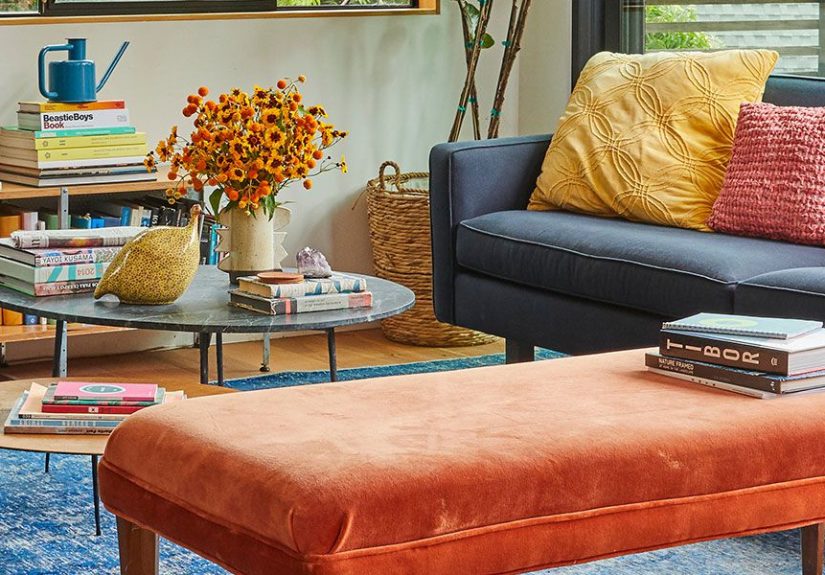
To get that layered, magazine-ready look, mix a variety of textures: linen, velvet, leather, wool, rattan, wood, metal. In a neutral room, texture keeps things from feeling flat. Picture a cream sofa with a chunky knit throw, a woven basket, a brass lamp, and a velvety pillowsame color family, but tons of visual interest.
Curate, Don’t Clutter
When styling shelves and surfaces, think in odd numbers and varied heights. Group items in threes, mix books with objects, and leave some breathing room. A single leafy plant, a stack of books, and a small bowl on a coffee table will feel calmer than a collection of ten small trinkets.
Real-Life Decorating Scenarios
1. The Blank-Slate Living Room
You’ve moved into a new place and you’re staring at bare walls and an echoey living room. Start with function and layout: decide where the main seating zone will be, then choose a sofa that fits your dimensions, a rug big enough to ground the area, and a coffee table that’s the right scale. Add a floor lamp and a table lamp for layered light before you worry about small accessories.
2. The Dark, Dreary Bedroom
If your bedroom feels cave-like, lighten the biggest surfaces: wall color, bedding, and window treatments. Swap heavy drapes for light-filtering curtains, choose a lighter duvet or quilt, and bring in bedside lamps with soft white bulbs. Add a pale rug to visually brighten the floor. A single piece of art above the headboard can become a serene focal point.
3. The Multipurpose Room
When one room has to be a home office, guest room, and workout space, zoning is everything. Use rugs and furniture placement to create a clear work area, a relaxing seating or sleeping area, and a corner for exercise equipment. Closed storage (like cabinets or baskets with lids) hides visual clutter so the room doesn’t look like a utility closet.
of Hands-On Decorating Experience
It’s one thing to read decorating advice; it’s another to live through the process of turning a “before” into an “after.” Here are a few real-world lessons that echo that Better Homes & Gardens sensibilitysmart, approachable, and totally livable.
The Sofa That Ate the Living Room
Almost everyone has a story about the sofa that looked perfect online and then arrived like a small cruise ship. In one modest living room, the gigantic sectional technically fit the wall but left no space for a side table, no proper walking path, and forced the TV into a corner. The fix wasn’t easywe’re talking resale and replacementbut the lesson stuck: always tape out the footprint of major pieces before purchasing. Once the owners swapped to a streamlined sofa and two armchairs, the room instantly felt bigger, and they gained more flexible seating for guests.
When Paint Color Goes Wrong (and How to Recover)
Another common decorating adventure: the wall color that looked calm on the sample card but turned neon on the wall. A light gray that seemed soft in the store can read icy blue in a north-facing room or weirdly purple next to warm wood floors. The experience most homeowners share is that repainting is annoying but worthwhile. The takeaway is to test big samples in multiple spots and live with them for a few days. One couple went from a too-bright blue to a quieter blue-gray with a hint of green, and suddenly their art, rug, and furniture all made sense together.
The Power of Editing
Many spaces don’t need more stuff; they need less. A family who loved souvenirs and framed photos realized their living room shelves looked more like a storage unit than a display. One afternoon, they pulled everything off, grouped like items, and only put back their favorites. They added a couple of plants and a few larger baskets to hide the not-so-pretty necessities. The room didn’t lose personalityit finally gained focus. Visitors started commenting on the beautiful shelves instead of just noticing the clutter.
Small Changes, Big Feelings
Sometimes, single upgrades make an outsized difference. Swapping heavy, dark curtains for light linen panels can completely change the mood of a room. Replacing a dated overhead light with a simple modern fixture instantly lifts the eye and makes the entire space feel fresher. Even something as simple as a new lampshade, a stack of fresh pillow covers, or a runner in a long hallway can make your home feel more intentional.
Embracing Imperfection
Finally, many seasoned decorators will tell you: a home that looks like a photo shoot all the time can feel stiff in real life. The rooms that feel best usually have a bit of personality and quirkbooks that are actually read, a well-loved chair, a handmade piece of art from a child, a mix of high and low. The real goal of decorating advice, especially in the Better Homes & Gardens spirit, is to help you create a home that supports your everyday routines and makes you smile when you walk in the door, not one that impresses strangers for five minutes.
Conclusion: Decorate with Confidence, Not Fear
Beautiful, livable rooms aren’t about chasing every trend or buying everything new. They’re about understanding a few core principleslayout, scale, color, lighting, and thoughtful stylingthen applying them to your real life, your real budget, and your real home. When you start with how you want a room to feel, plan the practical basics, and layer in personality, you end up with spaces that feel as welcoming as those Better Homes & Gardens spreads, but uniquely yours.