Table of Contents >> Show >> Hide
- What Makes This “Basic” Gruyère Quiche So Good?
- Ingredients
- Equipment You’ll Be Glad You Used
- Step-by-Step: How to Make Basic Quiche With Gruyère
- Custard Science (No Lab Coat Required)
- Troubleshooting: Quiche Problems and Quick Fixes
- Easy Variations (Same Method, New Personality)
- Make-Ahead, Storage, and Reheating
- Serving Ideas That Make It Feel Like a Whole Meal
- of Real-Life Quiche Experiences
- Conclusion
Quiche has a reputation problem. People hear “quiche” and picture a wobbly, beige cafeteria wedge that tastes like
regret and overcooked eggs. Let’s fix that. This basic quiche with Gruyère is the kind that converts skeptics:
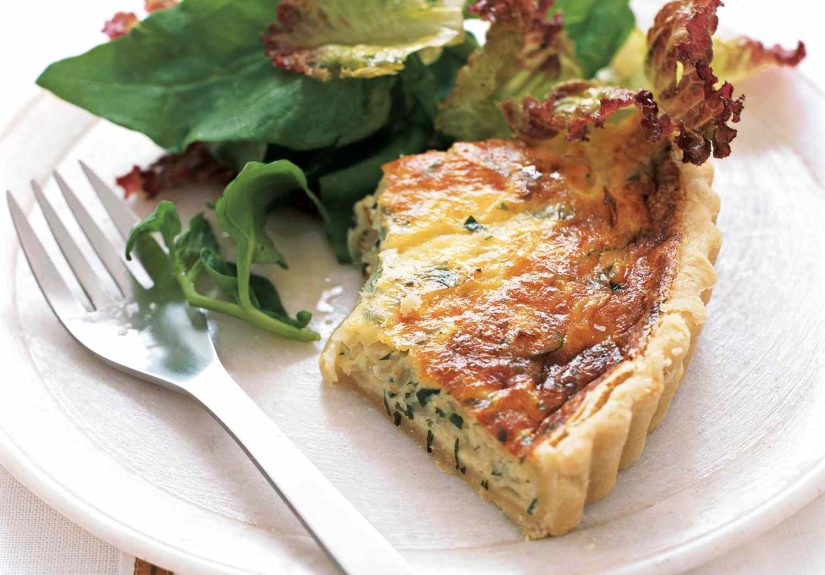
a crisp crust (yes, even on the bottom), a silky custard that slices cleanly, and nutty Gruyère that tastes like
it belongs at a fancy brunch where everyone says “mmm” a little too loudly.
The best part? You don’t need a culinary degree, a French accent, or a pastry tattoo. You just need a solid ratio,
a gentle bake, and the courage to pull it from the oven while the center still has a tiny jigglelike it’s waving
goodbye before it sets up perfectly.
What Makes This “Basic” Gruyère Quiche So Good?
- Gruyère brings the flavor: nutty, savory, and melty without turning greasy or stringy.
- A custard that’s creamy, not rubbery: lower heat + proper egg-to-dairy balance = silk.
- No soggy-bottom sadness: we blind-bake (par-bake) the crust and use a few pro tricks.
- Brunch-friendly: it reheats well, travels well, and looks like you tried harder than you did.
Ingredients
Crust (choose your adventure)
- 1 9-inch pie crust, homemade or store-bought (deep-dish is great if you like taller slices)
- Optional: 1 egg white (for sealing the crust)
Gruyère custard filling
- 4 large eggs
- 1 cup heavy cream
- 1/2 cup whole milk (or use 1 1/2 cups half-and-half instead)
- 1 1/2 cups grated Gruyère (about 5–6 oz), lightly packed
- 1/2 tsp kosher salt (reduce a pinch if your cheese is extra salty)
- 1/4 tsp freshly ground black pepper
- Pinch ground nutmeg (optional, but “quietly brilliant”)
Optional flavor boosters (still “basic,” just more fun)
- 2–3 tbsp minced chives or sliced green onions
- 1 small shallot, sautéed until soft
- 1–2 tsp Dijon mustard (thin layer on the crust before filling)
Equipment You’ll Be Glad You Used
- 9-inch pie dish (glass, ceramic, or metal)
- Rimmed baking sheet (for easy handling and spill insurance)
- Parchment paper or foil
- Pie weights, dried beans, or uncooked rice for blind-baking
- Whisk + mixing bowl
- Optional but excellent: instant-read thermometer
Step-by-Step: How to Make Basic Quiche With Gruyère
1) Prep and blind-bake the crust
- Preheat oven to 400°F. Place a rack in the middle.
-
Fit the pie crust into your dish. Crimp the edge. Chill it for 10–20 minutes if it feels soft
(cold dough = less shrinkage). - Prick the bottom lightly with a fork (a few pokes, not a crime scene).
- Line with parchment (or foil) and fill with pie weights/beans/rice. Set the pie dish on a rimmed baking sheet.
-
Bake 10–15 minutes, until the edges look set. Carefully remove parchment + weights.
Bake another 3–8 minutes, until the bottom looks dry and lightly golden. -
Optional sealing trick: brush the warm crust bottom with a thin layer of egg white.
Return it to the oven for 1–2 minutes to set the “crust raincoat.” - Reduce oven temperature to 325°F for a smooth, creamy custard.
2) Build the Gruyère base
-
Sprinkle about 2/3 of the grated Gruyère into the warm crust. (Cheese-first helps protect the crust and
makes the bottom layer extra luscious.) - If using chives or sautéed shallots, scatter them over the cheese.
3) Mix the custard (gently!)
- In a bowl, whisk 4 eggs until the yolks and whites are fully blended.
-
Add cream, milk, salt, pepper, and nutmeg. Whisk just until combinedno need to whip in a bunch of air.
(Air bubbles = puffing, then sinking, then sadness.)
4) Fill without flooding your kitchen
- Place the crust (still on the baking sheet) on the oven rack. Pull the rack out slightlyjust enough to work safely.
-
Pour custard into the crust slowly, stopping a little below the rim. Quiche puffs as it bakes,
so give it headroom. - Top with the remaining Gruyère.
- Slide the rack back in (carefullythis is not the moment to discover your inner chaos).
5) Bake low and slow for the creamiest set
-
Bake at 325°F for 35–50 minutes, depending on dish depth and your oven.
Start checking around minute 35. -
The quiche is done when the edges are set and the center has a small jiggle (like gelatin, not like soup).
If using a thermometer, aim for at least 160°F in the center for egg-dish safety. - Rest 15–30 minutes before slicing. This is not optional if you want clean slices instead of “quiche lava.”
Custard Science (No Lab Coat Required)
Eggs set when their proteins coagulate. Too hot, too fast, and they tighten like a clenched jawsqueezing out moisture
and turning your custard grainy. That’s why many trusted quiche recipes lean toward a lower oven temperature for the
final bake: the custard cooks evenly and stays tender.
About the ratio: you’ll see a few “right answers” in the wild. A classic rule of thumb is roughly 2 eggs per cup of
total liquid volume (eggs + dairy), while other popular approaches scale to your pan size and desired richness.
This recipe’s blend (eggs + cream + milk) is designed for a filling that’s set-but-creamy, not stiff.
Troubleshooting: Quiche Problems and Quick Fixes
Soggy bottom
- Blind-bake longer next time; the crust bottom should look dry and lightly golden.
- Try the egg-white seal before filling.
- Put the pie dish on a preheated baking sheet (or at least a hot sheet) to encourage browning underneath.
Rubbery or grainy filling
- Your oven may run hotuse 325°F and avoid overbaking.
- Pull it sooner: the center should still jiggle slightly. It finishes setting as it cools.
Cracked top
- That’s usually overbaking. Next time, check earlier and rest longer before slicing.
- Also: don’t over-whisk the eggs; too much air can lead to dramatic puffing and cracking.
Crust shrinking or slumping
- Chill the shaped crust before baking.
- Use enough weights, and press them up the sides so the crust holds its shape.
Easy Variations (Same Method, New Personality)
- Quiche Lorraine-ish: add cooked bacon and a spoon of sautéed shallots or onions.
- Spinach Gruyère: sauté spinach until dry; squeeze out moisture; add to the cheese layer.
- Mushroom Gruyère: cook mushrooms until they stop releasing liquid (patience = not watery quiche).
- Herby brunch vibe: fold in parsley, chives, and a tiny pinch of thyme.
Make-Ahead, Storage, and Reheating
-
Make-ahead: blind-bake the crust up to 1–2 days ahead and keep it covered at room temperature.
You can also prep the custard mixture and refrigerate it overnight; whisk briefly before using. - Refrigerate: store baked quiche covered for up to 3–4 days.
-
Reheat: warm slices at 300°F until heated through. Low heat keeps the custard tender.
(Microwaves work in a pinch, but they can toughen the eggs.) - Freeze: wrap slices tightly and freeze up to 2 months. Thaw overnight in the fridge, then reheat gently.
Serving Ideas That Make It Feel Like a Whole Meal
- Simple green salad with lemony vinaigrette
- Roasted tomatoes or a quick arugula + olive oil situation
- Fresh fruit (because brunch loves a cameo appearance)
- Soup-and-slice dinner: tomato soup + quiche is an underrated power couple
of Real-Life Quiche Experiences
My first “real” Gruyère quiche happened because I was trying to impress someone who casually said, “I love brunch,”
the way people say “I love oxygen.” I figured quiche was the moveelegant, French-adjacent, and conveniently sliceable
(which is a polite way of saying you can cut it into wedges and look like you planned your life).
I did not plan my life.
I skipped blind-baking because I thought, “How wet can eggs be?” Extremely wet, it turns out. The quiche emerged
looking beautiful on topgolden, proud, smugwhile the bottom crust was basically a damp apology note. When I served it,
each slice slid out with a sound that can only be described as “sad trombone.” My guest was kind, because kind people
exist, but I knew the truth: I had baked a very fancy puddle.
The second attempt was better, mostly because I stopped trying to shortcut physics. I blind-baked the crust, used a baking
sheet to keep everything steady, and poured the custard with the pie on the oven rack like a cautious adult. That last
part is key, because carrying a full quiche across the kitchen is a high-stakes activity. One wrong step and you’re
not making dinneryou’re power-washing custard out of oven vents.
The biggest surprise was how much the temperature changed the texture. Baking the quiche at a lower heat felt
counterintuitive. My brain wanted to crank the oven like it was a pizza. But the gentle bake is where the magic is:
the custard sets slowly, stays creamy, and doesn’t break into those grainy little egg bits that scream “hotel breakfast buffet.”
When I finally nailed the “tiny jiggle in the center” timing, the slices came out clean, the top stayed smooth, and the
Gruyère tasted like it had been waiting its whole life for this moment.
Now quiche is my go-to “I have it together” disheven when I absolutely do not. It’s what I make when friends visit,
when the fridge is half-empty, or when I need a dinner that works at 6 p.m. and again at 10 a.m. the next day.
It’s also the dish that taught me a humbling truth: sometimes the difference between “meh” and “marry me” is
fifteen minutes of blind-baking and the courage to trust a little wobble.
Conclusion
A basic Gruyère quiche is one of those recipes that pays you back every time you make it. Learn the rhythmblind-bake,
mix a balanced custard, bake gently, rest before slicingand you’ll have a dish that works for brunch, lunch, dinner,
and “I need something comforting but I also want it to look impressive.”