Table of Contents >> Show >> Hide
- What Exactly Is a 42-Inch Linear Wood LED Pendant?
- Why This Fixture Style Keeps Winning in Real Homes
- Core Specs You Should Understand Before You Buy
- Placement Rules That Make a 42-Inch Pendant Look Professionally Installed
- Hardwired Installation, Safety, and Dimming Compatibility
- Design Playbook: How to Style a Linear Wood LED Pendant
- Common Mistakes to Avoid
- Practical Buyer Checklist for a Linear Wood LED Pendant (42")
- Experience Section (500+ Words): Living With a Linear Wood LED Pendant (42")
- Conclusion
If lighting is the jewelry of a room, then a Linear Wood LED Pendant (42″) is that one piece everyone noticeseven if they pretend they “just popped in for coffee.” It’s architectural, warm, and practical at the same time: a rare combo in the home world, where many fixtures are either pretty-but-fussy or practical-but-bland. A 42-inch linear profile is especially useful over kitchen islands, narrow dining tables, and multifunction spaces where you need focused illumination without visual chaos.
This guide synthesizes practical product knowledge and U.S. lighting guidance into one clear playbook: what this fixture style is, why homeowners keep choosing it, where it works best, how high to hang it, how to match dimmers, and how to avoid the classic “looks great in the showroom, weird at home” problem. You’ll also get a long-form experience section at the end so this article is not just technically useful, but genuinely relatable for real homes with real habits (and real cereal spills).
Whether you’re replacing a dated chandelier, planning a kitchen refresh, or trying to make one open-concept space feel intentional, this 42-inch linear wood LED pendant can do heavy lifting. It brings warmth from natural wood, clean lines from modern design, and energy efficiency from integrated LED techwhile still feeling cozy enough for weeknight pasta and weekend pancakes.
What Exactly Is a 42-Inch Linear Wood LED Pendant?
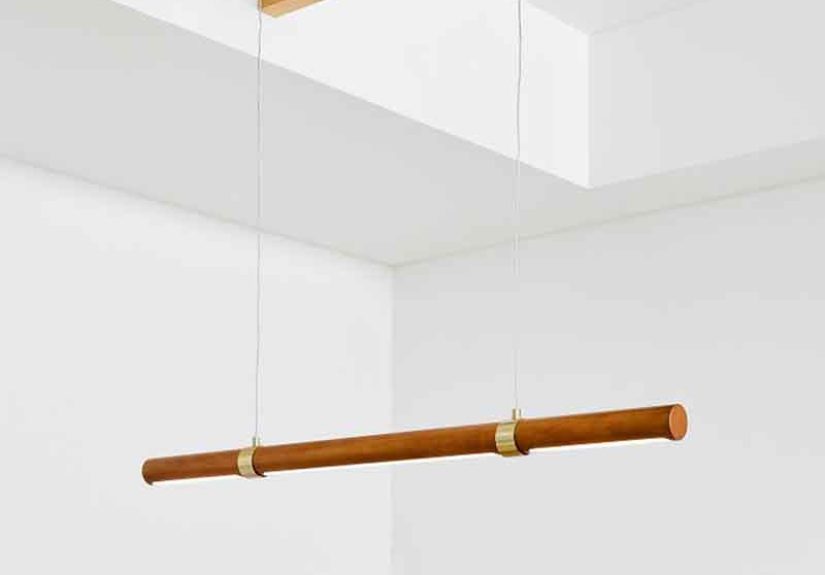
A linear wood LED pendant is a long, narrow suspended light fixture that combines a wood exterior (often walnut or ash tones) with an LED lighting system. The “42-inch” dimension refers to fixture width/length and is one of the most versatile sizes for residential spaces: long enough to anchor an island or table, compact enough to avoid overwhelming average-size rooms.
In many versions of this product category, the fixture includes an integrated LED module, hardwired installation, dimming compatibility, and a warm-to-neutral white color temperature around the 3000K range. You’ll often see finishes paired like:
- Walnut wood + antique brass metal accents
- Natural ash wood + dark bronze metal accents
That combination matters. Wood softens contemporary lines, so the light feels modern without going “cold showroom.” This is why the style works in modern farmhouse, Scandinavian, Japandi, transitional, and updated mid-century interiors.
Why This Fixture Style Keeps Winning in Real Homes
1) It gives you horizontal balance
Round pendants are great, but a linear pendant naturally “matches” long surfaces. Over a rectangular island or dining table, it looks intentional instead of accidental. The visual alignment makes the room feel planned, not patched together.
2) It merges task and mood lighting
When installed at the right height and paired with a compatible dimmer, a linear LED pendant can be bright enough for meal prep and soft enough for dinner. Translation: one fixture, two personalities.
3) It adds natural texture without clutter
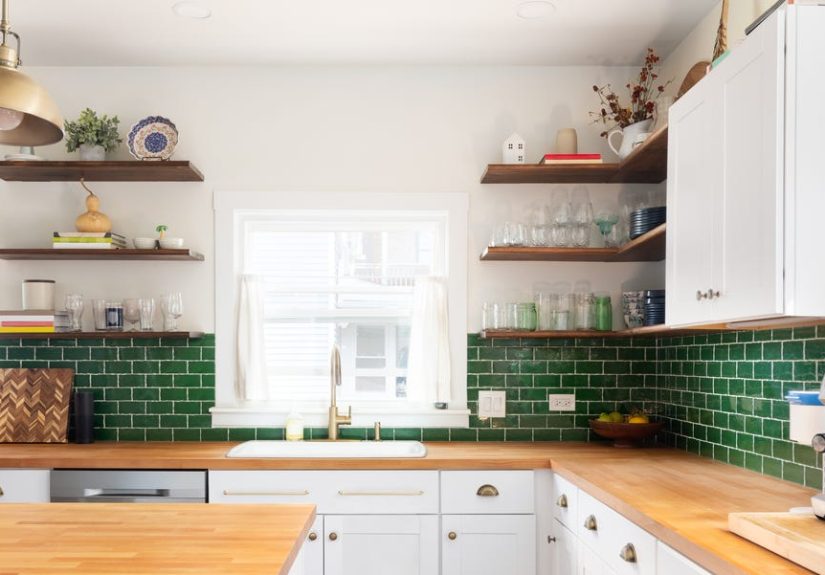
Wood introduces warmth instantly. If your kitchen has stone, tile, metal, and painted cabinetry, a wood pendant helps break up hard surfaces so the space feels less “echoey museum” and more “yes, we actually live here.”
Core Specs You Should Understand Before You Buy
Dimensions and proportion
At 42 inches, this fixture length is ideal for:
- Kitchen islands roughly 60–84 inches long
- Dining tables around 60–78 inches long
- Narrow bar counters where multiple mini pendants would look busy
A good visual rule: keep some breathing room at both ends of the fixture so it doesn’t look edge-to-edge cramped.
Lumens, watts, and what “bright enough” means
For LED fixtures, shop by lumens (light output), not just watts (energy use). In this product family, published specs can vary by region or version, so always verify the current spec sheet before checkout. You may find listings around 500+ lumens in some versions and much higher outputs in others. The important part is matching output to your use case and layering with other lights (recessed, under-cabinet, lamps).
Color temperature (K): the vibe control
Many linear wood LED pendants are around 3000K, often called bright warm white. This is a sweet spot for kitchens and dining areas because it feels clean without looking icy blue. If your cabinetry and countertops are already cool-toned, 3000K usually keeps the room from feeling clinical.
CRI and color accuracy
For interiors, a CRI around 80+ is a practical baseline. Higher CRI generally makes finishes, food, and skin tones look more natural. If you’ve ever looked gray-ish in one mirror and fabulous in another room, that’s often lighting quality talking.
Integrated LED life and replaceability
Many linear integrated LED fixtures are rated around long-life performance (often marketed around 50,000 hours in this category). Great for longevity, but there’s a tradeoff: in some designs the LED is built in and not user-replaceable like a standard bulb. If you like “swap a bulb and move on,” read that line carefully before buying.
Placement Rules That Make a 42-Inch Pendant Look Professionally Installed
Over a dining table
Common guidance puts the bottom of the fixture roughly 30–36 inches above the tabletop for 8-foot ceilings. For taller ceilings, raise incrementally so sight lines stay comfortable. This height usually balances conversation visibility with useful table illumination.
Over a kitchen island
A practical range is also about 28–36 inches above the countertop. Start around 32 inches, then adjust by eye based on fixture thickness, bulb shielding, and household height. If anyone in your home is tall, test before final mountingyou don’t want a beautiful fixture becoming a forehead detector.
Spacing logic in open-concept rooms
If your island sits near a dining table, keep fixture style language cohesive: similar finish temperature (warm brass vs cooler black), compatible color temperature (K), and matching dimming behavior. The room feels calmer when the lighting “speaks one dialect,” even across different fixture forms.
Hardwired Installation, Safety, and Dimming Compatibility
Hardwired means plan ahead
Most linear wood LED pendants in this class are hardwired. That usually means you should coordinate electrical location, drop height, and switch/dimmer choice before final ceiling repair or paint. It’s not complicatedbut doing it late can be annoying and expensive.
Why UL listing matters
UL-related certification signals that fixtures are evaluated against recognized safety standards for lighting products. It’s a practical quality checkpoint, especially for permanently installed luminaires.
Dimming: where many good projects go wrong
You’ll often see compatibility notes such as “works with LED dimmer; TRIAC/forward-phase recommended.” Don’t ignore that. LED dimming quality depends on the relationship between driver + dimmer + wiring conditions. Wrong pairing can lead to flicker, pop-on, limited dim range, or the dramatic “why is this light haunted?” effect.
If possible:
- Use a dimmer explicitly rated for LED loads
- Check manufacturer compatibility lists when available
- Test dim range before your electrician leaves
- Prefer one lighting circuit per control intent (task vs mood)
Design Playbook: How to Style a Linear Wood LED Pendant
For modern kitchens
Pair walnut/brass with white oak stools, matte tile, and black or bronze hardware for balanced contrast. If everything is already neutral, add one tactile counterpoint (linen shade nearby, handmade ceramics, or wood cutting boards) so the pendant doesn’t carry all the warmth alone.
For transitional dining rooms
Let the pendant be the anchor, then keep furniture simple: rectangular table, low-profile chairs, soft area rug. Use layered side lighting (sconce or buffet lamp) so dinner never feels like interrogation lighting.
For multifunction spaces
If the island is also homework HQ, WFH desk, and snack central, prioritize dimming and glare control. A 3000K fixture at full output during meal prep and lower levels in the evening creates rhythm in the roomwithout changing the décor every two hours.
Common Mistakes to Avoid
- Buying by looks only: Verify lumens, CCT, CRI, and dimmer compatibility.
- Ignoring sight lines: A low-hung linear pendant can block faces across the island.
- Skipping layered lighting: One pendant should not do every lighting job alone.
- Mismatched metal undertones: Warm wood + icy chrome can fight visually.
- No mock-up: Tape a cardboard strip at 42 inches to test scale before purchasing.
- Forgetting maintenance access: Integrated LED fixtures still need occasional dusting and secure mounting checks.
Practical Buyer Checklist for a Linear Wood LED Pendant (42″)
- Confirm exact fixture dimensions and canopy details.
- Check light output (lumens), power (watts), and color temperature (target ~3000K for warm-clean balance).
- Check CRI (80+ minimum for typical interior quality).
- Verify dimming type (TRIAC/forward-phase or otherwise) and choose the right dimmer.
- Confirm hardwired installation requirements.
- Look for recognized safety certification language.
- Measure hanging height target (usually 28–36 or 30–36 inches above surface).
- Test the drop visually with painter’s tape before final installation.
- Plan lighting layers so the pendant handles focal/tasknot every function.
- Save product docs and warranty details for future service.
Experience Section (500+ Words): Living With a Linear Wood LED Pendant (42″)
The first week after installing our 42-inch linear wood LED pendant, I noticed something funny: nobody commented on the paint color, the backsplash, or even the expensive faucet that took me three weeks to choose. Every single person looked up and said, “Oh wow, that light is nice.” Apparently lighting is the main character, and the rest of the kitchen is supporting cast.
Morning is where this fixture earns its keep. At full brightness, it gives a clean, focused wash over the island without the harsh “office breakroom” vibe. I can slice fruit, read tiny recipe text, and catch the exact moment toast goes from golden to “artisan charcoal.” Because the fixture is linear instead of point-source, the light feels evenly distributed across the work surface. No bright spotlight in the middle and sad shadows at the edges.
By late afternoon, dimming changes everything. This is where compatible controls matter in real life, not just spec-sheet life. A smooth dim curve turns the kitchen from prep zone to gathering zone in two seconds. Kids do homework at one end while someone stirs pasta at the other, and the light feels calm instead of glaring. That one adjustment reduced the “Can we turn this down?” requests to nearly zeroa household miracle on par with matching Tupperware lids.
Visually, wood was the secret ingredient. Before this pendant, the kitchen had great finishes but felt a little hard: stone, tile, painted cabinets, metal pulls. The wood band in the fixture softened everything and tied into small details we already hadcutting boards, stool legs, and a walnut fruit bowl. It looked intentional, even though the fruit bowl is mostly bananas and good intentions.
There was one lesson learned the hard way: initial hanging height. We first set it slightly too low because it looked dramatic in photos. In real life, it interrupted sight lines from sink to living room and made conversation feel like a game of peekaboo. We raised it a couple of inches and instantly fixed the room’s flow. The takeaway: dramatic can be good, but functional comfort wins every day in a working kitchen.
Another practical detail is cleaning. A linear fixture gathers dust differently than a chandelier: less intricate, more broad-surface. So maintenance is easierquick microfiber pass, done. No crystal puzzle, no tiny crevices, no tiny ladder monologue about life choices. If your home runs on realistic routines rather than museum-level upkeep, this matters more than you think.
Guests also respond differently depending on dimming level. Brighter settings during weekend brunch make the room feel energetic and social. Lower levels at dinner make it feel like a restaurant that actually knows your name and remembers your weird no-onions request. It subtly changes behavior: people linger longer, conversations stretch, and cleanup feels less like a fluorescent punishment.
From a workflow perspective, the pendant helped define zones in an open layout. Without adding walls, it visually “frames” the island as a work-and-gather hub. That is surprisingly powerful in modern homes where one space has to do five jobs. The fixture becomes both light source and spatial organizer.
If I had to summarize the lived experience in one line: this is one of the few upgrades that improved both how the kitchen looks and how we actually use it every single day. The 42-inch size feels right for a typical island, the wood keeps it warm, and the LED performance is efficient and practical. In short, it’s not just décor. It’s daily infrastructure that happens to look very good in photos.
Conclusion
A Linear Wood LED Pendant (42″) works because it solves multiple design problems at once: proportion over long surfaces, warm material balance in hard-finish kitchens, and efficient modern illumination with dimmable flexibility. If you treat it as both a design piece and a technical productchecking lumens, CCT, CRI, dimmer compatibility, and installation heightyou’ll get a fixture that performs as beautifully as it looks.
Choose carefully, install intentionally, test your dimming, and let the wood finish do what it does best: make modern spaces feel human.