Table of Contents >> Show >> Hide
- Heat lightning, explained in plain English
- Is heat lightning real, or just a myth?
- What you’re actually seeing: a quick lightning cheat sheet
- Is heat lightning dangerous?
- How to tell if heat lightning could become your lightning
- Lightning safety 101: what to do (and not do)
- Common myths about heat lightning (and lightning in general)
- Heat lightning vs. dry lightning: don’t mix these up
- When should you worry the most?
- Bottom line
- Experiences People Have With Heat Lightning (And What They Teach Us)
- 1) The porch-sitting light show
- 2) The “we didn’t even know there was a storm” barbecue
- 3) The beach night that suddenly feels less romantic
- 4) The sports practice that turns into a lightning policy lesson
- 5) The camping trip where the sky does “that flickering thing”
- 6) The “I was inside and still got spooked” moment
- 7) The best “experience” of all: the boring one
You’re outside on a sticky summer night. The air smells like fresh-cut grass and questionable decisions.
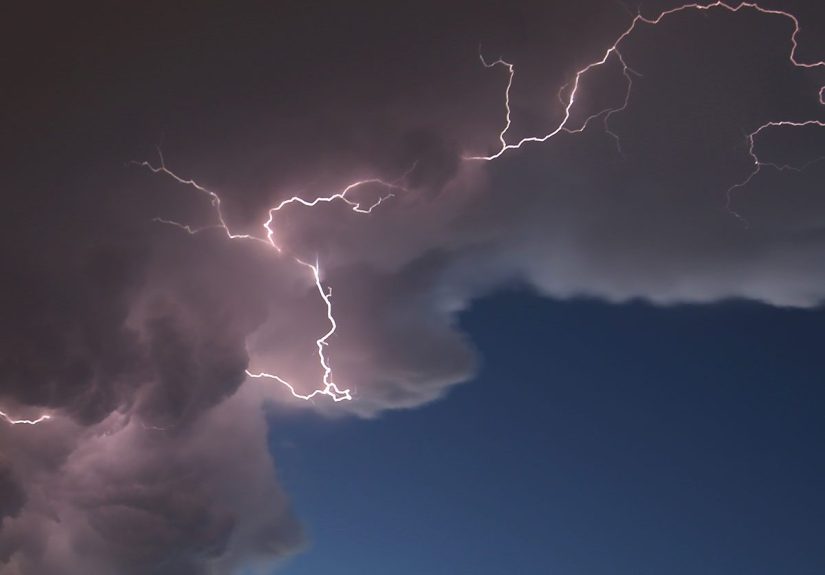
Then you notice it: silent flickers on the horizonlike someone taking paparazzi photos of a cloud bank.
No thunder. No rain. Just flash… flash… flash.
Most people call that heat lightning. And the name makes it sound like lightning got a summer job.
But here’s the plot twist: heat lightning isn’t a special kind of lightning.
It’s regular lightning from a thunderstorm that’s far enough away that you can’t hear the thunder.
Heat lightning, explained in plain English
“Heat lightning” is basically a nickname for distant lightning. The storm is real. The electricity is real.
The only thing missing is the sound track.
So why don’t you hear thunder?
Thunder is sound, and sound fades with distance. Even under good conditions, thunder doesn’t travel forever.
Add a little wind blowing the “wrong” way, city noise, humidity layers, or terrain in the mix, and the thunder
can fade out before it gets to you. Meanwhile, the flash can still be visible from far away,
especially at night when the sky is darker.
That’s why heat lightning is most often noticed on warm evenings: people are outdoors, it’s dark enough to see distant
flashes clearly, and summer is peak thunderstorm season in many parts of the U.S.
Is heat lightning real, or just a myth?
Bothdepending on what you mean by “real.”
- Real: The flashes you see are real lightning.
- Myth: The idea that the lightning is “caused by heat” or is a unique “heat lightning” type.
Think of it like this: calling it heat lightning is like calling a distant concert “silent music.”
The band is absolutely playing. You’re just too far away to hear the speakers.
What you’re actually seeing: a quick lightning cheat sheet
1) In-cloud and cloud-to-cloud lightning (aka “sheet lightning” vibes)
A lot of distant flickering looks like the whole cloud is lighting up. That’s often in-cloud lightning
(electricity discharging inside the storm cloud) or cloud-to-cloud lightning.
From far away, the cloud can act like a lampshadediffusing the light so you don’t see a crisp bolt.
2) Cloud-to-ground lightning (yes, the classic bolt)
Some distant storms still produce cloud-to-ground strikes. You might not see the full bolt (clouds, haze, trees, or the
curve of the horizon can block it), but you can still see the flash reflecting off the storm’s anvil or nearby clouds.
3) Why does heat lightning sometimes look reddish or orange?
Over long distances, the atmosphere scatters light. Shorter “bluer” wavelengths scatter more, leaving more red/orange
light to reach your eyessimilar to why sunsets get that warm glow. So the lightning itself isn’t “heat-colored”;
it’s just traveling through more air before it gets to you.
Is heat lightning dangerous?
Here’s the honest answer: it can be. Not because heat lightning is a special hazard,
but because any lightning is dangerousand distant storms can move toward you faster than your brain can say,
“Wait, didn’t this feel romantic five minutes ago?”
Danger #1: The storm may be closer than it looks
Storms can be deceptive at night. A thunderstorm 20, 30, even 50+ miles away can still light up the sky.
If it’s drifting in your direction, those quiet flashes can become “very much your problem” sooner than expected.
Danger #2: Lightning can strike far from the rain
People often assume, “No rain here, so we’re fine.” Unfortunately, lightning doesn’t care about your assumptions.
Lightning can strike miles away from the core of a stormsometimes from the storm’s anvil
(the big, flat, spreading top). These long-distance strikes are often called
“bolts from the blue” because they can appear to come from a clearer part of the sky.
Danger #3: You might skip precautions because it feels harmless
Heat lightning is a master of bad vibes: it looks pretty, sounds harmless, and encourages people to stay outside.
The risk isn’t that the flash itself is differentit’s that people treat it like a free fireworks show instead of a
weather warning.
How to tell if heat lightning could become your lightning
You don’t need a meteorology degree or a weather app with twelve subscription tiers. Try these practical checks:
Check #1: Listen for thunder (even faintly)
If you can hear thundereven a distant rumbleyou’re close enough to be struck.
That’s your cue to head to a safer place.
Check #2: Use the flash-to-bang method (when thunder is audible)
If you see lightning and then hear thunder, count the seconds between them.
Divide by 5 to estimate the distance in miles (because sound travels roughly a mile in about five seconds).
If the count is 30 seconds or less, the storm is within about 6 milestime to get indoors.
Check #3: Look at storm behavior
- Flashes are getting brighter or more frequent: the storm may be moving closer or strengthening.
- You start seeing defined bolts, not just flickers: you may be closer than you think.
- Clouds overhead start building/towering: local storm development could be beginning.
Lightning safety 101: what to do (and not do)
If there’s any chance storms are approaching, treat heat lightning as a “heads up” to start thinking about shelter.
Here’s the smartest playbook.
Best shelter options
- A substantial building (four walls, wiring, plumbingbasically a normal house, store, or office).
- A hard-topped metal vehicle with the windows up (not a convertible; sorry, main-character energy).
Not-safe “shelters” (aka the hall of nope)
- Tents
- Picnic shelters
- Porches, open garages, carports
- Small sheds
- Under a tree (trees are lightning’s favorite networking opportunity)
If you’re indoors during a thunderstorm
Indoors is saferbut not a license to do everything you normally do.
Lightning can travel through wiring and plumbing if a building is struck. To reduce risk:
- Avoid water: no showering, dishwashing, or long sink meditation sessions.
- Stay off corded phones.
- Avoid plugged-in electronics and don’t charge devices during the storm if you can help it.
- Stay away from windows and exterior doors.
- Don’t lie on concrete floors or lean on concrete walls in a storm.
How long should you wait before going back outside?
A common guideline is to wait at least 30 minutes after the last thunder (or last lightning)
before resuming outdoor activities. Lightning often strikes near the beginning and end of storms, when people are most
tempted to step back out.
Common myths about heat lightning (and lightning in general)
Myth: “Heat lightning is harmless because it’s far away.”
Reality: It’s still lightning. The storm could be moving toward you, and some lightning can strike far
from the rainfall area.
Myth: “If there’s no thunder, there’s no danger.”
Reality: No thunder can simply mean the storm is too far for you to hear it right now.
Also, environmental factors can make thunder harder to hear.
Myth: “Rubber shoes or car tires protect you.”
Reality: Rubber soles are not magical lightning shields.
A car is safer mainly because it’s a metal enclosure (a Faraday-cage-like effect), not because of tires.
Myth: “If someone is struck, you’ll get shocked touching them.”
Reality: A lightning victim doesn’t “hold” electricity. It’s safe to help and start first aid,
but make sure you move to a safer location if lightning is still possible.
Heat lightning vs. dry lightning: don’t mix these up
These terms get tangled all the time:
- Heat lightning: lightning you see from a distant storm (thunder not audible).
- Dry lightning: lightning from a storm that produces little to no rainfall at the groundoften a wildfire risk.
Dry lightning can be especially dangerous in drought-prone areas because it can ignite vegetation.
Heat lightning, on the other hand, is about distance and what you can perceive from where you are.
When should you worry the most?
Heat lightning deserves extra respect if:
- You’re swimming, boating, or on a beach with limited shelter.
- You’re on a field (sports, golf, hiking, campinganything wide open).
- You notice flashes getting brighter, more frequent, or closer to overhead.
- Radar/forecasts show storms developing or moving toward your area.
Bottom line
Heat lightning is not “fake” lightning. It’s real lightning from a storm that’s far away.
And while it might feel distant and harmless, it can still be a sign that thunderstorms are in the areaor headed your way.
If conditions change, the safest move is simple: get to a safe shelter early, and wait it out.
Experiences People Have With Heat Lightning (And What They Teach Us)
Heat lightning has a funny way of showing up in the exact moments when you don’t want to interrupt your plans.
It’s the weather equivalent of a “seen” receipt: quiet, glowing, and slightly ominous.
Below are common, real-world scenarios people experienceplus what to learn from themso you can keep the vibe and lose the risk.
1) The porch-sitting light show
This one is classic Americana: someone’s on the porch with a drink, a fan that’s doing its best, and a playlist
that makes them feel like the main character. Then the horizon starts flickering.
At first it’s subtlelike a camera flash behind a curtainthen it becomes a steady pulse.
People often describe it as “storm fireworks” because the flashes look harmless and the air around them is still.
What it teaches: distant storms can still be active storms. The safe move is to check the forecast or radar
and keep an eye on how the lightning changes. If the flashes get brighter, more frequent, or start creeping upward into the
clouds overhead, it’s time to head inside before you hear thunder.
2) The “we didn’t even know there was a storm” barbecue
Backyard gatherings love to pretend weather doesn’t exist. Someone’s grilling, kids are running around, and the sky above is
mostly clear. Then heat lightning starts popping on the edge of the sky.
The group debate begins: “Is that heat lightning?” “Does it count as a storm if there’s no rain?”
Someone inevitably says, “We’re fine,” because humans are brave when it’s inconvenient to be cautious.
What it teaches: “no rain here” doesn’t equal “no lightning risk.” If storms are in the region, plan a quick
shelter option. Even a simple planlike “If we hear thunder or see lightning getting closer, everyone goes inside”is
ridiculously effective.
3) The beach night that suddenly feels less romantic
Heat lightning over water can look spectacular. The horizon flashes and the reflections shimmer across the surface like a sci-fi
special effect. People on beaches and boats are especially tempted to keep watching because it feels far away and beautiful.
But water is a lightning danger multiplier. If storms shift closer, you can go from “nice view” to “please do not be the tallest
thing around” fast.
What it teaches: beaches and boats need earlier decision-making. Don’t wait for thunder as your first sign.
If there’s frequent lightning visible, consider it a cue to wrap up the water part of your evening and stay close to real shelter.
4) The sports practice that turns into a lightning policy lesson
Heat lightning often shows up during summer practicesfootball, soccer, marching band, you name it.
At first, coaches and parents spot flashes way off in the distance and hope it stays there.
Then someone remembers the safety rule: when thunder roars, go indoors. But what if it isn’t roaring yet?
What it teaches: good programs don’t wait until the last second. Many youth leagues build in weather monitoring
and stop play well before lightning becomes “close enough.” If you’re running an event, designate one person to monitor weather
and make the call. Your future self will thank you.
5) The camping trip where the sky does “that flickering thing”
Campers see heat lightning and sometimes shrug because they’re already outside and the nearest building is… not near.
The flashes can make people feel stranded: “If it gets bad, what do we even do?”
While a tent isn’t safe shelter for lightning, campers can still make smarter choiceslike relocating early toward a hard-topped
vehicle or a proper shelter area before the storm gets close.
What it teaches: camping safety is about early moves. If you’re seeing consistent lightning,
don’t wait for the “uh-oh” moment. If there’s a vehicle nearby, that’s often safer than staying exposed.
And if thunder becomes audible, treat it like a non-negotiable signal to get into safer shelter.
6) The “I was inside and still got spooked” moment
A surprising number of lightning stories start indoors: a loud crack, a power flicker, or a strike close enough to rattle nerves.
People then learn the less-fun truth: indoor lightning injuries can happen, usually through plumbing, wiring, or contact with
conductive surfaces.
What it teaches: once you’re inside, finish the job. Stay away from windows, avoid water, skip corded phones,
and don’t plug in or handle electrical devices unnecessarily until the storm is clearly past.
7) The best “experience” of all: the boring one
The safest heat lightning story is the one where nothing dramatic happens: you notice distant flashes, you check the weather,
you end the outdoor activity early, and you wait it out. No heroics. No sprinting for shelter. No “we almost got struck” tale.
Just a normal eveningplus the quiet satisfaction of making a smart call.
The takeaway from all these experiences: heat lightning is a visual clue that thunderstorms exist in your region.
Sometimes they stay far. Sometimes they don’t. The best approach is to treat it like an early warning system: keep watch,
know your shelter options, and don’t let “silent” lightning trick you into ignoring basic lightning safety.