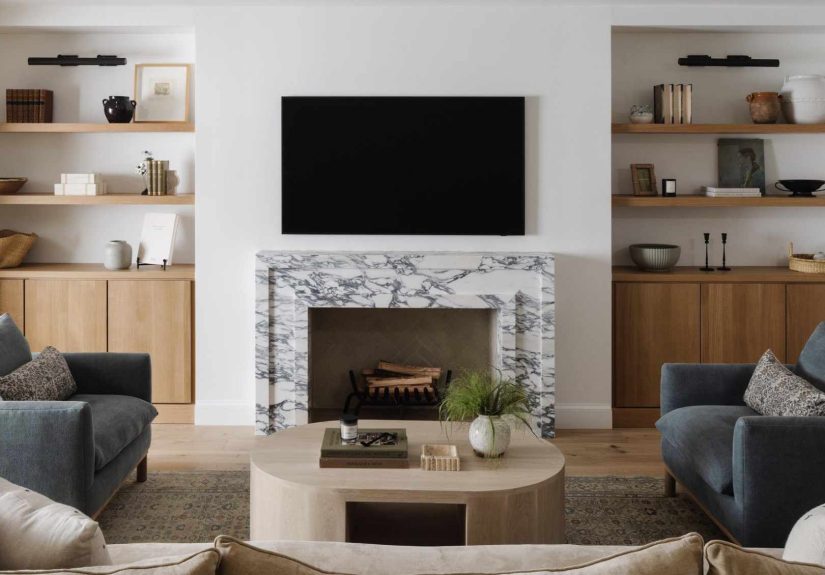
Table of Contents >> Show >> Hide
- First: What Designers Mean by “Minimalist” (and What They Don’t)
- The Designer Playbook: 10 Ways to “Fake Minimalism” Without Becoming a Monk
- 1) Hide the Clutter Like It’s a Surprise Party
- 2) Keep Your Color Palette on a “Three-Color Diet”
- 3) Use Texture as Your “Decor Without the Mess”
- 4) Curate Surfaces: The “3–4 Item” Styling Cap
- 5) Choose “Quiet Patterns” (or Keep Pattern Portable)
- 6) Upgrade the “Invisible Systems” Behind the Scenes
- 7) Borrow a Home Stager’s Trick: Remove the “Personal Noise”
- 8) Make One “Hero Piece” Do the Talking
- 9) Lean Into Light and Clean Lines
- 10) Maintain the Illusion With a 10-Minute Reset
- Room-by-Room: Minimalist “Cheat Codes” That Look Designer, Not Desperate
- Common Mistakes That Blow Your Cover
- Conclusion: Minimalist Look, Real-Life Friendly
- Experiences: What “Faking Minimalism” Looks Like in Real Life
Minimalism is one of those design styles that looks effortlesslike your home naturally woke up like this: calm, airy, and suspiciously free of random chargers.
But here’s the secret: plenty of minimalist-looking homes are not minimalist lives. Designers know that the “less stuff” vibe is often a
visual strategy, not a personality trait.
So if you love the clean, pared-back lookbut you also love owning things (and who among us hasn’t formed an emotional bond with a “miscellaneous” drawer?)good news.
You can absolutely fake being a minimalist with a few high-impact moves that reduce visual noise without forcing you to live like you’re moving out tomorrow.
First: What Designers Mean by “Minimalist” (and What They Don’t)
Minimalist interiors aren’t empty rooms with one chair and a single dramatic lemon. The goal is a space that feels simple, uncluttered, and functionalwhere
architectural features, clean lines, and thoughtful pieces get to be the main character. The overall look typically relies on a limited palette, minimal ornamentation,
and natural materials, warmed up with texture so it doesn’t feel like a waiting room.
Translation: minimalism is less about living with nothing and more about making everything look like it has a purpose. We’re aiming for
intentional, not sterile.
The Designer Playbook: 10 Ways to “Fake Minimalism” Without Becoming a Monk
1) Hide the Clutter Like It’s a Surprise Party
Designers will tell you the biggest threat to a minimalist look isn’t your tasteit’s your stuff being visible. The fastest shortcut is
closed storage: built-in cabinets, sideboards, nightstands with drawers, storage ottomans, lift-top benches, and beds that swallow extra pillows whole.
The trick is not just owning storageit’s using it strategically. Give daily-life clutter a “home”:
- Mail: one lidded box or one drawer (not three “temporary piles” that have been there since last Tuesday).
- Pet gear: treats and leashes in a cabinet near the door.
- Blankets: stored in an ottoman, bench, or a closed basket tucked under a console.
- Chargers/remotes: corralled in a tray inside a drawerout of sight, still easy to grab.
2) Keep Your Color Palette on a “Three-Color Diet”
If your room feels busy, it’s often not the furnitureit’s the color chaos. A designer-friendly rule is to pick
three hues you love and build from there: usually a base neutral, a secondary neutral, and a restrained accent. Neutrals (whites, beiges,
grays, soft browns) create that calm foundation, and then you sprinkle in contrast or an accent where it counts.
Want personality? Great. Keep it concentrated. One bold chair, one piece of art, or one color family repeated subtly (pillows, a vase, a throw) reads curatednot cluttered.
3) Use Texture as Your “Decor Without the Mess”
Minimalist-looking rooms can feel flat if everything is smooth and matchy-matchy. The fix is texture, not trinkets. Designers often recommend layering
natural materialswood, wool, stone, linenso the room feels warm and lived-in, even when surfaces are mostly clear.
Think: a linen curtain, a wool rug, a wood coffee table, a ceramic lamp. You didn’t add more “stuff.” You added depth.
4) Curate Surfaces: The “3–4 Item” Styling Cap
Here’s where the minimalist illusion lives or dies: your flat surfaces. Coffee tables, consoles, nightstands, countersthese are visual billboards.
Designers often recommend keeping most surfaces styled with no more than three or four accessories, depending on size.
An easy formula that looks intentional:
- One grounded piece: a tray or a low bowl.
- One vertical piece: a lamp or vase with branches.
- One “softener”: a book stack or small sculptural object.
- Optional life: a plant or a single stem (not a botanical crowd scene).
5) Choose “Quiet Patterns” (or Keep Pattern Portable)
Minimalist design doesn’t ban patternit just keeps it from shouting. If you love prints, use them in places you can swap easily:
rugs, pillows, throws, and art. Subtle stripes, tone-on-tone textures, and simple geometrics can add interest without visual overload.
6) Upgrade the “Invisible Systems” Behind the Scenes
You can’t fake minimalism if every drawer is a chaotic soup of batteries, pens, and mystery screws. The secret weapon is
micro-organization: bins, turntables, drawer dividers, and clear containers that create order inside closed storage.
In kitchens, designers and organizers often suggest keeping items near where you use them (coffee filters near the coffee maker, daily items at eye level),
and using easy-to-maintain storage tools so the system doesn’t collapse the minute you get hungry.
7) Borrow a Home Stager’s Trick: Remove the “Personal Noise”
Want your space to look instantly more minimalist? Pretend you’re staging it. Home stagers often hide
paper piles, overly personal photo clusters, and anything visually “clunky” that distracts from the room itself.
You don’t have to erase your personalityjust edit it. Keep a few meaningful photos, but swap a wall of family snapshots for one piece of general art
and suddenly the room looks calmer and more cohesive.
8) Make One “Hero Piece” Do the Talking
Minimalist rooms still need a focal point. The difference is you choose one strong element instead of ten medium ones.
That might be:
- a sculptural sofa or chair,
- a large-scale artwork,
- a statement pendant light,
- or a dramatic rug with a restrained palette.
When the hero shows up, everything else can calm down. It’s like letting one friend tell the story instead of the whole group trying at once.
9) Lean Into Light and Clean Lines
Minimalist design tends to feel bright and airy because it emphasizes lightnatural and artificial. Sheer curtains can soften windows without adding heaviness.
Sleek, simple-lined furniture reads cleaner than ornate shapes. In kitchens, panel-ready appliances or hardware-light cabinetry can reduce visual fragmentation.
If your room feels “busy,” check for broken lines: too many tiny frames, too many small decor pieces, too many competing shapes. Simplify the silhouettes first.
10) Maintain the Illusion With a 10-Minute Reset
The minimalist look isn’t created onceit’s maintained. The good news is you don’t need an all-day clean-a-thon. Try quick systems:
- One-in, one-out: for every new decor item, one leaves.
- A concealed donation bin: stash “maybe donate” items out of sight until it’s full.
- The 10–10 method: set a timer for 10 minutes and remove 10 items from one area.
These habits keep clutter from creeping back onto your surfaces like it pays rent.
Room-by-Room: Minimalist “Cheat Codes” That Look Designer, Not Desperate
Entryway: Stop the Pile Before It Forms
- Install hooks or a slim rail for daily essentials.
- Add one closed cabinet or lidded basket for “drop zone” items.
- Keep decor to one tray + one lamp (or one mirror + one plant).
Living Room: Clear the Coffee Table, Keep the Comfort
- Use a tray to “contain” remotes and coasterscontainment reads intentional.
- Pick one hero accent color and repeat it lightly.
- Swap multiple small frames for one larger artwork.
Kitchen: Make Counters Boring (In a Good Way)
- Store appliances in cabinets when possible, or keep only one “daily driver” out.
- Use drawer dividers and turntables so cabinets stay functional.
- Decant pantry staples into matching containers if you want instant “calm.”
Bedroom: Neutral + Texture = Calm
- Stick to muted shades and a tight color family.
- Add texture with bedding (linen, quilted cotton) instead of extra decor.
- Keep nightstands styled with 2–3 items max.
Bathroom: The Smallest Room, The Loudest Clutter
- Group items on a tray; it looks neat even when it’s full.
- Use small bins inside drawers so tiny items don’t become chaos confetti.
- Do an expiration sweep regularlyold products create instant mess.
Common Mistakes That Blow Your Cover
- Buying minimalist decor instead of editing what you have. Minimalism is subtraction first.
- Going all-white with no texture. That’s not minimalism; that’s “my living room is a blank document.”
- Too many small items. Five tiny vases don’t equal one good vase. They equal dusting.
- Open shelving with no system. Open shelves require curated restraintor they become a museum of snacks.
Conclusion: Minimalist Look, Real-Life Friendly
Faking minimalism isn’t about tricking peopleit’s about designing a home that feels calmer to live in. Hidden storage keeps life out of sight.
A limited palette reduces visual noise. Texture brings warmth without clutter. And a few small habitslike a quick reset and a donation binkeep the illusion alive.
The best part? You don’t have to become a minimalist. You just get to look like one. And honestly, that’s the most designer thing of all.
Experiences: What “Faking Minimalism” Looks Like in Real Life
Let’s talk about the part nobody posts: the messy middle. The minimalist look is gorgeous on a screen, but real homes have homework papers, pet toys, and
the kind of “temporary” piles that develop citizenship. The most realistic approach is treating minimalism as a rhythm you return tonot a permanent state
of being.
One common experience people have when trying to “look minimalist” is realizing that clutter isn’t always about having too muchit’s about not having a
system that matches daily habits. For example, if your mail always lands on the counter, the solution isn’t willpower. It’s giving mail a designated
landing spot that’s close, easy, and closedlike a lidded box or a drawer. The moment that container exists, the counter magically stays clear more often,
because your routine finally has a destination.
Another real-life pattern: the “decor creep.” You start with a clean coffee table, then add a candle. Then a cute little bowl. Then a stack of books.
Then someone sets down a remote. Then another remote. Suddenly the table looks like it’s hosting a tiny yard sale. A practical fix is committing to a
single tray. The tray becomes the boundary. If it doesn’t fit, it doesn’t live there. This doesn’t require you to own fewer thingsit just keeps your
surfaces from visually exploding.
Color decisions also show up in everyday experience. People often notice that a room can feel “messy” even when it’s clean if there are too many competing
colors and patterns. A quick experiment that tends to work is choosing one main neutral and repeating it in large areas (rug, curtains, bedding), then
limiting accent colors to one family. The room instantly feels calmer, and it becomes easier to choose new items without creating chaos. It’s like giving
your home a dress code: everyone is welcome, but please don’t all wear sequins at once.
Storage upgrades are where the fake-minimalist life really starts paying off. People who add one closed piecelike a sideboard, an entry cabinet, or a
storage benchoften report an unexpected benefit: tidying becomes dramatically faster. When everything has a “hidey hole,” your end-of-day reset can take
five to ten minutes instead of turning into an evening event. This is also why “micro-organization” feels so satisfying in practice: bins and dividers
inside drawers stop your storage from becoming a junk vortex. When storage stays usable, you keep using it.
And finally, the experience nobody admits: maintaining the minimalist look often depends on small, repeatable habitsnot big weekend cleanups. A timer-based
reset (even something as simple as 10 minutes) tends to be more sustainable than marathon organizing. It also feels less like punishment and more like
maintenancelike brushing your teeth, but for your living room.
In other words, faking minimalism is less about pretending you don’t own stuff and more about making your home look like it runs on purpose. You’re not
trying to become a different person. You’re just giving your space fewer ways to look chaotic. And when your home looks calmer, life often feels a little
calmer tooeven if there’s still a mysterious cord somewhere that you absolutely cannot identify.