Table of Contents >> Show >> Hide
- Why This Essex Studio Visit Matters
- Arriving at the Barn: First Impressions (and Second Breakfast Energy)
- The Big Idea: A Building Within a Building
- Material Strategy: Respect the Bones, Upgrade the Bloodstream
- Inside the Studio: Live/Work Without the “Work” Eating the “Live”
- What Pocknell Studio Teaches About Barn Conversion Design
- Zooming Out: Other Essex Work That Echoes the Studio’s DNA
- Practical Notes for Anyone Planning a Listed-Building Conversion
- Field Notes: of Visitor Experience
- Conclusion
If you’ve ever looked at an old barn and thought, “That’s gorgeous, but where would I plug in my laptop and emotionally support my espresso machine?”
then welcome. You’re about to tour one of the smartest live/work barn conversions in Essexan architectural flex that doesn’t yell, it just quietly
raises an eyebrow and lets the timber frame do the talking.
This is the world of Pocknell Studio, where rural history and modern life don’t “compromise.” They collaborate. Think medieval structure, contemporary
insertions, and a layout that understands a very real truth: sometimes you want a cathedral-like void, and sometimes you want a door you can close on
your inbox.
Why This Essex Studio Visit Matters
Barn conversions get romanticized (cue the soft-focus shots of reclaimed beams). But the best ones aren’t just prettythey’re operational. They solve
for light, heat, acoustics, preservation constraints, zoning quirks, and the question every creative person eventually asks: “Can my office be close
enough to commute in slippers, but far enough away to avoid ‘quick questions’ during dinner?”
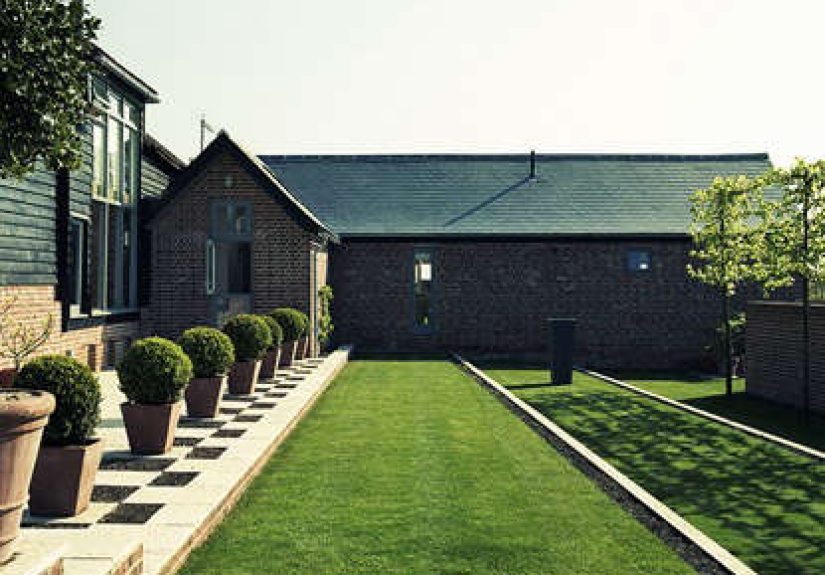
At Pocknell Studio’s Essex barn conversionoften associated with Saling Barn near Great Salingthe answer is a confident yes. The design is a masterclass
in adaptive reuse architecture: keep the historic envelope legible, add modern interventions that read as modern, and make the building work hard without
looking like it’s trying hard.
Arriving at the Barn: First Impressions (and Second Breakfast Energy)
The approach feels appropriately rural: lanes, hedgerows, that quiet Essex calm where even the wind seems to lower its voice. And thenthere it is:
a substantial, listed “cathedral” barn presence. It’s not cute. It’s commanding. The kind of structure that reminds you barns weren’t built for vibes;
they were built for purpose, scale, and survival.
But the real reveal doesn’t happen outside. It happens when you step in and realize the conversion isn’t a single makeover. It’s a carefully staged
conversation between old and new, where the historic timber frame remains the headline and everything contemporary plays a smart supporting role.
The Big Idea: A Building Within a Building
Here’s the move that makes architecture people lean in: instead of chopping up the barn into a typical warren of rooms, the design treats the barn as a
giant protective shell. Inside that shell, distinct “inserted” volumes handle modern lifeliving, working, bathing, storing, the occasional existential
crisiswhile preserving a dramatic open zone where the historic structure stays visible and spatially powerful.
1) The Three-Story House Insert
One end of the barn becomes home base: a multi-level domestic volume with the functions you’d expect in a serious family housekitchen/dining, reception
spaces, bedrooms, and supporting roomsarranged so the building still feels like a barn, not a disguised suburban house wearing beams as a costume.
2) The Two-Story Glass Office Suite
At the other end: a crisp, modern office insertionoften described in “Mies-esque” terms, because the language is glass, structure, clarity, and restraint.
The studio space reads as intentionally contemporary, not faux-rustic. That contrast is the point: it lets you understand what’s ancient and what’s new
without confusion, and it prevents the historic fabric from being “overdesigned.”
3) The Void in the Middle: The Luxury of Not Filling Everything
Between home and office, there’s breathing rooman open, flexible zone that keeps the barn’s original scale legible. It’s a spatial pause, a cathedral-like
volume where you can host meetings, exhibitions, family chaos, or simply enjoy the rare modern privilege of air and height.
Material Strategy: Respect the Bones, Upgrade the Bloodstream
Great conversions don’t “preserve” by freezing buildings in amber. They preserve by making them viable. That means threading modern performanceinsulation,
heating, ventilation, lightinginto a structure that was never designed for the expectations of today’s comfort. The trick is doing it without erasing
character or trapping moisture in ways that old buildings absolutely hate.
Historic Frame, Modern Performance
Timber-framed barns are honest structures; you can read the logic in the joints and spans. In the best adaptive reuse projects, the frame remains visible
(or at least emotionally present), while thermal upgrades are handled in a way that supports longevity: robust insulation strategies, airtightness where
appropriate, and smart detailing around glazing so the building doesn’t become a condensation experiment.
Glazing as “Punctuation,” Not Takeover
A recurring theme in Pocknell-style barn work is the careful use of glazing: inserted into openings in a way that feels like a deliberate punctuation mark
rather than a full rewrite. You get daylight and views, but the barn still reads as barnstrong silhouette, deep reveals, and openings that feel earned.
Inside the Studio: Live/Work Without the “Work” Eating the “Live”
Plenty of live/work spaces fail because boundaries get fuzzy. The kitchen table becomes a desk. The desk becomes a doom-scrolling station. The building
becomes a beautiful place where you’re somehow always at work.
The genius of this Essex setup is that it creates real separation without requiring distance. The office suite is distinct, purposeful, and professional.
The home volume is domestic. And the shared barn volume acts like a neutral commonsneither purely house nor purely officeso transitions feel natural.
Flexibility Without Chaos
Barn geometry helps: large spans, tall ridges, and open sightlines offer flexibility that typical houses can’t. But flexibility only works when it’s
anchored by clear program. Here, the inserted volumes give you that anchor, leaving the remaining space open for change over timekids, projects, teams,
hobbies, or the inevitable phase where someone decides they’re “getting into ceramics.”
What Pocknell Studio Teaches About Barn Conversion Design
Let’s translate the tour into takeaways you can actually usewhether you’re designing, renovating, writing a brief, or simply collecting ideas for your
future “one day” project (we see you, Pinterest board titled barn dreams).
Principle 1: Make New Work Clearly New
A modern insertion doesn’t insult history. It clarifies it. When contemporary elements are honestglass, steel, clean-lined timber, restrained detailing
the old fabric reads stronger, not weaker.
Principle 2: Preserve the Barn’s “Bigness”
The most precious thing in a barn isn’t just the beamsit’s the volume. If you subdivide too aggressively, you lose what made the building special in the
first place. This project protects the sense of scale by keeping a generous open zone where the frame can still be experienced as structure and space.
Principle 3: Treat Comfort Like a Design Problem, Not a Shopping List
Underfloor heating, insulation, and airtightness upgrades matter. But in older buildings, how you detail these systems matters as much as which brand you
pick. Moisture movement, ventilation, and reversibility aren’t optionalthey’re how you keep a historic shell healthy for decades.
Principle 4: Design for Real Life, Not Just Photos
A barn conversion should handle muddy boots, laptops, guests, kids, noise, and the fact that you cannot, in fact, live inside a magazine spread.
The best designs don’t fight lifethey quietly accommodate it.
Zooming Out: Other Essex Work That Echoes the Studio’s DNA
If you follow Pocknell Studio’s broader barn-related portfolio, you’ll notice recurring moves: respect for vernacular forms, modern detailing where it
counts, and a willingness to keep structures legible rather than “over-finishing” them into blandness.
East Barn: Light, Structure, and Selective Intervention
In a later Essex project known as East Barn, the approach similarly preserves the barn’s soaring timber frame while introducing contemporary insertions
(including mezzanine-level program) that keep the primary volume intact. The design language stays consistent: modern elements are inserted, not disguised,
and the historic envelope remains the protagonist.
Field Barns: A Contemporary Take on the “Black Essex Barn”
The “black barn” aesthetic has become a modern favorite for good reason: dark exteriors sharpen silhouettes, emphasize form, and sit comfortably in rural
landscapes without looking like they’re begging for attention. In newer accommodation-oriented barn projects in Essex, that contemporary black-barn reading
shows up againupdated for current use while still grounded in local building character.
Practical Notes for Anyone Planning a Listed-Building Conversion
If your dream includes a listed barn conversion, here’s the friendly reality check: you’re not just designing a home. You’re negotiating with time,
regulation, craft, and physics.
Expect Constraintsand Use Them
Preservation frameworks generally push for compatibility (so additions feel appropriate) and differentiation (so additions don’t fake history). When you
accept that premise, it can actually make the design cleaner. The “inserted volume” approach is a natural fit: it reduces invasive alteration to historic
fabric and helps keep changes legible.
Get Serious About Building Science Early
Old buildings manage moisture differently than new ones. Insulating and air-sealing without a coherent strategy can create hidden condensation and decay.
A high-performance barn conversion is absolutely achievablebut it needs deliberate detailing, not just thicker insulation.
Budget for Craft (and Patience)
Timber repair, bespoke glazing, and careful junction detailing cost money because they require skill. A listed barn is not the place to value-engineer
your way into regret.
Field Notes: of Visitor Experience
You step inside and your body reacts before your brain does. The air is cooler than you expected, not coldjust calmlike the building has learned
thermal stability over a few centuries and is mildly amused by modern panic about drafts. Your eyes go straight up. The timber frame is there in full
authority: massive, rhythmic, and slightly imperfect in a way that makes everything else you’ve seen lately feel suspiciously over-polished.
The sound is different, too. In a typical house, noise bounces off drywall like a racquetball. Here it travels, softens, and returns as a gentle echo.
Even your footsteps feel like they’re being edited for clarity. You notice how the space makes you slow downnot because someone told you to “be present,”
but because the geometry is quietly persuasive.
Then the modern insertions start to reveal themselves, and that’s when the visit becomes architecture instead of nostalgia. The glass office suite reads
like a calm, focused machine for thinking. It doesn’t compete with the barn. It behaves. It’s crisp lines and daylight and the unmistakable feeling that
meetings in here would be shorter, smarter, and less likely to include someone asking if you’ve “tried turning it off and on again.”
You drift toward the center voidthe generous in-betweenwhere the barn’s original scale is allowed to exist unapologetically. This is the moment you
understand why people chase barn conversions: not for the beams, exactly, but for the permission to have space that doesn’t justify itself. The openness
feels almost radical. You can imagine a long table for work sessions, or kids racing through, or an evening gathering where the building itself becomes
the atmosphere. No extra decoration required.
And yet, it’s not precious. That’s the surprise. The place feels lived in, not staged. You can picture coats getting tossed somewhere sensible. A dog
settling near a heat source. Someone cooking while someone else is still on a callseparate, but connected. The design doesn’t demand that life be tidy;
it simply gives life better zones.
When you finally step back outside, you realize the project has changed the way you think about “old versus new.” It’s not a battle. It’s a division of
labor. The barn provides presence, memory, shelter, and scale. The contemporary insertions provide function, comfort, and clarity. Together, they produce
something bigger than either style alone: a live/work environment that feels grounded, flexible, andagainst all oddsseriously joyful.